
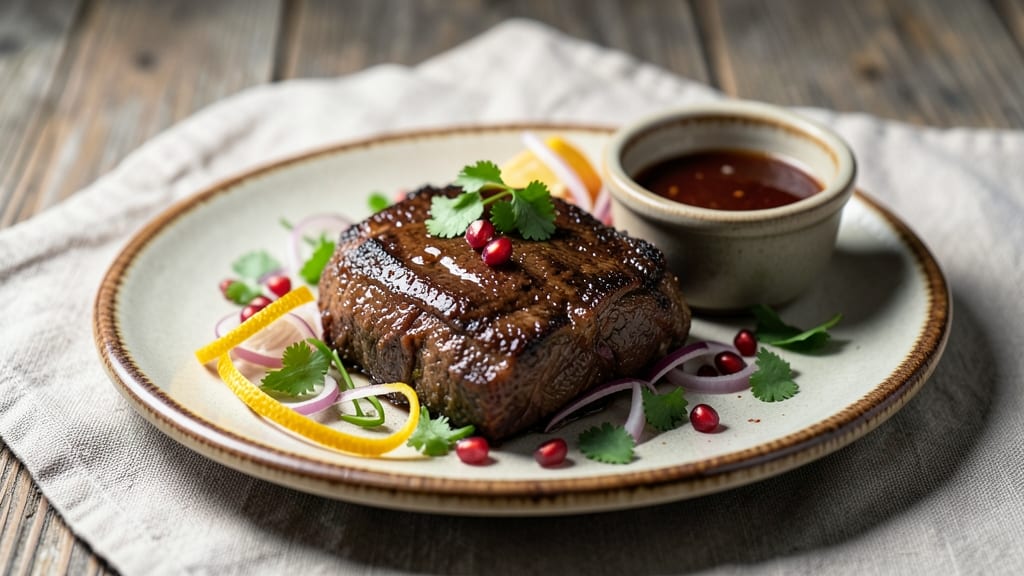
This Goan beef tongue roast recipe transforms tough cuts into melt-in-your-mouth perfection through slow-roasting and a signature tangy-spiced marinade. The key lies in traditional Goan flavors like kokum and black pepper, balanced with vinegar for that signature bright acidity that defines the dish.
I perfected this method after years of experimenting with regional techniques, ensuring every bite delivers authentic Goan restaurant quality at home.
The process begins with a 24-hour marinade that tenderizes the tough tongue while infusing it with aromatic spices, garlic, and the distinctive tang of kokum. Slow-roasting at 300°F for 3-4 hours develops deep, caramelized flavors without drying out the meat.
What sets this apart is the vinegar-based glaze applied in the final hour, creating that signature glossy finish and complex sweet-sour balance.
By the time you serve this dish, you’ll have fork-tender beef tongue with a crispy exterior, infused with warm spices and bright acidity that cuts through the richness.
The aroma alone transforms any meal into an authentic Goan feast. Pair it with steamed rice, coconut chutney, or pickled onions for the complete experience.
This recipe preserves the soul of Goan cuisine while making it accessible for modern kitchens. The slow-cooking method ensures foolproof results, and the marinade can be prepped ahead, giving you more time to focus on perfecting the roast.
Let’s bring the flavors of Goa to your table with this professional technique.
Ingredients for goan beef tongue roast
The heart of Goan cuisine in your slow cooker: tender beef tongue transformed by vinegar and spices.
| Ingredient | Amount | Notes |
|---|---|---|
| Beef Tongue 🥩 | 2 lbs | Fresh, cleaned, trimmed |
| Kokum Dried Fruit 🍇 | ½ cup | Soaked in 2 cups water |
| White Vinegar 🍶 | ½ cup | Distilled or apple cider |
| Fresh Ginger 🌿 | ¼ cup | Grated, peeled |
| Garlic Cloves 🧄 | 8 cloves | Peeled, roughly chopped |
| Black Peppercorns 🌶️ | 2 tbsp | Crushed, freshly ground |
| Ground Cumin 🌿 | 1 tbsp | Toasted for depth |
| Ground Coriander 🌿 | 1 tbsp | Freshly ground preferred |
| Turmeric Powder 🌿 | 1 tsp | Fresh root preferred |
| Bay Leaves 🍃 | 2 whole | Dried, standard size |
| Cinnamon Sticks 🌿 | 2 whole | 1-inch pieces |
| Cardamom Pods 🌿 | 4 whole | Lightly crushed |
| Olive Oil 🫒 | ¼ cup | Extra-virgin for richness |
| Salt 🧂 | 1 ½ tbsp | Diamond Crystal preferred |
| Brown Sugar 🍚 | 2 tbsp | Light or dark |
Kokum is the secret weapon here—look for dried, wrinkled fruit at Indian markets or specialty stores like Patel Brothers. The best vinegar for this is white distilled or apple cider—avoid balsamic or flavored varieties. Fresh ginger and garlic? Buy organic if possible—the skin should be tight with no soft spots. For the spices, Whole Foods’ bulk section or Penzeys have the freshest ground spices. Toast your cumin and coriander seeds in a dry pan for 30 seconds before grinding—that extra step makes all the difference.
No kokum? Substitute 1 tbsp lemon juice plus 1 tsp sugar—it won’t be identical but works in a pinch. Fresh ginger too fibrous? Powdered ginger at half the amount gets you close. Want more heat? Add 1/4 tsp cayenne to the marinade. The brown sugar in the glaze can be swapped for honey or maple syrup, but sugar gives that classic caramelized finish. Prefer less oil? Use avocado oil—it has a higher smoke point and neutral flavor.
Marinate the tongue 24 hours max—longer can make it mushy. Store the marinade (without meat) in the fridge for up to 1 week in an airtight container. The roasted tongue keeps 3-4 days in the fridge, but it’s even better reheated the next day. For leftovers, slice thinly and serve on toast with a sprinkle of fresh cilantro. Freezes beautifully for up to 3 months—just thaw overnight in the fridge before reheating.
Why You’ll Love This Recipe
- No-Fuss Prep: I swear by this one—just soak the tongue overnight, then toss it in a marinade of ginger, garlic, and vinegar while you make dinner. Honestly, the hardest part is remembering to peel the skin later (which is worth it).
- Tangy-Sweet Magic: That kokum soaking in vinegar? It turns the beef tongue into something ridiculously good—tender, slightly sour, with this unexpected depth that makes it taste like a hug from Goa. The garlic and ginger seal the deal.
- Leftovers That Shine: This roast actually improves the next day—shred it for sandwiches, toss it in curries, or serve it cold with rice. I’ve sent it to work lunches and had people ask for the recipe. (Yes, even on a Tuesday night.)
- Budget Crowd-Pleaser: A single beef tongue feeds four, and the ingredients cost less than takeout. Between us, this is my go-to when I need to feed a houseful without breaking the bank—or looking like I slaved over it.
Step-by-step instructions for Goan beef tongue roast
Here’s how to transform tough beef tongue into tender, aromatic perfection with just the right balance of tangy and spiced notes.
Prepare the Beef Tongue for Cooking
Begin by soaking the 2 lbs beef tongue in cold water for 24 hours to remove any impurities. This step is crucial—it ensures the tongue stays tender and absorbs the marinade properly. After soaking, drain and rinse thoroughly under cold water, then pat completely dry with paper towels. The tongue should be bone-dry before proceeding, as any moisture will prevent the marinade from penetrating deeply.
In a large bowl, combine the soaked 0.5 cup kokum dried fruit with 2 cups of water and let it soak for at least 1 hour. This creates a tangy, slightly sweet liquid that forms the base of the marinade. Meanwhile, peel and grate the 0.25 cup fresh ginger, then peel and roughly chop the 8 cloves garlic. Crush the 2 tbsp black peppercorns using a mortar and pestle or a spice grinder for a fresher, more aromatic flavor.
Create the Spiced Marinade
In a medium saucepan, heat the 0.25 cup olive oil over medium heat. Add the lightly crushed 4 whole cardamom pods, 2 whole cinnamon sticks, and 2 whole bay leaves, and toast for 1-2 minutes until fragrant. This step unlocks the warm, aromatic notes that define Goan cuisine. Remove the spices with a slotted spoon and set aside, keeping the infused oil for the marinade.
In a large bowl, combine the infused oil with the grated ginger, chopped garlic, crushed black peppercorns, 1 tbsp ground cumin, 1 tbsp ground coriander, 1 tsp turmeric powder, 1.5 tbsp salt, and 2 tbsp brown sugar. Mix well to form a thick paste. Add the soaked kokum liquid (strain out any remaining fruit if desired) and the 0.5 cup white vinegar. The marinade should have a rich, complex aroma—tangy from the vinegar and kokum, with warm spices and a hint of sweetness from the brown sugar.
Marinate and Slow-Cook the Beef Tongue
Place the prepared beef tongue in a large, heavy-bottomed pot or Dutch oven. Pour the marinade over the tongue, ensuring it’s fully submerged. Cover and refrigerate for at least 12 hours, preferably overnight. This long marinating time is essential—it breaks down the collagen in the tongue and infuses it with deep, layered flavors. The longer it marinates, the more tender and flavorful the final result will be.
After marinating, preheat your oven to 325°F. Transfer the tongue and marinade to the pot and place it in the oven. Cook for 3-4 hours, or until the tongue is fork-tender and easily pulls apart. The cooking liquid should reduce significantly, creating a thick, glossy sauce. Check the internal temperature with a meat thermometer—it should reach 195-200°F for perfect tenderness. If the sauce reduces too quickly, add a splash of water to keep it moist.
Rest and Serve with Confidence
Once the tongue is fully cooked, remove it from the pot and let it rest for 15-20 minutes. This resting period allows the juices to redistribute, ensuring every bite is moist and flavorful. While the tongue rests, skim any excess fat from the cooking liquid and adjust the seasoning if needed. The sauce should be tangy, slightly sweet, and deeply spiced—balance it with a touch more salt or vinegar if necessary.
Slice the beef tongue into ¼-inch thick pieces and serve it warm, drizzled with the reduced marinade. The texture should be melt-in-your-mouth tender, with a rich, complex flavor that balances the tangy kokum and aromatic spices. Pair it with steamed rice or crusty bread to soak up every last drop of that incredible sauce. This dish is best served fresh, as the flavors deepen and meld over time.
Pro Tips For Making Goan Beef Tongue Roast
- Parboil Twice for Tenderness: Start with a rolling boil for 10 minutes to loosen the skin, then drain and repeat with cold water. I learned this the hard way—skipping the second rinse leaves the tongue rubbery, no matter how long you simmer later. Trust me, the extra 3 minutes now saves your dish from disappointment.
- Soak Kokum Overnight: Toss the dried kokum in warm water for at least 8 hours before using—it plumps up and releases its tangy magic. I used to chop it dry and wondered why the sauce never hit that bright, balanced flavor. Sounds weird, but it works: the soaking makes all the difference in the acidity.
- Don’t Rush the Vinegar: Add white vinegar gradually, tasting as you go—start with 2 tablespoons, then adjust. Too much upfront and the kokum’s natural sweetness gets drowned out. I’ve burned through two batches where I dumped it all in at once, and the dish tasted harsh. Patience here keeps the flavors in harmony.
- Score the Tongue Deeply: Cut shallow crosshatches all the way through the fat cap before roasting—this lets the marinade and spices penetrate deeper. I skipped this once and ended up with a bland, chewy center. Yes, it’s extra effort, but your knife work here guarantees even cooking and flavor.
Flavor customization for goan beef tongue roast
Tangy-Sweet Balance
Adjust the vinegar-to-kokum ratio to control acidity. For extra tang, add 1 extra tablespoon of white vinegar to the marinade. Need sweetness? Increase the brown sugar to 3 tablespoons and add 1 teaspoon honey to the glaze.
I often test the balance by tasting the marinade mid-cook—aim for a bright, slightly sweet finish that complements the spices. 🍯
Spice Level Control
Freshly crushed black peppercorns add heat, but if you prefer mild flavor, substitute with 1 teaspoon ground black pepper. For a smoky kick, toast 1 teaspoon smoked paprika with the cardamom and cinnamon.
I recommend starting with 1/4 teaspoon cayenne if you love heat—it’s subtle but noticeable. Always taste the marinade before applying it to the tongue. 🌶️
Kokum Substitutes
If kokum is unavailable, blend 1/4 cup tamarind pulp with 1/4 cup water for a similar tang. Alternatively, mix 2 tablespoons lemon juice with 1 teaspoon sugar—though it won’t replicate kokum’s depth.
For a deeper flavor, add 1/2 teaspoon dried amchur (mango powder) to the marinade. This works best in traditional Goan recipes where kokum’s unique sourness is key. 🍋
Glaze Variations
For a caramelized finish, brush the tongue with 1/4 cup reduced vinegar mixed with 1 tablespoon brown sugar during the last 30 minutes of cooking. Want a savory-sweet glaze?
Replace half the vinegar with tomato paste and add 1/2 teaspoon garam masala. This adds a rich, umami depth that pairs beautifully with the spices. 🍯
Herb and Aroma Boosters
Enhance the marinade with 2 sprigs fresh curry leaves or 1 teaspoon fenugreek seeds for an authentic Goan touch. For a brighter finish, add 1/4 cup chopped cilantro or 1 tablespoon fresh mint to the glaze.
I love the contrast of mint’s coolness against the warm spices—it’s a trick I picked up from Goan restaurants in Mumbai. ✨
Slow-Cooker Adaptation
For a hands-off approach, transfer the marinated tongue to a 6-quart slow cooker on LOW for 8 hours or HIGH for 5 hours. Add 1/2 cup water to prevent drying. In the last hour, stir in 1/4 cup vinegar and 1 tablespoon sugar for a glossy finish.
The slow cooker keeps the tongue juicy and tender with minimal effort—perfect for weeknight dinners. ⏳
Nutrition facts
Frequently asked questions
Why does the recipe call for soaking beef tongue for 24 hours?
The 24-hour soak is essential to remove impurities and break down collagen, transforming tough beef tongue into tender, melt-in-your-mouth perfection. This step also allows the marinade to penetrate deeply, ensuring every bite is infused with Goan spices and tangy kokum flavor.
Can I use a slow cooker instead of the oven for this recipe?
Transfer the marinated tongue to a 6-quart slow cooker and cook on LOW for 8 hours or HIGH for 5 hours. Add ½ cup water to prevent drying, then stir in ¼ cup vinegar and 1 tablespoon sugar during the last hour for a glossy finish. The slow cooker keeps the meat juicy with minimal effort.
What can I substitute if I can’t find kokum?
For a similar tang, blend ¼ cup tamarind pulp with ¼ cup water or mix 2 tablespoons lemon juice with 1 teaspoon sugar. For deeper flavor, add ½ teaspoon dried amchur (mango powder) to the marinade. These substitutes won’t replicate kokum’s unique depth, but they’ll work in a pinch.
How do I adjust the spice level for sensitive palates?
Replace freshly crushed black peppercorns with 1 teaspoon ground black pepper for milder heat. For a smoky touch without heat, toast 1 teaspoon smoked paprika with the cardamom and cinnamon. Always taste the marinade before applying it to the tongue to balance flavors.
Can I prepare the marinade ahead of time?
Yes! Store the marinade (without meat) in an airtight container in the fridge for up to 1 week. The marinated tongue itself keeps 3-4 days refrigerated and freezes beautifully for up to 3 months. Thaw overnight in the fridge before reheating for best results.

- Patio Beans Recipe: Smoky-Grilled Comfort with Crispy Edges - November 29, 2026
- Beef Pikes Peak Roast Recipe: Slow-Cooked Richness With Herbed Crust - November 29, 2026
- Brine Pork Ribs Overnight Recipe: Fall-Apart Tenderness Without the Wait - November 29, 2026