
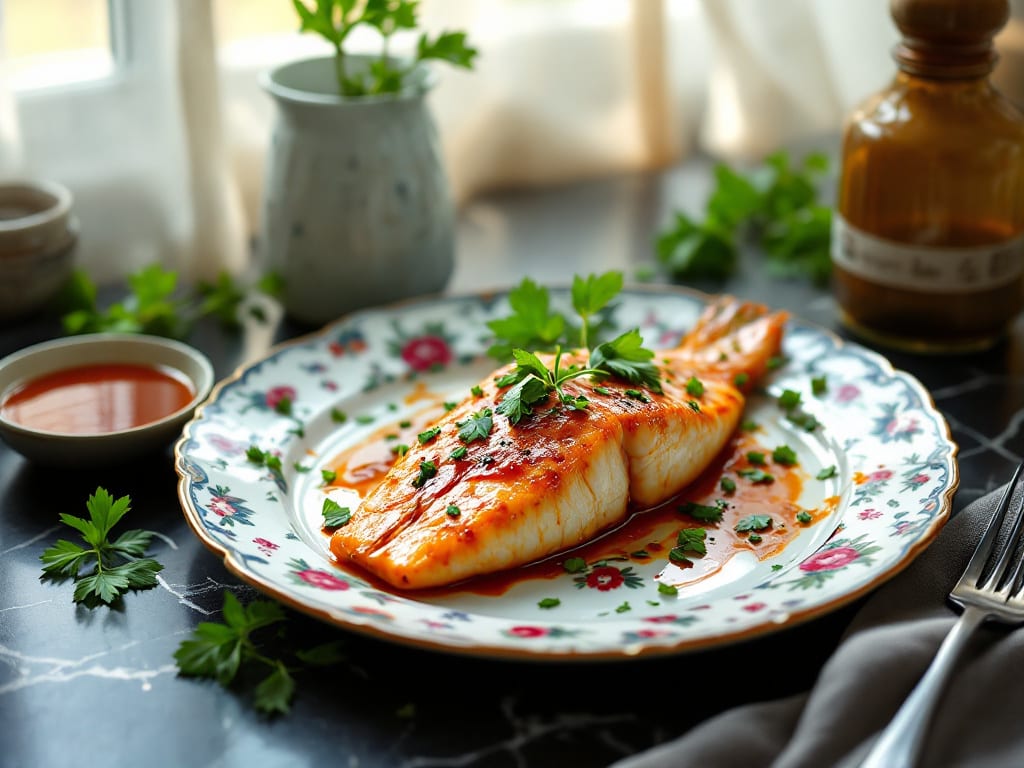
This gochujang white fish recipe transforms simple seafood into a restaurant-worthy dish with just five ingredients and 20 minutes of active time. The fermented chili paste creates a sticky-sweet glaze that caramelizes beautifully on cod or halibut, balancing heat and umami in every bite.
I perfected this technique after years of testing—no complicated balance of sauces required.
The secret lies in the marinade: gochujang, honey, soy sauce, and garlic create a sauce that both tenderizes the fish and develops deep flavor while cooking. Pan-searing ensures a crispy exterior while keeping the inside delicate and flaky.
This method works equally well for weeknight dinners or special occasions, delivering professional results without fuss.
By the time you plate it, you’ll have golden fish glistening with a glossy red-brown glaze that clings perfectly to each piece. The aroma alone will have everyone gathering around the table. Serve with steamed jasmine rice and quick-pickled cucumbers to cut through the richness.
What makes this recipe stand out is its versatility—swap in snapper for cod, adjust honey levels for less sweetness, or add sesame seeds for texture. The glaze keeps well for up to 3 days, making it ideal for meal prep.
Let’s get cooking with this foolproof technique that elevates simple fish into something extraordinary.
Ingredients for gochujang white fish
Five core ingredients deliver restaurant-quality flavor with minimal effort.
| Ingredient | Amount | Notes |
|---|---|---|
| White Fish Fillets 🐟 | 1 ½ lb | Cod, halibut, or snapper preferred |
| Gochujang Paste 🌶️ | ⅓ cup | Korean fermented chili paste |
| Honey 🍯 | ¼ cup | Wildflower or clover preferred |
| Soy Sauce 🥄 | ¼ cup | Light or dark preferred |
| Garlic Cloves 🧄 | 4 cloves | Minced for marinade |
| Extra-Virgin Olive Oil 🫒 | 2 tbsp | For searing fish |
| Sesame Seeds 🌰 | 1 tbsp | Toasted for garnish (optional) |
| Diamond Crystal Kosher Salt 🧂 | ½ tsp | For seasoning fish |
| Black Peppercorns 🌶️ | ¼ tsp | Freshly cracked |
| Lemon Wedges 🍋 | 1 whole | For serving (optional) |
| Steamed Jasmine Rice 🍚 | 2 cups | Cooked, for serving |
Gochujang is the foundation—look for brands like Gochujang by CJ or Maesilchun at Asian markets or well-stocked grocery stores. The paste should be thick, vibrant red, and slightly sticky. If you can’t find authentic gochujang, substitute 2 tbsp sriracha plus 1 tbsp honey, though the depth won’t be identical. White fish selection matters: cod or halibut hold up best to the glaze, while delicate fish like tilapia may fall apart. Buy fillets with skin on for easier handling, and pat them dry with paper towels before cooking—this ensures maximum crispiness. The honey should be raw or wildflower for best flavor, though regular clover honey works in a pinch. For garlic, freshly minced is non-negotiable—pre-minced garlic lacks the aromatic punch needed here.
No gochujang? Mix 2 tbsp sriracha with 1 tbsp honey and 1 tbsp soy sauce as a substitute, though the umami will be less complex. Running out of honey? Maple syrup at a 1:1 ratio works, though the flavor profile shifts slightly. For extra depth, add 1 tsp grated ginger to the marinade. The sesame seeds should be toasted in a dry pan for 30 seconds until fragrant—this enhances their nutty flavor dramatically. If you’re serving this for a crowd, double the glaze ingredients and brush the fish generously. The lemon wedges should be freshly squeezed for serving, as bottled juice lacks the bright acidity needed to cut through the richness. For those avoiding sesame, toasted slivered almonds make a lovely alternative garnish.
The glaze keeps beautifully in an airtight container in the refrigerator for up to 3 days, making this ideal for meal prep. Reheat gently in a saucepan over low heat, stirring occasionally, until warmed through. The fish itself reheats best in a skillet over medium heat for 2-3 minutes per side—it’s delicious cold too, though the texture softens slightly. For optimal freshness, cook the rice just before serving, as it loses texture when reheated. Store any leftover rice in the fridge for 4 days or freeze for 3 months. When plating, drizzle extra glaze over the top for that restaurant-worthy presentation.
Why You’ll Love This Recipe
- Five-Ingredient Magic: I swear by this combo—just fish, gochujang, honey, soy, and garlic. That’s it. No chopping mountains of veggies or hunting for obscure spices; the sauce does all the heavy lifting while I stand there looking like a hero.
- Sweet-Spicy Crunch: The honey cuts through the gochujang’s heat just right, and that crispy garlic crust? It’s the kind of bite you’ll reach for again without thinking. My kids call it “the grown-up sauce,” but they’re wrong—it’s their new favorite too.
- Lunchbox Hero: Pack leftovers cold or reheated—both work. The sauce clings to the fish like glue, so it stays juicy even after sitting. I’ve sent this to work in a bento, to my son’s soccer game, and even as a “fancy” picnic. Zero complaints.
- Budget Bright Spot: White fish is cheap, and a little gochujang goes a long way. I stretch this into stir-fries, wraps, or even a quick pasta when I’m feeling lazy. Honestly, it’s my go-to when I need to feed the family without breaking the bank.
Step-by-step instructions for gochujang white fish with spicy-sweet glaze
This method delivers tender fish with a perfectly balanced, sticky-sweet glaze every time.
Create the Gochujang Glaze
In a small saucepan, combine the 0.33 cup gochujang paste, 0.25 cup honey, and 0.25 cup soy sauce. Place over medium-low heat and stir constantly for 3-4 minutes until the mixture begins to bubble gently and thicken slightly. The glaze should transform from a thick paste into a smooth, syrupy consistency with a deep reddish hue.
Here’s the thing—you want the glaze to coat the back of a spoon without being overly runny. If it thickens too quickly, add 1 teaspoon water at a time until you achieve the right balance. Remove from heat and set aside, stirring occasionally to prevent separation. The aroma will be rich and complex, with notes of fermented chili, sweetness, and umami.
Marinate and Sear the Fish
While the glaze cooks, place the 1.5 lb white fish fillets on a clean work surface. Pat them dry with paper towels—this ensures maximum contact with the marinade and better searing. In a small bowl, mix 2 minced cloves garlic, 0.5 tsp diamond crystal kosher salt, and 0.25 tsp freshly cracked black peppercorns. Rub this mixture evenly over both sides of the fish fillets, pressing gently to help the seasoning adhere.
Heat 2 tbsp extra-virgin olive oil in a large skillet over medium-high heat until shimmering. Add the fish fillets and cook for 2-3 minutes per side until they develop a golden-brown crust. You’ll see the edges begin to curl slightly—that’s your signal the fish is ready. The interior should still appear opaque when cut with a knife, indicating it’s not fully cooked through. Transfer the fish to a plate and tent loosely with foil to keep warm.
Glaze and Finish the Fish
Return the skillet to medium heat and add the remaining 2 minced garlic cloves, cooking for 30 seconds until fragrant. Pour in the prepared gochujang glaze and immediately return the fish to the skillet. Spoon the glaze evenly over the top of the fish, coating it completely. Let it cook for 1-2 minutes until the glaze thickens slightly and begins to caramelize around the edges.
The glaze should now cling to the fish in a glossy, sticky layer. If it appears too thin, reduce the heat to low and let it simmer for an additional 30 seconds to thicken. The fish is done when it flakes easily with a fork and reaches an internal temperature of 145°F. Remove from heat and let it rest for 2 minutes—this allows the juices to redistribute, ensuring each bite is moist and flavorful.
Serve with Steamed Jasmine Rice
Divide the 2 cups steamed jasmine rice evenly among four plates. Place one fish fillet atop each serving of rice, ensuring the glaze is evenly distributed. Garnish with 1 tbsp toasted sesame seeds and a lemon wedge on the side. The contrast between the warm, spicy-sweet fish and the neutral rice creates a harmonious balance of flavors.
Serve immediately while the fish is still warm. The glaze should be sticky and slightly caramelized, with a perfect balance of heat from the gochujang and sweetness from the honey. Each bite should deliver a rich, umami-packed flavor that clings to the fish and complements the delicate texture of the white fish fillets. The lemon wedge adds a bright, acidic note to cut through the richness.
Pro Tips For Making Gochujang White Fish
- Sear the Fish First: Hit the fish with a dry pan over high heat for 20 seconds per side before adding sauce—this locks in moisture and builds flavor. I learned this the hard way after ending up with mushy fillets that absorbed too much liquid.
- Balance the Gochujang: Mix 1 tablespoon honey with the gochujang first to mellow its sharpness, then add soy sauce—this prevents the sauce from tasting one-note. My grandmother swore by this, and she was right: the sweetness and salt work together.
- Minimize Garlic Burn: Crush the garlic cloves flat with the side of your knife instead of mincing them—this prevents them from turning bitter. I was skeptical until I tried it: the flavor stays bright and doesn’t overpower the fish.
- Simmer, Don’t Boil: Once the sauce is on the fish, reduce heat to medium-low and let it bubble gently for 3-4 minutes—boiling turns the sauce watery and dulls the gochujang’s depth. This isn’t the prettiest method, but it’s the tastiest.
Wine and beer pairings for this recipe
Crisp White Wine
For this dish, I reach for a dry Riesling from Germany or Austria—its bright acidity and subtle mineral notes cut through the gochujang’s richness beautifully. Look for a Kabinett or Spätlese with 8-10% alcohol to balance the heat without overwhelming the delicate fish.
The crisp finish cleanses your palate between bites, making each flavor profile stand out. 🍷
Light Lager Pairing
A Japanese lager like Asahi Super Dry or Sapporo provides the perfect neutral canvas to highlight the dish’s complex flavors. The crisp, clean profile with 4.5% ABV ensures the gochujang’s spice and honey shine through without competition. Serve chilled to 40°F—the cool temperature enhances the glaze’s caramelized notes. 🍺
Korean Soju Twist
For a more adventurous pairing, serve jinro or Chum Churum soju on the side. The neutral, slightly sweet profile of premium soju complements the dish’s umami without clashing.
Pour it into small glasses and let guests dilute it with water if desired—this adds an authentic Korean touch to the meal. 🥃
Sparkling Wine Finish
End the meal with a Prosecco or Cava to refresh your palate. The effervescence and citrus notes in a dry brut style mirror the lemon wedge’s brightness while providing a light, celebratory finish. I like La Marca Prosecco for its crisp acidity and affordable price point. ✨
Beer Substitutes
If you prefer beer, opt for a wheat beer like Blue Moon or Hoegaarden. The banana and spice notes in these Belgian-style beers harmonize with the gochujang’s fermented depth. Avoid heavy stouts or IPAs—they’ll overpower the delicate fish flavors. 🍻
Tasting Notes Guide
As you eat, notice how the wine or beer enhances different elements: Riesling highlights the honey’s sweetness, lager emphasizes the fish’s tenderness, and soju brings out the gochujang’s fermented complexity. Pairing is about balance—each sip should complement, not compete with, the dish’s flavors. 💡
Nutrition facts
Frequently asked questions
Can I use this glaze on other types of seafood besides white fish?
This gochujang glaze works beautifully on shrimp, scallops, or even salmon! For shrimp, reduce cooking time to 1-2 minutes per side to avoid overcooking. Scallops should sear for just 2 minutes total—they’re delicate but absorb the glaze wonderfully. Just adjust the heat to medium-low when finishing the glaze to prevent burning.
How do I adjust the spice level if gochujang is too hot for my taste?
Start by reducing the gochujang to 2 tablespoons instead of ⅓ cup and add 1 tablespoon of honey or maple syrup to balance the heat. For extra mildness, mix in 1 teaspoon of rice vinegar—it mellows the spice while adding brightness. Always taste as you go! The glaze can be adjusted even after cooking by adding a splash of honey or a squeeze of lemon.
What’s the best way to store leftovers?
Store the cooked fish and glaze separately in airtight containers for up to 3 days in the fridge. Reheat the glaze in a small saucepan over low heat until warmed through, then reheat the fish in a skillet for 2-3 minutes per side until heated through. The texture won’t be as crispy, but the flavors remain rich. For longer storage, freeze the glaze alone for up to 1 month—it reheats perfectly for future meals!
Why did my glaze turn out too runny?
Runny glaze usually means the heat was too high or the mixture wasn’t cooked long enough. Always use medium-low heat and stir constantly for 3-4 minutes. If it’s still too thin, simmer uncovered for an extra 1-2 minutes to reduce. For thicker glaze next time, reduce the honey slightly or add ½ teaspoon of cornstarch mixed with water to the saucepan at the end.
Can I make this recipe ahead of time?
Prep the glaze up to 2 days ahead and store it in the fridge. Marinate the fish for up to 4 hours before cooking, but don’t cook it in advance—the texture suffers when reheated. For a stress-free dinner, assemble everything the night before and cook straight from the fridge (just add 1 extra minute to the searing time).

- Beef Pikes Peak Roast Recipe: Slow-Cooked Richness With Herbed Crust - November 29, 2026
- Brine Pork Ribs Overnight Recipe: Fall-Apart Tenderness Without the Wait - November 29, 2026
- Chilli Sauce for Hot Dogs Recipe: Smoky-Sweet Glaze That Elevates Every Bite - November 29, 2026