
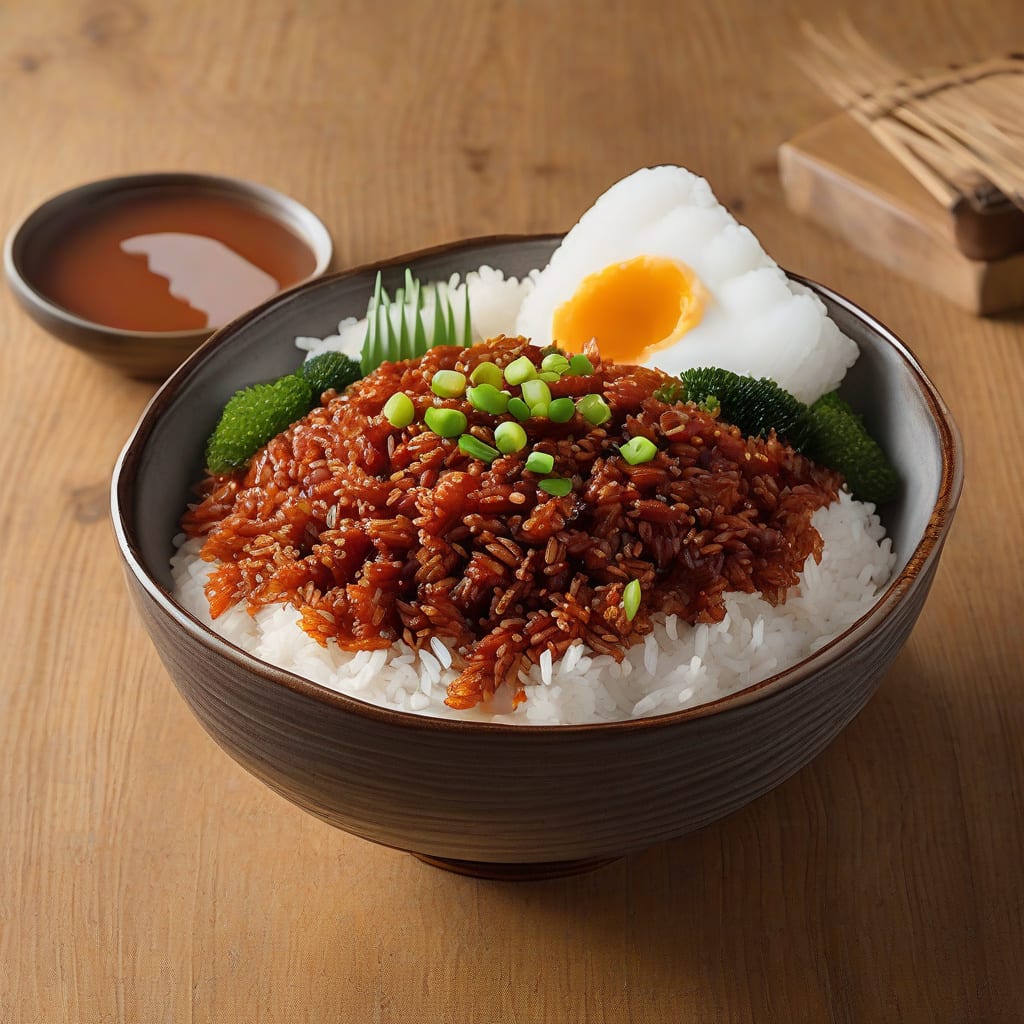
This gochujang rice recipe transforms plain rice into a flavorful side dish with a spicy kick. Using short-grain rice and adjusting the gochujang amount to your taste, you can create a dish that’s both aromatic and delicious.
To make it, you’ll combine rice, gochujang, soy sauce, and other seasonings, then cook until perfectly tender. The result is a perfectly balanced blend of spicy and savory flavors that pairs well with various Korean-inspired dishes.
Ingredients for Gochujang Rice
Simple ingredients come together to create this flavorful Korean-inspired gochujang rice dish.
| Ingredient | Amount | Notes |
|---|---|---|
| Short-Grain White Rice 🍚 | 1 ½ cups | Uncooked, rinsed thoroughly |
| Water 💧 | 2 ½ cups | Filtered for best taste |
| Gochujang Paste 🌶️ | 2 tbsp | Adjust to desired heat level |
| Soy Sauce 🧂 | 1 tbsp | Low-sodium preferred |
| Sesame Oil 🫒 | 1 tsp | Toasted for depth |
| Garlic Cloves 🧄 | 2 cloves | Minced, fresh |
| Ginger 🌿 | 1 tsp | Grated, fresh |
| Green Onions 🌱 | ¼ cup | Chopped, for garnish |
| Toasted Sesame Seeds 🥜 | 1 tsp | For added crunch |
| Black Pepper 🌶️ | ¼ tsp | Freshly ground |
| Salt 🧂 | ¼ tsp | Kosher or sea salt |
For the best gochujang, check Asian markets or Trader Joe’s. Look for short-grain rice at well-stocked grocery stores or Asian markets. I prefer Koshihikari or Calrose rice for this recipe. Fresh ginger and garlic make a big difference—don’t skip them.
No gochujang? Mix sriracha and miso paste as a substitute. For a milder version, start with 1 tablespoon gochujang and adjust. You can swap soy sauce with tamari for a gluten-free option. If you like a stronger sesame flavor, add an extra 0.5 teaspoon sesame oil.
This rice keeps well in the fridge for up to 5 days. Reheat with a splash of water to refresh. You can also freeze it for up to 3 months. Portion into containers for easy meal prep.
❤️
Why You’ll Love This Recipe
- Quick Fix: I can whip up this gochujang rice in under 20 minutes, and it’s a total lifesaver on busy weeknights when I need something ready fast.
- Flavor Bomb: The combination of gochujang paste and sesame oil creates a ridiculously good flavor that’s both spicy and nutty – I love how it adds depth to my meals.
- Meal Prep Master: This recipe is perfect for meal prep because it keeps well in the fridge for days, and I can easily reheat it for lunch or dinner, making it a solid addition to my weekly routine.
- Leftover Friendly: I love that I can make a big batch of this gochujang rice and use it throughout the week in different dishes, reducing food waste and saving me money on groceries.
Step-by-Step Instructions for Gochujang Rice
Let’s create this flavorful Korean-inspired dish together – simple, delicious, and ready in minutes.
Step 1: Prepare the Rice and Aromatics
Start by rinsing the 1.5 cups Short-Grain White Rice thoroughly until the water runs clear. This step removes excess starch, ensuring your rice cooks up fluffy rather than sticky. In a medium saucepan, combine the rinsed rice and 2.5 cups Water. Let it soak for 30 minutes – this helps the rice cook more evenly.
While the rice soaks, prepare your aromatics. Mince the 2 cloves Garlic Cloves and grate 1 tsp Ginger. The freshness of these ingredients makes a big difference in the final flavor, so don’t skip this step. You’ll know they’re ready when you smell that characteristic pungency from the garlic and the ginger releases its fragrant oil.
Step 2: Cook the Rice with Gochujang Flavor
After the rice has soaked, add 2 tbsp Gochujang Paste, 1 tbsp Soy Sauce, the minced garlic, and grated ginger to the saucepan. Stir everything gently to distribute the ingredients evenly. Bring the mixture to a boil over high heat, then reduce the heat to low, cover, and simmer for 15-20 minutes until the rice is tender and the liquid is absorbed.
During cooking, you’ll notice the gochujang paste infusing the rice with its signature spicy-sweet flavor. If you prefer a milder dish, start with 1 tablespoon of gochujang and adjust to taste. The rice is done when it’s tender and there’s no water left in the pan – you’ll see small craters on the surface.
Step 3: Finish with Sesame Oil and Garnishes
Once the rice is cooked, remove it from the heat and let it rest, covered, for 5 minutes. This resting period allows the flavors to meld together and the rice to become perfectly fluffy. Then, stir in 1 tsp Sesame Oil – the toasted flavor adds a wonderful depth to the dish.
Transfer the gochujang rice to a serving platter or individual bowls. Garnish with 0.25 cup Green Onions and sprinkle 1 tsp Toasted Sesame Seeds on top. Season with 0.25 tsp Black Pepper and 0.25 tsp Salt to taste. The combination of textures and flavors creates a truly satisfying Korean-inspired side dish.
👨🍳
Pro Tips For Making Gochujang Rice
- TOAST THE RICE: Before cooking, toast the short-grain white rice in a dry pan for about 2-3 minutes until it’s lightly golden and fragrant. This step enhances the rice’s natural flavor and gives it a nuttier taste that pairs perfectly with the gochujang paste.
- MIX GOCHUJANG CAREFULLY: When mixing gochujang paste into the cooked rice, do it gently to avoid mashing the grains. I learned this the hard way—overmixing can make the rice clumpy and unappetizing.
- USE THE RIGHT RATIO: Use a 1:1.2 ratio of rice to water to achieve perfectly cooked short-grain rice. Skipping this can result in rice that’s either too dry or too mushy.
- ADD SESAME OIL LAST: Stir in the sesame oil just before serving to preserve its delicate flavor and aroma. Adding it too early can cause the oil to lose its potency and the rice to become greasy.
Best Sauces and Condiments for This gochujang rice
Perfect Condiment Pairings
Gochujang rice pairs beautifully with various Korean condiments that enhance its spicy, savory flavor. I love adding kimchi on the side for an extra kick of heat and tanginess. The fermented kimchi complements the gochujang’s depth while adding a fresh crunch.
Banchan Style Accompaniments
In Korean cuisine, rice is often served with an array of small dishes called banchan. Consider serving your gochujang rice with spicy cucumber salad or marinated bean sprouts for a traditional Korean meal experience. These small dishes add variety and balance to the meal.
Complementary Sauces
For added depth, try serving gochujang rice with complementary sauces like ssamjang (Korean dipping sauce) or yogurt-ginger sauce. The creamy elements help cool down the spiciness while enhancing the overall flavor profile. You can drizzle these sauces directly over the rice or serve them on the side.
Modern Twists
To give your gochujang rice a modern twist, try adding different toppings like crispy garlic, furikake, or toasted nuts. These additions provide interesting texture contrasts and flavor layers that elevate the dish. Experiment with various combinations to find your favorite.
Traditional Korean Pairings
For an authentic Korean experience, serve gochujang rice alongside bulgogi (marinated beef) or spicy pork stir-fry. The spicy rice complements the rich, savory flavors of these main dishes perfectly. You can also pair it with grilled tofu for a vegetarian option that still packs plenty of flavor.
Nutrition Facts
240kcal
Frequently Asked Questions
Can I use regular long-grain rice instead of short-grain?
While you can use long-grain rice, short-grain rice is preferred for this gochujang rice recipe because it has a stickier texture that holds the flavors better. Long-grain rice will still work, but the dish might be less cohesive. For best results, try Calrose or Koshihikari rice.
How spicy is gochujang rice?
Gochujang rice has a moderate level of heat that you can adjust to your taste. Starting with 2 tablespoons of gochujang gives a noticeable but not overwhelming spiciness. You can reduce it to 1 tablespoon for a milder version or increase it for extra heat. The heat mellows slightly during cooking.
How do I store leftover gochujang rice?
Leftover gochujang rice stores well in an airtight container in the refrigerator for up to 5 days. To reheat, add a splash of water and microwave until warm and fluffy. You can also freeze it for up to 3 months – just thaw overnight in the refrigerator. The flavors remain delicious even after refrigeration or freezing.
Can I make gochujang rice in a rice cooker?
Yes, you can make gochujang rice in a rice cooker! Simply sauté the garlic and ginger first, then add all ingredients to the rice cooker. Use the same liquid ratio and cooking settings as for plain rice. The result is perfectly cooked gochujang rice with minimal effort.

- BBQ Sausage Recipe Oven: Smoky Depth Without the Grill - September 28, 2026
- BBQ Chicken Bowl Recipe Rice: Smoky Sweetness Over Fluffy Grains - September 28, 2026
- Beef Cutlet Recipe Ideas: Crispy Breaded Patties With Bold Seasonings - September 28, 2026