
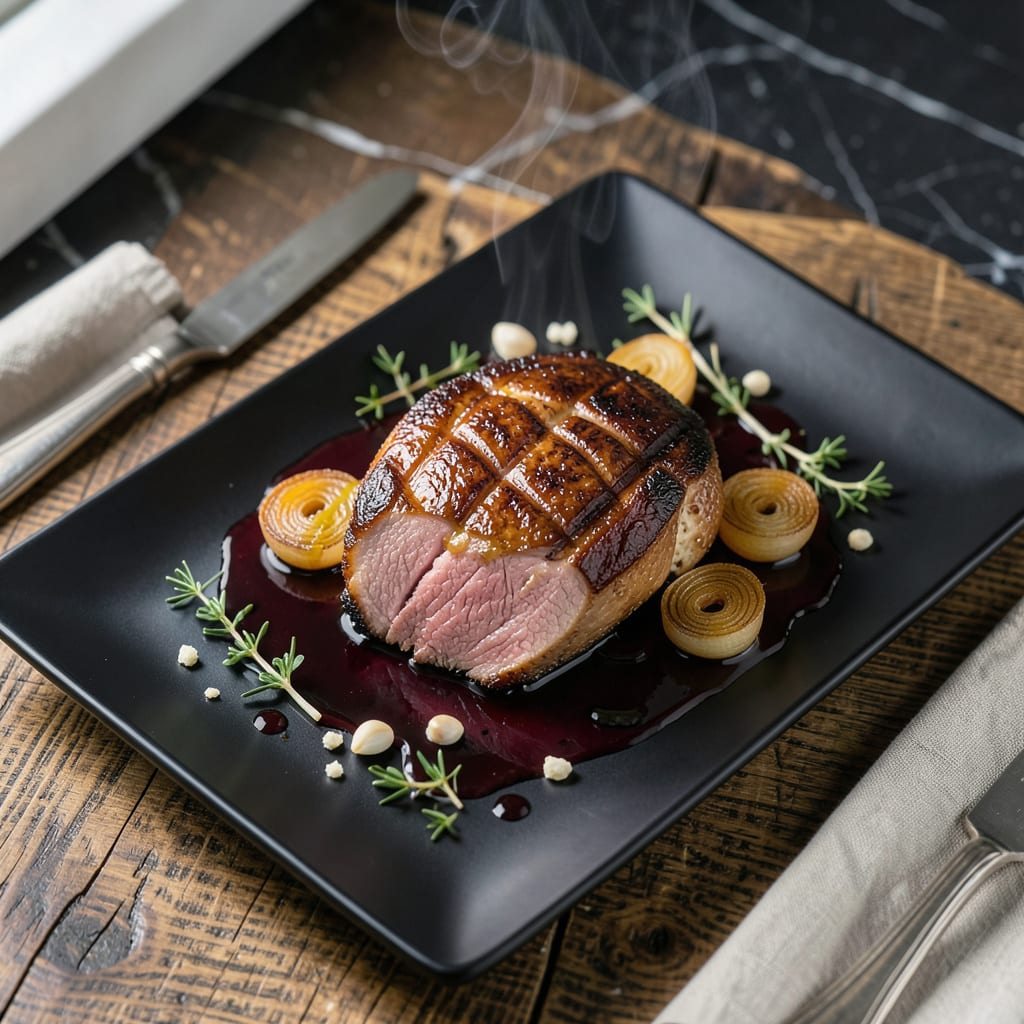
Achieving crispy duck skin with a perfect medium-rare center is simpler than you think. This method delivers restaurant-quality results with precise temperature control and timing.
Score the fat, render it slowly, then finish with a high-heat sear. The result: shatteringly crispy skin giving way to tender, rosy meat. Here’s how to master it.
Ingredients for Gordon Ramsay Duck Breast
Restaurant-quality duck requires precise ingredients and simple technique to achieve that signature crispy skin.
| Ingredient | Amount | Notes |
|---|---|---|
| Duck Breast 🦆 | 4 whole | Skin-on, about 6-8 oz each |
| Kosher Salt 🧂 | 2 tsp | Diamond Crystal preferred |
| Freshly Ground Black Pepper 🌶️ | 1 tsp | Coarse grind for texture |
| Fresh Thyme Sprigs 🌿 | 4 whole | For aromatics |
| Garlic Cloves 🧄 | 2 cloves | Lightly crushed |
| Shallot 🧅 | 1 whole | Thinly sliced for pan sauce |
| Red Wine Vinegar 🍷 | 2 tbsp | For deglazing pan |
| Chicken Stock 🍲 | ½ cup | Low-sodium preferred |
| Unsalted Butter 🧈 | 2 tbsp | Cold, cubed for finishing |
| Honey 🍯 | 1 tbsp | For glaze balance |
| Vegetable Oil 🫒 | 1 tsp | Neutral flavor, for initial sear |
[recipeingredientscaler]
Duck breast quality is paramount. Seek skin-on, magret-style breasts from reputable suppliers like D’Artagnan or Hudson Valley Foie Gras. Look for even fat distribution and deep rosy color—avoid any with dry or discolored skin. The fat rendering process demands high-quality starting material. Most specialty butchers carry this, or order online for consistent results.
No thyme? Fresh rosemary sprigs offer comparable aromatic depth. Shallots can be replaced with half a small onion, finely minced. For the pan sauce, dry white wine substitutes beautifully for the vinegar. Chicken stock is non-negotiable for authenticity—homemade or high-quality low-sodium brands like Swanson work best. The honey glaze can use maple syrup if preferred.
Duck fat renders during cooking and can be collected, strained, and stored in the fridge for 1 month. The finished dish holds well for 30 minutes if tented loosely with foil. Reheat gently to preserve the crispy skin—a 350°F oven for 8-10 minutes works perfectly.
Why You’ll Love This Recipe
- One Pan Wonder: I love that I only need a skillet and 5 ingredients—duck, salt, pepper, thyme, and garlic—to make this.
- Crispy Perfection: That skin renders out so crispy while the inside stays juicy, and the garlic-thyme aroma is unreal.
- Date Night Winner: Honestly, it feels fancy enough for a special dinner but takes less time than ordering takeout.
- Leftovers Luxury: Cold slices make the best sandwiches the next day—I’ll be real, I sometimes make extra just for this.
Step-by-Step Instructions for Gordon Ramsay Duck Breast
Master the technique for restaurant-quality results with crispy skin and a perfect medium-rare center.
Step 1: Score and Season the Duck Breast
Start by patting the duck breast completely dry with paper towels. Using a sharp knife, score the skin in a crosshatch pattern, cutting through the fat but not into the meat. This helps render the fat and creates crispy skin.
Season both sides aggressively with the 2 tsp Kosher Salt and 1 tsp Freshly Ground Black Pepper. The coarse grind of the pepper adds texture and visual appeal to the finished dish. Let the duck rest at room temperature for 10-15 minutes to ensure even cooking.
Step 2: Render the Fat and Sear to Perfection
Place a cold skillet over medium heat and add the duck breast skin-side down. Cook for 6-8 minutes, allowing the fat to render slowly. The skin should turn deep golden brown and crispy. Pour off excess fat periodically, leaving just enough to baste the duck.
Flip the duck and cook for 3-4 minutes for medium-rare. Add the 4 whole Fresh Thyme Sprigs, 2 cloves Garlic Cloves, and 1 tsp Vegetable Oil to the pan during the last minute to infuse the duck with aroma. The internal temperature should reach 130-135°F.
Step 3: Rest and Prepare the Pan Sauce
Transfer the duck to a cutting board, skin-side up, and tent loosely with foil. Let it rest for 5-10 minutes to allow the juices to redistribute. This resting period ensures the meat stays moist and tender when sliced.
Meanwhile, pour off all but 1 tablespoon of fat from the skillet. Add the thinly sliced 1 whole Shallot and cook over medium heat for 2-3 minutes until softened and translucent, stirring occasionally to prevent burning.
Step 4: Deglaze and Build the Sauce
Pour in the 2 tbsp Red Wine Vinegar and scrape up any browned bits from the bottom of the pan with a wooden spoon. Let the vinegar reduce by half, which should take about 1-2 minutes. This step captures all the concentrated duck flavor.
Add the 0.5 cup Chicken Stock and simmer for 3-4 minutes until the liquid reduces by about half. Stir in the 1 tbsp Honey and 2 tbsp Unsalted Butter, one cube at a time, whisking constantly until the sauce is glossy and emulsified.
Step 5: Slice and Serve
Slice the duck breast on a slight diagonal into ½-inch thick pieces. Arrange the slices on a serving platter or individual plates, fanning them out slightly for presentation. The skin should remain crispy, and the center should be a beautiful medium-rare pink color.
Spoon the warm pan sauce over the duck, allowing it to pool slightly on the plate. Garnish with additional thyme sprigs if desired. Serve immediately while the skin is still crisp and the sauce is hot.
Pro Tips For Making Gordon Ramsay Duck Breast
- Score the Fat: Use a sharp knife to make crosshatches in the duck fat—about 1/4-inch apart—so it renders evenly and crisps up properly. I learned this the hard way after my first few attempts came out chewy instead of crackling.
- Start Cold, Finish Hot: Place the duck breast fat-side down in a cold pan, then turn the heat to medium. This renders the fat slowly without burning, and you can spoon that liquid gold over potatoes later.
- Rest Under Foil: After cooking, tent the duck with foil and let it rest for at least 5 minutes—this keeps the juices inside where they belong, not all over your cutting board.
- Smash the Garlic: Lightly crush the garlic cloves with the side of your knife before adding them to the pan; it releases the flavor without burning the cloves to a bitter crisp.
Troubleshooting This Dish
Skin Not Crispy
If your skin isn’t crispy, you likely didn’t render enough fat first. Start with a cold pan and cook skin-side down on medium heat for 6-8 minutes, pouring off excess fat as it renders. Finish with 1-2 minutes on high heat for extra crispiness. 🔥
Overcooked Meat
Duck breast cooks quickly—pull it at 130-135°F internal temperature for perfect medium-rare. Use an instant-read thermometer and tent with foil for 5-10 minutes before slicing. The temperature will rise 5-10°F during resting.
Sauce Breaking
If your pan sauce separates, it’s too hot or not emulsified properly. Remove from heat and whisk in the 2 tbsp cold butter one cube at a time. The cold butter helps bind the sauce into a glossy finish.
Dry Duck
Dryness usually means overcooking or insufficient resting. Let the duck rest 10 minutes before slicing to redistribute juices. Also, baste with rendered fat during cooking to keep the meat moist.
Sauce Too Thin
Simmer the sauce longer—reduce the 0.5 cup chicken stock by half before adding honey and butter. If still thin, mix ½ tsp cornstarch with cold water and stir in while simmering.
Bitter Sauce
A bitter sauce often means the vinegar or shallots burned. Deglaze the pan immediately after removing the duck, scraping up browned bits. Balance the acidity with the 1 tbsp honey to mellow the flavor. 💡
Nutrition Facts
Frequently Asked Questions
Why do you start with a cold pan?
Beginning with a cold pan renders the fat slowly for even cooking. This prevents burning and ensures the skin crispens perfectly without overcooking the meat.
Hot pans can cause uneven rendering, leading to tough meat.
How do I know when the duck is done?
Use an instant-read thermometer to check for 130-135°F internally. The skin should be deep golden brown and the center slightly rosy.
Let it rest 5-10 minutes to reach the ideal temperature.
Can I use a different pan for cooking?
A heavy skillet like cast iron works best for even heat distribution. Avoid nonstick as it won’t crisp the skin as effectively.
Stainless steel is a great alternative for better browning.
What if my sauce is too rich?
Balance the richness by adding a splash of red wine vinegar or a pinch of salt. The acidity will cut through the fat beautifully.
Adjust seasoning gradually to avoid overdoing it.

- BBQ Sausage Recipe Oven: Smoky Depth Without the Grill - September 28, 2026
- BBQ Chicken Bowl Recipe Rice: Smoky Sweetness Over Fluffy Grains - September 28, 2026
- Beef Cutlet Recipe Ideas: Crispy Breaded Patties With Bold Seasonings - September 28, 2026