
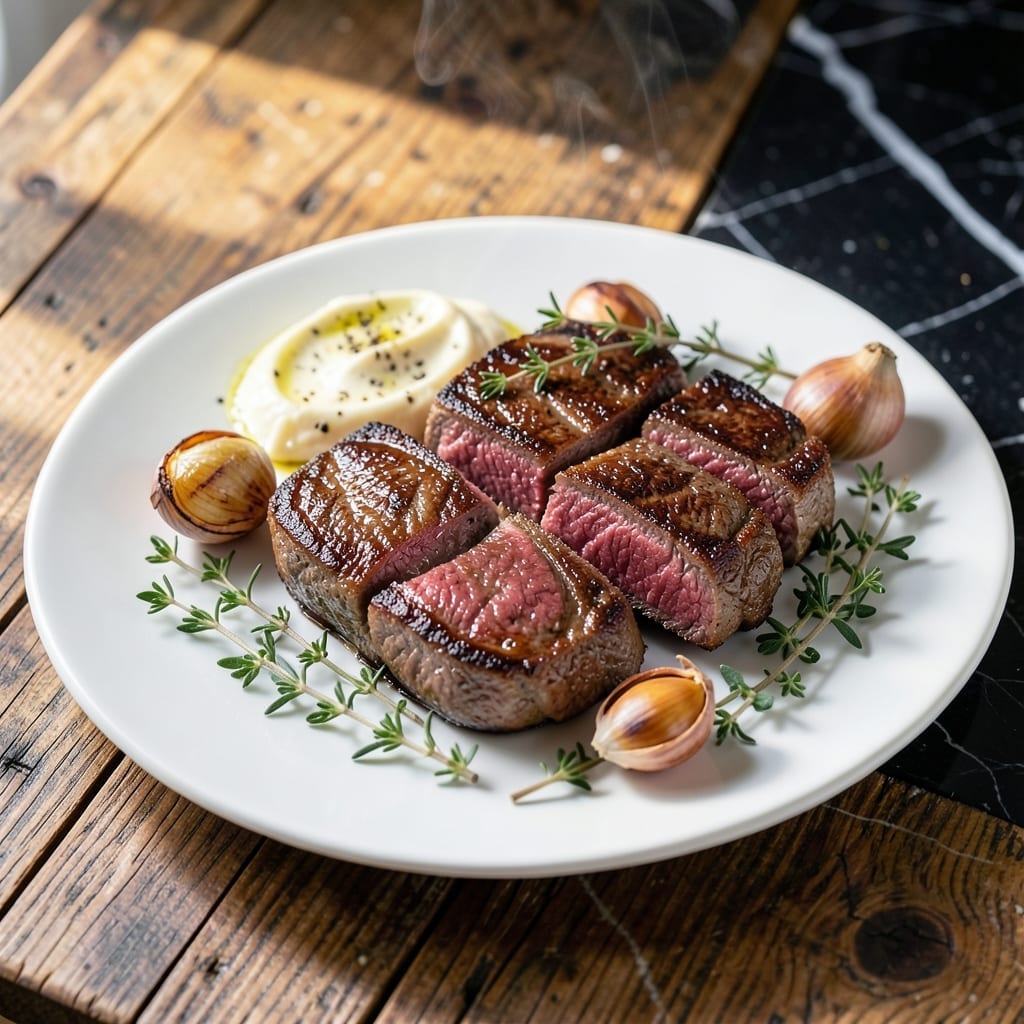
This professional method delivers restaurant-quality filet mignon with a perfect sear and tender center. The technique focuses on precise timing and temperature control to achieve ideal doneness every time.
The red wine reduction adds depth, transforming a simple pan sauce into something extraordinary. Each step builds flavor, from the initial sear to the final resting period that ensures juicy, melt-in-your-mouth results.
You’ll master the balance between crispy exterior and buttery interior, with a velvety sauce that complements the beef beautifully. This is the kind of dish that impresses without overwhelming.
Serve with your favorite sides for a complete, elegant meal. The results speak for themselves.
Ingredients for Gordon Ramsay Filet Mignon
Restaurant-quality beef deserves premium ingredients for that perfect sear and velvety finish.
| Ingredient | Amount | Notes |
|---|---|---|
| Filet Mignon Steaks 🥩 | 4 pieces | 1.5 inches thick, room temperature |
| Kosher Salt 🧂 | 2 tsp | Diamond Crystal preferred |
| Freshly Ground Black Pepper 🌶️ | 1 tsp | Coarse grind for crust |
| Olive Oil 🫒 | 2 tbsp | High smoke point variety |
| Unsalted Butter 🧈 | 4 tbsp | European-style preferred |
| Garlic Cloves 🧄 | 4 cloves | Lightly crushed, peeled |
| Fresh Thyme Sprigs 🌿 | 4 sprigs | Plus extra for garnish |
| Dry Red Wine 🍷 | 1 cup | Bold variety like Cabernet |
| Beef Stock 🥩 | 1 cup | Low-sodium preferred |
| Shallot 🧅 | 1 whole | Finely minced |
| Dijon Mustard 🟡 | 1 tbsp | Whole grain acceptable |
| Fresh Rosemary Sprigs 🌿 | 2 sprigs | Stems removed, chopped |
The beef is non-negotiable here. USDA Prime filet mignon has the marbling you need—Choice works but avoid Select grade. Most butchers will cut to your thickness preference. I source mine from Whole Foods or a trusted local butcher. Room temperature is critical (sit out 30-40 minutes before cooking) for even doneness. The Kosher salt should be Diamond Crystal—it adheres better and seasons more precisely.
No red wine? Beef broth plus a splash of balsamic vinegar mimics the acidity. Out of thyme? Dried thyme at one-third the amount works. Fresh shallots can be swapped for yellow onion in a pinch, but the flavor is more refined with shallots. For the butter, European-style has higher fat content and less water, which prevents splattering. If using salted butter, reduce the added salt by half.
Steaks rest better at room temperature, so prep everything else first. The reduction keeps 3-4 days refrigerated (reheat gently). Leftovers? Slice thin and toss into salads or sandwiches—never microwave the beef or it’ll overcook. Always store sauce separately.
Why You’ll Love This Recipe
- Minimal Effort: I just season, sear, and baste—no complicated steps, and the butter does most of the work.
- Restaurant-Quality Taste: That crust from the salt and pepper with the rich butter finish? It’s why I make this instead of ordering out.
- Date Night Ready: Honestly, it feels fancy enough for a special dinner but simple enough for a quiet night in.
- Leftovers? No Problem: The steak reheats beautifully for sandwiches or salads the next day—if there’s any left.
Step-by-Step Instructions for Pan-Seared Filet Mignon With Red Wine Reduction
Trust this method for restaurant-quality results with a perfect crust and silky sauce.
Step 1: Season and Sear the Filet Mignon
Pat the 4 pieces Filet Mignon Steaks completely dry with paper towels. Season all sides aggressively with the 2 tsp Kosher Salt and 1 tsp Freshly Ground Black Pepper—you want a visible crust of seasoning. Press it in gently so it adheres.
Heat the 2 tbsp Olive Oil in a heavy skillet over medium-high heat until it shimmers but doesn’t smoke. Add the steaks and sear undisturbed for 3-4 minutes per side until a deep, golden brown crust forms. The steaks should release easily from the pan when ready to flip.
For even cooking, sear the edges by holding each steak with tongs for 30 seconds per side. Transfer to a plate and tent loosely with foil to rest while you build the sauce.
Step 2: Build the Aromatic Base for the Sauce
Reduce heat to medium and add the 4 tbsp Unsalted Butter to the same skillet. Once melted, add the 4 cloves Garlic Cloves, 1 whole Shallot, 4 sprigs Fresh Thyme Sprigs, and 2 sprigs Fresh Rosemary Sprigs.
Sauté for 1-2 minutes until the shallot softens and the garlic becomes fragrant but not browned. The herbs should sizzle in the butter, releasing their oils. Watch closely—garlic burns quickly and will turn bitter if it darkens.
Step 3: Deglaze and Reduce the Wine
Pour in the 1 cup Dry Red Wine and scrape up all the browned bits from the bottom of the pan with a wooden spoon. These fond bits are packed with flavor and will dissolve into the sauce as it reduces.
Increase heat to medium-high and simmer for 4-5 minutes until the wine reduces by about half. You’ll notice the liquid transform from a thin, watery consistency to a richer, slightly syrupy texture.
Step 4: Finish the Sauce with Stock and Mustard
Add the 1 cup Beef Stock and 1 tbsp Dijon Mustard, then reduce heat to medium-low. Simmer for another 5-6 minutes until the sauce thickens enough to coat the back of a spoon.
Strain out the solids if you prefer a smooth sauce, or leave them in for rustic texture. Taste and adjust seasoning with a pinch of the Kosher Salt if needed. The sauce should be rich, slightly tangy from the wine, and deeply savory.
Step 5: Rest, Slice, and Serve
Let the steaks rest for 5-10 minutes before slicing—this allows the juices to redistribute for maximum tenderness. Slice against the grain into ½-inch thick pieces.
Spoon the warm red wine reduction over the steaks or serve it on the side. Garnish with extra thyme sprigs for color. The steaks should be medium-rare (warm red center) to medium (warm pink center), with a crust so crisp it crackles when cut.
Pro Tips For Making Gordon Ramsay Filet Mignon
- Dry the Steaks: Pat the filet mignon completely dry with paper towels before seasoning—I learned this the hard way after my first few steaks steamed instead of seared.
- Crust First, Butter Later: Sear the steaks in hot olive oil first to build a deep crust, then add the butter in the last 2 minutes to baste and add flavor.
- Skip the Cold Butter: Take the unsalted butter out of the fridge 10 minutes before cooking so it melts evenly when basting instead of clumping.
- Rest Under Foil: After cooking, tent the steaks with foil and let them rest for 5-10 minutes—this keeps them juicy and lets the temperature even out.
Serving Suggestions for This gordon ramsay filet mignon
Plating Perfection
Arrange 3-4 slices of filet mignon slightly overlapped on a warm plate. Drizzle the red wine reduction in a zigzag pattern across the beef, letting it pool slightly on the plate. This creates visual appeal while ensuring each bite gets sauce. 💫
Garnish Elegantly
Sprinkle with chopped fresh thyme leaves and a pinch of flaky sea salt like Maldon. The contrast of green against the deep brown crust and red center is stunning. I always garnish just before serving to maintain freshness.
Wine Pairing
A bold Cabernet Sauvignon or Malbec stands up to the rich beef and complements the wine reduction beautifully. Serve at 65-68°F for optimal flavor. The tannins in these reds cut through the butter and fat perfectly.
Classic Sides
Creamy mashed potatoes soak up that incredible sauce. Roasted asparagus with a squeeze of lemon balances the richness. I love adding truffle fries for a restaurant-style touch.
Bread Service
Offer warm crusty bread or baguette slices on the side. They’re perfect for mopping up any remaining sauce. Toast briefly with garlic butter for extra flavor.
Final Touch
Add a small pat of herb butter on top of each steak just before serving. It melts into the beef for an extra layer of luxury. This little detail always impresses my guests.
Nutrition Facts
Frequently Asked Questions
What temperature should the steaks be before cooking?
Always start with steaks at room temperature. Let them sit out for 30-40 minutes after removing from the fridge. This ensures even cooking throughout the entire thickness.
Can I use a different type of pan?
A heavy cast iron skillet or stainless steel pan works best for the perfect sear. Avoid nonstick as it won’t develop the same crust. Make sure your pan is oven-safe if finishing in the oven.
How do I know when the steaks are done?
Use an instant-read thermometer for accuracy. For medium-rare, aim for 130-135°F internal temperature. The steak will continue cooking as it rests, so pull it off heat just before reaching your target.
What if my sauce is too thin?
Simmer it longer over medium-low heat until it thickens. If it reduces too much, add a splash of beef stock and reduce again. The sauce should coat the back of a spoon but still be pourable.

- BBQ Sausage Recipe Oven: Smoky Depth Without the Grill - September 28, 2026
- BBQ Chicken Bowl Recipe Rice: Smoky Sweetness Over Fluffy Grains - September 28, 2026
- Beef Cutlet Recipe Ideas: Crispy Breaded Patties With Bold Seasonings - September 28, 2026