
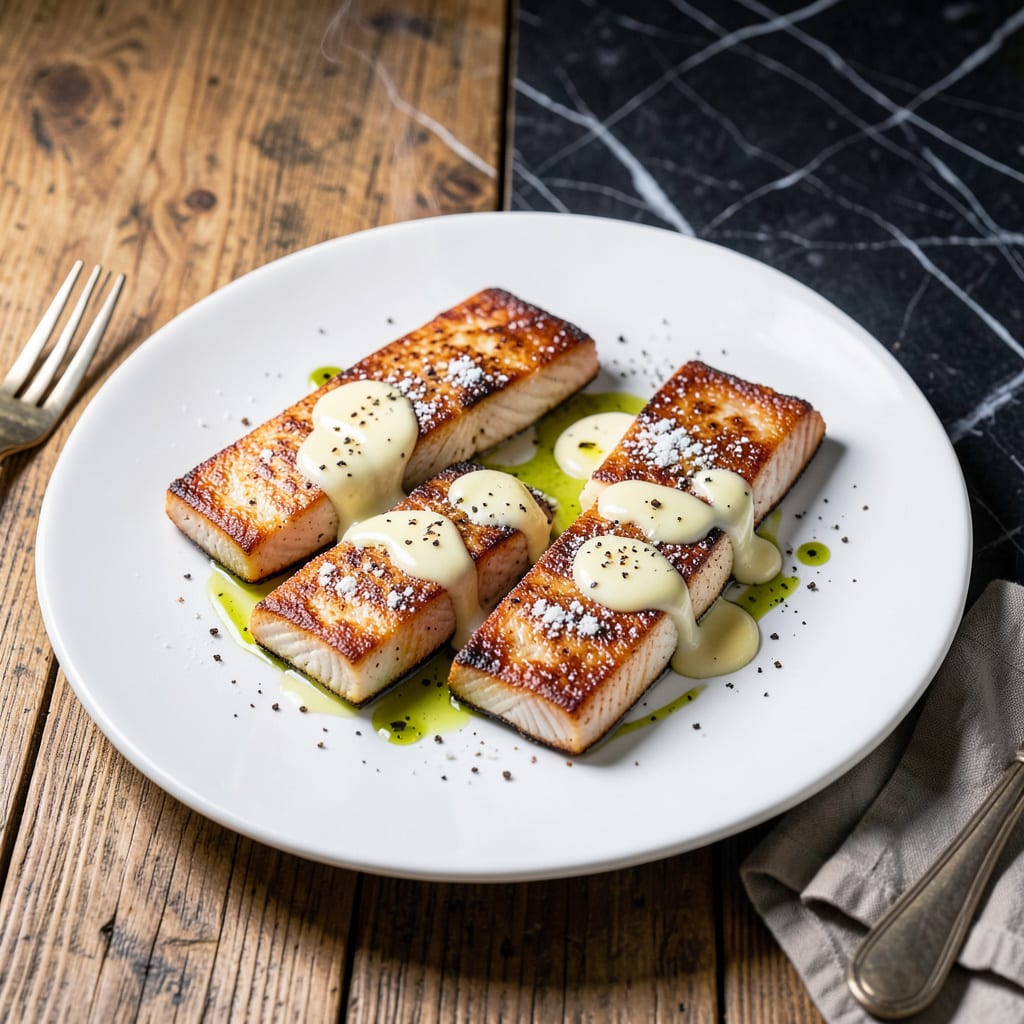
Pan-seared halibut with a silky lemon butter sauce is a dish that showcases the fish’s natural sweetness and delicate texture. This method delivers restaurant-quality results with a crisp golden crust and perfectly cooked interior.
The secret lies in precise timing and temperature control, ensuring the halibut remains moist while developing a beautiful sear. The bright, tangy sauce complements the mild flavor of the fish beautifully.
Ingredients for Gordon Ramsay Halibut
Restaurant-quality ingredients for perfect pan-seared fish with vibrant citrus sauce at home.
| Ingredient | Amount | Notes |
|---|---|---|
| Halibut Fillets 🐟 | 4 pieces | Skin-on, 6-8 oz each, patted dry |
| Unsalted Butter 🧈 | 6 tbsp | Divided for cooking and sauce |
| Extra-Virgin Olive Oil 🫒 | 2 tbsp | High smoke point for searing |
| All-Purpose Flour 🌾 | ¼ cup | For light dusting of fillets |
| Kosher Salt 🧂 | 1 ½ tsp | Diamond Crystal preferred for even seasoning |
| Freshly Ground Black Pepper 🌶️ | 1 tsp | Coarsely ground for texture |
| Garlic Cloves 🧄 | 3 cloves | Minced for sauce infusion |
| Fresh Lemon Juice 🍋 | ¼ cup | About 2-3 lemons, freshly squeezed |
| Lemon Zest 🍋 | 1 tbsp | Finely grated from organic lemons |
| Fresh Parsley 🌿 | ¼ cup | Finely chopped for garnish |
| Shallot 🧅 | 1 whole | Finely minced for sauce base |
| Dry White Wine 🍷 | ¼ cup | Sauvignon Blanc or Pinot Grigio |
| Heavy Cream 🥛 | ¼ cup | Optional for richer sauce texture |
| Capers 🌿 | 1 tbsp | Rinsed and drained for briny contrast |
[recipeingredientscaler]
The halibut is everything here. Wild-caught from Alaska or Pacific Northwest delivers superior texture and flavor—avoid farmed varieties. Whole Foods or local fishmongers are ideal for sourcing; ask for skin-on fillets about 1-1.5 inches thick. The butter must be high-fat European style (Plugrá or Kerigold) for the sauce’s silky emulsion. Fresh lemons with thick skins yield more zest—look for organic when possible.
No white wine? Substitute chicken stock with a splash of apple cider vinegar for acidity. Shallots can be replaced with sweet onion at half the quantity. For a lighter sauce, skip the cream entirely—the butter and lemon create enough richness. Fresh dill or chives work as parsley alternatives. The flour dredge is optional, but it creates that signature golden crust (don’t skip this part).
Halibut is best cooked immediately after purchase—store in the coldest part of your fridge for no more than 24 hours. The sauce can be made ahead and gently reheated. Leftovers? Rare with this dish, but they keep 2 days refrigerated (the fish texture changes slightly).
Why You’ll Love This Recipe
- I’ll be real: there are never leftovers. But if by some miracle there are, they reheat beautifully for lunch the next day.
- One Pan Magic: I love that I only need a skillet, a few ingredients, and 15 minutes to get this on the table. No fancy equipment, just simple searing with butter and oil.
- Buttery Perfection: The crispy flour-dusted exterior gives way to flaky halibut, and that browned butter sauce? Ridiculously good.
- Date Night Ready: This feels fancy enough for company but honestly, I make it for myself on a random Tuesday. It’s that versatile.
Step-by-Step Instructions for Pan-Seared Halibut With Lemon Butter Sauce
Master these professional techniques for restaurant-quality halibut with a silky, citrus-infused sauce.
Step 1: Prepare and Season the Halibut Fillets
Begin by patting the 4 pieces Halibut Fillets completely dry with paper towels. Any residual moisture prevents proper searing. Lightly dust each fillet with the 0.25 cup All-Purpose Flour, shaking off excess—this creates a delicate crust that locks in juices.
Season both sides evenly with 1.5 tsp Kosher Salt and 1 tsp Freshly Ground Black Pepper. The coarse grind of the pepper adds subtle texture. Let the fillets rest at room temperature for 10 minutes while you prepare the sauce base—this ensures even cooking.
Step 2: Sear the Halibut to Golden Perfection
Heat 2 tbsp Extra-Virgin Olive Oil in a large skillet over medium-high heat until it shimmers. Add the fillets skin-side down first, pressing gently with a spatula for the first 30 seconds to prevent curling and ensure full contact with the pan.
Sear undisturbed for 4-5 minutes until the edges appear opaque and the skin is golden brown and crisp. Flip carefully and cook for another 3-4 minutes until the fish flakes easily with a fork. Transfer the fillets to a warm plate and tent loosely with foil.
Step 3: Build the Aromatic Sauce Foundation
In the same skillet, reduce heat to medium and add 2 tbsp Unsalted Butter. Once melted, add the 1 whole Shallot (finely minced) and sauté for 2 minutes until translucent. Add the 3 cloves Garlic Cloves (minced) and cook for 30 seconds until fragrant—don’t let it brown.
Deglaze the pan with 0.25 cup Dry White Wine, scraping up all browned bits from the halibut. Simmer for 2-3 minutes until the liquid reduces by half. This step extracts maximum flavor from the fond.
Step 4: Finish with Creamy Lemon Butter Sauce
Reduce heat to low and stir in the remaining 4 tbsp Unsalted Butter, 0.25 cup Fresh Lemon Juice, 1 tbsp Lemon Zest, and 0.25 cup Heavy Cream. Whisk constantly for 2-3 minutes until the sauce emulsifies into a smooth, velvety consistency.
Fold in the 1 tbsp Capers and taste for seasoning. The sauce should balance bright acidity with rich creaminess. If it thickens too much, add a splash of warm water to reach your desired texture.
Step 5: Plate and Garnish Professionally
Spoon the warm sauce over the halibut fillets, ensuring each portion is generously coated. Garnish with the 0.25 cup Fresh Parsley (finely chopped) for a pop of color and freshness. The parsley adds a clean finish that complements the rich sauce.
Serve immediately while the sauce is still warm and silky. The halibut should be opaque throughout with a moist, flaky texture, and the sauce should pool slightly around the base of each fillet. Pair with steamed asparagus or a light arugula salad.
Pro Tips For Making Gordon Ramsay Halibut
- Dry the Fillets: Pat the halibut dry with paper towels before dusting with flour—I learned this the hard way after my first batch steamed instead of seared in the pan.
- Hot Pan, Cold Butter: Get your pan screaming hot with olive oil first, then add cold butter right before the fish to prevent burning while still getting that rich, nutty flavor.
- Skip the Overcrowding: Cook no more than two fillets at a time in a 12-inch pan, or they’ll release too much moisture and turn soggy instead of crisp.
- Use Clarified Butter: If you’re nervous about burning the butter, clarify it first by melting and skimming off the milk solids—it’s an extra step, but it handles high heat like a dream.
Troubleshooting gordon ramsay halibut
Sticking Fish
If the halibut sticks when you try to flip it, the pan likely wasn’t hot enough or the fish wasn’t dry. Pat the fillets thoroughly with paper towels and ensure your olive oil is shimmering before adding the fish. I use a cast iron skillet for its superior heat retention. 💡
Sauce Breaking
If your lemon butter sauce separates, don’t panic. Remove the pan from heat and whisk vigorously for 30 seconds—the emulsion will come back together. If needed, add 1 tsp cold water and whisk again. The key is maintaining low heat during the final sauce stage.
Dry Halibut
Halibut dries out quickly when overcooked. Use a meat thermometer to pull it at 130-135°F internal temperature. The fish will continue cooking to 145°F while resting. Thicker fillets may need an extra 1-2 minutes per side.
Bitter Sauce
If your sauce tastes overly bitter, the shallots or garlic may have browned. Cook them on medium-low heat and pull them off as soon as they turn translucent. A pinch of sugar can balance bitterness if needed, but prevention is better.
Thin Sauce
For a thicker consistency, increase reduction time by 1-2 minutes before adding the butter. Alternatively, mix ½ tsp cornstarch with cold water and whisk into the sauce. Simmer for 1 minute until thickened. 🔥
Underseasoned Fish
Halibut needs generous seasoning to bring out its natural sweetness. Don’t be shy with the kosher salt—I season both sides heavily. The flour dredge helps the seasoning adhere better to the fillets.
Nutrition Facts
Frequently Asked Questions
What’s the best pan for searing halibut?
A heavy cast iron skillet works best for even heat distribution. Avoid nonstick pans—they don’t get hot enough for a good sear.
Can I use a different fish instead?
Yes! Cod or mahi-mahi work well with similar cooking times. Adjust thickness if using thinner fillets to avoid overcooking.
How do I keep the sauce from separating?
Keep heat low when adding butter and whisk constantly. If it breaks, remove from heat and whisk in 1 tsp cold water.
Should I remove the skin before cooking?
No—skin-on fillets hold together better and develop a crisp texture. Just pat them very dry first for the best sear.

- BBQ Sausage Recipe Oven: Smoky Depth Without the Grill - September 28, 2026
- BBQ Chicken Bowl Recipe Rice: Smoky Sweetness Over Fluffy Grains - September 28, 2026
- Beef Cutlet Recipe Ideas: Crispy Breaded Patties With Bold Seasonings - September 28, 2026