
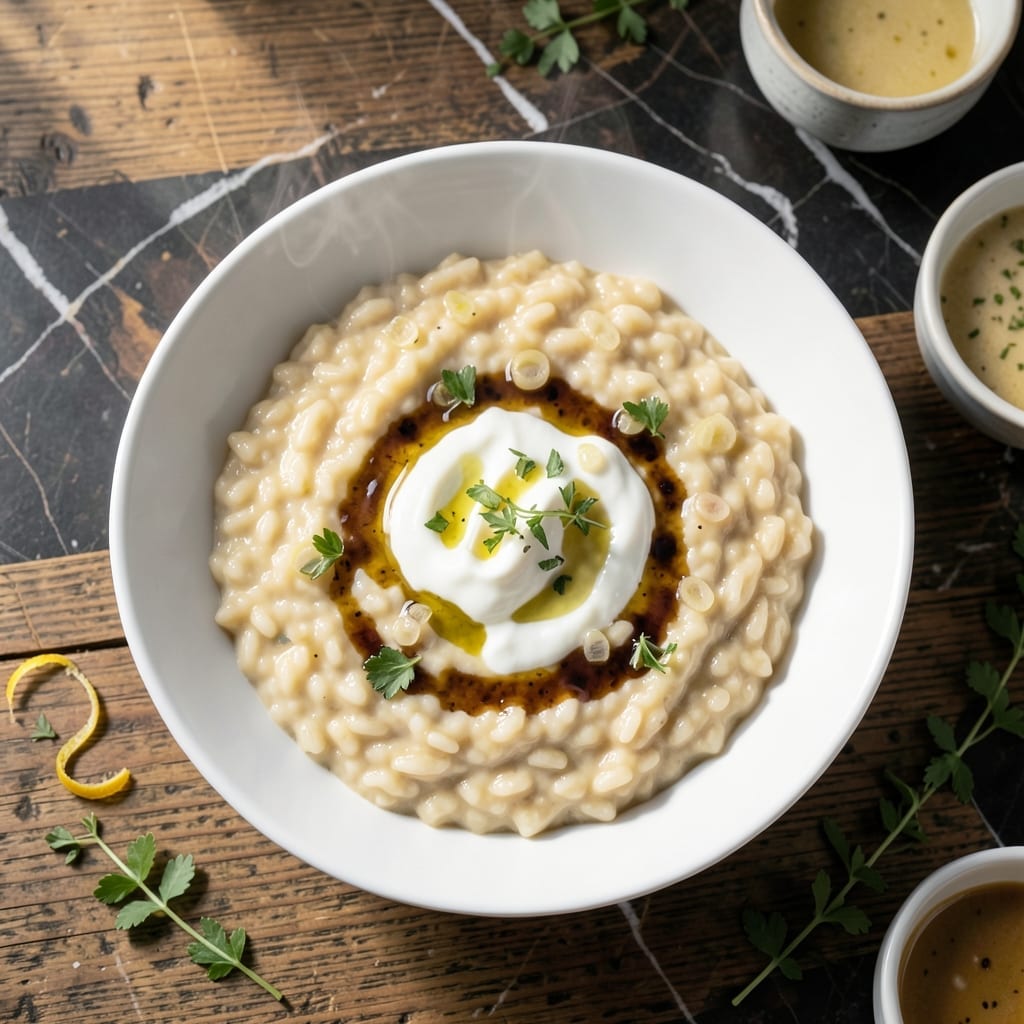
Mastering a creamy risotto at home is simpler than you think with this proven method.
I’ve refined this technique to achieve that signature velvety texture without constant stirring. The key is in the gradual addition of warm stock and proper heat control. This approach delivers consistent results every time.
What you’ll get is a dish with perfectly al dente rice suspended in a rich, creamy sauce. The finish is luxurious, with each grain of rice coated in that signature silky consistency.
Ready to elevate your home cooking with professional results?
Ingredients for Gordon Ramsay Risotto
Quality ingredients create that luxurious, velvety finish you expect from a chef-level dish.
| Ingredient | Amount | Notes |
|---|---|---|
| Arborio Rice 🍚 | 1 ½ cups | Short-grain for creamy texture |
| Vegetable Stock 🥣 | 6 cups | Warm, low-sodium preferred |
| Dry White Wine 🍷 | ½ cup | Crisp variety like Pinot Grigio |
| Shallot 🧅 | 1 whole | Finely minced for sweetness |
| Garlic Cloves 🧄 | 3 cloves | Minced for aromatic base |
| Unsalted Butter 🧈 | 4 tbsp | Divided for cooking and finishing |
| Parmesan Cheese 🧀 | 1 cup | Freshly grated, high-quality |
| Extra-Virgin Olive Oil 🫒 | 2 tbsp | For sautéing aromatics |
| Fresh Thyme Leaves 🌿 | 1 tbsp | Stripped from stems |
| Salt 🧂 | 1 tsp | Adjust to taste gradually |
| Freshly Ground Black Pepper 🌶️ | ½ tsp | For finishing the dish |
| Lemon Juice 🍋 | 1 tbsp | Freshly squeezed for brightness |
The Arborio rice is non-negotiable—its high starch content is what delivers that signature creamy texture. Look for Italian brands like Acquerello or Carnaroli at Whole Foods or specialty stores (the good stuff, not the cheap pre-boxed kind). Stock should be warm when added—cold stock shocks the rice. I always keep a carton of Imagine Foods vegetable broth on hand for this exact purpose.
No white wine? Substitute with additional warm stock plus a splash of lemon juice for acidity. Shallots can be swapped for yellow onion at a 1:1 ratio, though the flavor will be slightly more pungent. Parmesan is traditional, but Pecorino Romano adds a sharper bite (use two-thirds the amount). Fresh herbs are ideal, but dried thyme at one-third the quantity works in a pinch.
Risotto is best served immediately, but leftovers keep 2-3 days in the fridge. Reheat gently with a splash of stock to restore creaminess. Never freeze risotto—the texture suffers. Freshly grated Parmesan keeps 1 month in the fridge if wrapped tightly.
Why You’ll Love This Recipe
- One Pot Wonder: I love that this comes together in a single pan—just stir, sip the wine you’re cooking with, and let the Arborio soak up all that flavor.
- Rich and Silky: The shallots and garlic melt into the rice, and that splash of dry white wine gives it a brightness that’s honestly addictive.
- Date Night Ready: It feels fancy enough for company but I’ve made it on a random Tuesday just because. Yes, even in sweatpants.
- Budget Stretcher: A small bag of Arborio and a box of stock feed four of us with leftovers. I’ll be real: that’s my kind of math.
Step-by-Step Instructions for Creamy Risotto
Master this technique and you’ll achieve that signature velvety texture every time.
Step 1: Sauté the Aromatics to Build Flavor
Heat the 2 tbsp Extra-Virgin Olive Oil and 2 tbsp Unsalted Butter in a large, heavy-bottomed pan over medium heat. Add the finely minced Shallot and cook for 3-4 minutes until translucent and fragrant.
Add the 3 cloves minced Garlic Cloves and 1 tbsp Fresh Thyme Leaves, stirring constantly for 30 seconds—just long enough to release their aroma without browning. This aromatic base is crucial for the depth of flavor in your creation.
Season with 1 tsp Salt to enhance the natural sweetness of the shallots. The mixture should sizzle gently but never smoke.
Step 2: Toast the Rice and Deglaze
Stir in all 1.5 cups Arborio Rice, coating each grain thoroughly in the fat. Toast for 2 minutes until the edges become slightly translucent—this step creates a nutty depth and helps the rice absorb liquid evenly.
Pour in the 0.5 cup Dry White Wine and stir constantly until fully absorbed. The alcohol will cook off, leaving behind a bright acidity that balances the richness. You’ll notice the rice plump slightly as it soaks up the wine.
This deglazing step lifts all those flavorful browned bits from the bottom of the pan, infusing the dish with complex taste.
Step 3: Gradually Add Warm Stock
Begin adding the 6 cups Vegetable Stock, 1 cup at a time, stirring constantly. Wait until each addition is nearly fully absorbed before adding the next. This gradual process is what releases the starches to create that signature creamy texture.
Maintain a gentle simmer—the mixture should bubble lazily, not vigorously. After about 18-20 minutes, the rice should be al dente: tender with a slight bite in the center. Taste frequently to monitor progress.
I keep the stock warm in a nearby pot. Cold stock will shock the pan and interrupt the cooking process, leading to uneven texture.
Step 4: Finish with Butter and Cheese
Remove the pan from heat. Stir in the remaining 2 tbsp Unsalted Butter and 1 cup Parmesan Cheese. The residual heat will melt the butter and create a glossy, rich sauce that coats the rice perfectly.
Add the 1 tbsp Lemon Juice and 0.5 tsp Freshly Ground Black Pepper. The lemon brightens the dish, cutting through the richness, while the pepper adds a subtle warmth. Stir vigorously for 1 minute to achieve that characteristic creamy consistency.
The final texture should be thick but still flow slightly when stirred. If it’s too thick, stir in a splash of warm stock to loosen it to your preference.
Step 5: Rest and Serve Immediately
Let the risotto rest for 2 minutes off the heat. This brief pause allows the flavors to meld and the texture to set slightly. The grains should be suspended in a creamy sauce, not swimming in liquid.
Serve immediately in shallow bowls while still warm. The risotto will continue to thicken as it cools, so timing is everything. Each serving should have a glossy sheen and maintain its shape briefly before spreading slightly on the plate.
Real talk: This dish doesn’t wait. Gather your diners before you start the final step—it’s at its peak the moment it comes off the heat.
Pro Tips For Making Gordon Ramsay Risotto
- Toast the Rice: Cook the Arborio in the pan for 1-2 minutes until translucent at the edges—this builds a nutty base flavor that carries through the whole dish.
- Heat the Stock: Keep your vegetable stock simmering in a pot next to the risotto; adding cold stock slows cooking and makes the rice gluey.
- Skip the Rinse: Resist the urge to rinse the Arborio—its natural starch is what gives risotto that creamy texture.
- Wine First: Let the dry white wine reduce completely before adding stock, or you’ll be left with a raw alcohol taste in the final dish.
Storing and Reheating This Dish
Refrigerator Storage
Let risotto cool for no more than 2 hours before transferring to airtight containers. Store at 40°F or below for up to 2-3 days. The flavors actually improve overnight as they meld together. ❄️
Freezing Advice
Honestly, I don’t recommend freezing risotto. The texture suffers significantly upon thawing—the creaminess just doesn’t survive. If you must, use flat freezer bags with all air removed and freeze for no more than 1 month.
Stovetop Reheating
This is my preferred method. Heat in a heavy-bottomed pan over medium-low heat with a splash of warm vegetable stock or water. Stir constantly for 5-7 minutes until reaching 165°F. The added liquid restores creaminess. 🔥
Microwave Method
For quick lunches, microwave individual portions covered with a damp paper towel. Heat on 50% power for 1-2 minutes, stir, then continue in 30-second intervals. Add a splash of stock if it looks dry.
Reviving Leftovers
If your risotto seems too thick after storage, stir in ¼ cup warm stock at a time until it reaches the desired consistency. The key is gentle heat and constant stirring to prevent the rice from turning mushy.
Nutrition Facts
Frequently Asked Questions
What kind of rice must I use for authentic results?
Stick with Arborio for its high starch content. Italian varieties like Carnaroli also work beautifully, as their plump grains release creaminess perfectly during cooking.
Can I make this without wine?
Yes! Substitute with additional warm stock plus a splash of lemon juice. The acidity mimics wine’s role in balancing the richness of the dish.
Why does my risotto turn out mushy?
Over-stirring or using too much stock too quickly breaks the rice grains. Maintain a gentle simmer and add stock 1 cup at a time, waiting until it’s nearly absorbed.
Is constant stirring really necessary?
No, but stir frequently to prevent sticking. The key is keeping the rice moving enough to release starches while allowing it to absorb liquid properly.

- BBQ Sausage Recipe Oven: Smoky Depth Without the Grill - September 28, 2026
- BBQ Chicken Bowl Recipe Rice: Smoky Sweetness Over Fluffy Grains - September 28, 2026
- Beef Cutlet Recipe Ideas: Crispy Breaded Patties With Bold Seasonings - September 28, 2026