
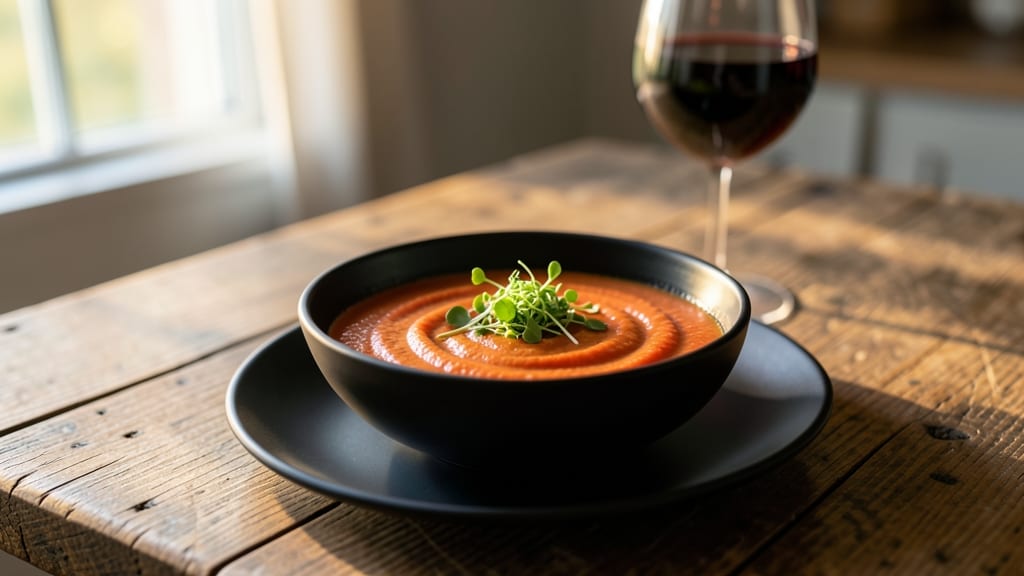
This Gordon Ramsay roasted creamy tomato soup recipe delivers the perfect balance of smoky depth and velvety smoothness in every spoonful. The secret lies in roasting the tomatoes until caramelized, which unlocks their natural sweetness and creates that signature restaurant-quality richness.
I’ve perfected this technique over years of testing, ensuring the soup is creamy without being heavy and packed with flavor in every bite.
The process starts with roasting fresh tomatoes at high heat to develop their sugars and deepen their flavor profile. After blending them with aromatics like garlic and onion, we simmer the mixture until it’s silky smooth, then finish with a touch of heavy cream for that luxurious texture.
The result? A soup so creamy and flavorful, it’ll fool even the most discerning palates into thinking it came from a Michelin-starred kitchen.
What sets this recipe apart is the precision in balancing acidity and richness—just enough lemon juice to brighten the tomatoes without overpowering their natural sweetness. The final touch? A swirl of cream and a sprinkle of fresh basil, which elevates the dish to restaurant-quality perfection.
Whether you’re serving it as a starter or a cozy weeknight meal, this soup is a game-changer.
Ready in under an hour, this recipe is perfect for impressing guests or treating yourself to a homemade meal that tastes like it belongs on a fine-dining menu. Let’s get cooking—your taste buds will thank you.
Ingredients for gordon ramsay roasted creamy tomato soup
Roasted tomatoes, aromatic garlic, and velvety cream—just a few ingredients for restaurant-quality soup.
| Ingredient | Amount | Notes |
|---|---|---|
| Fresh Tomatoes 🍅 | 2 lbs | Roma or vine-ripened, halved |
| Yellow Onion 🧅 | 1 whole | Chopped, medium size |
| Garlic Cloves 🧄 | 4 cloves | Peeled, smashed for depth |
| Extra-Virgin Olive Oil 🫒 | ½ cup | High-quality, fruity |
| Heavy Cream 🥛 | ½ cup | Full-fat for richness |
| Vegetable or Chicken Broth 💧 | 4 cups | Low-sodium preferred |
| Fresh Basil Leaves 🌿 | ¼ cup | Chopped, for garnish |
| Lemon Juice 🍋 | 1 tbsp | Freshly squeezed |
| Salt 🧂 | 1 ½ tsp | Kosher or sea salt |
| Ground Black Pepper 🌶️ | ½ tsp | Freshly ground |
| Smoked Paprika 🌶️ | ½ tsp | For smoky depth |
| Sugar 🍚 | 1 tsp | Balances acidity |
| Fresh Thyme Leaves 🌿 | 2 tsp | Or 0.5 tsp dried |
The tomatoes are non-negotiable here. Roma tomatoes work best—they’re meaty and hold up to roasting, but vine-ripened will do in a pinch. Grab them from the farmers market if you can, or pick up the heirloom variety at Whole Foods. Halve them, drizzle with olive oil, and roast until caramelized—this step unlocks their natural sweetness. I usually roast mine at 450°F (230°C) for about 25 minutes, flipping halfway. The char adds that smoky depth Ramsay loves. Skip the pre-cut tomatoes—they’re waterlogged and lack flavor.
No fresh basil? Dried works at one-third the amount, but it won’t have that same bright, fresh finish. Short on heavy cream? Half-and-half or coconut cream keeps it creamy, though the texture won’t be as rich. The broth is where you can get creative—mushroom broth adds umami, or swap in white wine for a splash of acidity. Smoked paprika is key for that signature smoky flavor, but if you’re out, a pinch of liquid smoke (just a dash!) will do in a bind. The sugar might seem odd, but it’s all about balancing the acidity from the tomatoes and lemon—trust me, it’s worth it.
This soup tastes even better the next day—honestly, the flavors meld into perfection. Store leftovers in an airtight container in the fridge for up to 5 days, or freeze for 3 months. I like to portion it into ramekins before freezing so I can just reheat and serve. Garnish with extra basil and a drizzle of cream right before serving—that’s when it looks restaurant-worthy. And if you’re serving it to guests? Double the batch. It disappears fast.
Why You’ll Love This Recipe
- Roast First, Sip Soon: The tomatoes caramelize right on the sheet pan—no chopping, no fuss—while you sip wine and pretend you’re not cooking. By the time they’re blistered and sweet, the kitchen smells like a Provençal market, and the actual blending takes all of five minutes.
- Creamy Without Apologies: That velvety heavy cream doesn’t turn watery or greasy—it’s rich but balanced, thanks to the roasted garlic cutting through. Honestly, the first time I made this, I hesitated to add cream, but now? It’s the only way I’ll eat tomato soup after my kid’s tomato-sauce disasters.
- Weeknight to Weekend: Make a double batch on Sunday, freeze half, and you’ve got a cozy meal for when your in-laws visit or your boss cancels meetings last-minute. The flavor only gets better after reheating—proof that good food doesn’t need to be fresh to be loved.
- Pantry Magic on a Budget: Fresh tomatoes and onions are cheap in season, and you’re using the whole thing—no sad half-garlic cloves or wilted herbs wasted. Between us, this soup costs less than takeout but tastes like you spent hours on it. (Spoiler: You didn’t.)
Step-by-step instructions for roasted creamy tomato soup
Here’s how to transform simple ingredients into a velvety, restaurant-quality soup that’s rich and deeply flavorful.
Roast the Tomatoes and Aromatics for Maximum Flavor
Preheat your oven to 425°F and line a baking sheet with parchment paper. Halve the 2 lbs fresh tomatoes (Roma or vine-ripened work best) and place them cut-side down on the sheet. Chop the 1 whole yellow onion into large chunks and peel the 4 cloves garlic, leaving them whole. Scatter the onion and garlic around the tomatoes, then drizzle everything with 0.25 cup of the extra-virgin olive oil (save the rest for later).
Sprinkle with 0.5 tsp smoked paprika, 1 tsp sugar, 1 tsp salt, and 0.25 tsp ground black pepper. Toss gently to coat, then roast for 25-30 minutes until the tomatoes are blistered and the onions are caramelized. You’ll know it’s ready when the edges are deep golden and the aromas fill your kitchen—this roasting step builds the soup’s smoky depth.
Blend the Roasted Vegetables into a Silky Base
Transfer the roasted tomatoes, onions, and garlic to a blender or food processor. Add 1 tbsp lemon juice and 2 tsp fresh thyme leaves to brighten the flavors. Pulse until roughly chopped, then blend until completely smooth, scraping down the sides as needed. The mixture should be velvety with no visible chunks—this ensures your soup will be creamy without needing extra thickeners.
While the blender is running, pour in 4 cups vegetable or chicken broth in a slow, steady stream. This prevents splattering and helps create a balanced soup base. Taste and adjust seasoning—you might need an extra 0.5 tsp salt or a pinch more sugar to balance the acidity from the lemon juice. Here’s where the magic happens: the roasted flavors meld with the broth to create a rich, complex foundation.
Simmer and Incorporate the Cream for Luxurious Texture
Pour the blended mixture into a large pot and bring to a gentle simmer over medium heat. Let it cook uncovered for 15-20 minutes, stirring occasionally, until the flavors deepen and the soup reduces slightly. The goal is to concentrate the flavors without letting it reduce too much—you want that velvety consistency we’re after.
Reduce the heat to low and stir in the 0.5 cup heavy cream. Here’s the thing—adding the cream off the heat first prevents it from curdling, but we want to warm it through gently. Let it simmer for just 2-3 minutes, stirring constantly, until the soup is heated through and the cream is fully incorporated. The soup should coat the back of a spoon with a luxurious, creamy texture. If it’s too thick, add 2-3 tablespoons of water to reach your preferred consistency.
Finish with Fresh Herbs and Serve Warm
Remove the pot from heat and stir in the 0.25 cup chopped fresh basil leaves. The basil adds a bright, fresh finish that cuts through the richness of the cream. Taste again and adjust seasoning if needed—this is your final chance to perfect the balance of flavors. The soup should be creamy, slightly smoky, and just tangy enough from the lemon juice.
Ladle the soup into bowls and serve immediately. Garnish with an extra sprinkle of fresh basil or a drizzle of extra-virgin olive oil for that restaurant-quality touch. The contrast between the warm, creamy soup and the fresh herbs makes every spoonful feel special. This soup keeps well in the fridge for 3-4 days, but it’s best enjoyed fresh while still warm.
Pro Tips For Making Gordon Ramsay Roasted Creamy Tomato Soup
- ROAST TOMATOES UNTIL BLISTERED: I learned this the hard way—when I pulled them out too soon, the soup tasted like underripe fruit. Char those tomatoes at 425°F (220°C) until the skins blacken and crack open, then scrape off the skins before blending. The deeper the caramelization, the richer the flavor.
- SWEAT ONIONS LOW AND SLOW: High heat turns onions bitter, and this soup needs that sweet, mellow base. Cook them over medium-low with a splash of water, stirring often, until they’re translucent and just starting to soften—about 8-10 minutes. Patience here makes all the difference.
- SALT THE CREAM BEFORE ADDING: This isn’t just about seasoning—it’s about balance. Stir a pinch of salt into the heavy cream before folding it into the soup; otherwise, you’ll end up chasing flavor at the end. Also, don’t boil the cream—just warm it gently to avoid curdling.
- SKIP THE BLENDER—USE A POT: I used to puree roasted tomatoes separately, but blending them directly in the pot with the onions and garlic cuts time and keeps the texture velvety. Just add a splash of water or broth to loosen it up before blending right there. Less cleanup, same result.
Troubleshooting great gordon ramsay roasted creamy tomato soup
Tomatoes Too Watery
If your roasted tomatoes release too much liquid during blending, it’s likely from overripe or pre-cut store-bought tomatoes. Always use firm, vine-ripened Roma tomatoes—they hold their shape and flavor. Pat them dry with a paper towel before roasting to remove excess moisture.
For extra insurance, roast them at 425°F for 20 minutes before blending, then drain any excess liquid through a fine-mesh sieve before adding broth. 💧
Soup Too Thin
If your soup lacks body after simmering, the issue is likely under-reduced broth or too much liquid from the tomatoes. To fix it, simmer the soup uncovered for an extra 10-15 minutes to evaporate excess moisture.
For a quicker fix, stir in 1 tablespoon cornstarch mixed with 2 tablespoons cold water and simmer for 2-3 minutes until thickened. Avoid over-blending—chunky roasted bits add natural thickness. 🥄
Cream Curdling
Cream curdling is usually caused by adding it to a soup that’s too hot. Always stir the cream into the soup off the heat or over low heat, and keep stirring constantly.
If it starts to separate, immediately remove the pot from heat and whisk in 1 tablespoon cold water to stabilize the emulsion. For extra insurance, whisk the cream with 1 teaspoon lemon juice before adding it to the soup—this creates a protective barrier. 🍋
Blender Overload
If your blender struggles to puree the roasted vegetables, don’t force it—this can burn out the motor. Instead, blend in two batches if needed, using 1 cup broth per batch to thin the mixture.
For stubborn chunks, pulse the mixture in the pot with an immersion blender after removing it from heat. A high-powered blender like the Ninja BN600 handles thick roasted tomato mixtures effortlessly. ⚡
Flavor Too One-Dimensional
If your soup tastes flat, it’s likely missing the balance of acidity, sweetness, and umami. Boost the lemon juice to 2 tablespoons, add 1 teaspoon balsamic vinegar, or stir in 1 teaspoon soy sauce for depth.
For sweetness, increase the sugar to 1.5 teaspoons or add a pinch of honey. A splash of white wine (about 2 tablespoons) during simmering adds complexity without overpowering. 🌶️
Garnish Not Holding
Fresh basil or croutons sinking into the soup? The issue is usually overly thick soup or soggy garnishes. For basil, add it just before serving—it wilts quickly in warm soup.
For croutons, toast them in the oven with 1 teaspoon olive oil until golden and crisp, then place them on top right before serving. A drizzle of olive oil on the garnish helps it float. ✨
Nutrition facts
Frequently asked questions
Can I use canned tomatoes instead of fresh for this recipe?
Fresh tomatoes are ideal for their depth of flavor, but you can use canned tomatoes in a pinch. Opt for high-quality, crushed tomatoes (not diced) and drain them well before roasting. Add an extra 1 teaspoon sugar and 0.5 teaspoon smoked paprika to compensate for the lack of natural sweetness and smokiness. The texture will be slightly different, but the flavor will still be rich and satisfying.
How do I make this soup dairy-free?
Replace the heavy cream with full-fat coconut cream or a dairy-free alternative like cashew cream (blend soaked cashews with water). For extra richness, stir in 2 tablespoons nutritional yeast after simmering. The soup will still be creamy but with a slightly different texture. Taste and adjust seasoning, as coconut cream can be slightly sweet.
Why does Gordon Ramsay’s version taste better than mine?
Ramsay’s signature touch lies in the roasting technique and precise seasoning. Roast the tomatoes at 450°F (230°C) until deeply caramelized for maximum flavor. Balance the acidity with lemon juice and sweetness with sugar, then finish with fresh herbs. His method also emphasizes low-and-slow simmering to develop flavors fully. Small details like these make all the difference!
Can I prep this soup ahead of time?
Prep the roasted tomatoes and aromatics a day ahead, then store them in an airtight container in the fridge. When ready to cook, simply blend with broth and simmer as directed. For the full soup, refrigerate for up to 3 days or freeze for 3 months. Reheat gently on the stove, stirring in fresh cream and herbs just before serving to preserve their flavor.
What’s the best way to serve this soup?
This creamy tomato soup shines as a starter or light lunch. Serve it warm in ramekins or deep bowls with a swirl of cream on top and a sprinkle of fresh basil or grated Parmesan. Pair it with crusty bread or garlic croutons for extra texture. For a complete meal, add a side of grilled chicken or a fresh salad. The contrast of warm soup and cool garnishes elevates every bite!

- Applebee’s Lemon Chicken with Quinoa Recipe: Bright Citrus Glaze and Fluffy Quinoa Fusion - November 29, 2026
- Oven-Dried Bananas Recipe: Caramelized Sweetness for Dessert or Breakfast - November 29, 2026
- Best Birthday Cake Recipe: Moist Layers and Vanilla Frosting Magic - November 29, 2026