
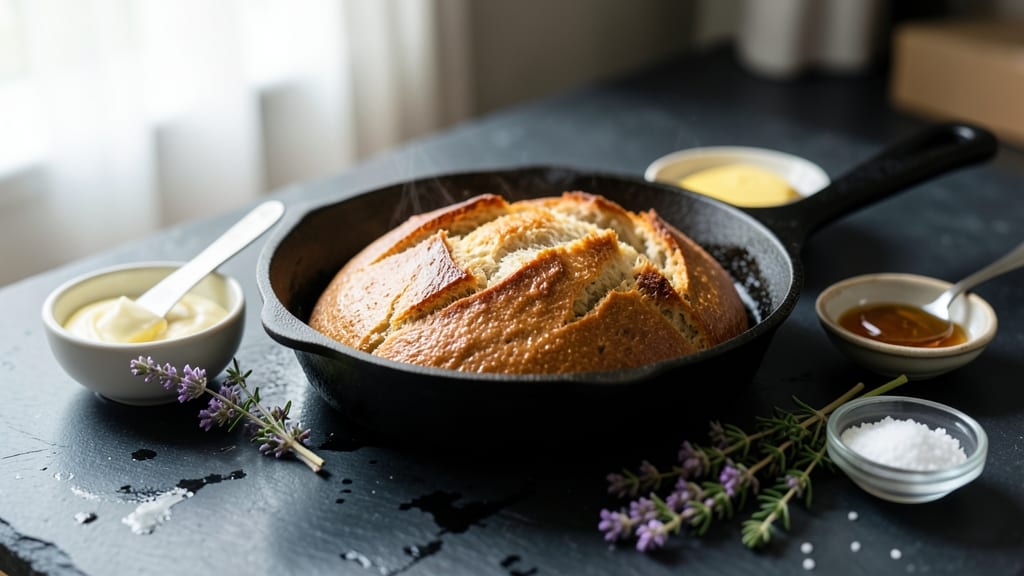
Grandma’s soda bread recipe brings the comforting aroma of an Irish countryside kitchen to your table with its signature crispy celery top and tender crumb.
This traditional quick bread requires no yeast, no kneading, and just a handful of simple ingredients—flour, buttermilk, baking soda, and salt—to create a loaf that’s as nostalgic as it is delicious.
I’ve baked this recipe countless times, perfecting the technique for that ideal balance between a crisp exterior and soft, pillowy interior.
The magic happens in the buttermilk rise, which activates the baking soda for a light, airy texture without the wait of yeast. The celery topping isn’t just decorative—it creates that signature crispy crust that crackles with every bite.
What makes this recipe truly special is its versatility: it works as a side for soups, a base for sandwiches, or even a hearty snack on its own.
By the time you pull it from the oven, you’ll have a loaf with a golden, crispy top that contrasts beautifully with the soft, slightly dense crumb inside. The aroma alone will transport you to a cozy kitchen, where the simplicity of the ingredients belies the depth of flavor.
This is comfort food at its finest—warm, inviting, and full of tradition.
Whether you’re serving it with butter and jam or using it as a base for open-faced sandwiches, this soda bread is a staple that belongs in every kitchen. Let’s get started on baking a loaf that tastes like home.
Ingredients for grandma’s soda bread
Four cups flour, a splash of buttermilk, and a crispy celery top—this is all you need for Grandma’s classic soda bread.
| Ingredient | Amount | Notes |
|---|---|---|
| All-Purpose Flour 🌾 | 4 cups | Unbleached preferred for best texture |
| Buttermilk 🥛 | 1 ½ cups | Full-fat for richness (or homemade) |
| Baking Soda 🧂 | 1 tsp | Pure, not baking powder |
| Salt 🧂 | 1 tsp | Fine sea salt preferred |
| Unsalted Butter 🧈 | ½ cup | Cold, cubed for topping |
| Celery Stalks 🥬 | 1 whole | Fresh, chopped for crispy topping |
| Fresh Rosemary 🌿 | 1 tbsp | Finely chopped, optional but traditional |
| Fresh Parsley 🌿 | 1 tbsp | Finely chopped, optional garnish |
| Whole Milk 🥛 | ¼ cup | For buttermilk substitute if needed |
| White Vinegar 🍶 | 1 tbsp | For homemade buttermilk |
| Cream Cheese 🧀 | 2 oz | Optional for extra richness |
Flour is the backbone here—King Arthur or Bob’s Red Mill are my go-tos for that perfect crumb. The buttermilk? Full-fat is non-negotiable—it’s what gives that signature tender crumb. No buttermilk? Mix 1 tbsp vinegar or lemon juice with 1 cup milk, let sit 5 minutes. The baking soda needs to be fresh (check the date—old soda won’t rise right). For the celery topping, use the stringy bits too—they add texture. I always grab organic celery at Whole Foods if I’m feeling fancy, but regular grocery store celery works fine too.
No rosemary? Skip it or swap for thyme—both work in a pinch. Cream cheese optional but worth it (trust me). The butter topping? Don’t melt it first—cold cubes create steam for that crispy crust. Short on celery? Substitute 1 tbsp chopped onion for a different flavor. The milk substitute works best if you let it curdle slightly—5 minutes is perfect. And if you’re feeling adventurous, add 1 tsp caraway seeds for a traditional Irish twist.
This keeps 3-4 days wrapped at room temp, but honestly? It’s best fresh. For leftovers, toast slices until crispy—they make amazing French toast. The celery topping gets stale fast, so make it fresh if you can. I usually bake two loaves—one for today, one for tomorrow’s toast. Freezes beautifully too: wrap tightly and freeze for up to 3 months. Just thaw at room temp before serving.
Why You’ll Love This Recipe
- No Mixer Needed: I’ll be real—this bread requires zero fancy equipment. Just a bowl, your hands, and maybe a butter knife to cut that cold butter into the flour. The buttermilk and baking soda do all the work while you’re stirring, and honestly? That’s half the charm.
- Tangy, Buttery Magic: That buttermilk tang paired with the rich butter? It’s the kind of flavor that makes you pause mid-bite. The crust stays crisp just long enough to hold up to jam or soup, but the inside stays soft—like a hug in bread form.
- Weeknight Hero: Between us, this is my go-to when I’ve got nothing planned. Toss it in the oven while I chop veggies for dinner, and it’s ready by the time the pasta boils. (Yes, even on a Tuesday night.) The best part? It’s always welcome at the table.
- Lasts All Week: One loaf feeds my family for days—sliced for toast, torn for sandwiches, or reheated with butter. And because it’s budget-friendly (flour, buttermilk, and a pinch of salt?), I’m not stressing about grocery runs. My kids don’t even notice when I reuse the last slice.
Step-by-step instructions for Grandma’s soda bread
Here’s how to make this classic bread with a crispy celery-topped crust.
Mix the Dough with Just Two Ingredients
In a large mixing bowl, combine the 4 cups all-purpose flour with 1 tsp baking soda and 1 tsp salt. I like to whisk these dry ingredients together first so they’re evenly distributed when we add the wet stuff. This creates a light, airy foundation for that signature soda bread texture.
Next, pour in the 1.5 cups buttermilk all at once. Using a wooden spoon or rubber spatula, stir just until the dough comes together—about 1 minute. You’ll notice it’s sticky, almost like wet sand, but that’s exactly what we want. Overmixing develops gluten, which makes the bread dense instead of tender. The buttermilk’s acidity reacts with the baking soda to create lift, so don’t worry about the dough looking underworked.
Shape and Prepare the Crispy Topping
Turn the dough out onto a lightly floured surface and gently shape it into a round loaf about 1 inch thick. I press down lightly with my hands to create an even surface, but don’t overwork it—this keeps the crumb tender. Here’s where the magic happens: chop the 1 whole celery stalk into fine, even pieces (about ¼-inch dice) and mix them into the top third of the dough. This creates that signature crispy, celery-speckled crust that Grandma was famous for.
For extra richness, crumble the 2 oz cream cheese (if using) over the top of the dough and gently press it in. Then, in a small bowl, mix the 0.25 cup whole milk with 1 tbsp white vinegar to make a quick buttermilk substitute—this goes on the very top for extra moisture and browning. Sprinkle the 1 tbsp fresh rosemary and 1 tbsp fresh parsley over the top for that classic herby aroma.
Bake Until Golden and Hollow-Sounding
Preheat your oven to 425°F and place a baking sheet on the middle rack. Shape the dough into a round loaf on the baking sheet, then cut a deep cross on top with a sharp knife—this helps the bread bake evenly and gives it that traditional look. Bake for 30-35 minutes until the top is deep golden brown and sounds hollow when tapped on the bottom.
Here’s the trick for crispy crust: about 10 minutes before the bread is done, place the 0.5 cup unsalted butter (cut into small cubes) on top of the loaf. The heat will melt it, creating a golden, buttery crust that’s irresistible. If you’re worried about burning, keep an eye on it after the 25-minute mark—every oven runs hot, so start checking early.
Cool and Serve for Maximum Flavor
Let the bread cool on a wire rack for at least 15 minutes before slicing—this is crucial. The steam inside needs time to escape, or your bread will turn gummy. I know it’s tempting to dig in right away, but trust me, the texture will be so much better if you wait.
Slice it thick and serve it warm with plenty of butter melting into those crispy celery bits. The inside should be tender with a slightly crumbly texture, while the outside stays crispy and golden. This bread tastes even better the next day, so make extra if you can—it freezes beautifully too!
Pro Tips For Making Grandma’S Soda Bread
- STOP MIXING DRY: Mix the buttermilk and baking soda first—let it fizz for 30 seconds before adding flour. I learned this the hard way when my bread turned dense; the reaction kickstarts the lift right away, and you’ll get a lighter crumb. (Yes, even if you’re impatient like me.)
- MEASURE FLUIDS RIGHT: Use a liquid measuring cup for the buttermilk—pour it in, then scrape the excess with a knife. I used to eyeball it, and my bread would either turn gummy or dry out faster than expected. Precision here makes a real difference.
- DON’T OVERHANDLE THE DOUGH: Stir the flour into the wet ingredients just until combined—lumps are fine, but don’t beat it like pancake batter. Overmixing develops gluten, and your bread will turn tough instead of tender. Two or three folds with a spatula is all you need.
- SALT THE BUTTERMILK: Mix the salt directly into the buttermilk before adding it to the flour. I was skeptical until I tried it—this ensures even distribution, and the flavor balances the tang. Skipping this step means you’ll have to rely on the flour’s salt, which is less effective.
Best sauces and condiments for these flavors
Butter and Honey
This classic pairing is a must-try with soda bread. Warm the loaf and spread 2 tablespoons softened unsalted butter over each slice, then drizzle with 1 tablespoon local honey (I love Madison Honey from Wisconsin).
The honey’s floral notes complement the bread’s crispy crust, while the butter melts into the tender crumb. For extra richness, add a pinch of flaky sea salt on top—this balances the sweetness perfectly. 🍯
Irish Whiskey Caramel
For a sophisticated twist, mix ½ cup brown sugar with 2 tablespoons Irish whiskey (like Jameson) and 2 tablespoons heavy cream in a small saucepan. Simmer over medium heat for 5 minutes until thickened, then brush onto warm bread slices.
The whiskey’s smoky depth pairs beautifully with the celery topping, while the caramel adds a sticky, indulgent texture. Save this for special occasions—it’s a crowd-pleaser! 🥃
Spiced Whipped Cream
Whip ½ cup heavy cream with 1 teaspoon vanilla extract and ½ teaspoon ground cinnamon until soft peaks form. Spread this lightly over toasted soda bread slices for a sweet contrast. The cream’s coolness cuts through the bread’s warmth, while the cinnamon echoes the rosemary in the dough.
I often serve this with raspberry jam for a fruity balance. Perfect for breakfast or dessert! 🍓
Herbed Olive Oil Drizzle
Infuse ¼ cup extra-virgin olive oil (like California Olive Ranch) with 1 tablespoon chopped fresh rosemary and 1 tablespoon chopped fresh thyme by heating gently for 5 minutes, then straining.
Drizzle over warm bread slices and finish with a sprinkle of flaky salt. This Mediterranean-inspired pairing highlights the bread’s natural flavors without overpowering them. Use within 3 days for freshness. 🌿
Cheese and Apple
Slice sharp cheddar (like Cabot Clothbound) and tart apples (such as Granny Smith) thinly, then layer them on toasted bread with a smear of whipped cream cheese. The apple’s acidity cuts through the richness, while the cheese adds a creamy element.
For extra flair, sprinkle with crushed black pepper—this combo is ideal for lunch or tea time. 🍎
Sweetened Condensed Milk
Warm 2 tablespoons sweetened condensed milk (like Eagle Brand) in a small saucepan until slightly runny, then drizzle over toasted bread. The caramelized milk creates a sticky, decadent topping that pairs surprisingly well with the bread’s crispy crust.
For contrast, add a pinch of smoked paprika—this adds a subtle warmth that enhances the sweetness. A nostalgic favorite from my childhood! 🧈
Nutrition facts
Frequently asked questions
Why does soda bread need buttermilk instead of regular milk?
The acidity in buttermilk reacts with baking soda to create lift, giving soda bread its signature airy texture. Regular milk won’t produce the same rise, and the bread may turn out dense. For a quick substitute, mix 1 tbsp vinegar or lemon juice with 1 cup milk and let it sit for 5 minutes.
Can I make this recipe without celery?
Skip the celery topping if you prefer, but it creates that signature crispy crust. Substitute with 1 tbsp chopped onion or 1 tsp dried herbs** like thyme or rosemary for flavor. The bread will still taste delicious—just without the celery crunch.
How do I know when the bread is fully baked?
Look for a deep golden brown color and tap the bottom—it should sound hollow. If unsure, check at 30 minutes and continue baking until fully set. Overbaking dries out the crumb, so pull it out just as it reaches these cues.
Why did my soda bread turn out dense instead of light?
Overmixing develops gluten, making the bread tough. Stir the dough just until combined—about 1 minute. Also, ensure your baking soda is fresh (old soda loses potency) and measure ingredients accurately. A slightly underbaked center is better than overbaking!
Can I freeze this bread for later?
Yes! Wrap the cooled loaf tightly in plastic wrap, then place it in a freezer bag. It keeps for 3 months. Thaw at room temperature before serving—no need to reheat. The texture stays fresh, and it’s perfect for quick toast or sandwiches.

- Chilli Sauce for Hot Dogs Recipe: Smoky-Sweet Glaze That Elevates Every Bite - November 29, 2026
- Broccili Salad Recipe: Crunchy, Creamy, and Crowd-Pleasing - November 29, 2026
- Rum Simple Syrup Recipe: Balanced Sweetness for Cocktails and Desserts - November 29, 2026