
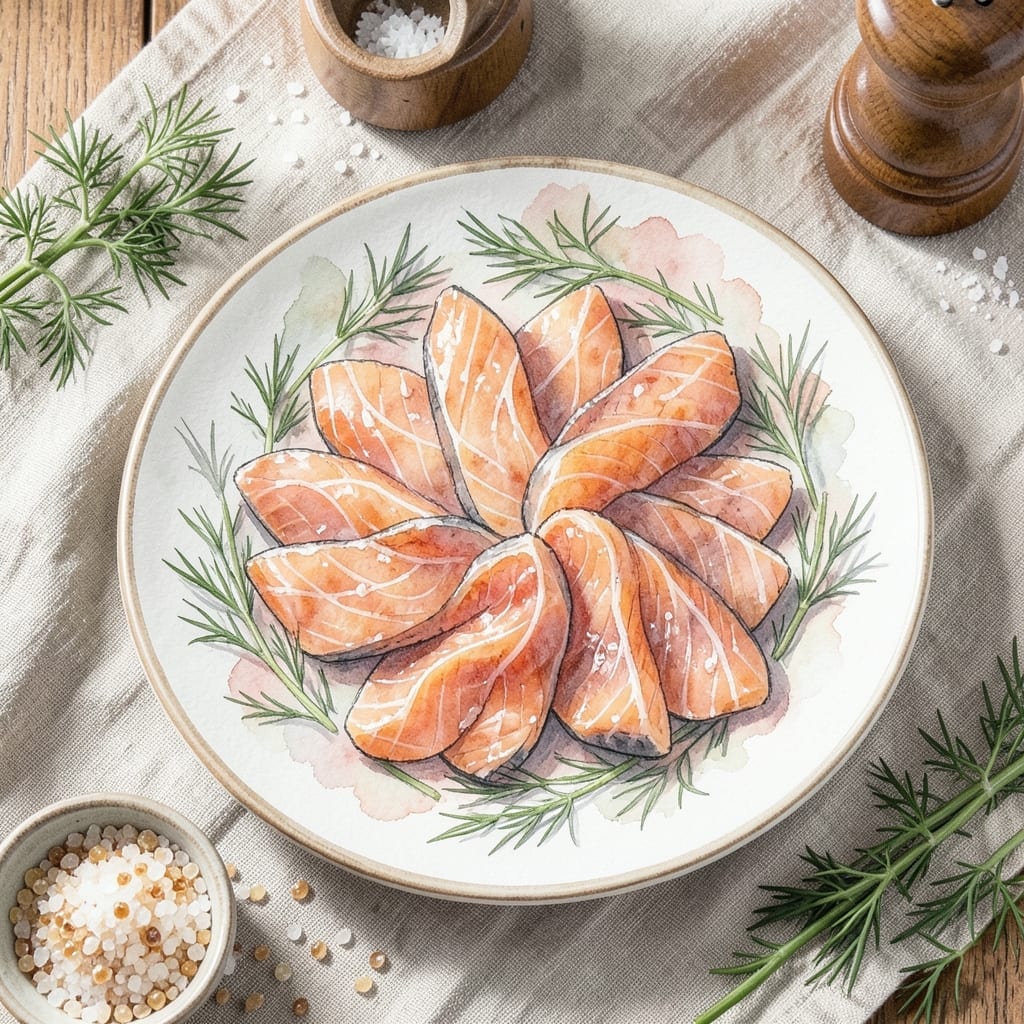
I’ve perfected this Nordic curing method to deliver silky, flavor-packed salmon every time. The vodka in the cure enhances the texture and draws out impurities, leaving the fish tender and pristine.
This technique requires minimal effort but demands precision—fresh salmon, the right salt-to-sugar ratio, and a 48-hour cure. The result is a dish that rivals any Scandinavian restaurant’s offering.
Once cured, the salmon transforms into a melt-in-your-mouth delicacy with a subtle sweetness and clean finish. Thinly sliced, it’s perfect on rye bread with mustard sauce or as an elegant appetizer.
No cooking required—just patience and quality ingredients. The process is as rewarding as the result.
Ingredients for Gravlax Recipe Vodka
Quality salmon and a precise cure transform into this Nordic delicacy with minimal effort.
| Ingredient | Amount | Notes |
|---|---|---|
| Fresh Salmon Fillet 🐟 | 1 ½ lb | Skin-on, center-cut preferred |
| Coarse Sea Salt 🧂 | ½ cup | Non-iodized, large crystals |
| Granulated Sugar 🍚 | ½ cup | Fine white or raw |
| Vodka 🥃 | ¼ cup | High-quality, neutral flavor |
| Fresh Dill 🌿 | 1 cup | Chopped, stems removed |
| White Pepper 🌶️ | 1 tbsp | Freshly ground for subtle heat |
| Lemon Zest 🍋 | 1 tbsp | From 1 large lemon |
| Yellow Onion 🧅 | ½ whole | Thinly sliced for curing bed |
| Fresh Lemon Juice 🍋 | 2 tbsp | Newly squeezed |
| Crushed Black Peppercorns 🌶️ | 1 tsp | Coarsely crushed |
The salmon is non-negotiable—wild-caught sockeye or Atlantic works best. Whole Foods or a reputable fishmonger are ideal sources. Look for fillets with vibrant color and no fishy odor. The vodka should be neutral (think Absolut or Grey Goose), as flavored varieties can impart unwanted notes. For the salt, Maldon or Diamond Crystal provides the right texture for even curing.
No vodka? Gin or white rum can substitute in a pinch, though the flavor profile will shift slightly. Out of fresh dill? Dried dill at one-third the amount works, but fresh delivers the brightest aroma. For sugar, turbinado or demerara adds a subtle caramel note. If using a smaller fillet, adjust the cure proportionally—1:1 salt to sugar by volume remains critical.
Store cured gravlax wrapped in plastic in the coldest part of your fridge for up to 1 week. For longer storage, vacuum-seal and freeze for 3 months. Slice just before serving to maintain texture. The curing liquid can be strained and reused once if desired.
Why You’ll Love This Recipe
- No Fuss Curing: I just mix salt, sugar, vodka and dill, rub it on the salmon, and let the fridge do the work overnight.
- Silky, Bright Flavor: The vodka draws out the perfect moisture while the dill and cure create that melt-in-your-mouth texture with a clean, fresh finish.
- Brunch Star: It’s my secret weapon for bagels and cream cheese—looks impressive but I’m just slicing what I prepped two days ago.
- Stretches Further: One fillet cures down to concentrated, rich slices that last a week—honestly, it’s cheaper than buying smoked salmon at the store.
Step-by-Step Instructions for Gravlax
This traditional Nordic curing method transforms the fresh salmon fillet into a delicate, flavorful masterpiece.
Step 1: Prepare the Salmon and Curing Bed
Begin by inspecting the 1.5 lb fresh salmon fillet for any remaining pin bones, using tweezers to remove them. Leave the skin intact as it helps maintain the fillet’s shape during curing. Pat the fillet completely dry with paper towels to ensure the cure adheres properly.
Thinly slice the 0.5 whole yellow onion and arrange half of the slices in an even layer on the bottom of a shallow dish large enough to hold the salmon. This creates a bed that elevates the fish, allowing the curing liquid to circulate evenly around it.
Step 2: Create the Curing Mixture
In a bowl, combine the 0.5 cup coarse sea salt, 0.5 cup granulated sugar, 1 tbsp white pepper, 1 tbsp lemon zest, and 1 tsp crushed black peppercorns. Stir until thoroughly blended. The sugar balances the salt’s intensity while the citrus and pepper add complexity.
Pour the 0.25 cup vodka and 2 tbsp fresh lemon juice into the mixture and stir until the salt and sugar begin to dissolve. The vodka helps draw out moisture from the salmon more efficiently, accelerating the curing process while keeping the texture silky.
Step 3: Apply the Cure and Dill
Place the salmon fillet skin-side down on the bed of onion slices. Rub the curing mixture all over the exposed flesh, pressing gently to ensure full coverage. Distribute the 1 cup fresh dill evenly over the top, pressing it into the surface so it adheres well.
The dill not only infuses flavor but also creates a protective layer, enhancing the visual appeal of the finished gravlax. Ensure no spots are left uncovered to prevent uneven curing.
Step 4: Cure Under Refrigeration
Cover the dish tightly with plastic wrap, ensuring it touches the surface of the salmon to prevent air exposure. Place a second dish or light weight on top to apply gentle, even pressure. Refrigerate for 48 hours, flipping the fillet every 12 hours to ensure consistent curing.
After 24 hours, the salmon will begin to firm up, and by 48 hours, it should feel dense and slightly translucent at the edges. The cure will have drawn out moisture, transforming the texture into the signature silky consistency of gravlax.
Step 5: Rinse, Slice, and Serve
Remove the salmon from the dish and gently rinse off the curing mixture under cold water. Pat it dry with paper towels, then discard the dill and onion. Using a sharp, thin-bladed knife, slice the gravlax thinly at a 45-degree angle, cutting away from the skin.
Serve immediately on rye bread, crackers, or with classic accompaniments like mustard sauce or capers. The gravlax should have a smooth, buttery texture with a balance of salty, sweet, and herbal notes in every bite.
Pro Tips For Making Gravlax Recipe Vodka
- Use ultra-fresh salmon: I learned this the hard way—gravlax is raw-cured, so the fish needs to be sushi-grade fresh, ideally from a trusted fishmonger the same day you start the cure.
- Balance salt and sugar: The cure ratio matters most: stick to 1 part sugar to 2 parts coarse sea salt by volume, or your gravlax will be either too sweet or harshly salty.
- Don’t skip the vodka: Sounds weird, but it works: 2 tablespoons of vodka in the cure mix helps draw out moisture evenly and keeps the texture silky, not dry.
- Flip twice daily: After burning a batch that cured unevenly, I finally figured out that turning the fillet every 12 hours guarantees the flavors penetrate all the way through.
Storing and Reheating This gravlax recipe vodka
Refrigerator Storage
After curing, wrap your gravlax tightly in plastic wrap, then place it in an airtight container. It’ll keep beautifully in the fridge at 40°F or below for up to 1 week. The flavors continue to develop, so it often tastes even better the next day. ❄️
Freezer Storage
For longer storage, slice the gravlax first, then vacuum-seal it in portions. It freezes well for up to 3 months without losing texture. I use FoodSaver bags for this—they prevent freezer burn better than anything else.
Thawing Properly
When ready to enjoy, thaw frozen slices overnight in the fridge. Avoid microwaving, as it can make the fish mushy. If you’re in a hurry, submerge the sealed bag in cold water for 30-60 minutes, changing the water every 15 minutes.
Serving After Storage
Once thawed, let the gravlax sit at room temperature for 10-15 minutes before serving to restore its silky texture. Pat it dry with a paper towel if it seems too moist. This step makes a surprising difference in quality.
Reviving Leftovers
If your stored gravlax tastes a bit flat, a quick rinse under cold water and a fresh sprinkle of dill or lemon zest can brighten it up. I also like to drizzle a little olive oil on top to refresh the richness. 💡
Nutrition Facts
Frequently Asked Questions
Why include vodka in the cure?
The vodka helps draw out moisture more efficiently, accelerating the curing process while keeping the texture silky. It also enhances flavor penetration for a more balanced taste.
Can I use a different alcohol?
Yes! Gin or white rum work as substitutes, though they may alter the flavor slightly. Stick to neutral spirits for the most authentic results.
How thin should the slices be?
Aim for paper-thin slices, about 1/8-inch thick. Use a sharp knife and cut at a 45-degree angle for the best presentation and texture.
What if my salmon isn’t fully cured after 48 hours?
If the center still feels soft, extend the cure by 12-24 hours. Thicker fillets or colder fridges may need extra time. Always check texture before serving.

- BBQ Sausage Recipe Oven: Smoky Depth Without the Grill - September 28, 2026
- BBQ Chicken Bowl Recipe Rice: Smoky Sweetness Over Fluffy Grains - September 28, 2026
- Beef Cutlet Recipe Ideas: Crispy Breaded Patties With Bold Seasonings - September 28, 2026