
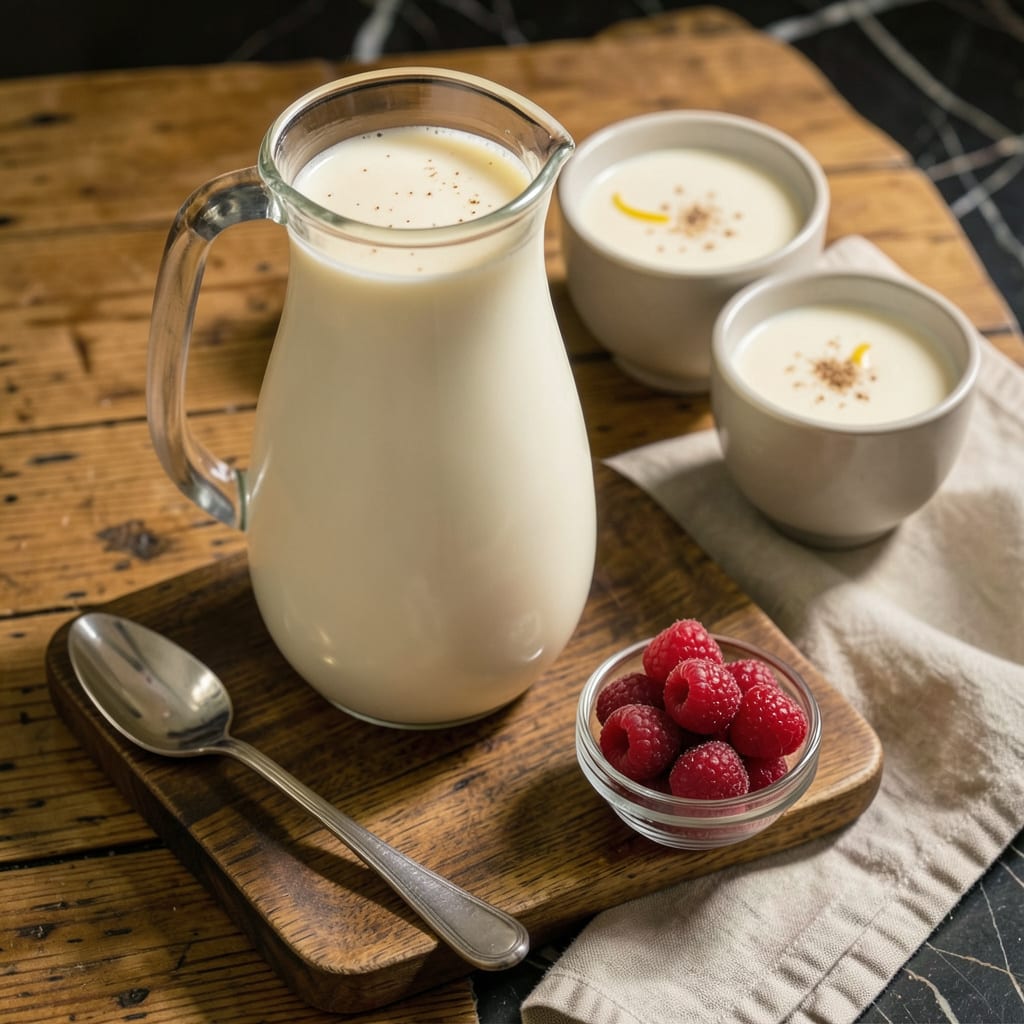
Combine 1 cup whole milk with 1 cup heavy cream, whisk until fully blended, and store in an airtight container in the fridge for up to 5 days. This creates a perfect 1:1 fat-to-liquid ratio for coffee, cooking, or baking.
This simple blend mimics store-bought versions by balancing the richness of heavy cream with the lighter texture of whole milk. The magic happens in the fat content—whole milk contributes about 3.5% while heavy cream adds 36%, landing you right in the ideal 10-12% range for half and half. I love how this ratio keeps coffee creamy without overpowering the flavor, and it behaves beautifully in recipes that call for moderate dairy richness. 🔥
What sets homemade versions apart is the freshness and customization potential. You can tweak the fat percentage slightly by adjusting the milk-to-cream ratio, or even infuse flavors like vanilla or cinnamon during blending. Just remember that freshness matters—use it within 5 days for peak quality in your cooking and beverages. ✨
💡 In This Article
- Why the 1:1 Ratio Works for Homemade Half and Half
- 5 Creative Ways to Use Homemade Half and Half
Why the 1:1 Ratio Works for Homemade Half and Half
The secret lies in the fat percentages of each component. Whole milk contains about 3.5% fat, while heavy cream packs a dense 36-40% fat. When you combine them equally, you’re mathematically creating a blend that lands right in the 10-12% fat range—the exact target for commercial half and half.
This balance gives you the body of cream with the pourability of milk, making it ideal for everything from coffee to sauces. ✨
Here’s what’s actually happening at the molecular level: The fat globules in cream are much larger than those in milk. When blended, they redistribute evenly throughout the liquid, creating a stable emulsion. This uniform fat distribution prevents separation and gives homemade versions that signature velvety texture.
The proteins in both dairy products (casein and whey) also interact to stabilize the mixture, though not as aggressively as commercial stabilizers.
Temperature plays a crucial role in this emulsion. Both components should be cold (38-40°F) when combining to maintain fat integrity. If either is warm, the fat globules may melt and clump, leading to separation.
I always recommend whisking vigorously for 30-45 seconds to ensure proper incorporation—you’ll see the mixture slightly thicken as the fats and liquids bind. 🔥
The 1:1 ratio isn’t just about fat content—it’s about functional performance. In coffee, this balance creates microfoam when steamed, unlike whole milk (too thin) or heavy cream (too thick). For baking, the moderate fat content tenderizes dough without weighing it down. Even in savory dishes, this ratio allows sauces to coat ingredients without becoming greasy.
The science confirms what chefs know: this middle-ground fat percentage hits the sweet spot for versatility.
Commercial versions often add carrageenan or other stabilizers to extend shelf life, but your homemade blend will naturally separate after 5-7 days as the fat rises. This is normal—just give it a quick whisk before using.
The tradeoff for no additives is superior freshness and flavor, with a cleaner dairy taste that shines in delicate recipes like custards or cream-based soups. 💫
For those wanting to experiment, you can adjust the ratio slightly: 2 parts milk to 1 part cream gives you a lighter 8% fat version (closer to “light cream”), while 1 part milk to 2 parts cream bumps you to 14% fat for richer applications.
Each variation changes how the dairy behaves in cooking—lower fat works better for drinking, while higher fat excels in baking where structure matters.

- BBQ Sausage Recipe Oven: Smoky Depth Without the Grill - September 28, 2026
- BBQ Chicken Bowl Recipe Rice: Smoky Sweetness Over Fluffy Grains - September 28, 2026
- Beef Cutlet Recipe Ideas: Crispy Breaded Patties With Bold Seasonings - September 28, 2026