
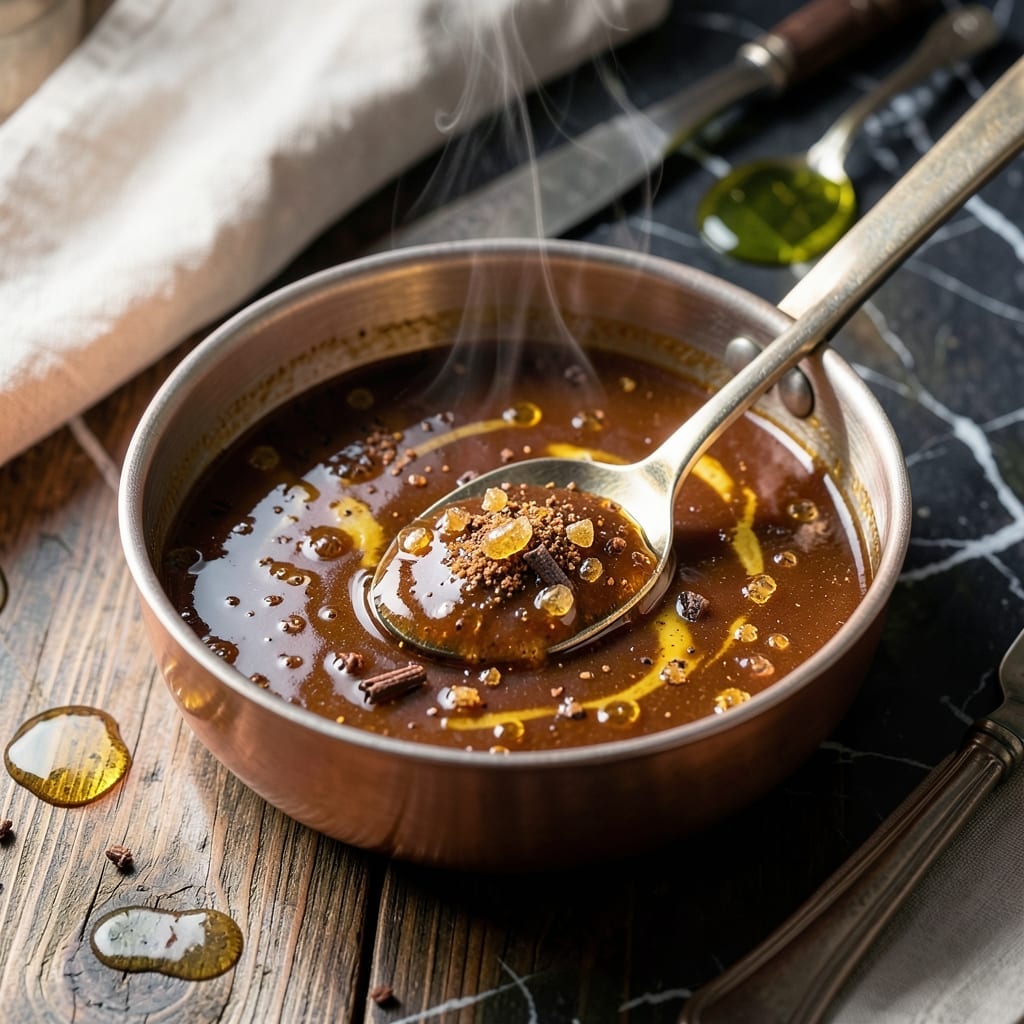
This glaze transforms any ham into a centerpiece worthy of your holiday table. A simple blend of pantry staples creates a sweet and sticky coating that caramelizes beautifully as it bakes.
I developed this recipe to be foolproof—no complicated techniques, just a perfect balance of sweet and tangy flavors. The secret lies in simmering the ingredients briefly to thicken before brushing onto the ham.
What you’ll get is a glossy finish that clings to every slice, enhancing the natural flavors of the meat. It’s versatile enough for spiral-cut, bone-in, or even pre-cooked hams.
Make it ahead and store in the fridge for up to a week, so it’s ready when you are. This glaze delivers every time.
Ingredients for Ham Glaze
Nine simple ingredients for that perfect sweet and sticky holiday shine.
| Ingredient | Amount | Notes |
|---|---|---|
| Brown Sugar 🍚 | 1 cup | Light or dark, packed |
| Honey 🍯 | ½ cup | Pure, not processed |
| Dijon Mustard 🟡 | 2 tbsp | Smooth, not grainy |
| Apple Cider Vinegar 🍏 | 2 tbsp | Adds tangy depth |
| Ground Cloves 🌿 | ¼ tsp | Freshly ground preferred |
| Ground Cinnamon 🌶️ | ½ tsp | Warm spice balance |
| Unsalted Butter 🧈 | ½ cup | Melted for richness |
| Orange Zest 🍊 | 1 tbsp | Finely grated, fresh |
| Orange Juice 🍊 | 2 tbsp | Freshly squeezed |
The brown sugar is the backbone here. Domino or C&H are reliable supermarket brands—just make sure it’s fresh and not hardened into a brick. For the honey, local raw honey (from farmers markets or Whole Foods) adds depth, but any pure honey works. The Dijon mustard should be smooth—Grey Poupon is my go-to, but any quality brand is fine.
No honey? Maple syrup at a 1:1 ratio works beautifully. Out of Dijon? Yellow mustard in a pinch, though it’ll be milder. For a deeper spice profile, add a pinch of nutmeg—just don’t overdo it. The orange zest is key for brightness, but if you’re short on time, skip the zest and double the juice.
This glaze keeps 1 week in the fridge—perfect for making ahead. Store in a sealed jar. If it thickens too much, warm it gently before using. Freezing isn’t recommended (separation issues), but it’s so easy you’ll likely use it all before that’s a concern.
Why You’ll Love This Recipe
- 5-Minute Mix: I just stir these five ingredients in a saucepan and it’s ready before the ham hits the oven.
- Sweet-Tangy Magic: The brown sugar and honey caramelize while the mustard and vinegar cut through with a bright kick.
- Holiday or Tuesday: Honestly, I slather this on Easter ham and then again on weeknight leftovers for sandwiches.
- Stretches Far: One batch glaze covers my biggest roast and still leaves enough for a second meal.
Step-by-Step Instructions for Ham Glaze
This holiday-worthy glaze comes together quickly with a perfect balance of sweet and tangy flavors.
Step 1: Melt and Combine the Base Ingredients
In a medium saucepan over medium heat, melt the 0.5 cup Unsalted Butter completely. Once melted, add the 1 cup Brown Sugar and 0.5 cup Honey, stirring constantly with a wooden spoon.
You’ll notice the mixture begin to bubble gently as the sugar dissolves. This is normal—keep stirring to prevent burning. The goal is to create a smooth, uniform base before adding the remaining ingredients. This should take about 3-4 minutes.
Step 2: Incorporate the Tangy and Spiced Elements
Once the sugar and honey are fully dissolved, stir in the 2 tbsp Dijon Mustard, 2 tbsp Apple Cider Vinegar, 0.25 tsp Ground Cloves, and 0.5 tsp Ground Cinnamon. The mustard and vinegar will add a subtle tang that cuts through the sweetness, while the spices provide warmth.
Continue stirring for another 2-3 minutes until the mixture thickens slightly and the spices are fully incorporated. You’ll know it’s ready when the glaze coats the back of a spoon and small bubbles form at the edges of the pan.
Step 3: Finish with Bright Citrus Notes
Remove the saucepan from the heat and stir in the 1 tbsp Orange Zest and 2 tbsp Orange Juice. The citrus adds a fresh, bright contrast to the rich, spiced glaze. Be sure to stir well to evenly distribute the zest and juice.
Let the glaze sit for 1-2 minutes to cool slightly. The orange zest will infuse the mixture with its aromatic oils, while the juice adds a subtle acidity that balances the sweetness perfectly.
Step 4: Apply and Bake for Holiday Perfection
Once the glaze has cooled slightly, brush it generously over your ham during the last 20-30 minutes of baking. The glaze should be thick enough to cling to the ham but still easy to spread.
Bake the ham at 325°F or 350°F (depending on your recipe) until the glaze caramelizes into a glossy, sticky coating. For the best results, baste the ham with the glaze every 10 minutes to ensure an even, glossy finish. The glaze is ready when it turns a deep amber color and forms a slightly crispy crust.
Pro Tips For Making Ham Glaze
- Simmer Low and Slow: Keep the heat at medium-low and let the glaze bubble gently for 5-7 minutes—any higher and the brown sugar will burn before the flavors meld.
- Bloom the Cloves: Toast the ground cloves in the pot for 10 seconds before adding liquids; I learned this the hard way after my first batch tasted like raw spice.
- Skip the Boil: Resist the urge to crank the heat to speed things up, or you’ll end up with a hard, bitter caramel instead of a glossy, balanced glaze.
- Thin with Vinegar: If the glaze thickens too much, splash in a teaspoon of apple cider vinegar—it thins it out without watering down the tangy-sweet depth.
Essential Equipment for Great ham glaze
Saucepan Selection
Use a medium saucepan with a heavy bottom to prevent hot spots. I prefer All-Clad stainless steel for even heat distribution. A 2-3 quart size gives enough room for stirring without overflow as the glaze bubbles. 🔥
Wooden Spoon
A wooden spoon is essential for stirring this glaze—it won’t scratch your saucepan and handles the thick mixture better than metal. I keep a 12-inch spoon dedicated for sauces. The wood also won’t conduct heat like metal, keeping your hand comfortable.
Pastry Brush
For applying the glaze to ham, a silicone pastry brush works best. It withstands 350°F oven temps and spreads the thick glaze evenly. I like OXO’s heat-resistant brush with its comfortable grip. Avoid natural bristle brushes—they can melt or shed.
Measuring Tools
Accurate measurements matter here. Use dry measuring cups for brown sugar and liquid measuring cups for honey. A set of stainless steel measuring spoons handles the small spice amounts perfectly. I always level off my measurements for consistency.
Storage Containers
Store leftover glaze in a glass jar with a tight lid. I repurpose Ball mason jars—they’re airtight and easy to label. For short-term fridge storage, any airtight container works, but glass won’t absorb odors like plastic might.
Thermometer
While not essential, an instant-read thermometer helps monitor the glaze temperature. Aim to keep it below 220°F to prevent burning the sugars. I use a ThermoWorks ThermaPen for quick, accurate reads. This small tool prevents many glaze disasters. 💡
Nutrition Facts
Frequently Asked Questions
Can I make this ahead of time?
Yes! The glaze keeps well in the fridge for up to 1 week in an airtight container. Just warm it gently before using to restore its smooth consistency.
What if my glaze is too thin?
Simmer it for an additional 2-3 minutes over medium-low heat. The sugar needs time to caramelize properly. Avoid high heat, which can cause burning.
Can I use maple syrup instead of honey?
Substitute at a 1:1 ratio. Maple syrup adds a slightly different flavor but works beautifully in this recipe.
How often should I baste the ham?
For best results, baste every 10 minutes during the last 20-30 minutes of baking. This builds layers of flavor and creates a glossy finish.

- BBQ Sausage Recipe Oven: Smoky Depth Without the Grill - September 28, 2026
- BBQ Chicken Bowl Recipe Rice: Smoky Sweetness Over Fluffy Grains - September 28, 2026
- Beef Cutlet Recipe Ideas: Crispy Breaded Patties With Bold Seasonings - September 28, 2026