
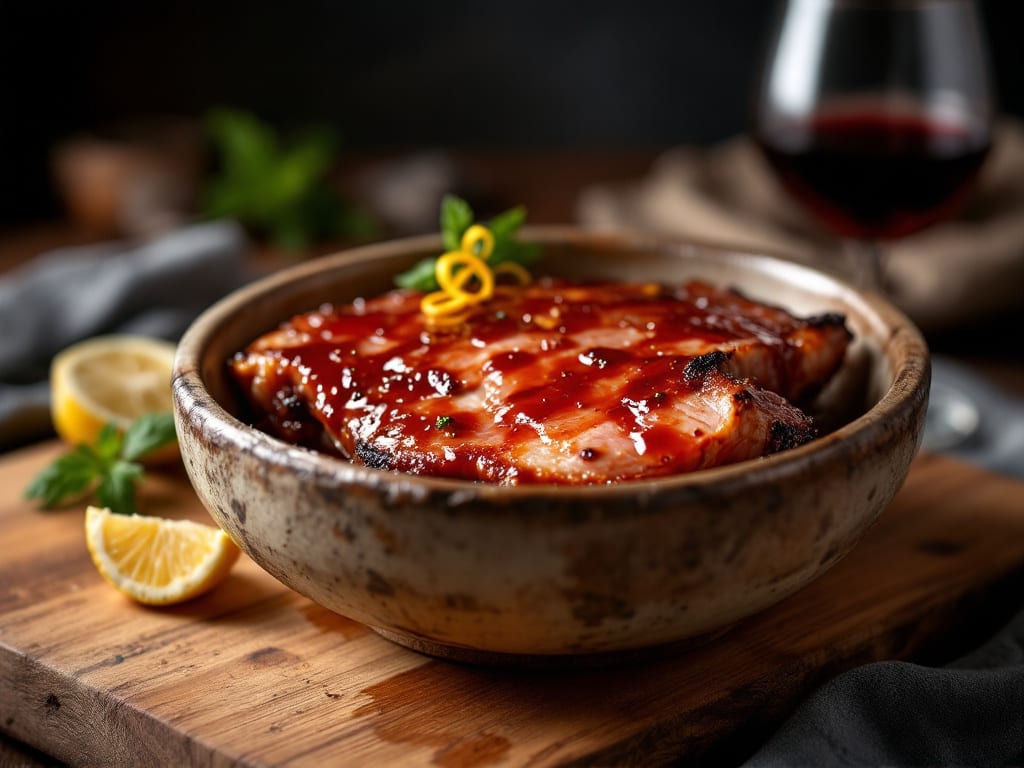
This ham steak glaze recipe transforms ordinary ham into a showstopping centerpiece with its perfect balance of caramelized sweetness and smoky depth. The secret lies in a precise blend of brown sugar, Dijon mustard, and liquid smoke that creates a glossy, sticky finish while enhancing the ham’s natural flavors.
I developed this glaze after years of experimenting with holiday ham preparations, and it consistently delivers restaurant-quality results at home.
The beauty of this glaze is its versatility—it works equally well on pre-cooked ham steaks or as a finishing touch for roasted ham. With just five simple ingredients and 15 minutes of active prep time, you’ll have a glaze that’s rich, flavorful, and impossible to resist.
The caramelization process adds depth while the mustard brings a subtle tang that cuts through the sweetness.
What sets this glaze apart is its ability to create a glossy, crackling crust that clings beautifully to every slice. The liquid smoke adds that signature smoky note found in professional deli hams, while the brown sugar ensures a perfect caramelized finish.
This isn’t just a glaze—it’s a flavor transformation that turns simple ham into an elegant centerpiece.
Perfect for holiday feasts, dinner parties, or even a special weeknight meal, this glaze keeps well in the refrigerator for up to one week or can be frozen for longer storage.
Whether you’re serving it alongside roasted vegetables or pairing it with classic sides, this recipe guarantees impressive results every time.
Ingredients for ham steak glaze
Five ingredients transform ordinary ham into a restaurant-worthy masterpiece—sweet, smoky, and irresistibly glossy.
| Ingredient | Amount | Notes |
|---|---|---|
| Light Brown Sugar 🍚 | ¾ cup | Packed firmly for caramelization |
| Dijon Mustard 🧂 | 2 tbsp | High-quality grainy preferred |
| Liquid Smoke 🔥 | 1 tbsp | Pure, no added flavors |
| Apple Cider Vinegar 🍎 | 1 tbsp | Bright, tangy acidity |
| Unsalted Butter 🧈 | ¼ cup | Cold, cubed for glossy finish |
The brown sugar is non-negotiable here—light brown sugar gives that perfect caramelized depth without overpowering. I always grab the Domino brand from the bulk section at Kroger—it’s consistently packed and dissolves smoothly. For the Dijon mustard, Maille is my go-to, but any high-quality grainy mustard works. The liquid smoke? Pure, no additives—I find the best at Penzeys Spices, but the regular grocery store stuff is fine in a pinch. That said, don’t skimp on this one—it’s what gives your glaze that signature smoky depth that makes it taste like it came from a deli counter.
No liquid smoke? Smoked paprika mixed with a splash of water can mimic it, though it won’t be as intense. Running short on apple cider vinegar? White vinegar or balsamic works in a bind, but the apple cider adds that subtle fruity note that balances the sweetness beautifully. The butter is crucial for that glossy finish—full-fat, unsalted is a must. If you’re watching calories, you can use half butter and half olive oil, but trust me, the butter makes it sing. The glaze thickens as it cools, so if it seems too runny while you’re working, let it sit for 5 minutes before applying to the ham—it’ll come together perfectly.
This glaze keeps beautifully in the fridge for up to one week in an airtight container, though I usually make it fresh every time I glaze ham. If you’re prepping ahead for a holiday feast, you can actually make it two days in advance—the flavors meld even better. For longer storage, freeze it in ice cube trays. Each cube is perfect for a single ham steak—just thaw and reheat gently before brushing on. The glaze reheats beautifully, so if you’re serving it at room temperature, just give it a quick 30-second zap in the microwave to restore that glossy finish.
Why You’ll Love This Recipe
- Five-Ingredient Magic: I swear, this glaze comes together with just a saucepan and five pantry staples. No fancy techniques—just melt butter, whisk in sugar and vinegar, and let the liquid smoke and mustard do their thing while you chop veggies or set the table.
- Smoky-Sweet Obsession: That caramelized brown sugar and tangy vinegar combo? It’s like a hug for your taste buds. The liquid smoke adds this deep, campfire vibe that turns plain ham steak into something you’ll lick the plate for.
- Leftovers That Shine: Save half the glaze for tomorrow—it’s way better reheated than most sauces. Drizzle it over breakfast eggs, toss it with roasted potatoes, or even slather it on grilled cheese. My kids beg for it on sandwiches, and honestly? I don’t blame them.
- Weeknight Hero: Between us, this is my go-to when I’m too tired to think. Simmer it while the ham cooks, and boom—you’ve got a restaurant-worthy finish without extra effort. Plus, the apple cider vinegar cuts through the richness, so it’s lighter than it looks.
Step-by-step instructions for ham steak glaze
This glaze delivers an incredible balance of caramelized sweetness and smoky depth that’ll transform your ham steaks.
Create the Glaze Base
In a medium saucepan, combine the 0.75 cup light brown sugar and 0.25 cup unsalted butter over medium-low heat. Let the mixture melt together, stirring occasionally with a wooden spoon until it becomes a smooth, golden liquid. This process should take about 5 minutes—watch carefully as the sugar begins to dissolve and the butter incorporates completely.
Here’s the thing—pack the brown sugar firmly when measuring. The moisture content affects caramelization, and packed sugar gives you that deeper, richer flavor we’re after. Once melted, you’ll notice the mixture smells like pure caramel heaven—that’s your first indicator everything’s on track.
Build Flavor Layers
Reduce heat to low and add the 2 tablespoons Dijon mustard and 1 tablespoon liquid smoke. Stir continuously for 2 minutes until the mustard dissolves completely and the liquid smoke disperses evenly. The mixture will darken slightly and develop an aromatic depth that’s impossible to resist.
This is where the magic happens—the mustard brings tangy complexity while the liquid smoke infuses that authentic barbecue depth. Don’t rush this step; let the flavors meld together completely. You’ll see tiny bubbles form along the edges—that’s your visual cue that the flavors are integrating properly.
Add Acid and Simmer
Pour in the 1 tablespoon apple cider vinegar and increase heat to medium. Bring the mixture to a gentle boil, then immediately reduce heat to low and let it simmer for 8-10 minutes. You’re looking for a syrupy consistency that coats the back of a spoon—this indicates proper reduction and flavor concentration.
Real talk: The vinegar might make you think you’ve gone wrong at first—the mixture will look thinner and more liquid. But trust me, this acidity is crucial for balancing the sweetness and creating that glossy finish. Stir occasionally to prevent sticking, and watch for the glaze to thicken noticeably as moisture evaporates.
Test and Adjust Consistency
Remove the pan from heat and perform the classic glaze test: Dip a clean spoon into the mixture and let it drip back into the pan. If it forms a slow, glossy ribbon that doesn’t immediately pool, your glaze is perfect. If it’s too thin, return it to low heat for another 2-3 minutes to reduce further.
If you find it’s still too thick after cooling slightly, you can thin it with 1 teaspoon hot water at a time until it reaches your desired consistency. The glaze should be thick enough to cling beautifully to the ham steaks but still flow smoothly when brushed on. This balance ensures both coverage and that perfect glossy finish.
Pro Tips For Making Ham Steak Glaze
- Simmer Low and Slow: DESCRIPTION:
- Toast the Sugar First: DESCRIPTION:
- Balance the Vinegar: DESCRIPTION:
- Whisk in Butter Off Heat: DESCRIPTION:
Common mistakes when making perfect results
Overcooking the Glaze
One of the most common mistakes is letting the glaze reduce too much during simmering, which creates a thick, sticky mess that won’t coat the ham properly.
I’ve seen people walk away from the stove and let it bubble down into syrup—this kills the balance of flavors and makes application nearly impossible.
Keep a close eye on the pan during those 8-10 minutes of simmering and remove it as soon as it reaches a syrupy consistency that coats the back of a spoon. 🔥
Skipping the Vinegar
Many home cooks omit the apple cider vinegar, thinking the mustard provides enough acidity. But that vinegar is crucial—it cuts through the sweetness and creates the glossy finish that makes this glaze special.
Without it, you’ll end up with a cloyingly sweet coating that lacks balance. I always add the vinegar right before the simmering phase to preserve its bright acidity.
Using Low-Quality Liquid Smoke
The liquid smoke makes or breaks this glaze’s signature smoky depth. Using cheap, heavily processed versions (or worse, skipping it entirely) results in a flat, one-dimensional flavor. I recommend Penzeys brand for its pure, concentrated smoke flavor.
If you must substitute, mix 1 tsp smoked paprika with ½ tsp water, but expect less intensity.
Inconsistent Heat Control
Fluctuating heat levels cause the glaze to either burn or fail to caramelize properly. Maintain steady medium-low heat when melting the sugar-butter base, and reduce to low once the mustard and smoke are added.
I’ve seen people crank the heat too high, which burns the sugar and creates bitter notes. Use the back of your hand to test heat—it should feel warm but not hot.
Applying Glaze Too Early
Many people brush the glaze on ham steaks while they’re still hot from cooking, causing the sauce to cook off too quickly and lose its glossy finish. Always let your ham steaks cool to 140°F before applying the glaze.
This allows the sauce to properly adhere and develop that beautiful crackling crust. I like to work with room-temperature ham for even better results.
Overmixing After Removal
Once you take the glaze off the heat, resist the urge to stir constantly. Overmixing after removal can create air bubbles that disrupt the smooth, glossy texture.
Let it sit undisturbed for 2-3 minutes before testing consistency. This brief resting period helps the glaze settle into its perfect syrupy state without those pesky bubbles.
Nutrition facts
Frequently asked questions
Can I make this glaze ahead of time?
This glaze keeps beautifully in the refrigerator for up to one week in an airtight container. For holiday prep, make it two days ahead—the flavors actually meld better over time. For longer storage, freeze it in ice cube trays. Each cube is perfect for a single ham steak—just thaw and reheat gently before brushing on.
What if I don’t have liquid smoke?
No problem! Mix 1 teaspoon smoked paprika with ½ teaspoon water as a substitute. While it won’t be as intense, it’ll still add that smoky depth. For best results, use a high-quality smoked paprika like Alaska Smokehouse or Cholula for more authentic flavor.
Can I use this glaze on other meats?
Yes, but with adjustments. It works beautifully on pork chops or ribs—just reduce the liquid smoke to ½ tablespoon to avoid overpowering the meat. For poultry like turkey breast, cut the sugar to ½ cup to prevent excess sweetness. The mustard and vinegar balance remains the same.
Why did my glaze turn grainy?
Graininess usually means the sugar didn’t dissolve completely. Stir constantly over medium-low heat until fully melted, then reduce heat to prevent burning. If it happens after cooling, gently reheat the glaze until smooth. For extra insurance, whisk in 1 teaspoon hot water to help dissolve any sugar crystals.
How do I fix a glaze that’s too thick?
Thin it gradually with ½ teaspoon hot water at a time, whisking well between additions. The glaze should coat the back of a spoon but still flow smoothly. Avoid adding too much liquid at once—it’s easier to reduce than to thin. If it’s still too thick after reheating, let it cool slightly and test again before applying to ham.

- Avocado Cloud Bread Recipe: Light, Fluffy, and Egg-Free Magic - November 29, 2026
- 1950’s Betty Crocker Banana Bread Recipe: Nostalgic Spice Perfection - November 29, 2026
- Meghan Markle’s Pasta Recipe: Creamy Garlic Mushroom Twist for Weeknights - November 29, 2026