
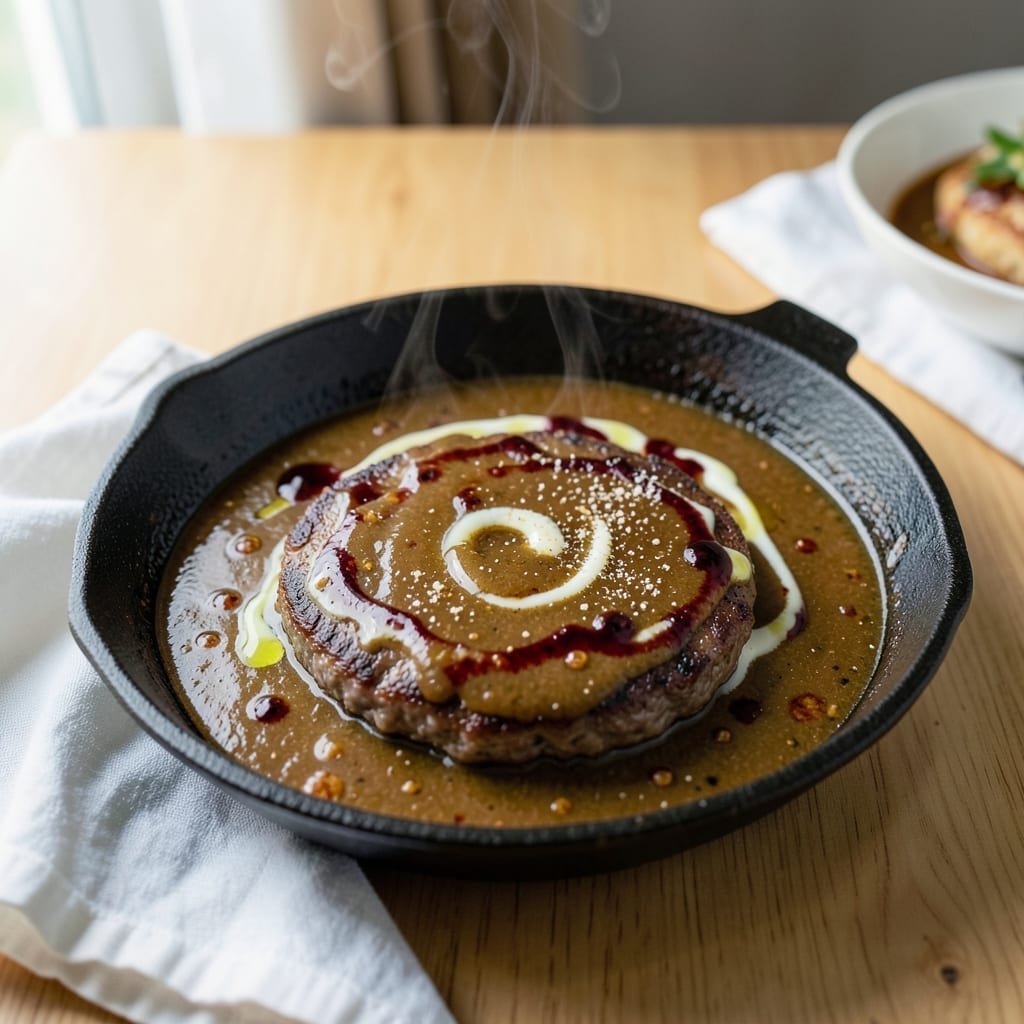
This gravy transforms pan drippings into a rich brown sauce without a drop of milk.
Using beef drippings as the base creates deep, savory flavor that pairs perfectly with mashed potatoes or biscuits. The simple technique relies on a flour slurry to thicken the gravy to the ideal consistency.
What results is a smooth, velvety sauce with robust beef flavor that’s ready in minutes. No dairy means it’s suitable for those avoiding milk while delivering all the comfort of traditional gravy.
Perfect for topping hamburger steaks, meatloaf, or serving alongside roasted vegetables. Here’s how to make it.
Ingredients for Hamburger Gravy Recipe Without Milk
Transform pan drippings into a rich, velvety sauce with these simple ingredients.
| Ingredient | Amount | Notes |
|---|---|---|
| Beef Drippings 🥩 | 1 cup | From cooked hamburger or steak |
| All-Purpose Flour 🌾 | ¼ cup | For thickening slurry |
| Cold Water 💧 | 2 cups | For adjusting consistency |
| Beef Broth 🍲 | 1 cup | Low-sodium preferred |
| Worcestershire Sauce 🫒 | 1 tbsp | Adds depth of flavor |
| Garlic Powder 🧄 | ½ tsp | Enhances savory notes |
| Onion Powder 🧅 | ½ tsp | Balances the richness |
| Salt 🧂 | ½ tsp | Adjust to taste |
| Black Pepper 🌶️ | ½ tsp | Freshly ground preferred |
| Dried Thyme 🌿 | ¼ tsp | Optional for extra depth |
The beef drippings are non-negotiable here. Save them from cooking hamburger steaks or roasts—they’re the foundation of that deep, meaty flavor. If you’re short on drippings, supplement with high-quality beef tallow (look for Epic or Fatworks brands). The flour must be all-purpose for the slurry to work properly; bread flour or self-rising will give inconsistent results.
No beef drippings? Butter or bacon fat (if not avoiding pork) can substitute, but the flavor profile will shift. Vegetable oil plus beef bouillon works in a pinch. For a gluten-free version, swap the flour for cornstarch at half the amount. The Worcestershire sauce is key for umami—Lea & Perrins is the standard, but Annie’s makes a solid organic version.
This gravy keeps in the fridge for 3-4 days in an airtight container. Reheat gently on the stove with a splash of water to loosen. Freezes beautifully for 3 months—portion into ice cube trays for easy single servings. The flavor deepens overnight, so it often tastes even better the next day.
Why You’ll Love This Recipe
- One Pan Wonder: I just brown the beef, use the drippings, and mix in flour—no extra bowls or fancy tools.
- Rich & Savory: The beef broth and Worcestershire sauce give it that deep, meaty flavor without a drop of milk.
- Weeknight Hero: Honestly, it’s my go-to for busy evenings when I need something hearty over mashed potatoes or biscuits.
- Budget Stretcher: A pound of ground beef turns into a meal that feeds my family for days, with ingredients I already have on hand.
Step-by-Step Instructions for Hamburger Gravy Without Milk
This method delivers a rich, velvety sauce using only beef drippings and a few pantry staples.
Step 1: Create a Smooth Roux with Beef Drippings and Flour
Place a heavy-bottomed saucepan over medium heat and add the 1 cup Beef Drippings. Allow them to warm until they just begin to shimmer—this ensures the flour will incorporate evenly without clumping.
Gradually whisk in the 0.25 cup All-Purpose Flour, adding it a little at a time to prevent lumps. Continue whisking constantly for 2-3 minutes until the mixture turns a light golden brown and develops a nutty aroma. This is your roux, and its color determines the final gravy depth.
Watch the heat carefully—if the roux darkens too quickly, reduce the temperature slightly. The ideal color here is a light caramel shade, which will yield a rich but not overly dark gravy.
Step 2: Slowly Incorporate Liquids to Prevent Clumping
With the roux still over medium heat, begin adding the 2 cups Cold Water in a slow, steady stream while whisking vigorously. The key is to add the liquid gradually—about ¼ cup at a time—allowing each addition to fully incorporate before adding more.
Once the water is fully incorporated, pour in the 1 cup Beef Broth and the 1 tbsp Worcestershire Sauce. Whisk continuously until the mixture is smooth and begins to thicken. This step should take 3-4 minutes as the gravy starts to reach its desired consistency.
If you notice any lumps forming, don’t panic. Simply press them against the side of the pan with the back of your whisk or a wooden spoon—they’ll dissolve as the gravy continues to cook.
Step 3: Season and Simmer to Perfection
Add the 0.5 tsp Garlic Powder, 0.5 tsp Onion Powder, 0.5 tsp Salt, 0.5 tsp Black Pepper, and 0.25 tsp Dried Thyme to the gravy. Stir well to distribute the seasonings evenly throughout the mixture.
Reduce the heat to low and let the gravy simmer gently for 5-7 minutes, stirring occasionally. This allows the flavors to meld and the gravy to thicken to a rich, coat-the-back-of-a-spoon consistency. Taste and adjust the seasoning if needed, though the beef drippings already contribute significant depth.
Keep an eye on the texture. If the gravy becomes too thick, whisk in a small amount of additional cold water, 1 tablespoon at a time, until it reaches your preferred consistency. The gravy should be smooth, glossy, and pourable but still substantial enough to cling to mashed potatoes or biscuits.
Step 4: Strain and Serve Immediately
For the smoothest possible gravy, strain it through a fine-mesh sieve into a clean bowl or serving vessel. This step removes any potential lumps or bits of flour that didn’t fully dissolve, ensuring a silky finish.
Serve the gravy immediately while it’s hot and at its thickest. If you need to hold it for a short time, keep it warm over very low heat and stir occasionally to prevent a skin from forming on the surface. This gravy pairs perfectly with mashed potatoes, biscuits, or even poured over a hot beef sandwich.
Real talk: this gravy thickens slightly as it cools, so if you’re making it ahead, you may need to thin it with a little warm water before reheating. Never boil it vigorously after adding the liquid, as this can cause the gravy to separate or become thin.
Pro Tips For Making Hamburger Gravy Recipe Without Milk
- Use Cold Water: Always whisk in cold water with the flour first—it prevents lumps better than warm or hot liquid. I learned this the hard way after too many clumpy gravies.
- Render Fat Completely: Don’t rush the beef drippings step; cook them down until they’re golden and smell nutty. This builds the base flavor that milk would normally add.
- Skip the Boil: Once the gravy thickens, keep it at a low simmer—boiling can break the sauce and make it thin or greasy.
- Add Worcestershire Last: Stir in the Worcestershire at the end so its tangy depth doesn’t cook off. A teaspoon is plenty for a rich, savory kick.
Serving Suggestions for Leftovers
Classic Pairings
I love pouring this rich gravy over a pile of creamy mashed potatoes—the contrast between the smooth sauce and fluffy spuds is pure comfort. For extra flair, use Yukon Gold potatoes and add a touch of roasted garlic to your mash. 💛
Biscuit Perfection
Split open some flaky buttermilk biscuits and smother them with this gravy for a Southern-style treat. I recommend Pillsbury for convenience or homemade with White Lily flour for authenticity. The gravy soaks in beautifully.
Meat Pairings
This sauce was born to complement beef. Drizzle it over hamburger steaks, meatloaf, or even a hot roast beef sandwich. I like to add a sprinkle of fresh parsley on top for color and brightness.
Veggie Sides
For a lighter option, serve it alongside roasted Brussels sprouts or steamed green beans. The savory gravy enhances their natural flavors. Toss 1 lb of halved sprouts with olive oil and roast at 400°F for 20-25 minutes.
Breakfast Twist
Try it for breakfast over scrambled eggs or hash browns. The beefy depth adds heartiness to your morning meal. I often stir in a bit of crumbled sausage for extra protein.
Gravy Boats
For serving at the table, use a small gravy boat or a mason jar with a ladle. This lets guests add as much as they like. Keep it warm in a slow cooker on low if serving buffet-style.
Nutrition Facts
Frequently Asked Questions
Can I use cornstarch instead of flour?
Yes, swap 2 tablespoons cornstarch for the flour. Mix it with 2 tablespoons cold water first to prevent clumping. Cornstarch creates a glossier finish but thickens faster.
Why did my gravy turn out thin?
Likely the roux wasn’t cooked long enough or liquids were added too quickly. Cook the flour-drippings mix until golden, then add liquid slowly while whisking. Simmer for 5-7 minutes to reach desired thickness.
How do I fix lumpy gravy?
Press lumps against the pan with a whisk or strain through a fine-mesh sieve. For stubborn lumps, blend briefly with an immersion blender. Prevention is key—whisk constantly when adding flour.
What if I don’t have beef drippings?
Use butter or bacon fat for flavor, or vegetable oil plus extra beef broth. The taste won’t be as rich, but it’ll still work in a pinch.

- Peach Syrup Recipe for Ice Cream: Sweet and Silky Drizzle for Scoops - October 6, 2026
- Pav Bhaji Recipe Food Lab: Mumbai Street Food Magic at Home - October 6, 2026
- Peach Jelly Recipe Without Pectin: Naturally Set Sweet Spread - October 6, 2026