
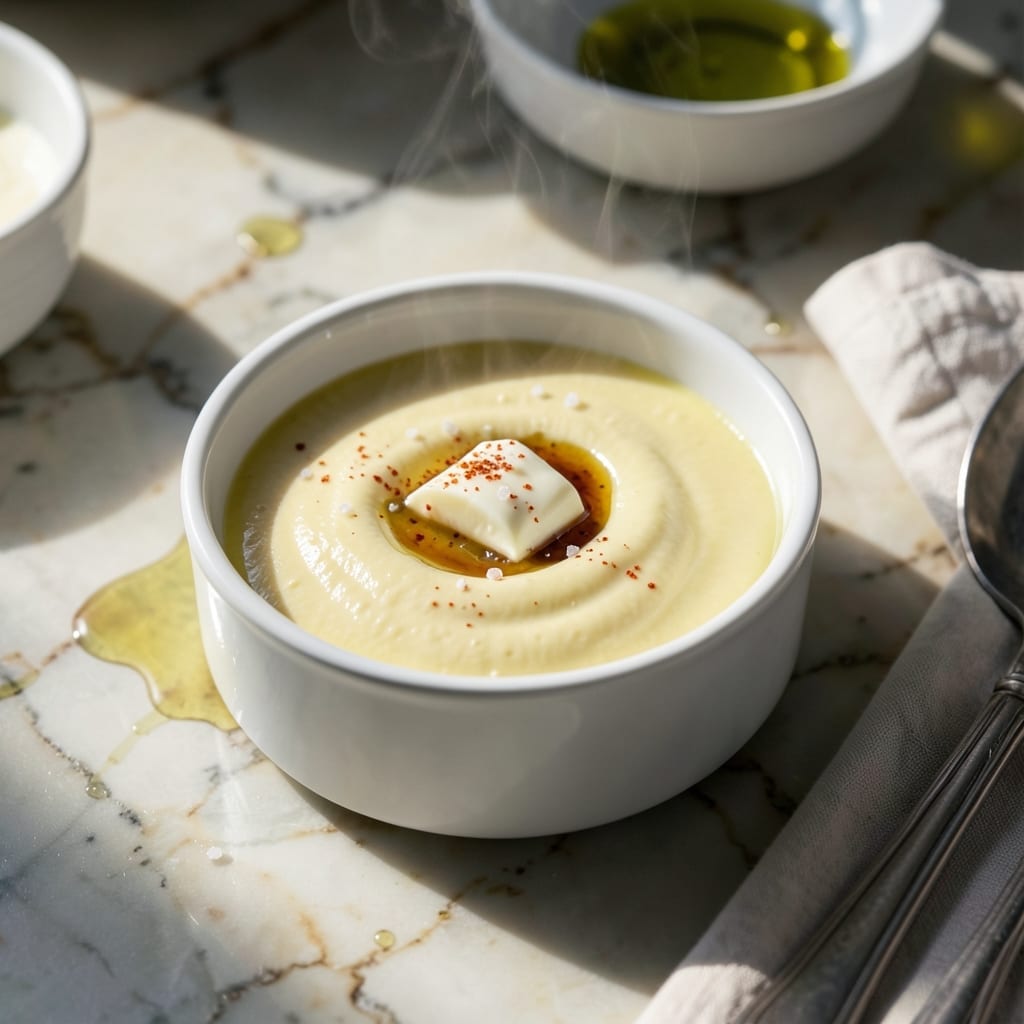
Mastering hollandaise transforms eggs Benedict from good to extraordinary. This classic French emulsion requires patience and precision, but the perfect results are worth every whisk stroke.
Julia Child’s method relies on clarified butter and constant temperature control. The key is whisking egg yolks until thick and pale before slowly drizzling in the warm butter to create a smooth, creamy sauce.
What emerges is a rich, velvety sauce with a delicate lemon tang that coats the back of a spoon. The texture should be thick enough to hold its shape briefly, yet still fluid enough to pour.
Serve immediately over poached eggs, asparagus, or fish. This timeless technique delivers classic French elegance to your kitchen.
Ingredients for Hollandaise Sauce Recipe Julia Child
Eight classic ingredients deliver that perfect velvety French emulsion every time.
| Ingredient | Amount | Notes |
|---|---|---|
| Large Egg Yolks 🥚 | 3 whole | Room temperature essential |
| Unsalted Butter 🧈 | 1 cup | Clarified for smoothest texture |
| Fresh Lemon Juice 🍋 | 1 tbsp | Strained, no pulp |
| White Wine Vinegar 🍷 | 1 tsp | Or substitution with apple cider vinegar |
| Kosher Salt 🧂 | ¼ tsp | Diamond Crystal preferred |
| Cayenne Pepper 🌶️ | 0.125 tsp | Pinch for subtle heat |
| Cold Water 💧 | 2 tbsp | For temperature control |
| White Pepper 🌶️ | 0.125 tsp | Optional, for traditional flavor |
The butter quality is non-negotiable. Plugra or European-style gives you that rich, golden base Julia insisted on. Clarifying removes milk solids that could break your emulsion—take the extra 10 minutes (worth every second). Room temperature yolks whisk up thicker and paler, which is your visual cue they’re ready for the butter drizzle. For vinegar, a good white wine vinegar adds depth without overpowering.
No white wine vinegar? Apple cider vinegar at the same amount works in a pinch. Want more brightness? Add an extra 1/2 tsp lemon juice. The cayenne is subtle—omit entirely if serving to sensitive palates. For a modern twist, some chefs add a pinch of smoked paprika. The cold water isn’t just for thinning—it’s your insurance against scrambling if the sauce gets too hot.
Hollandaise waits for no one. Serve immediately or keep warm in a thermos for up to 1 hour. Never microwave to reheat—gentle double boiler only. Leftover sauce? Discard it. The emulsion breaks down too quickly to save, even refrigerated. Julia would approve of this waste—not her usual style, but hollandaise is the exception.
Why You’ll Love This Recipe
- No-Fail Whisk: I’ll admit, Julia’s double-boiler method had me nervous at first. Now? Four ingredients and a whisk are all it takes—no fancy tools, just silky sauce every time.
- Bright and Buttery: The lemon and vinegar cut through the butter in a way that’s rich but never heavy. Honestly, I’ve caught myself sneaking tastes straight from the bowl.
- Brunch MVP: This sauce turns eggs Benedict into a showstopper, but I’ve also drizzled it over asparagus and fish. Between us, it’s my secret for making weeknight meals feel special.
- Stretch a Dollar: Egg yolks and butter are budget staples, and a little goes a long way. I make a batch on Sunday and it keeps perfectly for three days—no waste, all flavor.
Step-by-Step Instructions for Hollandaise Sauce
Master this classic French emulsion with precise technique and temperature control.
Step 1: Reduce Vinegar and Prepare Base
In a small saucepan, combine the white wine vinegar, 1 tablespoon fresh lemon juice, 0.25 tsp kosher salt, 0.125 tsp cayenne pepper, and 0.125 tsp white pepper. Simmer over medium heat until the liquid reduces by half, about 2-3 minutes.
This reduction concentrates the flavors and removes the raw edge from the vinegar. The mixture should be syrupy but not dry. Transfer this to a blender or whisking bowl and let cool for 1 minute before proceeding.
Step 2: Blend Yolks with Reduction
Add the 3 whole large egg yolks and 2 tablespoons cold water to the vinegar reduction. Blend on medium-high speed for 20-30 seconds until the mixture becomes pale yellow and slightly thickened.
The cold water helps regulate temperature and prevents the yolks from cooking prematurely. At this stage, you should see ribbons forming when the mixture is lifted with a spoon, indicating proper emulsion potential.
Step 3: Emulsify with Melted Butter
Melt the 1 cup unsalted butter in a small saucepan over low heat until it reaches 180-190°F and the milk solids separate. With the blender running on low speed, slowly drizzle in the hot butter in a thin, steady stream.
This gradual incorporation is critical for a stable emulsion. The sauce will begin to thicken as the butter integrates. If it becomes too thick, add 1 teaspoon cold water to adjust consistency. The finished sauce should coat the back of a spoon but still be pourable.
Step 4: Adjust Seasoning and Serve
Taste and adjust the seasoning with additional kosher salt or cayenne pepper if needed. The sauce should have a balanced tangy flavor with a subtle kick. If the sauce is too thick, whisk in 1 teaspoon cold water at a time until it reaches the desired consistency.
Serve immediately while warm over eggs Benedict, asparagus, or fish. If the sauce breaks, whisk in 1 teaspoon hot water vigorously to re-emulsify. This classic technique ensures a smooth, velvety texture every time.
Pro Tips For Making Hollandaise Sauce Recipe Julia Child
- Keep It Warm, Not Hot: Use a double boiler over barely simmering water—around 160°F. I learned this the hard way after scrambling my yolks because the water was boiling too hard.
- Clarify Your Butter: Melt the butter slowly, then skim off the milk solids that rise to the top. Sounds tedious, but it prevents the sauce from breaking and gives it that silky texture.
- Skip the Cold Yolks: Let your egg yolks sit at room temperature for 10-15 minutes before starting. Cold yolks take longer to emulsify, and I’ve had the sauce split on me more than once when I rushed this.
- Use a Whisk, Not a Spoon: A balloon whisk gives you the control to incorporate air and keep the emulsion stable. My grandmother swore by this, and she was right—it actually changes the outcome.
Essential Equipment for Great hollandaise sauce recipe julia child
Double Boiler Setup
I always use a stainless steel mixing bowl over a medium saucepan of simmering water for temperature control. The bowl should rest snugly without touching the water. This gentle indirect heat prevents scrambled eggs while maintaining the 180-190°F range needed for proper emulsification.
Whisk Selection
A balloon whisk is essential for incorporating air and creating volume in the yolks. I prefer a 10-inch whisk with a comfortable handle—I use OXO Good Grips for its ergonomic design. The wider the whisk, the more air you can incorporate with each stroke. 💪
Precision Thermometer
Temperature accuracy is non-negotiable for hollandaise. I rely on my ThermoWorks Thermapen for instant readings. The butter must stay between 180-190°F—any hotter risks breaking the emulsion, while cooler butter won’t incorporate properly.
Blender Alternative
For foolproof emulsification, I sometimes use my Vitamix blender. The powerful motor creates a stable emulsion with minimal effort. Start on low speed and gradually increase as the butter drizzles in. This method is particularly helpful for beginners.
Serving Tools
A small gravy boat or squeeze bottle makes elegant presentation easy. I love my Le Creuset stoneware gravy boat—it retains heat beautifully. For eggs Benedict, a slotted spoon helps drain poached eggs before saucing.
Emergency Repair Kit
Keep ice cubes and hot water nearby. If your sauce starts to scramble, immediately plunge the bowl into ice water while whisking vigorously. If it breaks, whisk in 1 tsp hot water to re-emulsify. Julia always said preparation prevents panic! 🔥
Nutrition Facts
Frequently Asked Questions
Can I use a hand mixer instead of whisking by hand?
Yes, a hand mixer on low speed works well. It helps create a stable emulsion with less effort. Just be sure to drizzle the butter in very slowly to prevent breaking.
Why does my sauce keep breaking?
This usually happens if the butter is too hot or added too quickly. Keep butter at 180-190°F and drizzle in a thin stream. If it breaks, whisk in 1 tsp hot water to fix it.
How far in advance can I make it?
Hollandaise is best served immediately. For short storage, keep warm in a thermos for up to 1 hour. It doesn’t hold well beyond that.
Can I substitute salted butter?
It’s better to use unsalted so you can control the seasoning. If using salted, reduce added salt by half and taste as you go.

- Peanut Brittle Recipe With Dry Roasted Peanuts: Crunchy Caramelized Sweetness - October 7, 2026
- Peanut Butter and Banana Bread Recipe UK: Moist Crumb With Nutty Swirls - October 7, 2026
- Frittata Recipe Oven: Fluffy Eggs with Crisp Golden Top - October 7, 2026