
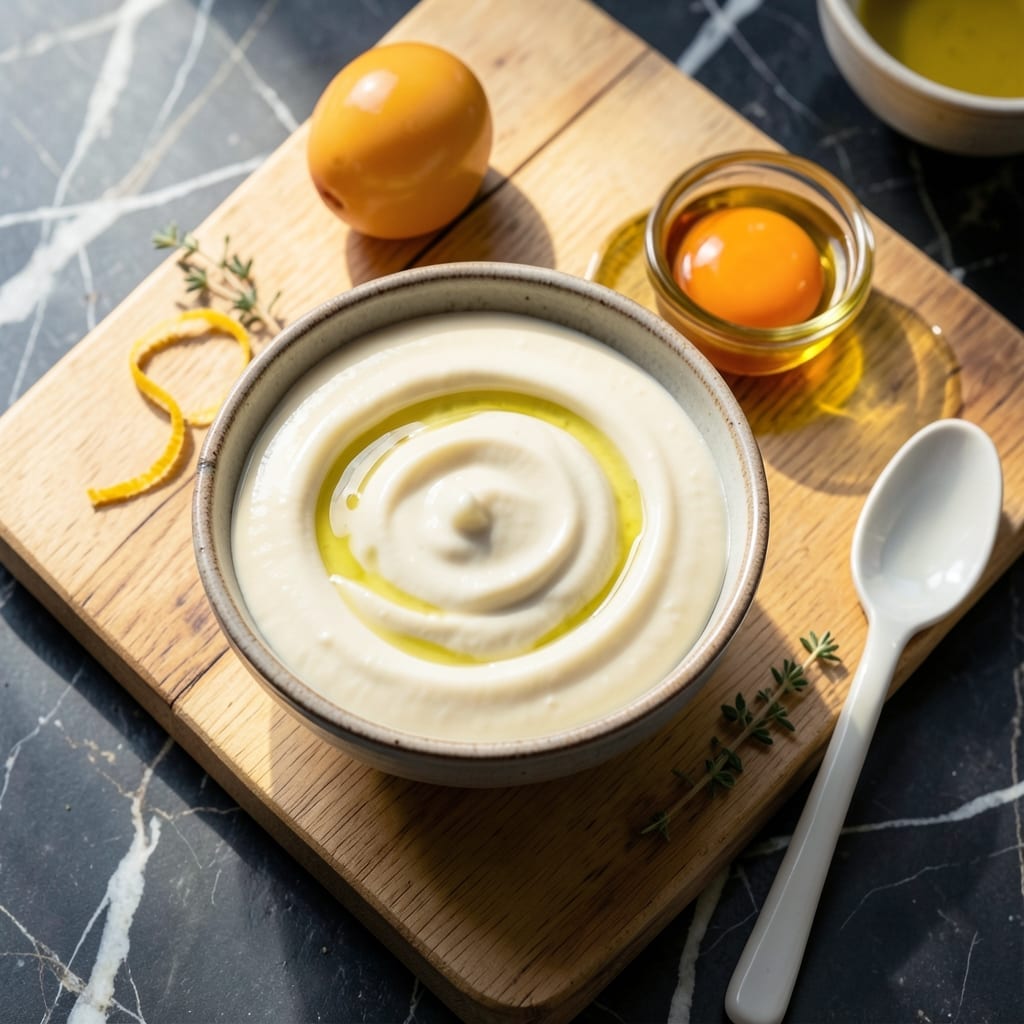
Creamy, rich homemade mayonnaise beats store-bought every time, and making it with olive oil adds a sophisticated depth of flavor. This simple emulsion comes together in minutes with just a few pantry staples.
With precise technique, you’ll achieve a smooth, stable sauce that’s perfect for sandwiches, dressings, or dipping. The key is patience and proper incorporation of the oil.
Ingredients for Homemade Mayonnaise Recipe with Olive Oil
Seven simple ingredients create this luxurious, velvety emulsion at home in minutes.
| Ingredient | Amount | Notes |
|---|---|---|
| Large Egg Yolk 🥚 | 1 whole | Room temperature for best emulsion |
| Dijon Mustard 🟡 | 1 tsp | Smooth, not whole grain |
| White Wine Vinegar 🍷 | 1 tbsp | Or substitute lemon juice |
| Extra-Virgin Olive Oil 🫒 | 1 ¼ cups | Light or mild variety preferred |
| Sea Salt 🧂 | ¼ tsp | Fine grain for even distribution |
| Freshly Ground White Pepper ⚪ | 0.125 tsp | Subtler than black pepper |
| Water 💧 | 1 tsp | For thinning if needed |
The olive oil quality is paramount here. Light or mild extra-virgin olive oil (like Filippo Berio or Bertolli) works best—strong, peppery oils can overpower. Room temperature eggs are non-negotiable; cold yolks won’t emulsify properly. For the Dijon, Grey Poupon or Maille deliver consistent results. Sea salt dissolves more evenly than kosher in this context.
No white wine vinegar? Apple cider vinegar or lemon juice at the same ratio works fine. Out of Dijon? Yellow mustard at half the amount (it’s milder). Want a richer flavor? Add one additional yolk. For a lighter mayo, use half water, half oil in the final additions. The white pepper is traditional but black pepper works if that’s what you have.
Store in a clean glass jar in the fridge for up to 1 week. The emulsion may separate slightly over time—just whisk to recombine. For longer storage, freeze in ice cube trays for up to 3 months. Always use a clean, dry spoon to prevent contamination.
Why You’ll Love This Recipe
- 5-Minute Whisk: That’s all it takes—just a bowl, a whisk, and these five ingredients. I make it between commercials during my favorite show.
- Bright and Rich: The olive oil gives it this luxurious depth, while the Dijon and white wine vinegar cut through with a tangy kick.
- Sandwich Savior: Honestly, once I started making this, my lunch game changed forever. It turns even a simple turkey sandwich into something spectacular.
- Fridge Staple: I double the batch and it keeps for a week, so I’m never stuck buying overpriced jars. Between us, it tastes better anyway.
Step-by-Step Instructions for Homemade Mayonnaise
Master the emulsion technique and create a rich, velvety mayonnaise with professional results.
Step 1: Combine Yolk, Mustard, and Vinegar
In a medium bowl, whisk together the 1 whole Large Egg Yolk, 1 tsp Dijon Mustard, and 1 tbsp White Wine Vinegar until fully combined. The mustard acts as an emulsifier, while the vinegar adds acidity to balance the richness.
Use a wire whisk for this step—it incorporates air better than a fork. The mixture should look smooth and slightly thickened. I always ensure the egg yolk is at room temperature to help the emulsion form more easily.
Step 2: Begin the Emulsion with Olive Oil
Start adding the 1.25 cups Extra-Virgin Olive Oil one drop at a time while whisking constantly. This slow incorporation is critical for a stable emulsion. After the first 2 tablespoons, you can begin to drizzle the oil in a very thin stream.
Watch for the mixture to thicken and lighten in color—this indicates the emulsion is forming. If it looks too thick, add a few drops of the 1 tsp Water to loosen it slightly. The key is patience; rushing this step will break the emulsion.
Step 3: Incorporate Remaining Oil and Season
Once the emulsion is established, you can pour the remaining olive oil in a slightly faster but still steady stream while continuing to whisk vigorously. The mixture should become thick, creamy, and pale, resembling store-bought mayonnaise but with a fresher, more vibrant color.
After all the oil is incorporated, whisk in the 0.25 tsp Sea Salt and 0.125 tsp Freshly Ground White Pepper. Taste and adjust seasoning if needed, but remember the flavors will develop slightly as it rests.
Step 4: Adjust Consistency and Rest
If the mayonnaise is too thick, whisk in the remaining 1 tsp Water, one drop at a time, until it reaches your desired consistency. For a lighter texture, you can add up to 1 additional teaspoon of water, but avoid over-thinning.
Let the mayonnaise rest at room temperature for 10 minutes before using. This allows the flavors to meld and the emulsion to fully stabilize. Store in an airtight container in the refrigerator for up to 1 week.
Pro Tips For Making Homemade Mayonnaise Recipe With Olive Oil
- Slow Pour the Oil: Drizzle the olive oil in a thin, steady stream—about 1 teaspoon every 5 seconds at first. I learned this the hard way after my first attempt broke because I rushed it.
- Use Room-Temp Eggs: Take the egg out of the fridge 30 minutes before starting. Cold yolks resist emulsifying, and I’ve had better luck with mayo that doesn’t separate when the ingredients aren’t fighting each other.
- Skip the Blender: A whisk and a bowl give you more control than a blender or food processor. Sounds weird, but it works: I can see the emulsion form and adjust the oil flow in real time.
- Add Vinegar Last: Mix in the white wine vinegar after the mayo has thickened. Adding it too early can thin the mixture and make it harder to stabilize—my grandmother swore by this, and she was right.
Pro Cooking Tips for This Dish
Room Temperature Matters
Always use room temperature egg yolk for the best emulsion. Cold ingredients won’t bind properly, leading to a broken sauce. I set my egg out 30 minutes before starting.
Slow Oil Incorporation
Begin with drop-by-drop addition of Extra-Virgin Olive Oil while whisking. After the first 2 tbsp, you can switch to a thin stream. This gradual process builds a stable base. 💡
Whisking Technique
Use a wire whisk in a circular motion, keeping the bowl at a slight angle. This creates a vortex that helps incorporate air and oil evenly. A fork won’t give you the same control.
Fixing Broken Emulsion
If your mayo separates, don’t panic. Start with a fresh yolk in a clean bowl, then slowly whisk in the broken mixture. It will re-emulsify beautifully.
Oil Quality Counts
Choose a light or mild olive oil like Filippo Berio. Peppery oils can overpower the delicate flavor. I learned this the hard way with a too-strong EVOO. 🫒
Seasoning Adjustment
Taste before finalizing—you may want more Sea Salt or a pinch of White Pepper. Remember, flavors will intensify slightly after resting for 10 minutes.
Frequently Asked Questions
Why does my mayonnaise break when making it?
This usually happens if the oil is added too quickly or the ingredients are cold. Always use room temperature eggs and add oil drop by drop at first to create a stable emulsion base.
Can I use a different oil besides olive oil?
Yes, but neutral oils like avocado or grapeseed create a milder flavor. Strong oils like extra virgin can overpower the taste. Stick to light olive oil for best results.
How long does homemade mayo last in the fridge?
Properly stored in an airtight container, it keeps for up to 1 week. For longer storage, freeze in ice cube trays for up to 3 months.
Nutrition Facts

- BBQ Sausage Recipe Oven: Smoky Depth Without the Grill - September 28, 2026
- BBQ Chicken Bowl Recipe Rice: Smoky Sweetness Over Fluffy Grains - September 28, 2026
- Beef Cutlet Recipe Ideas: Crispy Breaded Patties With Bold Seasonings - September 28, 2026