
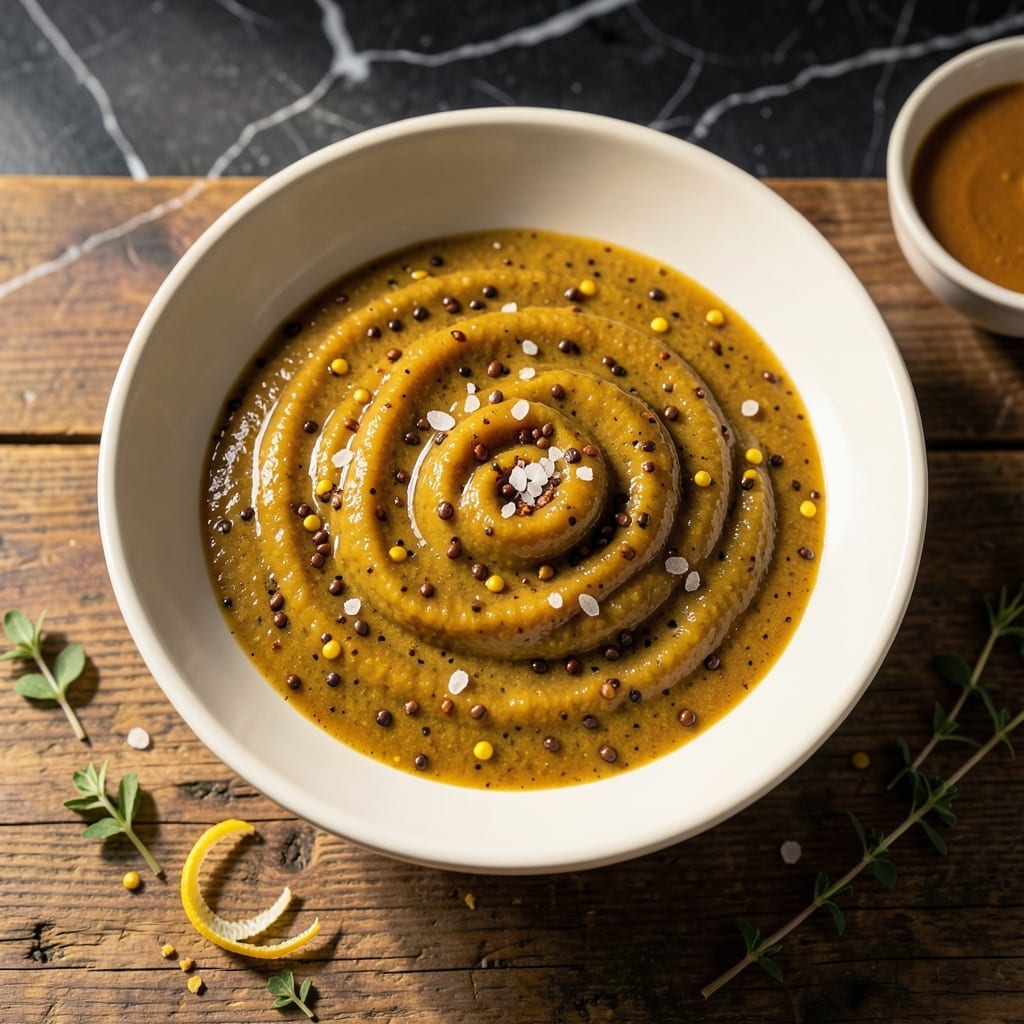
This hot mustard delivers bold, fermented heat that elevates sandwiches and appetizers with its complex depth of flavor. No artificial additives, just simple ingredients transformed through time-honored techniques.
The process begins with mustard seeds soaked in vinegar, allowing natural fermentation to develop that signature sharpness. A touch of sweetness balances the heat, creating a versatile condiment that enhances without overpowering.
What emerges is a smooth, spicy paste with layers of flavor that commercial versions can’t match. The fermentation process mellows the raw heat while intensifying the mustard’s natural pungency.
Store in an airtight container for up to 6 months—the flavor only improves with time. Use it to transform ordinary dishes into extraordinary culinary experiences.
Ingredients for Hot Mustard
Simple seeds and vinegar transform into bold, fermented heat for your favorite dishes.
| Ingredient | Amount | Notes |
|---|---|---|
| Yellow Mustard Seeds 🌿 | ½ cup | Whole, not ground |
| Brown Mustard Seeds 🌿 | ¼ cup | Whole, for depth |
| Apple Cider Vinegar 💧 | 1 cup | Raw, unfiltered preferred |
| White Wine Vinegar 💧 | ½ cup | Balances acidity |
| Turbinado Sugar 🍚 | 2 tbsp | Or brown sugar alternative |
| Sea Salt 🧂 | 1 tsp | Fine grain for dissolving |
| Turmeric Powder 🌶️ | ½ tsp | For color and earthiness |
| Filtered Water 💧 | ¼ cup | Adjust for consistency |
The mustard seeds are critical—bulk bins at natural food stores often have the freshest stock. Look for vibrant color and strong aroma; if they smell dusty, they’re past their prime. Both yellow and brown seeds are essential: yellow for heat, brown for depth. Frontier Co-op or Penzeys offer high-quality options if you prefer pre-packaged. The vinegars should be raw and unfiltered for maximum microbial activity to kickstart fermentation.
No turbinado sugar? Brown sugar or coconut sugar work equally well—just avoid refined white sugar, which lacks the molasses notes that complement the mustard. Short on brown mustard seeds? Black mustard seeds at half the amount add even more heat. For a milder version, increase the yellow seeds. The turmeric is optional but adds a golden hue and subtle earthiness that balances the sharpness.
This keeps improving with age. Store in a sterilized glass jar in a cool, dark place for up to 6 months. The flavor deepens and mellows over time. If a white film forms on top, it’s harmless kahm yeast—just skim it off. Always use a clean, dry spoon to avoid contamination.
Why You’ll Love This Recipe
- Five-Minute Mix: I just dump the seeds, vinegars, and sugar in a jar, shake, and let it sit—no cooking, no fuss.
- Punchy Heat: That first sharp kick from the brown mustard seeds mellows into a sweet, tangy finish thanks to the turbinado.
- Sandwich Superhero: It’s my secret for turning leftover turkey or cold cuts into something I actually crave at lunch.
- Jar Full of Flavor: One batch lasts me weeks in the fridge, and honestly, it tastes even better after a few days.
Step-by-Step Instructions for Hot Mustard
Master the technique, and you’ll produce a mustard with balanced heat and complex flavor every time.
Step 1: Combine Mustard Seeds with Vinegars
In a non-reactive bowl, combine the 0.5 cup Yellow Mustard Seeds and 0.25 cup Brown Mustard Seeds with the 1 cup Apple Cider Vinegar and 0.5 cup White Wine Vinegar. The whole seeds will soften and absorb the acidity, developing their characteristic heat.
Stir well to ensure all seeds are fully submerged. This initial soaking begins the fermentation process that unlocks the mustard’s pungent, spicy profile. Let the mixture sit at room temperature for 12 hours or overnight to maximize flavor extraction.
Step 2: Add Sugar, Salt, and Turmeric
After the seeds have soaked, stir in the 2 tbsp Turbinado Sugar, 1 tsp Sea Salt, and 0.5 tsp Turmeric Powder. The sugar balances the sharpness of the vinegars and seeds, while the turmeric adds earthy depth and a vibrant golden hue.
The sea salt enhances all the flavors, and its fine grain ensures it dissolves evenly throughout the mixture. At this stage, the aroma should be sharp and tangy, with a hint of warmth from the fermenting seeds.
Step 3: Adjust Consistency with Filtered Water
Gradually add the 0.25 cup Filtered Water to the mixture, stirring continuously. The goal is to achieve a thick, pourable consistency that coats the back of a spoon without being runny. Start with half the water, then add more as needed—some seeds absorb more liquid than others.
This step ensures the mustard spreads easily but maintains enough body to cling to sandwiches or dips. The final texture should be smooth yet slightly grainy from the whole seeds, with no visible liquid separation.
Step 4: Blend to Desired Texture
Transfer the mixture to a blender or food processor. Pulse until you reach your preferred level of coarseness. For a rustic texture with visible seed bits, use short bursts. For a smoother finish, blend for 30-45 seconds until nearly uniform.
I prefer a slightly coarse grind—it delivers a more complex mouthfeel and allows the heat to build gradually. Avoid over-blending, as excessive heat from the motor can dull the mustard’s sharpness. Taste and adjust for seasoning if needed.
Step 5: Rest and Mature the Flavors
Transfer the blended mustard to a clean, airtight jar. Let it rest at room temperature for 24 hours before refrigerating. This resting period allows the flavors to meld and the heat to fully develop, transforming the mixture from a simple blend into a deeply layered condiment.
After maturing, store the mustard in the refrigerator, where it will keep for up to 6 months. The flavor will continue to intensify over time, with the heat becoming more pronounced and the acidity mellowing slightly. Stir before each use to redistribute the natural separation that occurs.
Pro Tips For Making Hot Mustard
- Soak the Seeds: Cover mustard seeds in vinegar for 12-24 hours before blending—I learned this the hard way after my first batch tasted more like bitter grit than hot mustard.
- Balance the Vinegars: Use a 1:1 ratio of apple cider to white wine vinegar; skip the white wine vinegar and the mustard loses that sharp, bright kick.
- Grind Just Before: Pulse the soaked seeds right before mixing with sugar and remaining liquid, or they’ll oxidize and turn muddy instead of vibrant.
- Use Fine Turbinado: Pulse the turbinado sugar to superfine first—it dissolves faster and prevents that weird grainy texture in your finished mustard.
Flavor Customization for This Dish
Increase the Heat
For serious spice lovers, swap ¼ cup brown mustard seeds for black mustard seeds. These pack more natural heat and will make your mustard significantly hotter. I also add ½ tsp cayenne pepper to the blend for an extra kick. 🌶️
Add Sweetness
If you prefer a sweeter profile, increase the turbinado sugar to 3 tbsp. Honey works too—use 2 tbsp for a floral note. The extra sweetness helps balance the heat, making it more approachable for those sensitive to spice.
Herb Infusions
Stir in 1 tsp dried thyme or ½ tsp ground allspice for an aromatic twist. Fresh herbs don’t work as well in this recipe, as their moisture can affect fermentation. I love the earthy depth that thyme adds to the mustard’s natural sharpness.
Citrus Zing
Add 1 tbsp lemon zest or 2 tsp orange zest to brighten the flavor. The citrus oils complement the vinegar’s acidity and add a refreshing note. This variation pairs beautifully with grilled meats and sandwiches.
Smoky Depth
For a barbecue-inspired twist, include ½ tsp smoked paprika or a touch of liquid smoke. This adds a subtle smokiness that enhances the mustard’s complexity. It’s perfect for brushing on ribs or mixing into burger sauces. 💡
Creamy Texture
Blend in 2 tbsp Greek yogurt or 1 tbsp mayonnaise after fermentation for a creamier consistency. This works well for dips or salad dressings, softening the heat while adding richness.
Nutrition Facts
Frequently Asked Questions
Can I use ground mustard seeds instead of whole?
No, whole seeds are essential for proper fermentation and texture. Ground seeds will make the mustard too thick and may not develop the same depth of flavor. Stick with whole for best results.
Why does the mixture need to rest before refrigerating?
The 24-hour rest allows flavors to meld and the heat to fully develop. Skipping this step results in a sharper, less balanced mustard that lacks complexity.
How do I fix a too-thick mustard?
Gradually stir in 1-2 tbsp of filtered water until it reaches your desired consistency. Add slowly to avoid making it too runny.
Can I substitute the turbinado sugar?
Yes! Use brown sugar or coconut sugar in equal amounts. Avoid white sugar, as it lacks the molasses notes that complement the mustard’s flavor.

- BBQ Sausage Recipe Oven: Smoky Depth Without the Grill - September 28, 2026
- BBQ Chicken Bowl Recipe Rice: Smoky Sweetness Over Fluffy Grains - September 28, 2026
- Beef Cutlet Recipe Ideas: Crispy Breaded Patties With Bold Seasonings - September 28, 2026