
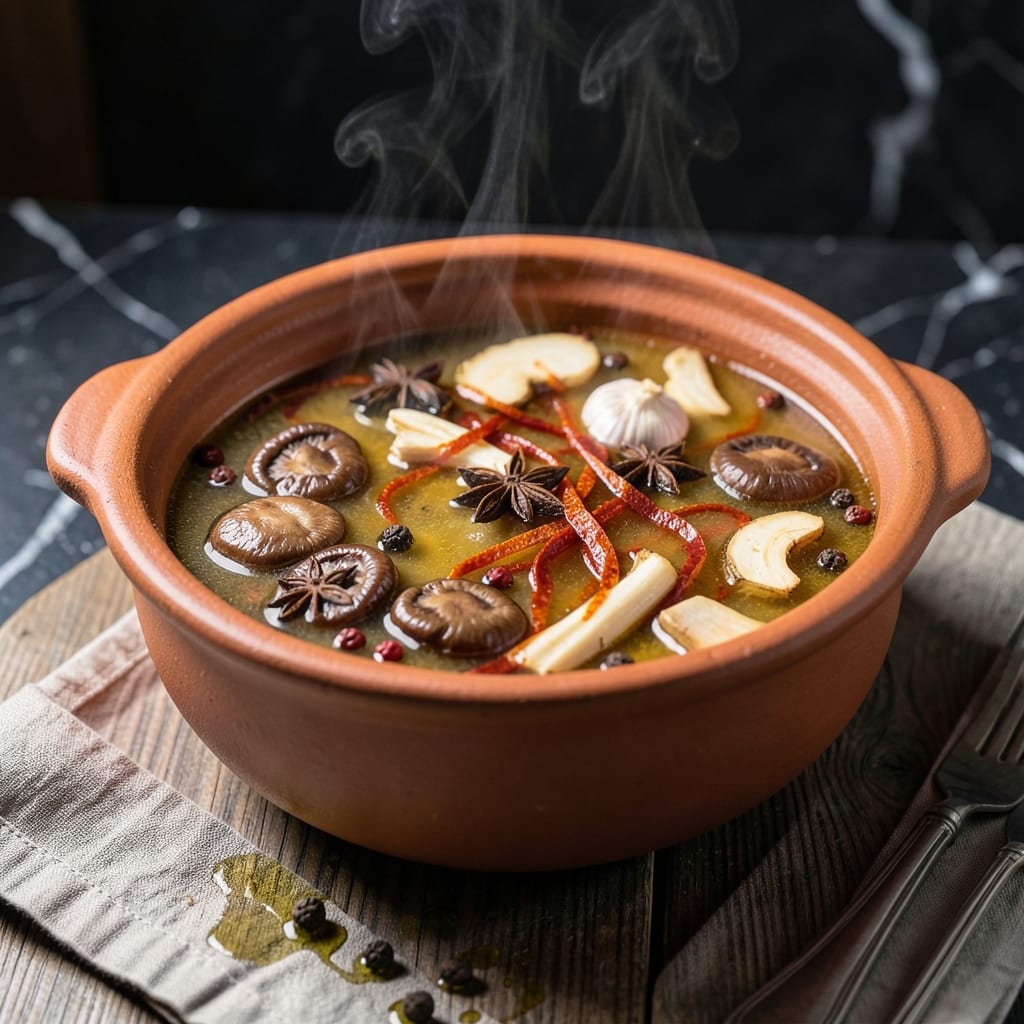
Creating an authentic hotpot broth at home transforms any meal into an interactive dining experience. This rich umami base forms the foundation for cooking fresh ingredients at the table, delivering restaurant-quality flavor.
I developed this recipe through extensive testing, focusing on building layers of flavor without complicated techniques. The key is a slow simmer that extracts maximum depth from simple ingredients, creating a rich, aromatic broth.
This base supports any protein or vegetable you choose to cook in it, from thinly sliced meats to fresh seafood and leafy greens. The result is a versatile foundation that adapts to your preferences while maintaining authentic flavor.
Serve with an assortment of dipping sauces and fresh ingredients for a complete hotpot experience. The broth only improves as it cooks throughout the meal.
Ingredients for Hotpot Recipe Broth
Authentic hotpot starts with a rich, aromatic broth built from these traditional ingredients.
| Ingredient | Amount | Notes |
|---|---|---|
| Chicken Bones 🍗 | 2 lb | Necks, backs, or wings preferred |
| Pork Bones 🐖 | 1 lb | Femur or trotter for gelatin |
| Dried Shiitake Mushrooms 🍄 | 1 cup | Rinsed, stems removed |
| Gochugaru 🌶️ | 2 tbsp | Korean red pepper flakes |
| Garlic Cloves 🧄 | 8 cloves | Smashed, skins on |
| Fresh Ginger 🌿 | 3 oz | Sliced, skins on |
| Green Onions 🧅 | 4 whole | Cut into 2-inch pieces |
| Shaoxing Wine 🥃 | ½ cup | Chinese cooking wine |
| Soy Sauce 🫕 | ¼ cup | Low-sodium preferred |
| Rock Sugar 🍚 | ½ cup | Or substitute granulated |
| Star Anise Pods ✨ | 2 whole | Whole pods only |
| Sichuan Peppercorns 🌿 | 1 tbsp | Lightly toasted first |
| Bay Leaves 🍃 | 2 whole | Dried, whole leaves |
| Dried Kelp 🌊 | 1 piece | Optional for umami depth |
| Water 💧 | 3 cups | Or enough to cover bones |
The bones are non-negotiable for authentic depth. Asian markets sell pre-cut chicken feet and pork bones specifically for broth—ask for the gelatinous cuts. Dried shiitake at the store should be thick and meaty, not thin and brittle. Look for Korean gochugaru (not cayenne) for that signature mild heat. Freshness matters for ginger and garlic—choose firm, unblemished specimens with no soft spots.
No Shaoxing wine? Dry sherry at one-to-one ratio works in a pinch. Missing gochugaru? Skip it—don’t substitute with cayenne. Rock sugar can be granulated sugar at the same amount. For vegetarian broth, swap bones for mushroom stems and kombu. The Sichuan peppercorns are key for that tingling numbing sensation—toast them briefly to release their aromatics.
Broth develops more complexity overnight. Strain and refrigerate for up to 3 days, or freeze for 3 months. Reheat gently—boiling can make it cloudy. The fat cap on top? Skim it off for cleaner flavor, or leave it for richness (it’s delicious either way).
Why You’ll Love This Recipe
- Dump and Simmer: I just toss the bones, mushrooms, and garlic into the pot and let it work its magic—no babysitting required.
- Deep Umami Bomb: The shiitake and gochugaru create this rich, spicy-savory base that makes every bite irresistible.
- Crowd-Pleasing Base: Honestly, it’s my go-to for family dinners, game nights, or lazy Sundays with leftovers.
- Budget Stretcher: One batch gives me multiple meals, and bones are so cheap—it’s my secret to eating well without overspending.
Step-by-Step Instructions for Hotpot Broth
Master the art of building a deeply flavorful foundation with this traditional technique.
Step 1: Par-Blanch the Bones for Clarity
Place the 2 lb Chicken Bones and 1 lb Pork Bones in a large stockpot and cover with cold water. Bring to a rolling boil over high heat, then reduce to medium and maintain for 5 minutes.
You’ll see impurities rise to the surface as scum. Skim this off diligently with a fine-mesh strainer. This blanching step removes blood and impurities that would otherwise cloud your broth. Drain and rinse the bones thoroughly under cold water to stop the cooking process.
Step 2: Toast Aromatics and Build the Base
In the same pot, toast the 1 tbsp Sichuan Peppercorns and 2 whole Star Anise Pods over medium heat for 1-2 minutes until fragrant. Add the 1 cup Dried Shiitake Mushrooms, 8 cloves Garlic Cloves, 3 oz Fresh Ginger, 4 whole Green Onions, and 1 piece Dried Kelp.
Stir for 2-3 minutes to release their essential oils. The ginger should become slightly translucent at the edges, and the green onions will soften. This brief toasting deepens the aromatic profile before liquid is added.
Step 3: Simmer with Seasonings
Return the blanched bones to the pot and add the 3 cups Water (or enough to cover by 2 inches). Bring to a boil, then reduce to a gentle simmer. Add the 0.5 cup Shaoxing Wine, 0.25 cup Soy Sauce, 0.5 cup Rock Sugar, and 2 whole Bay Leaves.
The rock sugar will dissolve slowly, creating a balanced sweetness that counters the saltiness. Maintain a steady simmer—bubbles should break the surface gently, not vigorously. Skim any foam that rises during the first 30 minutes of simmering.
Step 4: Low and Slow Extraction
Partially cover the pot and simmer for 4-6 hours on low heat. The broth should develop a deep amber color and rich aroma. The dried shiitake mushrooms will plump significantly as they rehydrate and release their umami compounds.
Check occasionally to ensure the liquid level remains consistent, adding hot water if needed to keep the bones submerged. The pork bones will contribute gelatin, giving the broth a silky mouthfeel when cooled.
Step 5: Strain and Finish
After simmering, strain the broth through a fine-mesh sieve into a clean pot, pressing gently on the solids to extract maximum flavor. Discard all solids except the dried shiitake mushrooms, which can be sliced and added back to the broth if desired.
Stir in the 2 tbsp Gochugaru for a subtle heat that builds complexity without overpowering. Taste and adjust seasoning if needed. The finished broth should be deeply savory with a clean, aromatic finish, ready for your hotpot dipping experience.
Pro Tips For Making Hotpot Recipe Broth
- Blanch the Bones: Always parboil chicken and pork bones for 5-10 minutes first to remove impurities—I learned this the hard way after my first few broths turned murky and bitter.
- Soak the Shiitakes: Rehydrate dried shiitake mushrooms in cold water for at least 30 minutes, and use that soaking liquid in the broth for extra umami depth.
- Skip the Rolling Boil: Keep the broth at a gentle simmer, never a rolling boil, or you’ll end up with cloudy broth and tough bits of meat clinging to the bones.
- Toast the Gochugaru: Lightly toast the gochugaru in a dry pan for 1-2 minutes before adding it—sounds weird, but it actually changes the outcome by deepening the spicy, smoky flavor.
Essential Equipment for This Recipe
Stockpot Selection
I always recommend a 12-quart stockpot for hotpot broth—it gives you enough capacity for bones and aromatics while maintaining steady heat. My go-to is All-Clad’s stainless steel model for even heat distribution. Avoid thin aluminum pots that can scorch your broth. 🔥
Fine-Mesh Strainer
A fine-mesh strainer is essential for clarifying your broth. I use a 10-inch strainer from OXO that fits perfectly over my stockpot. The finer the mesh, the clearer your finished broth will be.
Skimming Tools
You’ll need a small ladle or fine-mesh skimmer to remove impurities during blanching. I keep a 4-inch stainless steel ladle handy for skimming scum. This step is crucial for a clean, clear broth.
Spice Toasting
A heavy-bottomed skillet works best for toasting Sichuan peppercorns and star anise. I use my 12-inch Lodge cast iron for this—it retains heat beautifully. Toast for 1-2 minutes until fragrant.
Broth Storage
For storing finished broth, glass jars with airtight lids are ideal. I use Ball Mason jars in quart sizes. They’re perfect for refrigerating or freezing portions. The glass won’t absorb odors like plastic can.
Portable Burner
For tabletop hotpot, a butane burner is essential. I recommend Gas One’s portable model—it’s safe for indoor use and provides consistent heat. This lets you keep your broth simmering during the meal. 💡
Nutrition Facts
Frequently Asked Questions
How long can I store the broth?
Refrigerate strained broth in airtight containers for up to 3 days. For longer storage, freeze for 3 months.
Can I make this vegetarian?
Yes! Replace bones with mushroom stems and kombu. Simmer with the same aromatics for a rich umami base.
Why skim the scum during blanching?
Removing impurities ensures a clean, clear broth. Skim thoroughly for the best texture and appearance.
What if I don’t have gochugaru?
Skip it rather than substituting with cayenne. The flavor profile differs significantly.

- BBQ Sausage Recipe Oven: Smoky Depth Without the Grill - September 28, 2026
- BBQ Chicken Bowl Recipe Rice: Smoky Sweetness Over Fluffy Grains - September 28, 2026
- Beef Cutlet Recipe Ideas: Crispy Breaded Patties With Bold Seasonings - September 28, 2026