
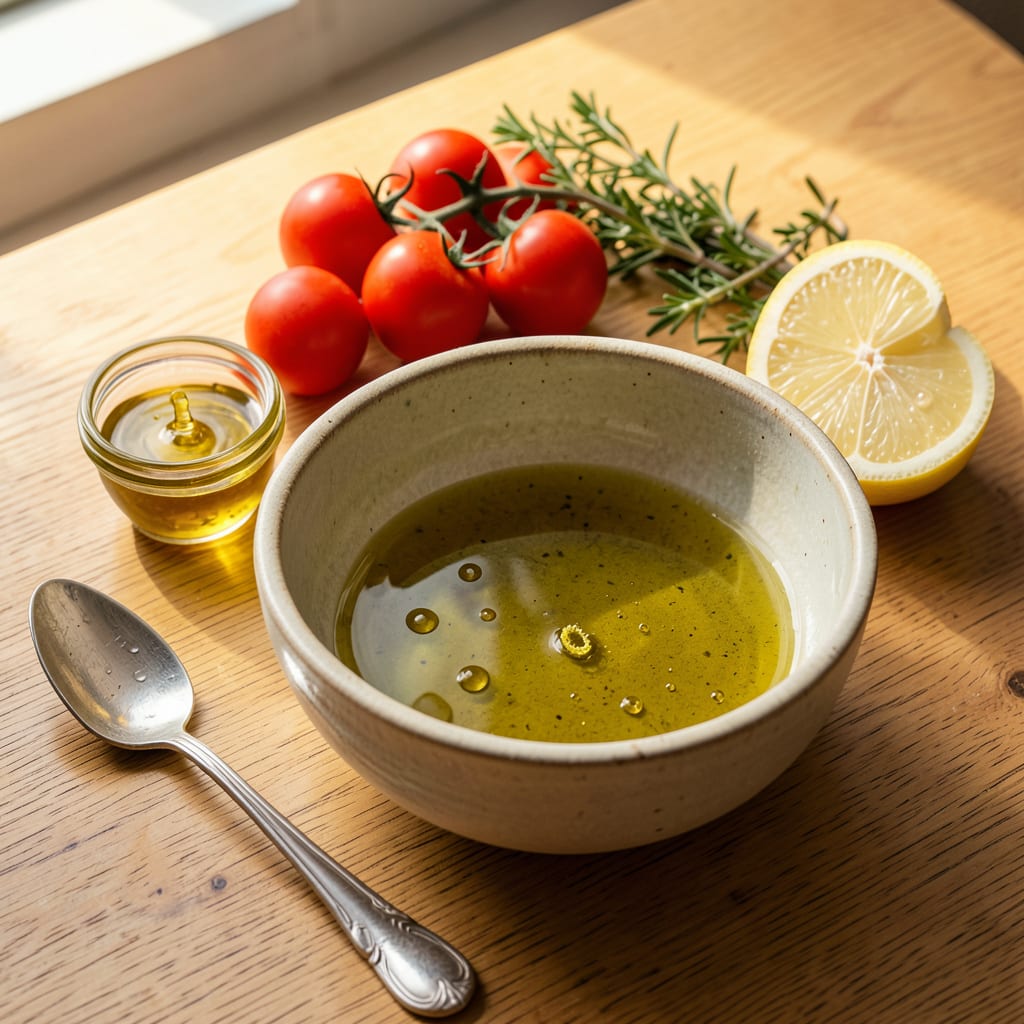
A splash in cooking typically means about 1 to 2 tablespoons of liquid—enough to add flavor without overwhelming a dish. For alcohol or vinegar, 1 teaspoon is often sufficient due to potency.
I’ve found that this measurement works because it’s just enough to enhance a dish without altering its core flavor profile. 🔥 The difference between a 1-teaspoon splash for potent ingredients like balsamic vinegar and a 2-tablespoon splash for milder liquids like broth comes down to concentration levels. Professional chefs often use this term to maintain flexibility in recipes, allowing for adjustments based on personal taste preferences and ingredient quality.
What’s interesting is how this term evolved in restaurant kitchens—it’s a practical shorthand that balances precision with creative freedom. ✨ I always recommend starting with the smaller amount, especially with strong flavors, then adding more gradually until you reach the perfect balance for your palate.
💡 In This Article
- Why Recipe Splash Measurements Vary by Ingredient
- Chef-Approved Alternatives to Splash Measurements
Why Recipe Splash Measurements Vary by Ingredient
The term “splash” isn’t one-size-fits-all because ingredients have vastly different flavor concentrations. Take vanilla extract versus white wine vinegar: vanilla contains about 35% alcohol and concentrated flavor compounds, while vinegar’s acidity (typically 5-7%) makes it much more potent.
A 1-teaspoon splash of vanilla might be perfect for a cake batter, but that same amount of vinegar could overpower a delicate salad dressing. 🔥
Liquid density plays a surprising role too. Heavy cream (with 36-40% fat content) coats ingredients differently than water-based broths. When a recipe calls for a splash of cream, you’re usually looking at 1-2 tablespoons to achieve that velvety texture without making the dish too rich.
Compare that to a splash of lemon juice—where even ½ teaspoon can dramatically brighten flavors due to its high citric acid concentration (about 5-7%).
Professional kitchens developed this terminology as a flexible shorthand. Chefs know that a splash of soy sauce (with its 12-18% sodium content) needs to be more conservative than a splash of chicken stock.
The rule I follow: start with 1 teaspoon for strong, salty, or acidic liquids, and 1 tablespoon for milder ingredients like milk or wine. This approach prevents over-seasoning while allowing for adjustments. ✨
Temperature and cooking method also influence splash measurements. A splash of brandy added to a hot pan will reduce by about 30-40% through evaporation, concentrating its flavor. That’s why recipes often call for a larger splash (2 tablespoons) when deglazing compared to just 1 teaspoon when mixing into a cold sauce.
The heat transforms the liquid’s impact on the final dish.
Here’s what most home cooks overlook: dish volume matters. A splash in a single-serving sauce might be 1 teaspoon, but that same “splash” in a gallon of soup could mean ¼ cup to maintain proper flavor balance.
Professional recipes often scale splashes proportionally—this is why you’ll see 1 tablespoon per cup of liquid as a common ratio in restaurant kitchens. 💫
Even the vessel shape affects splash measurements. A wide, shallow pan requires more liquid to achieve the same flavor distribution as a deep pot. I’ve tested this with wine reductions—2 tablespoons in a sauté pan gives similar results to 1 tablespoon in a saucepan due to the different surface areas exposed to heat.
The historical context explains why this term persists: 19th-century French chefs used “un peu” (a little) measurements that evolved into our modern “splash.” This tradition continues because cooking remains both science and art—precise enough for consistency, flexible enough for creativity.
The key is understanding each ingredient’s flavor intensity and how it interacts with your specific dish. ⚡

- BBQ Sausage Recipe Oven: Smoky Depth Without the Grill - September 28, 2026
- BBQ Chicken Bowl Recipe Rice: Smoky Sweetness Over Fluffy Grains - September 28, 2026
- Beef Cutlet Recipe Ideas: Crispy Breaded Patties With Bold Seasonings - September 28, 2026