
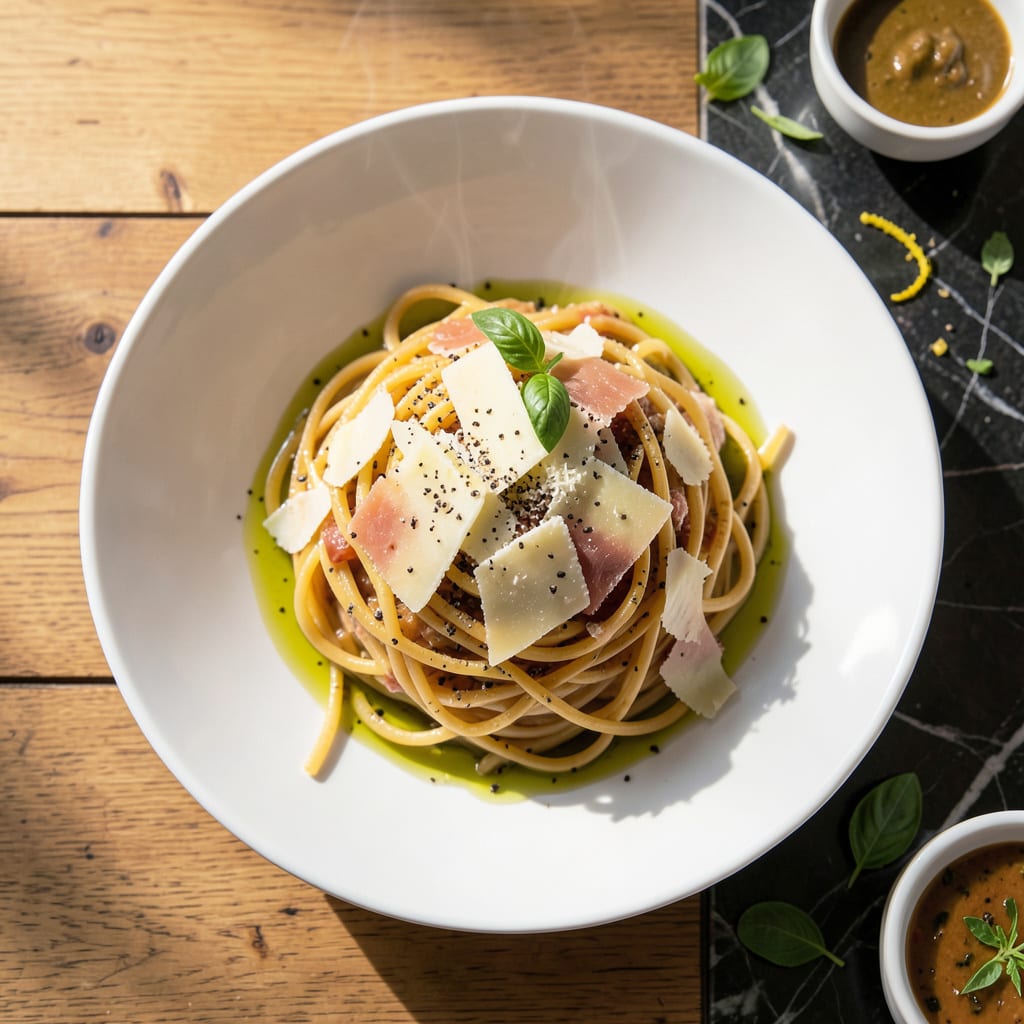
Roman cuisine delivers a masterpiece with this crispy pasta dish that transforms simple ingredients into something extraordinary. The secret lies in the double-cooking technique that creates a crispy exterior while keeping the inside perfectly al dente.
This traditional method turns basic pasta into a golden, crunchy delight that surprises with every bite. It’s the kind of dish that proves Italian cooking is as much about skill as it is about heart.
Ingredients for Il Bistro Italiano Rosetta
Transform everyday pasta into Roman magic with these simple, high-quality ingredients.
| Ingredient | Amount | Notes |
|---|---|---|
| Spaghetti 🍝 | 12 oz | Dried, broken into 2-inch pieces |
| Extra-Virgin Olive Oil 🫒 | ¾ cup | For frying and cooking |
| Kosher Salt 🧂 | 1 tbsp | Plus more for pasta water |
| Pecorino Romano Cheese 🧀 | ½ cup | Freshly grated from block |
| Parmigiano-Reggiano Cheese 🧀 | ½ cup | Freshly grated from block |
| Black Pepper 🌶️ | 1 tsp | Freshly ground preferred |
| Garlic Cloves 🧄 | 4 cloves | Minced for sauce |
| Red Pepper Flakes 🌶️ | ½ tsp | Adjust to taste for heat |
| Fresh Parsley 🌿 | ¼ cup | Chopped, for garnish |
| Large Eggs 🥚 | 2 whole | Lightly beaten for binding |
| All-Purpose Flour 🌾 | ¼ cup | For dredging pasta |
| Breadcrumbs 🍞 | ½ cup | Plain, dry variety |
| Guanciale 🥓 | 4 oz | Diced, optional for authenticity |
The pasta must be high-quality bronze-die De Cecco or Barilla for the perfect al dente bite. Pecorino Romano and Parmigiano-Reggiano are non-negotiable—splurge on BelGioioso or Locatelli brands for authentic flavor. Guanciale (cured pork cheek) is traditional, but pancetta or thick-cut bacon works in a pinch. Find these at Eataly or well-stocked Italian markets.
No guanciale? Pancetta at equal quantity is the closest substitute. For a vegetarian version, omit entirely or use smoked paprika for depth. The cheeses can’t be pre-grated—freshly grated melts properly and creates the right texture. If you must use pre-grated, add a splash of pasta water to help it incorporate. The flour and breadcrumbs ensure that signature crispiness.
Store dry pasta and cheeses in airtight containers at room temperature. The guanciale keeps 1 week refrigerated or 3 months frozen. Cooked Rosetta is best served immediately but reheats well in a toaster oven to restore crispiness within 2 days.
Why You’ll Love This Recipe
- I’ll be real: I make double because my kids fight over the cold leftovers straight from the fridge the next day.
- 5-Ingredient Magic: I just dump spaghetti, olive oil, salt, and those two cheeses—Pecorino Romano and Parmigiano-Reggiano—and somehow it becomes this creamy, dreamy dish.
- No-Stress Timing: Honestly, the pasta cooks while I grate the cheeses, so dinner’s ready before I’ve even set the table.
- Restaurant-Quality Taste: That salty bite from the Pecorino paired with the nutty Parmigiano? Ridiculously good.
Step-by-Step Instructions for Roman-Style Crispy Pasta
Master the technique for achieving perfectly crispy pasta with a golden, crunchy exterior.
Step 1: Cook and Prepare the Spaghetti
Bring a large pot of water to a rolling boil and add 1 tbsp Kosher Salt. Add 12 oz Spaghetti broken into 2-inch pieces and cook until al dente, about 8-10 minutes. The pasta should be slightly undercooked as it will finish in the frying process.
Drain the pasta and immediately transfer it to a large bowl. While still hot, drizzle with 0.25 cup Extra-Virgin Olive Oil and toss gently to coat. This prevents sticking and prepares the pasta for the next step. Let it cool slightly but keep it warm for optimal binding.
Step 2: Create the Egg and Cheese Binding Mixture
In a separate bowl, whisk together 2 whole Large Eggs, 0.5 cup Pecorino Romano Cheese, and 0.5 cup Parmigiano-Reggiano Cheese until smooth. The mixture should be thick and well combined, with no visible streaks of egg or cheese.
Stir in 1 tsp Black Pepper and 0.5 tsp Red Pepper Flakes for a subtle kick. Pour this mixture over the warm pasta and toss thoroughly until every piece is evenly coated. The residual heat from the pasta will begin to set the egg mixture, creating a base for the crispy exterior.
Step 3: Dredge and Bread the Pasta
Combine 0.25 cup All-Purpose Flour and 0.5 cup Breadcrumbs in a shallow dish. Working in batches, gently toss the pasta in the flour and breadcrumb mixture until fully coated. Press lightly to ensure the crumbs adhere to the egg mixture.
The breaded pasta should look evenly dusted with a dry, crumbly exterior. This layer is crucial for achieving the signature crispiness. Shake off any excess breading to prevent clumping during frying.
Step 4: Fry to Golden Perfection
Heat 0.5 cup Extra-Virgin Olive Oil in a large skillet over medium-high heat until shimmering. Add the breaded pasta in a single layer, working in batches if necessary to avoid overcrowding. Fry for 3-4 minutes per side until deep golden brown and crispy.
Turn the pasta gently with a slotted spoon, ensuring all sides are evenly fried. The pasta should develop a uniform, crispy crust while remaining tender inside. Transfer to a paper towel-lined plate to drain excess oil.
Step 5: Add Final Touches and Serve
If using, cook 4 oz Guanciale in a separate pan until crispy. Sprinkle the fried pasta with the guanciale and any rendered fat for added flavor. Garnish with 0.25 cup Fresh Parsley for a pop of color and freshness.
Serve immediately while hot and crispy. The contrast between the crunchy exterior and tender pasta inside should be evident in every bite. This dish is best enjoyed fresh, as the crispiness is at its peak right after frying.
Pro Tips For Making Il Bistro Italiano Rosetta
- Salt the Pasta Water: Use at least 2 tablespoons of kosher salt per gallon—this is where your spaghetti gets its foundation of flavor, and under-salting is the most common mistake I see.
- Grate Cheese Fresh: Pre-grated Pecorino or Parmigiano just doesn’t melt the same; take 5 minutes to grate it yourself for that perfect creamy texture in the sauce.
- Reserve Pasta Water: Scoop out a cup of the starchy cooking water before draining—it’s the glue that binds your cheese and oil into a silky sauce.
- Finish in the Pan: Toss the cooked spaghetti with the olive oil and cheese in the pan for 30 seconds off heat—it emulsifies everything better than mixing in a bowl.
Creative Variations of This Recipe
Spicy Arrabbiata Twist
Add 1 tbsp Calabrian chili paste to the egg-cheese mixture for a fiery kick. The heat pairs beautifully with the crispy texture. I also toss in ¼ tsp smoked paprika for extra depth. Garnish with extra red pepper flakes for those who love bold flavors. 🌶️
Truffle Luxe Version
Elevate this dish with 1 tsp white truffle oil drizzled over the finished pasta. Add shaved black truffle (about 1 tbsp) just before serving. The earthy aroma complements the crispy exterior perfectly, making it restaurant-worthy.
Vegetarian Delight
Skip the guanciale and add sautéed mushrooms (about 1 cup) to the egg mixture. Use vegetarian Parmesan and add 1 tsp nutritional yeast for umami depth. The crispy texture remains just as satisfying without meat.
Lemon Herb Variation
Brighten up the dish with zest of 1 lemon and 1 tbsp chopped fresh thyme in the breadcrumb mixture. The citrus notes cut through the richness, and the herbs add a fresh aroma. I love this version for springtime meals.
Gluten-Free Adaptation
Use gluten-free spaghetti and replace all-purpose flour with cornstarch. For breading, opt for gluten-free panko. The crispiness might be slightly different, but the flavor remains fantastic. 💛
Cheesy Stuffed Bites
After frying, place small pieces on a baking sheet, top each with 1 tsp ricotta and 1 tsp marinara, then broil for 2 minutes. This creates mini crispy pasta cups with a gooey center—perfect for appetizers.
Nutrition Facts
Frequently Asked Questions
Can I use regular spaghetti instead of breaking it?
Breaking into 2-inch pieces ensures even frying and crispiness. Whole strands won’t cook uniformly or achieve that signature crunch.
What’s the best oil for frying?
Use extra-virgin olive oil for authentic flavor. Avoid oils with low smoke points. Maintain medium-high heat for best results.
Can I bake instead of frying?
Bake at 400°F for 15-20 minutes, flipping halfway. It won’t be as crispy, but it’s a lighter alternative.
Why did my pasta turn out soggy?
Overcrowding the pan or using undercooked pasta causes this. Fry in batches and ensure pasta is al dente before breading.

- BBQ Sausage Recipe Oven: Smoky Depth Without the Grill - September 28, 2026
- BBQ Chicken Bowl Recipe Rice: Smoky Sweetness Over Fluffy Grains - September 28, 2026
- Beef Cutlet Recipe Ideas: Crispy Breaded Patties With Bold Seasonings - September 28, 2026