
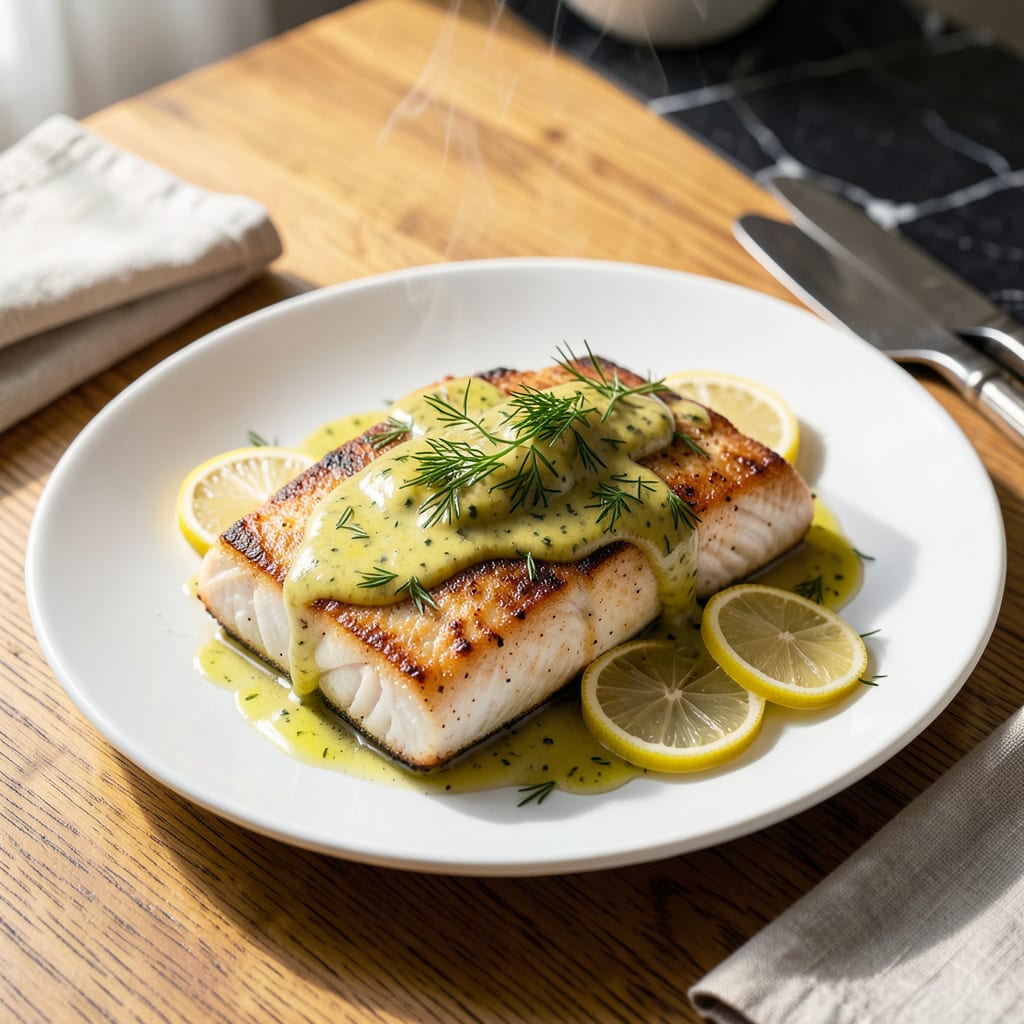
This baked halibut delivers flaky, tender fish with minimal effort. A lemon-herb crust adds bright flavor while keeping the preparation simple and elegant.
Ina Garten’s method ensures perfect results every time—just season, bake, and serve with a squeeze of fresh lemon for a dish that feels special but stays approachable.
Ingredients for Ina Garten Baked Halibut
Eleven quality ingredients create this elegant baked fish with bright lemon-herb crust.
| Ingredient | Amount | Notes |
|---|---|---|
| Halibut Fillets 🐟 | 1 ½ lb | Skinless, fresh or thawed |
| Extra-Virgin Olive Oil 🫒 | 3 tbsp | Divided for crust and baking |
| Dijon Mustard 🟡 | 2 tbsp | Smooth, not grainy |
| Fresh Lemon Juice 🍋 | 3 tbsp | From 1 large lemon |
| Lemon Zest 🍋 | 1 tbsp | From 1 large lemon |
| Fresh Dill 🌿 | ¼ cup | Chopped, stems removed |
| Fresh Parsley 🌿 | ¼ cup | Chopped, flat-leaf preferred |
| Garlic Cloves 🧄 | 2 cloves | Minced finely |
| Panko Breadcrumbs 🍞 | ½ cup | Lightly toasted for texture |
| Kosher Salt 🧂 | 1 tsp | Diamond Crystal preferred |
| Freshly Ground Black Pepper 🌶️ | ½ tsp | Coarse grind ideal |
| Unsalted Butter 🧈 | 2 tbsp | Melted for crust |
The halibut quality is non-negotiable here. Wild-caught Pacific halibut offers the best flake and texture—look for fillets with a transluscent sheen, not dull or dry. Whole Foods and FreshDirect consistently stock premium options. If buying frozen, thaw overnight in the fridge (never at room temperature). The fillets should be about 1-inch thick for even cooking.
No fresh dill? Dried dill at one-third the amount works, but fresh is superior. Parsley can be flat-leaf or curly (flat-leaf has more flavor). Panko substitution isn’t ideal here—regular breadcrumbs lack the crisp texture. For a gluten-free option, use crushed cornflakes. The Dijon mustard is key—don’t swap for yellow mustard, as it lacks the depth.
Halibut is best cooked the day of purchase, but fillets keep in the fridge for 1-2 days max. Store breadcrumbs in the pantry for 3 months. The herb crust can be prepped 1 hour ahead—keep it covered at room temperature until ready to use.
Why You’ll Love This Recipe
- One Pan Simplicity: I love that I can mix the olive oil, Dijon, and lemon in one bowl, slather it on the halibut, and bake—no fuss, no extra dishes.
- Zingy Perfection: The combo of tangy Dijon and bright lemon zest makes every bite of halibut taste like it came from a seaside bistro.
- Dinner or Lunch: It’s just as good served hot for dinner as it is cold the next day in a salad or wrap.
- Leftovers? Yes Please: Honestly, the flavors deepen overnight, so I always make extra for tomorrow’s lunch.
Step-by-Step Instructions for Baked Halibut with Lemon-Herb Crust
Here’s the method I use to guarantee perfectly flaky fish with a crisp, golden topping.
Step 1: Prepare the Halibut Fillets
Pat the 1.5 lb Halibut Fillets completely dry with paper towels to ensure the crust adheres properly. This step is non-negotiable—moisture prevents browning and crisping. Season both sides evenly with the 1 tsp Kosher Salt and 0.5 tsp Freshly Ground Black Pepper, pressing gently so the seasoning sticks.
Place the fillets on a parchment-lined baking sheet. Drizzle with 1 tbsp Extra-Virgin Olive Oil and rub it over the surface to create a base layer for the crust. This prevents sticking and adds richness to the final dish.
Step 2: Make the Lemon-Herb Crust Mixture
In a small bowl, combine the 2 tbsp Dijon Mustard, 3 tbsp Fresh Lemon Juice, 1 tbsp Lemon Zest, 0.25 cup Fresh Dill, 0.25 cup Fresh Parsley, and 2 cloves minced Garlic Cloves. Whisk until smooth and fully incorporated. The acidity of the lemon juice brightens the fish, while the herbs add freshness.
Stir in the 0.5 cup Panko Breadcrumbs and 2 tbsp Unsalted Butter until the mixture resembles a coarse paste. The panko provides texture, and the butter ensures a golden, crisp finish. Let it sit for 2 minutes to allow the breadcrumbs to absorb the liquid slightly.
Step 3: Top the Halibut and Bake
Preheat the oven to 400°F. Spread the crust mixture evenly over the halibut fillets, pressing lightly to form an even layer. Drizzle the remaining 2 tbsp Extra-Virgin Olive Oil over the top for extra crispness.
Bake on the center rack for 12-15 minutes until the crust is golden brown and the halibut flakes easily with a fork. Avoid overbaking—halibut continues cooking slightly after removal from the oven. The internal temperature should reach 145°F for perfect doneness.
Step 4: Rest and Serve Immediately
Remove the halibut from the oven and let it rest for 3-5 minutes. This short rest allows the juices to redistribute, ensuring the fillets stay moist and flaky. The crust will also crisp up slightly as it cools.
Transfer the fillets to serving plates using a spatula, keeping the crust intact. Serve immediately while hot—the contrast of the crisp topping and tender fish is best enjoyed fresh from the oven. Garnish with additional fresh dill or a squeeze of lemon if desired.
Pro Tips For Making Ina Garten Baked Halibut
- Pat Dry First: Blot the halibut fillets thoroughly with paper towels before seasoning—I learned this the hard way after my first batch steamed instead of searing in the oven.
- Don’t Overbake: Pull the halibut out when it just starts to flake and reaches 130°F internally; it’ll keep cooking off the heat and stay moist.
- Use Fresh Zest: Skip the pre-grated lemon zest and use a microplane on a whole lemon; the oils in fresh zest make the Dijon-lemon crust taste brighter.
- Warm the Plates: Pop your serving plates in the oven for a few minutes before plating—sounds fussy, but it keeps the halibut from cooling too fast and losing that perfect temperature.
Troubleshooting Perfect Results
Crust Not Browning
If your crust stays pale, your oven may be running cool. Use an oven thermometer to verify 400°F. Also, ensure you’re using the full 2 tbsp Unsalted Butter in the mixture—it’s essential for golden color. 🔥
Fish Sticks to Pan
This usually means the parchment paper wasn’t used or the fish wasn’t properly dried. Always pat fillets completely dry and use parchment. A well-seasoned Lodge cast iron skillet also works beautifully if you prefer stovetop finishing.
Dry, Overcooked Fish
Halibut cooks fast—pull it at exactly 145°F internal temperature. Even 1-2 minutes over can dry it out. Use a ThermoWorks instant-read thermometer for precision. The fish will continue cooking while resting.
Crust Slides Off
This happens when the fish releases too much moisture. Pat fillets extra dry and let the crust mixture sit for 2 minutes before applying. Press the topping on gently but firmly so it adheres during baking.
Bland Flavor
Don’t skip the Dijon Mustard—it adds depth. Use fresh herbs, not dried. I also recommend finishing with a squeeze of fresh lemon juice just before serving to brighten all the flavors. 💡
Uneven Cooking
For consistent results, ensure fillets are of equal thickness—about 1-inch thick. If some pieces are thinner, fold them under slightly. Rotate the pan halfway through the 12-15 minute baking time.
Nutrition Facts
Frequently Asked Questions
Can I substitute another fish for halibut?
Yes! Cod or mahi-mahi work well with the same baking time. Just ensure fillets are 1-inch thick for even cooking.
How do I know when the fish is done?
Look for 145°F internal temperature and opaque flesh that flakes easily. The crust should be golden brown after 12-15 minutes.
Can I make the crust ahead?
The crust mixture can be prepped 1 hour ahead. Keep covered at room temperature, but apply just before baking for best texture.
Why did my crust turn out soggy?
Pat fillets completely dry first. Also, use the full 400°F oven temperature and full 2 tbsp butter for crispness.

- BBQ Sausage Recipe Oven: Smoky Depth Without the Grill - September 28, 2026
- BBQ Chicken Bowl Recipe Rice: Smoky Sweetness Over Fluffy Grains - September 28, 2026
- Beef Cutlet Recipe Ideas: Crispy Breaded Patties With Bold Seasonings - September 28, 2026