
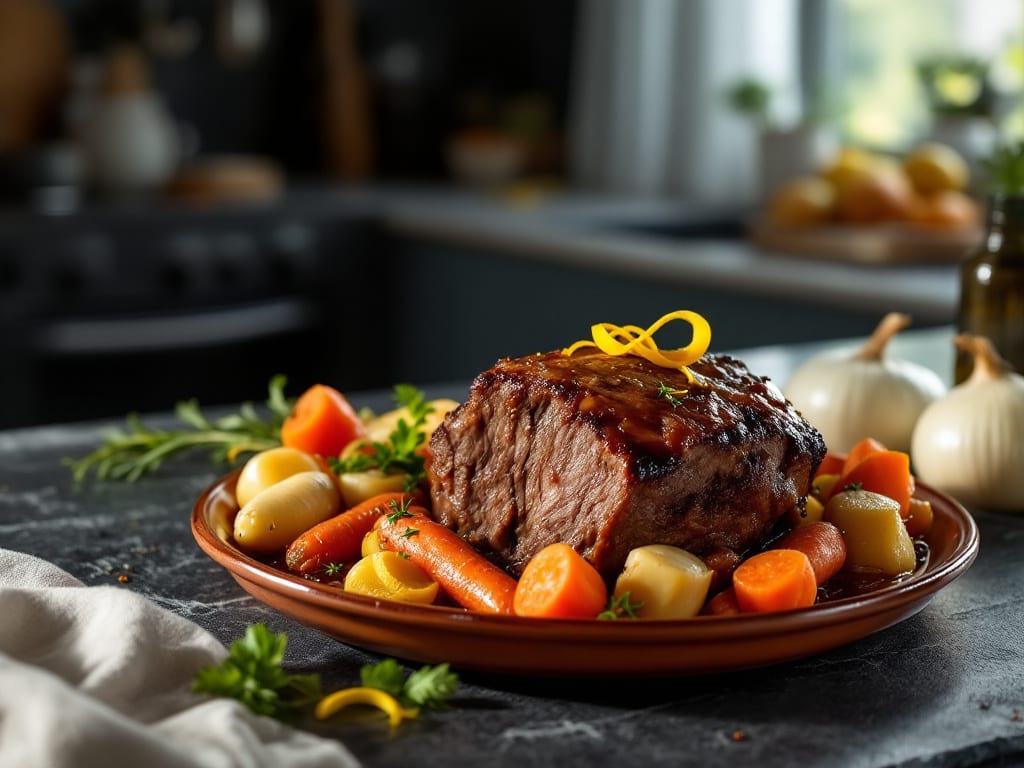
Ina Garten’s pot roast recipe transforms tough cuts of beef into melt-in-your-mouth perfection through slow cooking and careful technique. This classic dish delivers restaurant-quality results with her signature balance of rich flavors and elegant presentation.
The key lies in searing the meat first to develop deep caramelization, then braising it low and slow until tender enough to fall apart.
What makes this recipe special is the herbed gravy that elevates simple ingredients into something extraordinary. Using just a few pantry staples—like beef broth, red wine, and fresh herbs—we create a velvety sauce that coats every bite.
The slow cooking process allows the meat to absorb these flavors deeply while maintaining its natural richness.
By the time you serve this pot roast, you’ll have perfectly tender beef with a glossy, aromatic gravy that ties everything together. The dish pairs beautifully with crusty bread to soak up every last drop of that flavorful sauce.
This is comfort food at its finest—simple yet impressive, perfect for family dinners or special occasions.
The best part? This recipe delivers foolproof results even for home cooks. With precise timing and a few professional techniques, you’ll achieve the same level of tenderness and flavor that makes Ina Garten’s dishes legendary. Let’s get started on creating this timeless classic.
Ingredients for ina garten pot roast
Sixteen ingredients transform tough beef into melt-in-your-mouth perfection through slow cooking mastery.
| Ingredient | Amount | Notes |
|---|---|---|
| Beef Chuck Roast 🥩 | 3 lb | Center-cut for even cooking |
| Yellow Onion 🧅 | 1 whole | Large, peeled and sliced |
| Carrots 🥕 | 4 whole | Medium, peeled and halved |
| Garlic Cloves 🧄 | 6 cloves | Peeled and smashed |
| Fresh Thyme 🌿 | 2 sprigs | Stems removed, leaves only |
| Fresh Rosemary 🌿 | 1 sprig | Stem removed, needles only |
| Beef Broth 💧 | 4 cups | Low-sodium preferred |
| Dry Red Wine 🍷 | 1 cup | Bold variety like Cabernet |
| Tomato Paste 🍅 | 2 tbsp | Smooth, not chunky |
| All-Purpose Flour 🌾 | 2 tbsp | For gravy thickening |
| Unsalted Butter 🧈 | 2 tbsp | Cold, for gravy |
| Kosher Salt 🧂 | 1 ½ tsp | Adjust to taste |
| Freshly Ground Black Pepper 🌶️ | 1 tsp | Coarsely ground |
| Olive Oil 🫒 | 2 tbsp | For searing meat |
The beef is non-negotiable—center-cut chuck roast delivers the best tenderness. Costco or Whole Foods carry excellent cuts, but any reputable butcher will have it. Look for good marbling and avoid anything with a grayish tint. For the herbs, fresh thyme and rosemary from the grocery store’s produce section are ideal, but if they’re wilted, dried will work at half the quantity. The beef broth should be low-sodium—Swanson or Pacific Foods are reliable brands. If you can’t find tomato paste in a tube, San Marzano crushed tomatoes work in a pinch, though you’ll need to simmer them down first.
No red wine? Beef broth with a splash of balsamic vinegar mimics the depth. Fresh herbs unavailable? Dried thyme and rosemary at one-third the amount suffice. For the tomato paste, Trader Joe’s has convenient squeeze tubes that eliminate waste. The olive oil should be extra-virgin—it’s worth the investment for searing. If you’re short on time, pre-sliced onions and carrots from the salad bar section work fine, though fresh is always better. The flour for thickening should be all-purpose, not cake flour—it won’t work as effectively.
This dish tastes even better the next day as flavors meld. Store leftovers in an airtight container for up to 5 days in the fridge or 3 months in the freezer. For reheating, cover with a lid and warm on low heat with a splash of broth to restore moisture. The gravy thickens as it cools, so reheat gently and adjust with warm water if needed. Portion individual servings before freezing for easy lunches—just thaw and reheat. The crusty bread pairing? Baguettes from the bakery section are perfect for soaking up every last drop of that herbed gravy.
Why You’ll Love This Recipe
- Thyme for a Treat: That fresh thyme? It’s the secret weapon—bright, earthy, and just enough to make the beef taste like it’s been slow-cooked for hours (even if it’s not). The onions caramelize into sweet pockets, and the carrots turn tender-crisp without falling apart.
- Leftovers That Don’t Suck: Between us, most pot roasts turn into sad, dry mystery meat by day three. Not this one. The beef stays juicy, the veggies hold their shape, and I’ve reheated slices straight from the fridge for sandwiches—no one’s ever complained. (My lunchbox hero.)
- Sunday Supper, Tuesday Takeout: Make it for a crowd, then repurpose it all week: shred the beef for tacos, toss the veggies into salads, or just eat it cold with mustard. Honestly, I’ve served it at holiday dinners and lazy weeknight dinners—same recipe, zero guilt. Budget-friendly? Absolutely. Fussy? Not even close.
Step-by-step instructions for slow-cooked pot roast with herbed gravy
This method delivers melt-in-your-mouth tenderness with rich, aromatic gravy—exactly how Ina Garten would prepare it.
Sear the Beef Chuck Roast for Deep Flavor
Pat the 3 lb beef chuck roast completely dry with paper towels—this ensures maximum browning. Heat the 2 tablespoons olive oil in a large Dutch oven over medium-high heat until shimmering. Place the roast in the pot, searing on all sides until deeply browned, about 5-6 minutes total. The goal is to develop a rich crust that will carry through the slow cooking process.
While the roast browns, remove it from the pot and set it aside. You’ll notice the oil will foam slightly—this is normal and indicates proper heat. If the oil smokes excessively, reduce the heat slightly. The seared crust forms the flavor foundation for your pot roast, so don’t rush this step.
Build the Aromatic Base with Vegetables and Herbs
In the same Dutch oven, add the sliced 1 whole yellow onion and the halved 4 whole carrots. Cook for 5 minutes, stirring occasionally, until the vegetables begin to soften slightly. Add the smashed 6 cloves garlic, the leaves from 2 sprigs fresh thyme, and the needles from 1 sprig fresh rosemary, stirring for 30 seconds until fragrant.
Here’s the thing—these aromatics should dance in the pan for just a moment before you add the remaining ingredients. Overcooking them will make the dish taste bitter. The garlic should be golden but not browned, and the herbs should release their essential oils without burning. This quick cooking preserves their bright flavors that will infuse the meat during the slow cook.
Deglaze and Combine All Ingredients
Pour in the 1 cup dry red wine and scrape up all the browned bits from the bottom of the pot with a wooden spoon. This deglazing step captures all that concentrated flavor from the searing process. Let the wine simmer for 2 minutes until reduced by half. Add the 2 tablespoons tomato paste and stir to combine completely.
Return the seared beef chuck roast to the pot. Add the 4 cups beef broth, ensuring the roast is mostly submerged. Sprinkle with the 1.5 teaspoons kosher salt and 1 teaspoon freshly ground black pepper. Bring the liquid to a gentle simmer, then reduce heat to low, cover, and transfer to a 325°F oven.
Slow Cook Until Fork-Tender
Cook the pot roast for 3 to 3½ hours until the meat is fork-tender. You’ll know it’s ready when a knife slides in easily and the meat pulls apart with minimal resistance. The internal temperature should reach 205°F at its thickest part. I always check for doneness by inserting a knife—if it comes out clean with no resistance, the roast is perfect.
During the cooking process, you might notice the liquid level decreases. This is normal as the meat renders its juices. If the liquid appears too low, you can add a splash of water or broth to prevent the vegetables from drying out. The slow cooking transforms the tough chuck roast into fork-tender perfection with rich, infused flavors.
Prepare the Herbed Gravy
Remove the pot roast from the oven and transfer it to a cutting board. Tent loosely with foil and let it rest for 15 minutes—this allows the juices to redistribute throughout the meat. Skim any excess fat from the cooking liquid in the Dutch oven, then stir in the 2 tablespoons all-purpose flour to thicken the gravy.
Cook the gravy over medium heat for 3-4 minutes, stirring constantly, until it thickens to your desired consistency. Remove from heat and stir in the 2 tablespoons cold unsalted butter. This final step adds richness and helps create a silky, velvety texture. Taste and adjust seasoning with additional salt or pepper if needed. The gravy should coat the back of a spoon and have a smooth, velvety consistency.
Pro Tips For Making Ina Garten Pot Roast
- SEAR THE ROAST FIRST: That pot roast won’t caramelize properly if you toss it straight into the pot. Hit the chuck roast with high heat in a dry pan for 3-4 minutes per side—you’re not cooking it, just building flavor. I used to skip this, and the dish always tasted like it needed more depth.
- PEEL THOSE CARROTS LAST: Keep the carrots whole and unpeeled until the very end—it’s the only way to get that perfect tender-crisp texture. Peel them right before serving, or they’ll turn to mush while the meat finishes. (Yes, it’s a pain, but it’s worth it.)
- DON’T CROWD THE VEGETABLES: If your pot’s packed like a sardine can, the onions and carrots will steam instead of brown. Layer them loosely—onions in the bottom, carrots on top—so they get that golden crust. I learned this after a batch where everything just… dissolved into soup.
- USE WHOLE THYME STEMS: Toss the thyme stems right into the pot—they add subtle earthiness and won’t overpower the dish. No need to strip the leaves; just give the bundle a quick rinse and drop it in. (Your future self will notice the difference.)
Regional styles of ina garten pot roast
Classic French Approach
Ina Garten’s method draws inspiration from classic French techniques, particularly the bouillabaisse tradition of slow-cooked meats with aromatic vegetables. The French version often includes white wine instead of red, but Ina’s red wine addition adds depth that complements the beef beautifully.
For a true French twist, add 1 bay leaf and ½ cup pearl onions to the Dutch oven during cooking. The French also emphasize butter basting—after searing, spoon the rendered beef fat over the meat during the first 30 minutes of cooking for extra richness.
German-Inspired Sauerbraten
This regional style transforms pot roast into Sauerbraten, a German classic marinated in vinegar and spices for 2-3 days before cooking.
Start by marinating the 3 lb chuck roast in 1 cup red wine vinegar, ½ cup red wine, 1 tbsp juniper berries, 1 tbsp black peppercorns, and 2 bay leaves for 48 hours.
After marinating, follow Ina’s searing and slow-cooking method, but reduce the cooking time to 2½ hours since the marinade tenderizes the meat. The result is a tangy, deeply flavorful dish that’s perfect with red cabbage and potato dumplings.
Italian Osso Buco Style
Inspired by Milan’s Osso Buco, this Italian variation focuses on cross-cutting the beef into 1-inch thick slices before searing. Use 2 cups beef broth instead of 4, and add 1 cup dry white wine, 1 cup crushed tomatoes, and 1 tbsp tomato paste to the Dutch oven.
After searing, cook the meat at 300°F for 2 hours instead of 3, then finish with ½ cup heavy cream and 1 tbsp butter to create a luxurious sauce. Serve with risotto or polenta to soak up the rich sauce.
Southern US Comfort Style
For a Southern twist, swap the red wine for 1 cup apple cider and add 1 tbsp brown sugar to the Dutch oven during cooking. Include 2 whole cloves and 1 cinnamon stick for warmth, and finish the gravy with ½ cup apple cider vinegar instead of butter.
This version pairs perfectly with cornbread and collard greens. The slow-cooked meat becomes incredibly tender, and the sweet-tangy sauce adds a comforting depth that’s quintessentially Southern.
Modern Fusion Twist
Elevate the dish with a modern fusion approach by adding 1 tbsp smoked paprika and ½ tsp cayenne pepper during searing. After slow cooking, stir in ½ cup beef bone broth and 2 tbsp miso paste to the gravy for umami depth.
Garnish with toasted sesame seeds and serve with jasmine rice or roasted sweet potatoes. This fusion style bridges traditional techniques with bold, contemporary flavors while keeping Ina’s core method intact.
Holiday-Inspired Variations
For Thanksgiving or Christmas, add 2 whole star anise pods, 1 tsp ground allspice, and ½ cup cranberry sauce to the Dutch oven during the final 30 minutes of cooking. The warm spices and tart cranberries create a festive flavor profile that’s perfect for holiday gatherings.
Serve with mashed potatoes and green bean almondine for a complete holiday meal. The slow cooking process allows the spices to infuse deeply, making every bite feel celebratory.
Nutrition facts
Frequently asked questions
Why does Ina Garten’s pot roast need to sear first?
The searing step creates a rich, flavorful crust called the Maillard reaction, which develops deep, caramelized flavors. This crust locks in juices during slow cooking, ensuring your beef stays tender and packed with flavor. Skipping this step means missing out on that restaurant-quality depth.
Can I use a slow cooker instead of the oven?
For a slow cooker version, follow the same searing step, then transfer everything to your slow cooker. Cook on low for 8 hours or high for 5-6 hours, adding a splash of broth if needed. The gravy will be thinner, so reduce it on the stove afterward. This method works well for busy days when you can’t monitor the oven.
What’s the secret to making the gravy thick and smooth?
The key is proper timing and technique: whisk the flour into the cooking liquid off the heat first, then return to medium heat while stirring constantly. Adding cold butter at the end creates a silky texture by cutting through the flour’s raw taste. If your gravy is too thick, thin it with warm broth; if too thin, stir in more flour.
How do I know when the beef is fully tender?
Use the fork test: insert a fork into the thickest part of the roast. If it slides in easily and the meat pulls apart with minimal resistance, it’s done. The internal temperature should reach 205°F. If you’re unsure, let it cook 15 more minutes—it’s better to overcook slightly than have tough meat.
What’s the best way to reheat leftovers?
Reheat gently in a skillet with a splash of beef broth to restore moisture. Cover and warm on low heat until heated through (165°F internal temperature). Never microwave without adding liquid—it makes the meat dry. The gravy thickens as it cools, so thin it with warm water if needed. Leftovers taste even better the next day!

- 1 Kg Vanilla Cake Recipe: Moist Layers and Vanilla Infusion Magic - November 29, 2026
- Pork Belly With Fish Sauce Recipe: Crispy Crackling and Umami-Rich Tenderness - November 29, 2026
- Falafel Recipe Without Flour: Chickpea Blend That Binds Without a Grain - November 29, 2026