
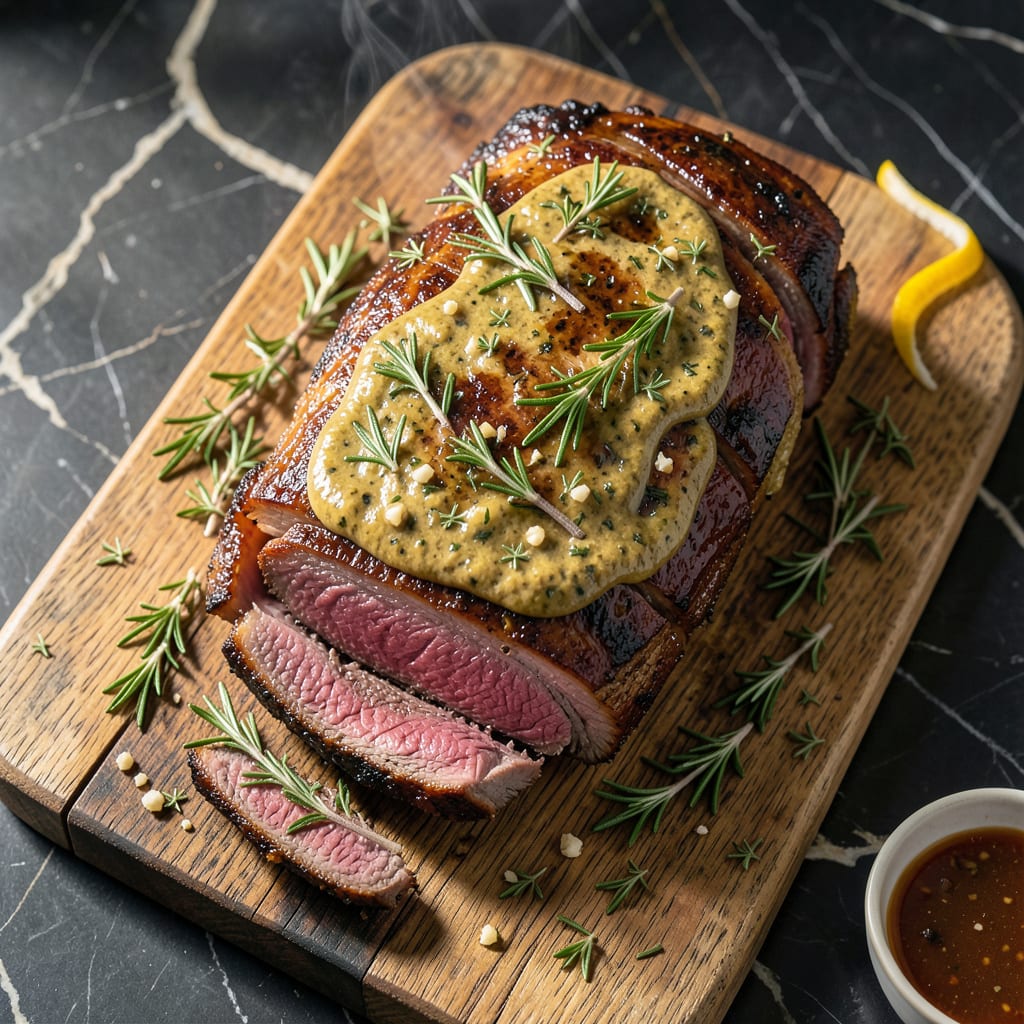
This herb-crusted roast delivers the holiday centerpiece your table deserves. A simple mustard and herb coating creates a flavorful crust while keeping the meat tender and juicy.
Ina Garten’s method ensures perfect results every time, with a cooking process that’s straightforward yet impressive. The aromas alone will have your guests gathering in the kitchen.
Ingredients for Ina Garten Prime Rib Roast
Pantry staples plus a stunning prime rib roast. That’s your holiday centerpiece sorted.
| Ingredient | Amount | Notes |
|---|---|---|
| Prime Rib Roast 🥩 | 5 lb | Bone-in, well-marbled preferred |
| Kosher Salt 🧂 | 2 tbsp | Diamond Crystal preferred for texture |
| Freshly Ground Black Pepper 🌶️ | 2 tbsp | Coarse grind for crust |
| Dijon Mustard 🟡 | ½ cup | Whole-grain for texture |
| Fresh Rosemary 🌿 | ¼ cup | Finely chopped, stems discarded |
| Fresh Thyme 🌿 | ¼ cup | Finely chopped, stems discarded |
| Garlic Cloves 🧄 | 6 cloves | Minced to fine paste |
| Extra-Virgin Olive Oil 🫒 | ¼ cup | For herb paste consistency |
| Dry Red Wine 🍷 | 1 cup | Full-bodied like Cabernet Sauvignon |
| Beef Stock 🥩 | 2 cups | Low-sodium preferred |
| Unsalted Butter 🧈 | 4 tbsp | Room temperature for finishing |
| All-Purpose Flour 🌾 | 1 tbsp | For optional pan gravy |
The prime rib is the star—look for bright red meat with creamy white fat marbling. Bone-in adds flavor, but boneless works if that’s what’s available. Your butcher at Whole Foods or a local shop can prep it for you (ask for the cap removed and bones frenched). For the herbs, fresh is non-negotiable—dried won’t give you that vibrant green crust. I grab mine from Trader Joe’s when I’m in a pinch, but farmers markets have the best selection.
No Dijon? Whole-grain mustard actually works better here—more texture. Out of red wine? Beef stock plus a splash of balsamic vinegar gets you 80% there. If rosemary or thyme aren’t in your garden, fresh marjoram or sage can sub in (just use half as much). The beef stock can be homemade or Better Than Bouillon—just watch the salt content if using store-bought.
Prime rib needs to rest after cooking—at least 20 minutes before slicing. Leftovers (if you’re lucky enough to have any) keep 4-5 days in the fridge, or freeze for 3 months. I like to slice and vacuum-seal portions for easy reheating. The herb paste can be made a day ahead too (just add the mustard and oil last).
Why You’ll Love This Recipe
- I’ll be real: the sandwiches I make with the leftovers might be even better than the original meal, and that’s saying something.
- Set It and Forget: Honestly, the hardest part is waiting—just rub the roast with salt, pepper, Dijon, and rosemary then let the oven do the work.
- Herb-Crusted Heaven: That combo of fresh rosemary and sharp Dijon creates a crust so good I catch myself sneaking bites straight off the cutting board.
- Holiday Hero: Between us, this is my secret for looking like a pro at Christmas dinner without losing my mind in the kitchen.
Step-by-Step Instructions for Herb-Crusted Prime Rib
Here’s the method that guarantees a showstopping centerpiece with perfect crust and juicy meat.
Step 1: Prepare the Herb Paste for Maximum Flavor
In a small bowl, combine the 0.5 cup Dijon mustard, 0.25 cup finely chopped fresh rosemary, 0.25 cup finely chopped fresh thyme, minced 6 cloves garlic cloves, 2 tbsp kosher salt, and 2 tbsp freshly ground black pepper. Stir in the 0.25 cup extra-virgin olive oil until it forms a thick, spreadable paste.
This aromatic blend will create that signature herb crust. I like to make it 1 hour ahead to let the flavors meld, but it’s effective even if used immediately. The oil helps the paste cling to the roast and promotes even browning.
Step 2: Coat and Season the Prime Rib
Place the 5 lb prime rib roast bone-side down on a rack in a roasting pan. Pat it completely dry with paper towels—this ensures the herb paste adheres properly and promotes better browning.
Spread the herb paste evenly over the entire surface of the roast, pressing it in firmly. Let the coated roast sit at room temperature for 1 hour before roasting. This step is crucial for even cooking and that beautiful crust development we’re after.
Step 3: Roast at High Heat for Perfect Crust
Preheat your oven to 450°F. Roast the prime rib for 30 minutes at this high temperature to develop a deep, flavorful crust. You’ll see the herb paste transform into a golden-brown crust with an incredible aroma filling your kitchen.
After the initial high-heat roasting, reduce the oven temperature to 325°F without opening the door. Continue roasting for approximately 1.5 to 2 hours or until the internal temperature reaches 125°F for medium-rare (the temperature will rise 5-10°F during resting).
Step 4: Rest and Prepare Optional Pan Gravy
Transfer the roast to a cutting board, tent loosely with foil, and let it rest for 30 minutes. This allows the juices to redistribute throughout the meat, ensuring every slice is moist and flavorful.
For the gravy, place the roasting pan on the stovetop over medium heat. Add the 1 cup dry red wine and simmer for 2 minutes, scraping up all the browned bits. Whisk in the 1 tbsp all-purpose flour, then add the 2 cups beef stock. Simmer for 5-7 minutes until thickened. Finish by whisking in the 4 tbsp unsalted butter until smooth and glossy.
Pro Tips For Making Ina Garten Prime Rib Roast
- Room Temp First: Pull the prime rib out of the fridge 2 hours before cooking—cold meat won’t sear evenly, and I learned this the hard way with uneven doneness.
- Salt Aggressively: Use a full tablespoon of kosher salt per pound and press it in hard; the crust won’t form right if you’re shy with it.
- Don’t Skip the Mustard: Brush the Dijon mustard on thick before the herbs—it’s the glue that keeps the rosemary from burning and adds a tangy depth.
- Rest Under Foil: Tent it loosely with foil for 20-30 minutes after roasting—skipping this makes the juices run wild when you carve.
Dietary Considerations for This Recipe
Gluten-Free Adaptation
This creation is naturally gluten-free if you skip the optional pan gravy. For gravy lovers, use cornstarch (1 tbsp mixed with 1 tbsp water) instead of flour as your thickener. I always have Bob’s Red Mill cornstarch in my pantry for this exact purpose. 💡
Low-Carb Option
The prime rib itself contains no carbohydrates, making it perfect for keto and low-carb diets. Just be mindful of the wine in the gravy—replace with additional beef stock if avoiding alcohol. The herb paste adds minimal carbs, about 2g per serving.
Dairy Considerations
The only dairy in this recipe comes from the optional butter in the gravy. For a dairy-free version, use olive oil or dairy-free margarine instead. The roast itself remains rich and flavorful without any dairy products.
Sodium Awareness
Prime rib can be high in sodium, especially with the 2 tbsp kosher salt in the herb paste. To reduce sodium, cut the salt in half and use low-sodium beef stock. I often do this when serving guests watching their salt intake.
Allergen Notes
This dish contains mustard, which is a common allergen. For mustard-free versions, replace the Dijon with 2 tbsp olive oil and add 1 tsp garlic powder for depth. Always check your beef stock label for potential allergens like soy or wheat. 🌱
Nutrition Facts
Frequently Asked Questions
Should I cover the roast while cooking?
No, leave it uncovered to develop that beautiful herb crust. Covering would steam the meat instead of browning it.
How do I know when it’s done?
Use a meat thermometer: 125°F for medium-rare, 135°F for medium. The temperature will rise 5-10°F during resting.
Can I make this ahead of time?
Prepare the herb paste and coat the roast up to 24 hours ahead. Refrigerate uncovered, then bring to room temperature before roasting.
What if I don’t have a roasting rack?
Use a bed of chopped vegetables like onions, carrots, and celery. This elevates the meat and adds flavor to the pan drippings.

- BBQ Sausage Recipe Oven: Smoky Depth Without the Grill - September 28, 2026
- BBQ Chicken Bowl Recipe Rice: Smoky Sweetness Over Fluffy Grains - September 28, 2026
- Beef Cutlet Recipe Ideas: Crispy Breaded Patties With Bold Seasonings - September 28, 2026