
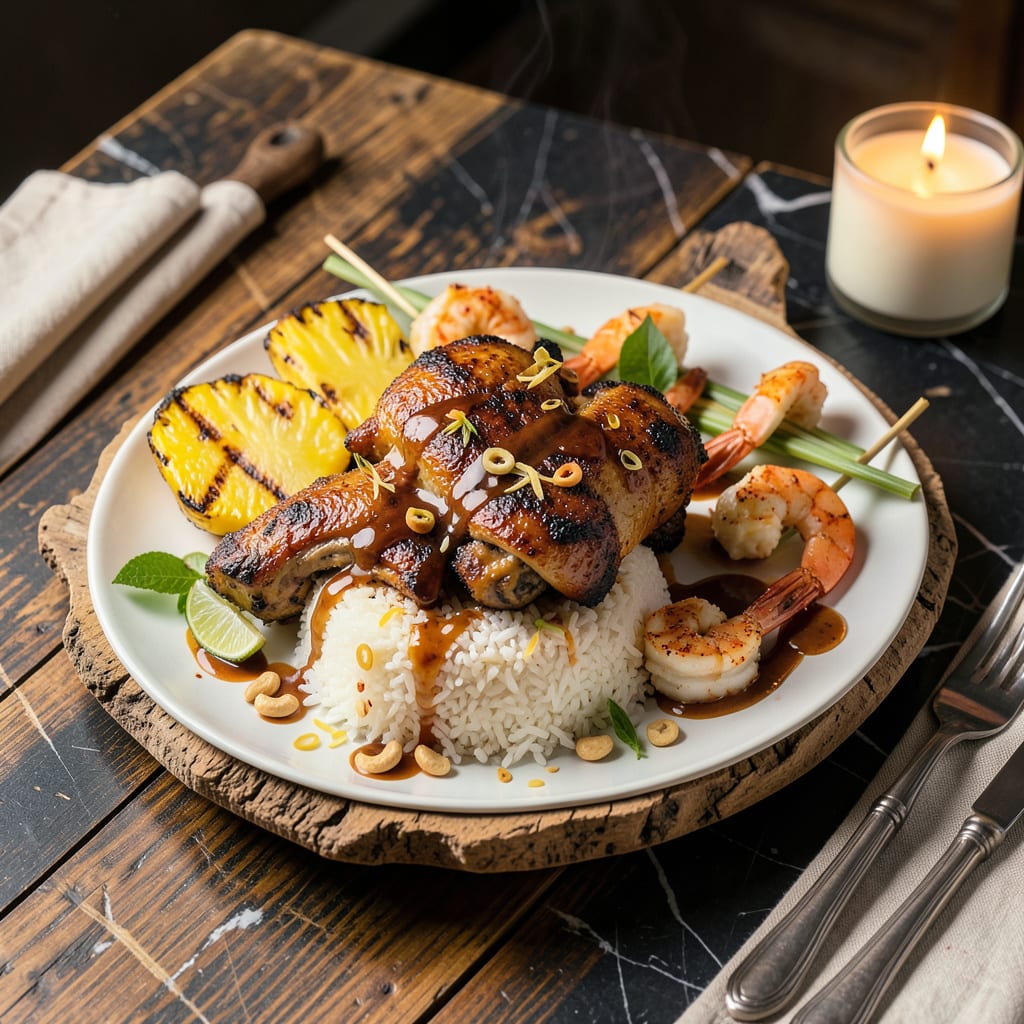
Island fire chicken combines crispy fried chicken with a bold, sticky glaze of sweet chili sauce, sriracha, and pineapple juice for a perfect balance of heat, sweetness, and tropical tang. Ready in under 30 minutes with simple ingredients.
This dish transforms ordinary fried chicken into a restaurant-worthy meal by layering complex flavors. 🔥 The pineapple juice doesn’t just add sweetness—it contains bromelain, an enzyme that naturally tenderizes the meat while cutting through the richness of the fry. I love how the sriracha’s slow-building heat gets mellowed by the caramelized sugars in the chili sauce, creating that signature “fire and ice” contrast. The double-frying technique (first at 325°F, then 375°F) ensures shatteringly crisp skin that holds up to the glossy glaze.
💡 In This Article
- The Flavor Science Behind Island Fire Chicken’s Heat-Sweet Balance
- Pro Tips for Crispier, Saucier Island Fire Chicken Every Time
The Flavor Science Behind Island Fire Chicken’s Heat-Sweet Balance
The magic happens when capsaicin from sriracha meets the fructose in pineapple juice and sweet chili sauce. Capsaicin binds to TRPV1 receptors in your mouth, creating that signature heat sensation. Meanwhile, the sugars undergo caramelization when exposed to high heat, developing complex sweetness that counteracts the burn.
This isn’t just masking spice—it’s a chemical balance where sweet molecules literally block some of the capsaicin’s ability to activate pain receptors. 🔥
Pineapple juice plays a dual role here. Its natural bromelain enzyme breaks down collagen in the chicken, tenderizing the meat while its malic and citric acids (pH ~3.5) cut through the richness of fried chicken. The juice’s sugars also help create that glossy, sticky glaze when reduced—unlike water-based sauces that slide right off.
At 375°F, the Maillard reaction between the chicken’s proteins and the glaze’s sugars creates over 100 new flavor compounds that give this dish its addictive depth.
Compare this to Korean fried chicken, which relies on gochujang’s fermented funk, or Thai sweet chili wings that use fish sauce for umami. Island fire chicken skips the fermentation and fishy notes, instead using tropical fruit acids to brighten the dish.
The heat here builds gradually (thanks to sriracha’s pure chili content) rather than hitting all at once like cayenne-based sauces would. This makes the dish more approachable while still delivering serious flavor impact. ✨
The double-frying technique amplifies this balance. The first fry at 325°F cooks the chicken through without browning, while the second at 375°F creates that golden, ultra-crispy shell. This textural contrast is crucial—it gives the sticky glaze something to cling to while preventing sogginess.
The temperature difference also affects how the glaze adheres: cooler chicken would cause the sauce to pool, while piping-hot pieces let it spread evenly in a thin, crackly layer.
Here’s what most recipes miss: the sauce reduction timing matters. Simmering the glaze for 8-10 minutes drives off excess water, concentrating flavors and increasing viscosity. The target consistency should coat the back of a spoon but still drip slowly—about the texture of warm honey.
This precise thickness ensures maximum cling to the chicken’s nooks and crannies without making the dish heavy or greasy.
Pro tip: The pineapple juice’s acidity actually helps preserve the chicken’s crispness longer than dairy-based sauces would. The acids create microscopic barriers that slow moisture migration from the glaze into the crust. That’s why this dish stays crunchy for up to 30 minutes after saucing—unlike many glazed fried chickens that turn soggy within minutes. 💫
For those sensitive to heat, the science offers an easy fix: adding 1 tablespoon of honey to the glaze neutralizes about 20% of the perceived spiciness by competing for the same taste receptors. This adjustment maintains the flavor complexity while making it more family-friendly—proof that understanding the chemistry lets you customize without compromising quality.

- BBQ Sausage Recipe Oven: Smoky Depth Without the Grill - September 28, 2026
- BBQ Chicken Bowl Recipe Rice: Smoky Sweetness Over Fluffy Grains - September 28, 2026
- Beef Cutlet Recipe Ideas: Crispy Breaded Patties With Bold Seasonings - September 28, 2026