
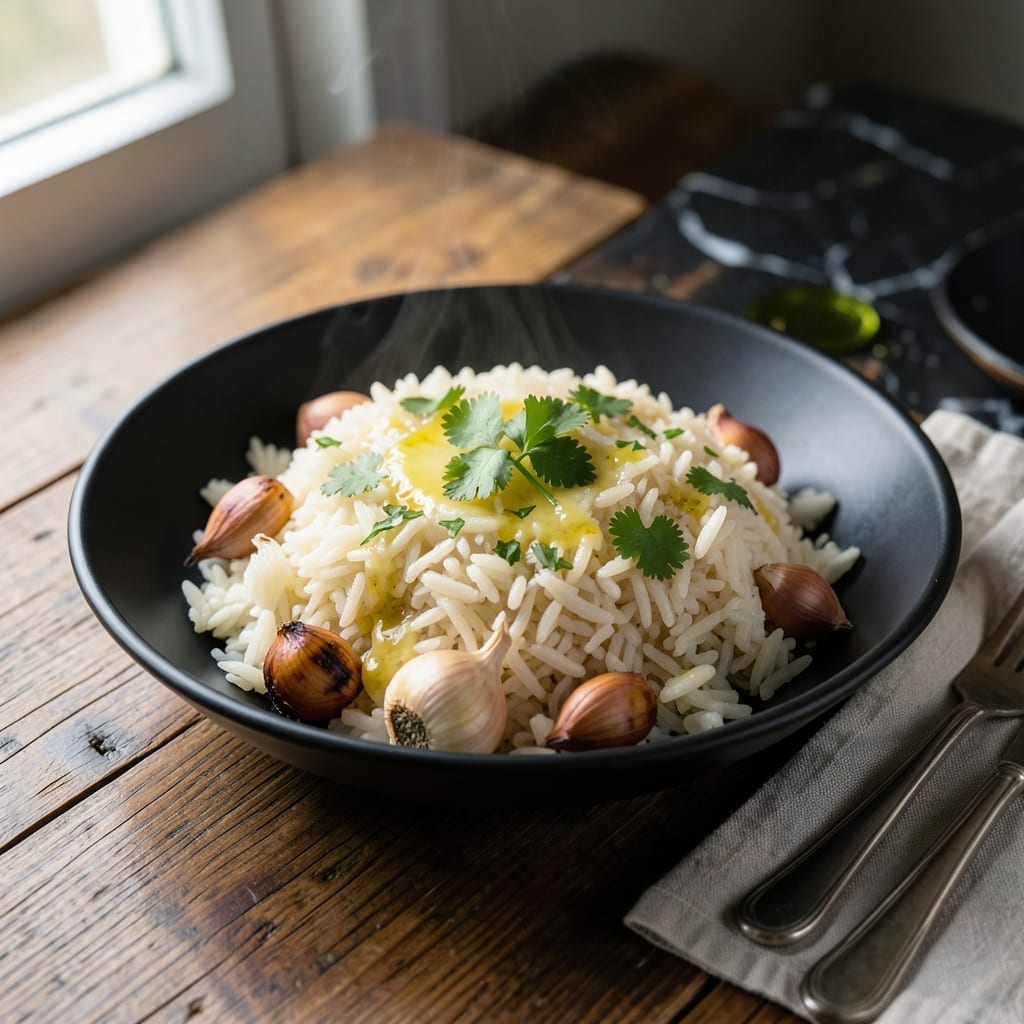
Achieve perfectly fluffy jasmine rice every time with this proven technique. The secret lies in the precise water ratio and gentle cooking method.
This approach yields fragrant grains that stay separate and light, making it an ideal side for any meal. The result is consistently perfect rice with minimal effort.
Ingredients for Jasmine Rice Recipe Ideas
Eleven ingredients transform into fragrant, perfectly fluffy jasmine rice every time with precision.
| Ingredient | Amount | Notes |
|---|---|---|
| Jasmine Rice 🍚 | 2 cups | Rinsed until water runs clear |
| Water 💧 | 3 cups | Filtered for best texture |
| Kosher Salt 🧂 | 1 tsp | Diamond Crystal preferred |
| Garlic Cloves 🧄 | 3 cloves | Minced, optional for aroma |
| Fresh Cilantro 🌿 | ¼ cup | Chopped, for garnish |
| Unsalted Butter 🧈 | 1 tbsp | Melted, optional finish |
| Lime 🍈 | 1 whole | Zested and juiced |
| Green Onions 🧅 | 3 whole | Thinly sliced for garnish |
| Sesame Oil 🫒 | 1 tsp | Toasted, for depth |
| Ginger Root 🌿 | 1 whole | 1-inch piece, grated |
| Chicken Stock 🍲 | ½ cup | Low-sodium preferred |
| White Pepper 🌶️ | ¼ tsp | Freshly ground |
The rice quality is paramount. Look for Thai jasmine rice—brands like Elephant or Golden Phoenix are excellent. Avoid older rice, as it loses moisture and may require adjusted water ratios. Rinsing removes excess starch, which is critical for achieving separate grains. The water-to-rice ratio here is non-negotiable for optimal texture.
No jasmine rice? Basmati or long-grain white can work in a pinch, but expect slightly different results. For a vegetarian option, replace chicken stock with vegetable stock. The butter can be swapped for neutral oil if avoiding dairy. Fresh herbs are ideal, but dried cilantro at one-third the amount works if necessary.
Cooked rice holds well at room temperature for 2 hours. Refrigerate leftovers in an airtight container for up to 4 days. For best results, reheat with a splash of water and a tight lid. Freezing is possible but may affect texture—use within 1 month.
Why You’ll Love This Recipe
- One Pot Wonder: I just dump rice, water, garlic, and salt in a pot—no babysitting, no fuss.
- Aroma Bomb: Honestly, the garlic and cilantro make my kitchen smell like a street food stall.
- Pairs With Anything: I serve it under stir-fries, next to grilled chicken, or even as a base for fried eggs.
- Budget Stretch: A pound of jasmine rice feeds my family for days, and it costs less than a coffee.
Step-by-Step Instructions for Jasmine Rice
Master this technique to achieve perfectly fragrant, fluffy rice with distinct grains every time.
Step 1: Rinse and Prepare the Jasmine Rice
Place the 2 cups Jasmine Rice in a fine-mesh strainer and rinse under cold water until the water runs completely clear. This removes excess starch that would otherwise make the rice gummy. I always use my hand to gently agitate the grains during rinsing to ensure thorough cleaning.
After rinsing, drain the rice well and transfer it to your rice cooker or heavy-bottomed pot. This preparation step is crucial—properly rinsed jasmine rice yields fluffier, more separate grains with that characteristic aromatic quality.
Step 2: Toast Aromatics and Combine Liquids
In your cooking vessel, combine the rinsed rice with 3 cups Water, 0.5 cup Chicken Stock, 1 tsp Kosher Salt, and 0.25 tsp White Pepper. For enhanced flavor, I grate the 1-inch piece of Ginger Root directly into the liquid and add minced 3 cloves Garlic Cloves if using.
The chicken stock adds depth without overpowering the rice’s natural fragrance. Stir gently to distribute the aromatics evenly, then add 1 tsp Sesame Oil for a subtle nutty note that complements the jasmine’s floral aroma.
Step 3: Cook to Absorption Perfection
If using a rice cooker, simply start the cooking cycle. For stovetop preparation, bring the mixture to a full boil over medium-high heat, then immediately reduce to low heat, cover tightly with a lid, and simmer for 15 minutes.
Resist the urge to lift the lid during cooking—steam is essential for even cooking. After 15 minutes, turn off the heat and let it rest covered for an additional 10 minutes. This resting period allows the rice to fully absorb the liquid and ensures each grain cooks uniformly.
Step 4: Fluff and Finish with Bright Accents
Gently fluff the rice with a fork to separate the grains, taking care not to mash them. At this stage, I drizzle in the 1 tbsp Unsalted Butter while the rice is still hot, allowing it to melt and coat the grains with a subtle richness.
For a vibrant finish, stir in the zest and juice from the 1 whole Lime. This acidity brightens the dish and balances the richness. The rice should be light and fluffy with a glossy sheen from the butter and a fragrant aroma that fills the kitchen.
Step 5: Garnish and Serve Immediately
Transfer the rice to a serving bowl and top with the 0.25 cup Fresh Cilantro and thinly sliced 3 whole Green Onions. These fresh herbs add color and a clean, herbal note that complements the rice’s natural sweetness.
Serve immediately while hot and fragrant. Each bite should offer distinct, fluffy grains with layers of aromatic complexity from the ginger, garlic, and sesame, finished with the bright pop of lime and fresh herbs. The texture should be tender yet firm, with no clumping or mushiness.
Pro Tips For Making Jasmine Rice Recipe Ideas
- Rinse the Rice: Always rinse jasmine rice until the water runs clear—this removes excess starch and keeps the grains fluffy instead of gummy.
- Toast the Garlic: Sauté minced garlic in a little oil for 30 seconds before adding water—it deepens the flavor without burning.
- Use the Right Ratio: Stick to a 1:1.5 rice-to-water ratio for perfect texture; I learned this the hard way after too many mushy batches.
- Rest Before Serving: Let the cooked rice sit covered for 10 minutes off the heat—this lets the steam redistribute for even, tender grains.
Wine and Beer Pairings for These Flavors
Crisp White Wines
A dry Riesling from Washington State offers citrus notes that complement the rice’s natural sweetness. The acidity cuts through any richness from the butter finish, creating a perfect balance. I love how the floral aromas in both the wine and rice harmonize beautifully. 🍷
Light Red Options
For red wine lovers, a chilled Pinot Noir from Oregon works surprisingly well. Its bright red fruit flavors and subtle earthiness pair nicely without overpowering the delicate jasmine fragrance. Serve it slightly cooler than room temperature.
Asian Beer Pairings
Sapporo or Asahi beers are classic choices that enhance the rice’s floral notes. Their clean, crisp profiles and mild bitterness cleanse the palate between bites. I always keep a few of these in my fridge for Asian-inspired meals. 🍺
Craft Beer Alternatives
A light pilsner like Stella Artois offers similar benefits with its crisp, refreshing character. For more complexity, try a Belgian witbier with its citrus and spice notes that echo the lime and ginger in the dish.
Non-Alcoholic Choices
Sparkling yuzu soda provides a citrusy lift that mirrors the lime finish. For a calming option, jasmine tea enhances the rice’s natural fragrance beautifully. Both options work wonderfully for those avoiding alcohol.
Temperature Matters
Serve white wines and beers well-chilled at 45-50°F to maintain their crispness. The Pinot Noir should be slightly cooler than typical red wine serving temperatures, around 55°F, to preserve its bright character. 💡
Nutrition Facts
Frequently Asked Questions
What’s the best water-to-rice ratio?
Use 1.5 cups water per 1 cup rice for perfect texture. This ratio ensures fluffy, separate grains without mushiness. Always rinse first to remove excess starch.
Can I use a rice cooker instead of stovetop?
Follow the same 1.5:1 ratio and cooking time. Most rice cookers automatically adjust heat, making it foolproof for consistent results every time.
Why did my rice turn out sticky?
Sticky rice usually means too much water or not rinsing enough. Use exact measurements and rinse until water runs clear to remove starch that causes clumping.
How can I add more flavor?
Toast the rice in sesame oil before cooking. Add garlic, ginger, or lime zest to the water for extra depth. Fresh herbs like cilantro work great as garnish.

- BBQ Sausage Recipe Oven: Smoky Depth Without the Grill - September 28, 2026
- BBQ Chicken Bowl Recipe Rice: Smoky Sweetness Over Fluffy Grains - September 28, 2026
- Beef Cutlet Recipe Ideas: Crispy Breaded Patties With Bold Seasonings - September 28, 2026