
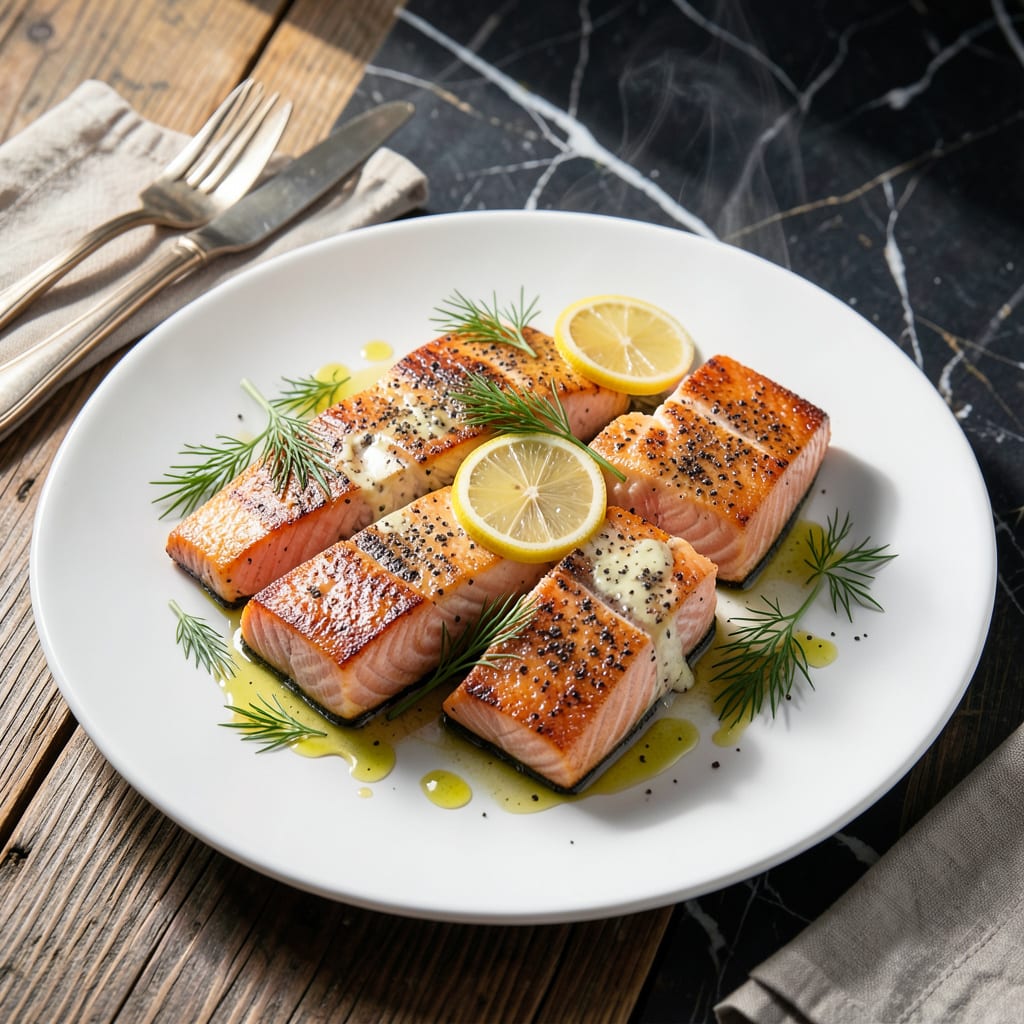
This pan-seared salmon delivers restaurant-quality results with a simple yet effective technique. The key is crispy skin and tender flesh, achieved through precise timing and temperature control.
Paired with a bright lemon-dill sauce, this dish balances richness with freshness. It’s a foolproof method that works every time, making it ideal for weeknight dinners or special occasions.
Ingredients for Jeff Mauro Salmon
Restaurant-quality salmon requires precise ingredients and simple preparation. Nothing more, nothing less.
| Ingredient | Amount | Notes |
|---|---|---|
| Salmon Fillets 🐟 | 4 pieces | Skin-on, 6 oz each, patted dry |
| Kosher Salt 🧂 | 1 ½ tsp | Diamond Crystal preferred for texture |
| Freshly Ground Black Pepper 🌶️ | 1 tsp | Coarse grind for boldness |
| Olive Oil 🫒 | 3 tbsp | High smoke point, divided use |
| Unsalted Butter 🧈 | 2 tbsp | For basting salmon |
| Garlic Cloves 🧄 | 3 cloves | Minced for aroma |
| Fresh Dill 🌿 | ¼ cup | Chopped, fronds only |
| Fresh Lemon 🍋 | 1 whole | Zested and juiced |
| Dijon Mustard 🟡 | 1 tbsp | Smooth, not whole grain |
| Mayonnaise 🥚 | ¼ cup | Full-fat for creaminess |
| Shallot 🧅 | 1 whole | Finely diced for sauce |
| Capers 🫒 | 1 tbsp | Drained, for briny contrast |
The salmon quality is non-negotiable. Wild-caught sockeye or coho from Whole Foods or Costco delivers the best texture and flavor. Look for fillets with vibrant color and no discoloration. Skin should be intact and slightly moist—dry skin won’t crisp properly. Always ask for skin-on at the counter if pre-cut pieces lack it.
No fresh dill? Dried dill at one-third the amount works, but fresh is ideal for the bright finish. Substitute tarragon if you’re feeling adventurous. The mayonnaise can be Greek yogurt for tang, but full-fat mayo emulsifies better for the sauce. Out of capers? Chopped cornichons add similar briny punch. Lemon juice can be bottled (just don’t tell Jeff Mauro).
Salmon cooks best the day it’s purchased—store in the coldest part of your fridge for 1-2 days max. The sauce keeps 3 days refrigerated in a sealed jar. Leftovers? Flake into salads or grain bowls within 24 hours for best texture.
Why You’ll Love This Recipe
- One Pan Wonder: I love that this comes together with just a hot pan, olive oil, and butter—minimal cleanup, maximum flavor.
- Buttery Perfection: The butter bastes the salmon as it cooks, creating this rich, tender bite every single time.
- Weeknight Hero: Honestly, it’s my go-to for busy evenings when I need something fast but still impressive.
- Leftovers Win: The cooked salmon holds up beautifully for salads or sandwiches the next day—no waste here.
Step-by-Step Instructions for Pan-Seared Salmon with Lemon-Dill Brightness
Master the technique for perfectly flaky salmon with a vibrant, herbed finish.
Step 1: Season and Prep the Salmon Fillets
Pat the 4 pieces salmon fillets completely dry with paper towels—this ensures a proper sear. Season both sides evenly with the 1.5 tsp kosher salt and 1 tsp freshly ground black pepper. The coarse grind of pepper adds a subtle texture that complements the delicate fish.
Let the fillets sit at room temperature for 10 minutes while you prep the remaining ingredients. This takes the chill off the fish, allowing it to cook more evenly and preventing it from sticking to the pan.
Step 2: Sear the Salmon to Crisp Perfection
Heat 2 tbsp olive oil in a large skillet over medium-high heat until it shimmers but doesn’t smoke. Place the salmon fillets skin-side up in the pan. Cook undisturbed for 4-5 minutes until the edges turn opaque and the bottom develops a deep golden crust.
Flip the fillets carefully using a thin spatula, then add the remaining 1 tbsp olive oil and 2 tbsp unsalted butter to the pan. Tilt the skillet slightly to pool the butter, then baste the salmon with the hot butter for 1-2 minutes until the internal temperature reaches 125-130°F.
Step 3: Prepare the Lemon-Dill Sauce
While the salmon cooks, combine the 0.25 cup mayonnaise, 1 tbsp Dijon mustard, zest of the 1 whole fresh lemon, and 0.25 cup fresh dill in a small bowl. Stir until smooth and vibrant. Finely dice the 1 whole shallot and mince the 3 cloves garlic cloves, then fold them into the sauce for a sharp, aromatic bite.
Stir in the 1 tbsp capers and 1 tbsp fresh lemon juice from the zested lemon. The capers add a briny contrast, while the lemon juice brightens the richness of the mayonnaise. Adjust the consistency with a splash of water if needed.
Step 4: Plate and Garnish
Transfer the seared salmon to a serving platter, skin-side down. Spoon the lemon-dill sauce generously over each fillet, ensuring the edges are well coated. Garnish with additional chopped dill and a few capers for visual appeal.
Serve immediately while the salmon is hot. The sauce should cling to the fish, offering a creamy, tangy contrast to the crispy skin and tender flesh. Each bite delivers the bright, herbed flavors that define this dish.
Pro Tips For Making Jeff Mauro Salmon
- Pat the Salmon Dry: I learned this the hard way—moisture on the fillets steams instead of sears, so blot them thoroughly with paper towels before seasoning.
- Hot Pan, Cold Butter: Start with a screaming-hot pan and olive oil, then add cold butter right before the salmon to prevent burning and get that glossy finish.
- Skip the Overcrowding: Resist the urge to cram all the fillets in at once; give each piece 2-3 inches of space so they brown, not steam.
- Rest Before Serving: After burning my first few batches, I finally realized letting the salmon rest 3-4 minutes off the heat keeps it juicy, not dry.
Common Mistakes When Making Perfect Results
Overcrowding the Pan
Never crowd your skillet with all 4 pieces salmon fillets at once. This lowers the oil temperature, causing the fish to steam instead of sear. Cook in batches if needed—2 fillets at a time ensures that golden crust forms properly. 🔥
Moving the Fish Too Soon
The most common mistake is flipping the salmon before it develops a crust. Let it cook undisturbed for the full 4-5 minutes on the first side. If it sticks slightly when you try to flip, it’s not ready yet.
Skipping the Dry Pat
Moisture is the enemy of crispy skin. Always pat the fillets completely dry with paper towels before seasoning. Even a little water on the surface will create steam, preventing that perfect sear you’re after.
Overcooking the Salmon
Salmon continues cooking off the heat, so pull it from the pan when it reaches 125-130°F internally. Anything higher and you’ll end up with dry, tough fish. Use a meat thermometer for precision—I trust my ThermoWorks model.
Cold Fish in the Pan
Let your fillets sit at room temperature for 10 minutes before cooking. Cold salmon straight from the fridge won’t cook evenly, leading to dry edges and undercooked centers. This simple step makes a noticeable difference.
Ignoring the Butter Temp
When basting, make sure the butter is hot but not burnt. If it smokes, remove the pan from heat for 30 seconds to cool slightly before continuing. Burnt butter adds a bitter taste that ruins the dish.
Nutrition Facts
Frequently Asked Questions
What’s the best way to check if salmon is done?
Use a meat thermometer to check the internal temperature, which should read 125-130°F. The flesh should flake easily with a fork. Overcooking dries out the fish, so pull it from the pan just before it reaches the target temp.
Can I use skinless fillets for this recipe?
Yes, but you’ll miss out on the crispy texture. If using skinless, reduce cooking time by 1-2 minutes per side. The sauce will still add plenty of flavor, but the presentation won’t be as impressive.
How long can I store leftover salmon?
Leftover salmon keeps in the fridge for up to 24 hours for best texture. Store in an airtight container and reheat gently to avoid drying it out. For longer storage, freeze for up to 3 months.

- BBQ Sausage Recipe Oven: Smoky Depth Without the Grill - September 28, 2026
- BBQ Chicken Bowl Recipe Rice: Smoky Sweetness Over Fluffy Grains - September 28, 2026
- Beef Cutlet Recipe Ideas: Crispy Breaded Patties With Bold Seasonings - September 28, 2026