
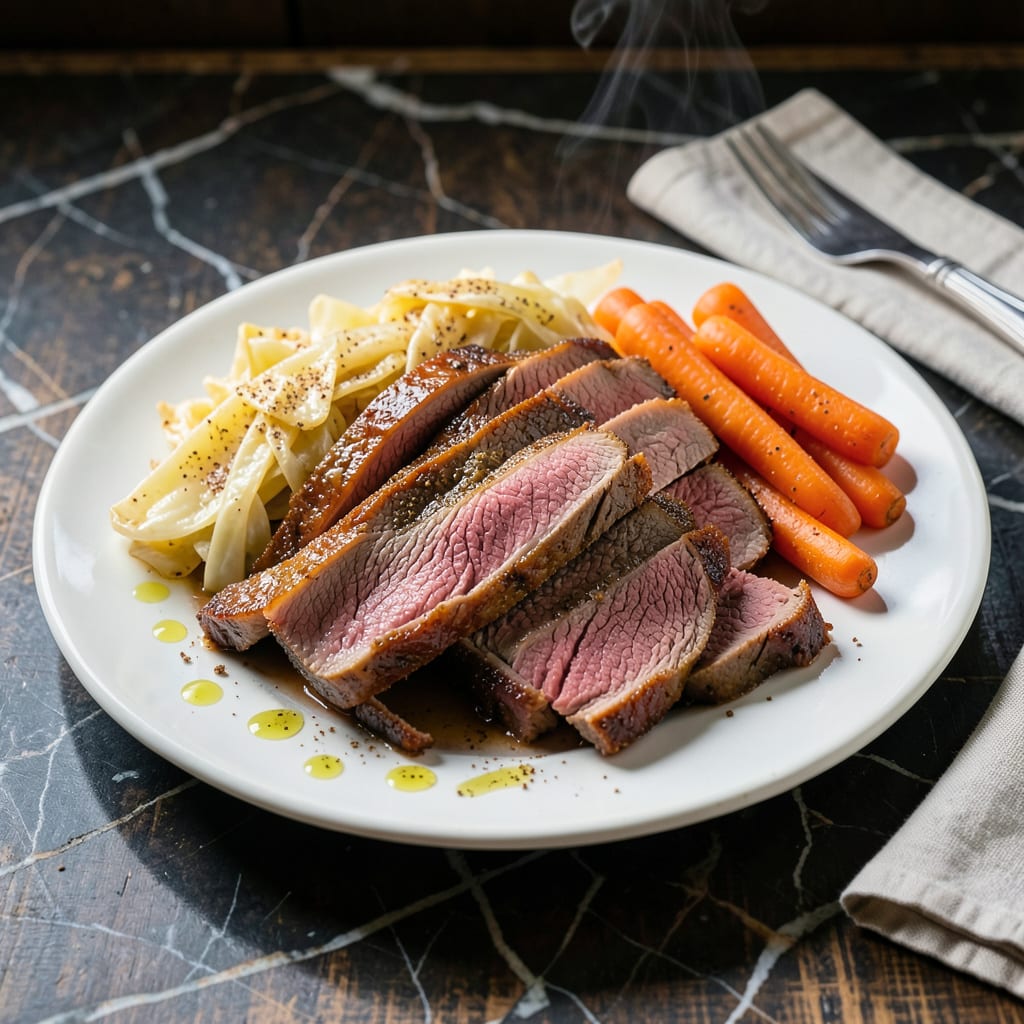
This recipe brings authentic deli flavor to your kitchen with a traditional slow-cure and spice rub. The process transforms brisket into tender, aromatic corned beef that rivals any New York delicatessen.
With simple ingredients and precise timing, you’ll achieve perfectly spiced, fall-apart meat. The secret lies in the 4-day brine and patient cooking that develops deep, rich flavors.
Ingredients for Jewish Deli Corned Beef
Transform brisket into deli-quality corned beef with this traditional spice brine and curing method.
| Ingredient | Amount | Notes |
|---|---|---|
| Beef Brisket 🥩 | 3 lb | Flat cut preferred, well-marbled |
| Kosher Salt 🧂 | ½ cup | Diamond Crystal brand recommended |
| Granulated Sugar 🍚 | ¼ cup | Helps balance cure |
| Brown Sugar 🟤 | ¼ cup | Light or dark variety |
| Pickling Spice 🌿 | 2 tbsp | Store-bought or homemade blend |
| Garlic Cloves 🧄 | 6 cloves | Smashed for brine infusion |
| Yellow Onion 🧅 | 1 whole | Quartered for brining |
| Bay Leaves 🍃 | 4 pieces | Dried, whole leaves |
| Black Peppercorns 🌶️ | 1 tbsp | Whole, for brine depth |
| Mustard Seeds 🟡 | 1 tsp | Yellow or brown variety |
| Coriander Seeds 🌿 | 1 tsp | Lightly crushed for aroma |
| Water 💧 | 8 cups | For complete brine coverage |
| Beef Broth 🥣 | 4 cups | Low-sodium preferred |
The brisket is non-negotiable here. Flat cut from a trusted butcher yields the most consistent results—look for even marbling and a thick, uniform shape. Costco carries excellent pre-trimmed briskets at a good price point, but Whole Foods offers grass-fed options if you’re prioritizing quality. Avoid pre-brined or enhanced cuts, as they won’t absorb the cure properly. The salt should be kosher, not iodized—it dissolves cleanly and seasons evenly.
No pickling spice? Combine 1 tbsp mustard seeds, 1 tsp coriander, 1 tsp allspice, 1 tsp cloves, and 1 cinnamon stick for a close approximation. Short on time? Pre-made corned beef spice packets work in a pinch, though they often lack depth. The sugar balance is key—don’t skip the brown sugar, as it adds molasses notes that define the flavor. For the broth, Better Than Bouillon makes a solid beef base if you’re not using homemade.
The brine needs 4 full days to work its magic—don’t rush it. Store the brisket submerged in the fridge, flipping daily. Once cooked, it keeps 5 days refrigerated or 3 months frozen. Slice against the grain only after resting 15 minutes for maximum tenderness.
Why You’ll Love This Recipe
- Set It & Forget: I just mix the kosher salt, sugars, and pickling spice, rub it on the brisket, and let time do the work.
- Sweet & Spiced: That balance of brown sugar with the warm pickling spice gives it the deli counter depth I crave.
- Holiday to Weeknight: Honestly, this goes from Rosh Hashanah centerpiece to my Tuesday sandwich special just as well.
- Leftovers for Days: One brisket yields a week of Reubens, hash, or just cold slices straight from the fridge.
Step-by-Step Instructions for Jewish Deli Corned Beef
This traditional curing process transforms the beef brisket into tender, flavorful corned beef with authentic deli character.
Step 1: Prepare the Brine with Aromatic Spices
In a large stockpot, combine the 8 cups water and 4 cups beef broth. Add the 0.5 cup kosher salt, 0.25 cup granulated sugar, and 0.25 cup brown sugar, stirring until fully dissolved. This balanced sweet-salty foundation is essential for proper curing.
Add the 2 tbsp pickling spice, 1 tbsp black peppercorns, 1 tsp mustard seeds, and 1 tsp coriander seeds to the pot. These whole spices will infuse the brine with complex, layered flavors that define authentic corned beef. Bring the mixture to a boil, then remove from heat.
Step 2: Infuse the Brine with Fresh Aromatics
Add the 6 cloves garlic cloves (smashed to release their oils), 1 whole yellow onion (quarter it first for maximum surface area), and 4 pieces bay leaves to the hot brine. These fresh elements will deepen the flavor profile during the curing process.
Let the brine steep off heat for 30 minutes to allow all the spices and aromatics to fully infuse. The mixture should take on a rich, golden hue and emit a fragrant, spiced aroma. Strain the brine through a fine-mesh sieve to remove solids before using.
Step 3: Cure the Beef Brisket in the Refrigerator
Place the 3 lb beef brisket in a large, non-reactive container or food-safe plastic bag. Pour the cooled brine over the brisket, ensuring it is completely submerged. If necessary, weigh it down with a small plate to keep it under the liquid surface.
Refrigerate the brisket in its brine for 5-7 days, turning it once daily to ensure even curing. The meat will gradually change from its original red to a pinkish-gray color, which indicates the curing process is working properly. This extended cure time develops the characteristic corned beef flavor and texture.
Step 4: Simmer Until Tender
After curing, remove the brisket from the brine and rinse it briefly under cold water. Place it in a large Dutch oven and cover completely with fresh cold water. Bring to a boil, then reduce heat to maintain a gentle simmer.
Cook the brisket for 3-4 hours until it is fork-tender and the internal temperature reaches 195°F. Skim any foam that rises to the surface during the first hour of simmering. The meat should be tender enough to pull apart easily with a fork when fully cooked.
Step 5: Rest and Slice Against the Grain
Transfer the cooked brisket to a cutting board and let it rest for 15-20 minutes before slicing. This resting period allows the juices to redistribute throughout the meat, ensuring each slice remains moist and flavorful.
Slice the brisket thinly against the grain for the most tender texture. The finished corned beef should have a rich pink color throughout, with a subtle sheen from the curing process. Serve warm with traditional accompaniments like mustard, rye bread, or pickles.
Pro Tips For Making Jewish Deli Corned Beef
- Brine Longer: Give the brisket a full 10 days in the brine—I learned this the hard way after pulling it out at 5 days and ending up with meat that was bland at the core. The salt and spices need that time to penetrate deep.
- Use Flat Cut: Skip the point cut and go for flat cut brisket; it’s leaner, slices cleaner, and holds its shape better for those classic deli-thin slices.
- Simmer, Don’t Boil: Keep the cooking liquid at a gentle simmer, around 180°F—any hotter and the meat toughens up. I used to crank the heat to speed things up, but the texture suffered every time.
- Add Mustard Seeds: Sounds weird, but it works: toss a tablespoon of mustard seeds into your pickling spice mix. It adds that signature deli tang without overpowering the beef.
Regional Styles of This Recipe
New York Deli Style
The classic approach uses a 5-day brine with extra garlic and mustard seeds for that signature bold flavor. I always add juniper berries to my brine when aiming for authentic NYC taste. The meat is simmered with carrots and cabbage for the final hour. 🗺️
Montreal Smoked Meat
This variation swaps brisket for beef plate and adds coriander and allspice to the cure. Instead of simmering, it’s hot-smoked at 225°F for 6-8 hours for a firmer texture. The result is leaner but intensely flavorful.
Texas Style
Lone Star corned beef often includes chili powder and cumin in the brine for a Southwestern kick. I’ve seen recipes that finish with a quick sear on the grill. The spice profile is more assertive than traditional versions.
Irish American
For St. Patrick’s Day, many add Guinness stout to the simmering liquid. The beer adds malty depth that pairs perfectly with the spices. I prefer using half beer, half water for balance.
Pastrami Conversion
Transform your corned beef into pastrami by coating with a black pepper and coriander rub after curing. Hot-smoke at 200°F for 3-4 hours until the rub forms a crust. This technique gives you two deli classics from one brisket. 🔥
Nutrition Facts
Frequently Asked Questions
Can I use a different cut of beef?
Flat cut brisket is ideal, but beef round or chuck can work in a pinch. These alternatives may be less tender and require longer cooking times. Always choose well-marbled meat for best results.
Why does the meat need to cure for so long?
The 5-7 day brine allows the salt and spices to penetrate deeply, creating the signature flavor and pink color. Rushing this process results in uneven seasoning and tougher texture.
Can I make this in a slow cooker?
Yes! After curing, place the brisket in a slow cooker with water or broth. Cook on low for 8-10 hours until fork-tender. This method works well for hands-off preparation.
How do I store leftovers?
Store cooked corned beef in an airtight container in the fridge for up to 5 days. For longer storage, freeze for up to 3 months. Reheat gently in broth to maintain moisture.

- BBQ Sausage Recipe Oven: Smoky Depth Without the Grill - September 28, 2026
- BBQ Chicken Bowl Recipe Rice: Smoky Sweetness Over Fluffy Grains - September 28, 2026
- Beef Cutlet Recipe Ideas: Crispy Breaded Patties With Bold Seasonings - September 28, 2026