
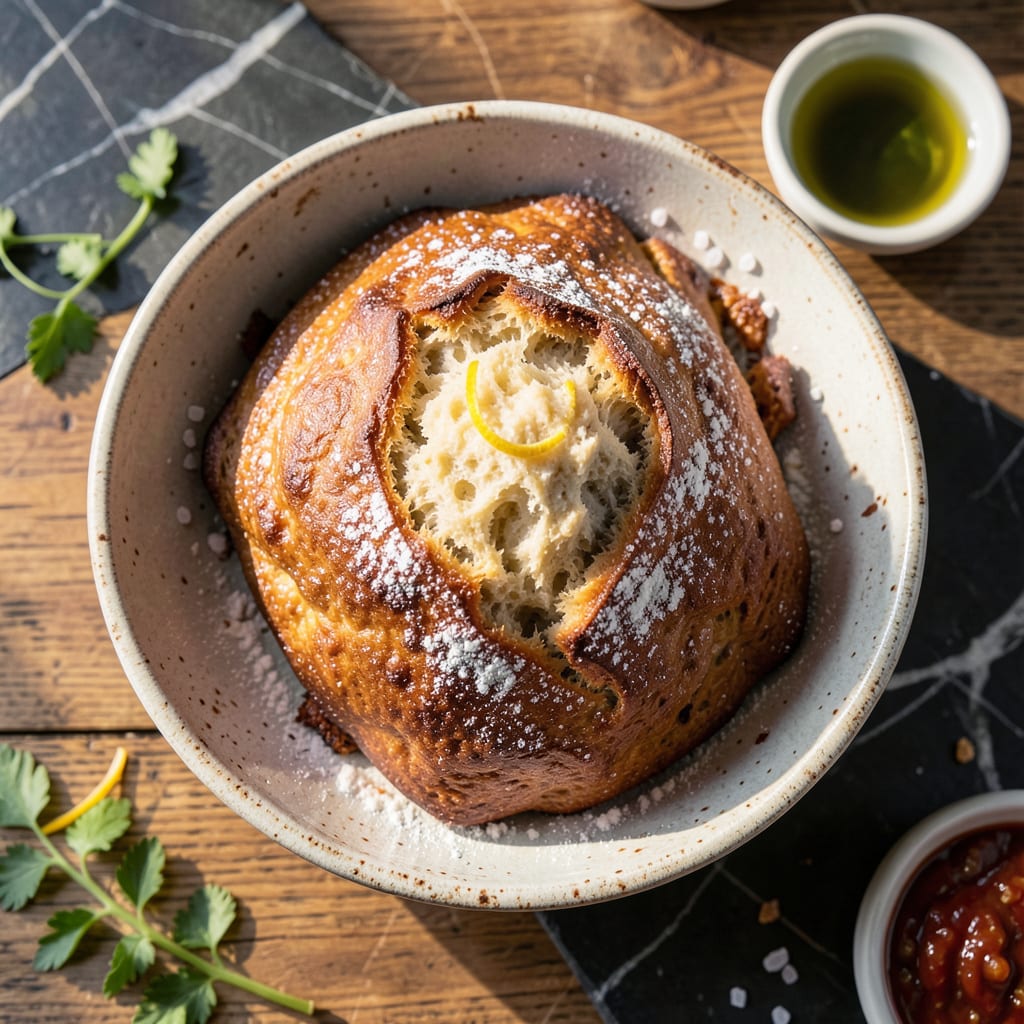
There’s something deeply satisfying about pulling a warm, crusty loaf from the oven. This artisan bread delivers rustic charm with minimal effort, using just a few simple ingredients and basic techniques.
With a crisp golden crust and soft, airy interior, it’s perfect for any meal. The dough comes together quickly and bakes to perfect texture every time, making it ideal for bakers of all levels.
Ingredients for Joanna Gaines Bread
Simple ingredients create that signature rustic artisan loaf everyone loves at the first bite.
| Ingredient | Amount | Notes |
|---|---|---|
| Bread Flour 🌾 | 4 cups | Plus extra for dusting surface |
| Active Dry Yeast 🍞 | 2 ¼ tsp | One standard packet equivalent |
| Granulated Sugar 🧂 | 1 tbsp | Feeds the yeast activation |
| Kosher Salt 🧂 | 2 tsp | Diamond Crystal preferred for consistency |
| Warm Water 💧 | 1 ½ cups | 110-115°F for optimal yeast proofing |
| Extra-Virgin Olive Oil 🫒 | 2 tbsp | For bowl greasing and dough enrichment |
| Cornmeal 🌽 | ¼ cup | For dusting baking surface |
| Honey 🍯 | 1 tbsp | Optional for slightly sweeter bread |
| Unsalted Butter 🧈 | 1 tbsp | Melted, for brushing finished loaf |
| All-Purpose Flour 🌾 | ½ cup | For adjusting dough consistency |
The flour is the foundation here. King Arthur Bread Flour delivers consistent protein content for that perfect chew—Gold Medal works too but may need slightly more. Yeast freshness is non-negotiable; check the expiration date and store unopened packets in the freezer. For the water, use a thermometer to hit that 110-115°F sweet spot (too hot kills the yeast, too cool slows proofing).
No bread flour? All-purpose works at a 1:1 ratio, though the crumb will be slightly less chewy. Short on yeast? Instant yeast at 25% less quantity (so 1.75 tsp here) works in a pinch. The honey is optional—maple syrup or sugar can substitute. For the butter topping, olive oil gives a different but equally delicious finish.
Dough rises best in a warm, draft-free spot—I use my turned-off oven with the light on. Baked loaves keep 2-3 days at room temperature in a paper bag, or slice and freeze for up to 3 months. Always cool completely before slicing to maintain that perfect texture.
Why You’ll Love This Recipe
- No Fuss Dough: Honestly, mixing bread flour, yeast, sugar, and warm water takes less time than scrolling through my phone.
- Warmly Satisfying: That first bite of crusty, slightly sweet bread fresh from the oven? Pure comfort in every slice.
- Feeds the Week: I bake two loaves on Sunday and we’re set for sandwiches, toast, and even impromptu garlic bread.
- Pantry Staples: Between us, I always have these five ingredients on hand—no special trips to the store required.
Step-by-Step Instructions for Artisan Bread With Rustic Charm
Master the technique for a crusty exterior and airy crumb with this proven method.
Step 1: Activate the Yeast and Prepare the Dough
In a large mixing bowl, whisk together the 1.5 cups Warm Water, 2.25 tsp Active Dry Yeast, 1 tbsp Granulated Sugar, and 1 tbsp Honey. Let this mixture sit for 5-7 minutes until it becomes frothy and cloudy, indicating the yeast is active. The surface should show a layer of foam—this confirms the yeast is ready to work its magic.
Add the 4 cups Bread Flour, 2 tsp Kosher Salt, and 2 tbsp Extra-Virgin Olive Oil to the bowl. Use a wooden spoon to stir until a shaggy dough forms. The dough will be sticky at this stage, but resist the urge to add more flour prematurely. This wetter dough is key to achieving an open crumb structure.
Step 2: Knead and Let the Dough Rise
Turn the dough out onto a lightly floured surface dusted with 0.5 cup All-Purpose Flour. Knead for 8-10 minutes by hand, pushing the dough away with the heel of your hand and folding it back over itself. The dough should become smooth and elastic, springing back when poked gently with a finger.
Lightly grease a clean bowl with additional Extra-Virgin Olive Oil, place the dough inside, and cover with a damp kitchen towel. Let it rise in a warm, draft-free area for 1 to 1.5 hours, or until it has nearly doubled in size. You’ll know it’s ready when the dough holds an indent when pressed lightly with two fingers.
Step 3: Shape the Loaf and Proof
Punch down the risen dough to release the air, then turn it out onto a surface dusted with 0.25 cup Cornmeal. Shape the dough into a round loaf by folding the edges under and rolling it gently on the counter to create surface tension. The cornmeal prevents sticking and adds a rustic texture to the finished loaf.
Place the shaped dough on a parchment-lined baking sheet or a floured banneton. Cover loosely with the damp towel and let it proof for another 45-60 minutes. The loaf should rise slightly and hold its shape well. Preheat your oven to 425°F during the last 20 minutes of proofing.
Step 4: Bake to Perfection
Just before baking, use a sharp knife or lame to score the top of the loaf in a decorative pattern. This allows the bread to expand properly in the oven. Bake on the center rack for 25-30 minutes, or until the crust is a deep golden brown and the internal temperature reaches 190-200°F.
The loaf should sound hollow when tapped on the bottom—a sure sign it’s fully baked. If the top browns too quickly, tent the loaf with aluminum foil for the remaining baking time.
Step 5: Cool and Finish
Transfer the baked loaf to a wire rack and let it cool for at least 30 minutes before slicing. This cooling period allows the crumb to set properly; slicing too soon can result in a gummy texture. While still warm, brush the crust with 1 tbsp Unsalted Butter for added sheen and flavor.
Serve the bread warm or at room temperature. The crust should be crisp and the interior light and airy, with a subtle sweetness from the honey. Store any leftovers in an airtight container at room temperature for up to 3 days.
Pro Tips For Making Joanna Gaines Bread
- Test Your Yeast: I learned this the hard way—always proof your active dry yeast in the warm water with sugar for 5-10 minutes until foamy. If it doesn’t bubble, your bread won’t rise, no matter how long you wait.
- Use Bread Flour: Skip the all-purpose and stick with bread flour—its higher protein content gives this recipe the chewy, bakery-style texture Joanna Gaines is known for.
- Don’t Over-Knead: After burning out my mixer twice, I finally realized this dough only needs 6-8 minutes of kneading. Overdo it, and your bread turns dense and tough.
- Warm the Bowl: Sounds weird, but it works: rinse your mixing bowl with warm water before adding ingredients. It keeps the dough at the right temp for a consistent first rise.
Serving Suggestions for joanna gaines bread
Warm Bread Basket
Serve this artisan loaf warm from the oven in a lined basket with a checkered cloth. The presentation feels straight out of a cozy farmhouse kitchen. I love watching guests tear into the crusty exterior to reveal that soft, airy interior. 💛
Soup Pairings
A hearty bowl of tomato basil soup or creamy butternut squash bisque makes the perfect companion. The bread is ideal for soaking up every last drop. For a lighter option, try it with a simple minestrone.
Charcuterie Board
Slice and arrange on a board with aged cheddar, prosciutto, and olive tapenade. The bread’s mild flavor lets the other ingredients shine. I like to drizzle a bit of balsamic glaze over the top for extra flair.
Breakfast Treat
Toast thick slices and top with creamy butter and local honey for a simple morning indulgence. It also makes incredible French toast—dip 1-inch slices in egg batter and cook until golden.
Salad Accompaniment
Pair with a fresh Caprese salad or arugula with shaved Parmesan. The contrast of the crisp crust with the creamy cheese and tangy dressing is irresistible. I often add a sprinkle of flaky sea salt to the bread.
Dessert Twist
Transform leftovers into bread pudding by cubing and soaking in a custard of eggs, milk, and vanilla extract. Bake at 350°F for 45 minutes for a comforting sweet treat.
Nutrition Facts
Frequently Asked Questions
What’s the best flour for this artisan loaf?
Bread flour gives the best texture with its higher protein content. King Arthur or Gold Medal work well. In a pinch, use all-purpose flour at a 1:1 ratio.
Why is my bread dense instead of airy?
Dense texture often means the dough didn’t rise enough. Check yeast freshness and ensure it foams in 5-7 minutes. Also, avoid adding extra flour too early.
Can I make this without a stand mixer?
Knead by hand for 8-10 minutes on a floured surface. The dough will be sticky at first but becomes smooth as you work it.
How do I know when it’s done baking?
Tap the bottom—it should sound hollow. The internal temp should reach 190-200°F. A deep golden brown crust is another good sign.

- BBQ Sausage Recipe Oven: Smoky Depth Without the Grill - September 28, 2026
- BBQ Chicken Bowl Recipe Rice: Smoky Sweetness Over Fluffy Grains - September 28, 2026
- Beef Cutlet Recipe Ideas: Crispy Breaded Patties With Bold Seasonings - September 28, 2026