
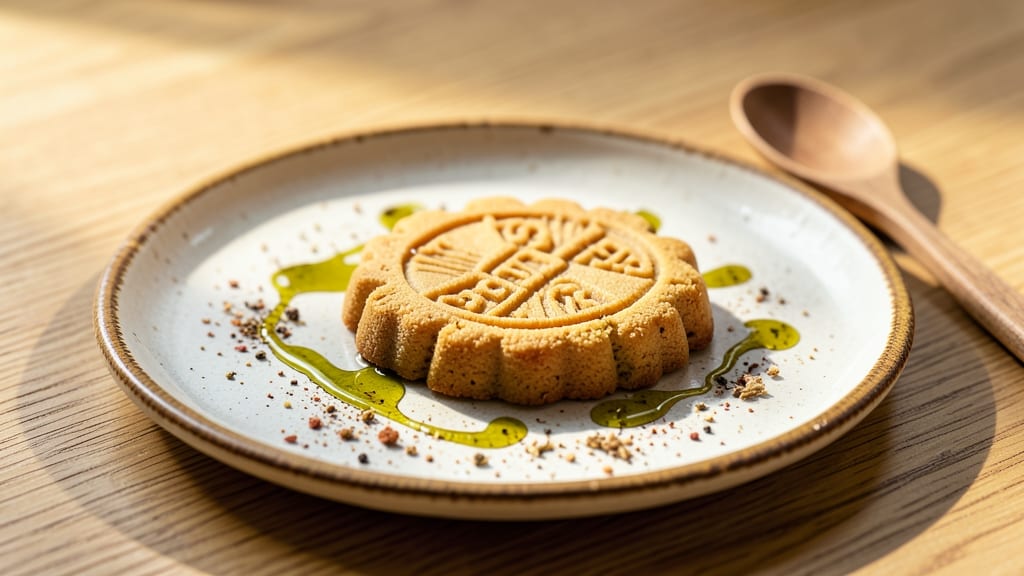
This Joy of Cooking Springerle recipe brings a taste of Germany’s festive traditions right to your kitchen, where delicate anise-spiced cookies crackle with crispy lace patterns. 💫 What started as a medieval gingerbread has become a beloved holiday treat, and I’ve perfected the technique for achieving that signature crispness while keeping the flavor rich and aromatic.
The secret to authentic Springerle lies in the dough—made with honey, anise seeds, and precise measurements to ensure the right texture. Once rolled thin and cut with intricate molds, these cookies develop their signature crispy edges and tender centers during baking.
The anise flavor is subtle yet unmistakable, giving them a warm, slightly sweet profile that pairs beautifully with tea or coffee.
What makes these cookies truly special is the contrast between their delicate lace designs and the satisfying crunch they deliver. Whether you’re baking for Christmas markets or simply indulging in a nostalgic treat, this recipe captures the artistry of traditional German baking.
The process is methodical but rewarding, with each step designed to preserve the cookie’s signature qualities.
Ready to create cookies that taste like a piece of history? This recipe delivers restaurant-quality results with a touch of holiday magic. Let’s get started on making Springerle that will impress even the most discerning cookie lovers.
Ingredients for joy of cooking springerle
Authentic German baking relies on precise measurements and quality ingredients for these delicate anise-spiced cookies.
| Ingredient | Amount | Notes |
|---|---|---|
| All-Purpose Flour 🌾 | 3 cups | Sifted for even texture |
| Honey 🍯 | 1 cup | High-quality, preferably German |
| Anise Seeds 🌿 | 2 tbsp | Whole seeds, lightly toasted |
| Ground Ginger 🌶️ | 1 tbsp | Freshly ground preferred |
| Cinnamon 🍃 | 1 tsp | Ceylon cinnamon for delicate flavor |
| Cardamom 🌿 | ½ tsp | Ground cardamom pods |
| Salt 🧂 | ½ tsp | Diamond Crystal kosher salt |
| Unsalted Butter 🧈 | ½ cup | Cold, cubed for dough |
| Egg Yolks 🥚 | 2 whole | Large eggs, separated |
| Springerle Cookie Molds 🎨 | 1 package | Lace pattern design |
| Cornstarch 🌾 | 1 tbsp | For dusting molds |
| Powdered Sugar 🍚 | 1 cup | For rolling dough |
| Vanilla Extract 🌸 | ½ tsp | Pure vanilla preferred |
The honey should be German dark forest honey if possible—Wieliczka or Bayerische Berg Honig brands deliver the richest flavor. Anise seeds must be toasted lightly to release their aromatic oils; Penzeys or bulk spice sections at specialty stores like Whole Foods carry the best quality. For the butter, use European-style if available—Plugrá or Kerrygold brands provide superior fat content for the signature crispness. Cardamom and cinnamon should be freshly ground to avoid bitterness, and the Ceylon variety of cinnamon is essential for that delicate, sweet warmth traditional to Springerle.
Substitutions require careful consideration—ground anise can replace whole seeds at half the quantity, but the texture will differ slightly. For honey, agave nectar works in a pinch but lacks the depth of flavor. If you can’t find Ceylon cinnamon, Madagascar cassia is acceptable but more potent. The cookie molds are non-negotiable for authentic lace patterns; Amazon or specialty baking shops like Sur La Table carry high-quality sets. For powdered sugar, Domino brand is ideal due to its fine texture, though any high-quality brand will suffice. The egg yolks must be separated—room temperature yolks incorporate more smoothly into the dough.
Store the dry ingredients—flour, spices, and powdered sugar—in airtight containers away from light to preserve freshness for up to 6 months. The honey will keep indefinitely in its original container, sealed tightly. Once baked, Springerle maintain their crispness for 2 weeks when stored in a cool, dry place. For longer storage, freeze the cookies in a single layer before transferring to an airtight container, where they’ll retain their texture for up to 3 months. The molds should be cleaned with a soft brush and stored in their original packaging to prevent warping.
Why You’ll Love This Recipe
- No-Rolling Needed: I swear by this recipe because it skips the fuss of rolling dough by hand—just press the honey-spiced mixture into molds with a rolling pin, and you’re done. The anise seeds add that signature crunch without extra steps, and the cinnamon-honey combo does half the flavor work for you.
- Honey-Spiced Magic: That first bite? Warm, lightly crisp, and packed with a slow-sweet honey warmth balanced by anise’s licorice kick and ginger’s gentle bite. It’s the kind of flavor that lingers—like a hug from your favorite baking relative, but with actual carbs.
- Holiday or Snack Attack: Between us, these are my go-to for Christmas markets, but I also keep a stash in the pantry to toss in lunchboxes or pair with coffee when I need a pick-me-up. The ginger and cinnamon make them feel special, but they’re not so fancy you’ll stress over serving them.
- Pantry Goldmine: Flour, honey, and spices? You’re already stocked. No weird ingredients or last-minute grocery runs—just mix, bake, and enjoy. They stay crisp for days (yes, even in humid kitchens), so you can bake a big batch and forget about it until you’re ready for that sweet, spiced crunch.
Step-by-step instructions for anise-spiced German cookies
Mastering these delicate cookies requires precision in technique and timing.
👨🍳 Step 1: Prepare the Spiced Dough Foundation
In a medium mixing bowl, combine the 3 cups all-purpose flour, 2 tbsp anise seeds, 1 tbsp ground ginger, 1 tsp cinnamon, 0.5 tsp cardamom, and 0.5 tsp salt. Whisk vigorously for 2 minutes to fully aerate the flour and distribute the spices evenly. This step ensures each cookie carries that signature anise warmth and crisp texture.
In a separate small bowl, create the wet mixture by whisking together the 1 cup honey, 0.5 cup cold unsalted butter (cubed), 2 whole egg yolks, and 0.5 tsp vanilla extract. The butter should remain cold—this prevents the dough from becoming too soft. Gradually pour the wet ingredients into the dry mixture while stirring with a wooden spoon until a shaggy dough forms.
Here’s the thing—don’t overmix. You’re aiming for a cohesive dough with small flour streaks visible. Overworking develops gluten, which would make your delicate lace patterns collapse during baking. Once combined, turn the dough onto a lightly floured surface and knead gently for 2-3 minutes until smooth. Wrap in plastic wrap and refrigerate for at least 1 hour (up to 24 hours) to allow the gluten to relax and flavors to meld.
🥘 Step 2: Roll and Mold for Crispy Perfection
Preheat your oven to 350°F and line two baking sheets with parchment paper. After chilling, divide the dough into 4 equal portions (about 12 oz each). On a lightly floured surface, roll each portion into a ¼-inch thick rectangle, about 12×10 inches. The dough should be cool to the touch—if it’s sticky, chill for another 15 minutes.
Lightly dust your springerle cookie molds with 1 tbsp cornstarch to prevent sticking. Press each mold firmly into the dough, rotating slightly as you go to ensure crisp edges. Gently lift the molds and transfer the delicate lace shapes to the prepared baking sheets, spacing them 1 inch apart. The patterns should be clearly defined—this is where your crispy texture begins.
Real talk: Don’t press too hard or the molds will tear the dough. The key is gentle but firm pressure. If any dough breaks during transfer, use a small spoon to carefully repair the edges before baking. This attention to detail ensures your final cookies maintain their intricate lace designs.
🔥 Step 3: Bake to Crispy Lace Perfection
Bake the cookies for 12-15 minutes until the edges are deep golden brown and the lace patterns appear crisp and defined. The centers should still look slightly underdone—this ensures they remain crisp rather than cakey. Rotate the baking sheets halfway through for even browning. Your oven might run hot, so start checking at the 10-minute mark—every oven behaves differently.
Here’s the moment that matters: the cookies are done when they pull away cleanly from the parchment paper. If they’re browning too quickly, tent with foil to prevent burning while they finish baking. Remove from oven and let cool on the baking sheets for 5 minutes before transferring to a wire rack. This resting period prevents the delicate lace patterns from cracking as they cool completely.
While cooling, roll the 1 cup powdered sugar in a fine-mesh sieve over the cookies. This creates that signature dusting while they’re still warm, ensuring even coverage. The powdered sugar should cling to the crisp edges, enhancing both texture and presentation. Store in an airtight container for up to 1 week—though they rarely last that long!
Pro Tips For Making Joy Of Cooking Springerle
- Toast the Seeds First: Anise seeds lose their punch when raw—pop them in a dry pan for 30 seconds until fragrant. I learned this the hard way when my first batch tasted like bland flour. The aroma doubles when toasted, and the flavor sticks to the dough better.
- Chill the Dough Hard: Wrap the dough in plastic and refrigerate for at least 2 hours—overnight is even better. I used to skip this and ended up with cracked cookies that spread like pancakes. Cold dough holds its shape and caramelizes cleaner.
- Sift the Spices Twice: Ground ginger and cinnamon clump like glue—sift them into the flour before mixing, then sift the whole batch again. My grandmother swore by this, and she was right: uneven distribution turns your cookies into a flavor rollercoaster.
- Use a Thin Roller: Springerle need precision—roll the dough to ⅛-inch thickness with a thin rolling pin or pasta machine. Thicker dough bakes unevenly, and thinner dough burns faster. I now keep a dedicated ¼-inch pin just for this.
Troubleshooting great joy of cooking springerle
Dough Too Sticky?
If your dough feels too soft or sticky when rolling, it’s likely because the butter warmed up during mixing. Return the dough to the refrigerator for 15-20 minutes to firm up.
I’ve found that chilling dough on a baking sheet (rather than in a bowl) speeds up the process by 50%.
If it’s still sticky after chilling, dust your rolling surface with extra cornstarch or add 1-2 tbsp more flour—just don’t overdo it, or your cookies will lose their delicate texture. 🧊
Mold Not Holding?
The lace patterns won’t transfer properly if your molds aren’t sharp or if the dough isn’t cold enough. First, ensure your molds are clean and free of old dough residue—use a soft brush to remove any buildup.
Second, press the molds firmly but evenly into the dough, rotating slightly to create crisp edges. If the dough tears, gently repair it with a small spoon before transferring to the baking sheet.
I’ve had success using plastic-coated molds from Amazon—they’re easier to clean and hold details better than metal ones. 🎨
Cookies Spreading?
Overworked dough or too much butter can cause your Springerle to spread during baking. To prevent this, handle the dough minimally and keep it cold. If your cookies still spread, reduce the butter by 1 tbsp next time or increase the flour by 1 tbsp.
Another trick I swear by: place the baking sheets on the middle rack of your oven. The even heat distribution prevents uneven cooking and keeps the lace patterns intact. If they spread slightly, they’ll still taste amazing—just less delicate! 🔥
Browning Too Fast?
If your cookies brown too quickly, your oven is likely running hot. Tent the baking sheets with aluminum foil after 8 minutes to slow browning while allowing the centers to cook through. Alternatively, reduce the oven temperature by 25°F (to 325°F) and add 2-3 minutes to the baking time.
I’ve also found that using dark-colored parchment paper (like Silpat) helps absorb excess heat, preventing over-browning. 🌡️
Lace Patterns Fading?
Delicate lace designs can collapse if the dough isn’t rolled thin enough or if it’s too warm. Aim for a ¼-inch thickness—any thicker, and the patterns won’t crisp properly. After baking, let the cookies cool on the baking sheet for 5 minutes before transferring to a wire rack.
This gradual cooling preserves the lace structure. If the patterns still fade, try rolling the dough slightly thinner (⅛ inch) and baking at 325°F for 14-16 minutes to encourage crispiness. 💫
Honey Too Liquid?
If your honey is too runny (like store-bought varieties often are), it can make the dough sticky and cause the cookies to spread. To fix this, warm the honey gently in a small saucepan over low heat for 2-3 minutes, stirring constantly, until it thickens slightly.
Let it cool completely before using. Alternatively, substitute ½ cup honey with ½ cup golden syrup or agave nectar—both thicken the dough and add depth to the flavor. Just be sure to adjust the liquid-to-dry ratio carefully. 🍯
Nutrition facts
Frequently asked questions about German Springerle cookies
What makes Springerle different from other gingerbread cookies?
Springerle stand out for their signature crispy lace patterns and delicate anise flavor. Unlike traditional gingerbread, they use honey instead of molasses and rely on precise dough rolling to create intricate designs. The cookies develop a satisfying crunch while maintaining a tender center—perfect for holiday baking.
Can I make Springerle without cookie molds?
Yes! If you don’t have lace molds, try cutting simple shapes like stars or circles with a sharp knife or cookie cutter. For a rustic look, use a fork to create textured patterns. The key is rolling the dough ¼-inch thick and baking at 350°F for 12-15 minutes to achieve crisp edges.
How do I store Springerle for maximum freshness?
Keep these delicate cookies in an airtight container at room temperature for up to 1 week. For longer storage, freeze them in a single layer before transferring to a container—they’ll stay crisp for up to 3 months. Avoid refrigerating as it makes them soft. The powdered sugar coating helps preserve their texture!
Why does my Springerle dough keep sticking?
Sticky dough usually means the butter warmed up or the honey was too liquid. Chill the dough for 15-20 minutes longer and dust your surface with extra cornstarch. If needed, add 1-2 tbsp flour—just don’t overdo it. For future batches, use thicker honey or golden syrup to prevent stickiness.
Are Springerle gluten-free?
Traditional Springerle contain wheat flour, but you can adapt the recipe with a 1:1 gluten-free flour blend. Replace the all-purpose flour and increase the spices by 10% to compensate for flavor differences. Note that gluten-free versions may not crisp as dramatically, but they’ll still taste delicious!

- Buttery Baked Salmon Recipe: Pan-Seared Crispness With Melted Herb Butter - November 29, 2026
- 1 Kg Vanilla Cake Recipe: Moist Layers and Vanilla Infusion Magic - November 29, 2026
- Pork Belly With Fish Sauce Recipe: Crispy Crackling and Umami-Rich Tenderness - November 29, 2026