
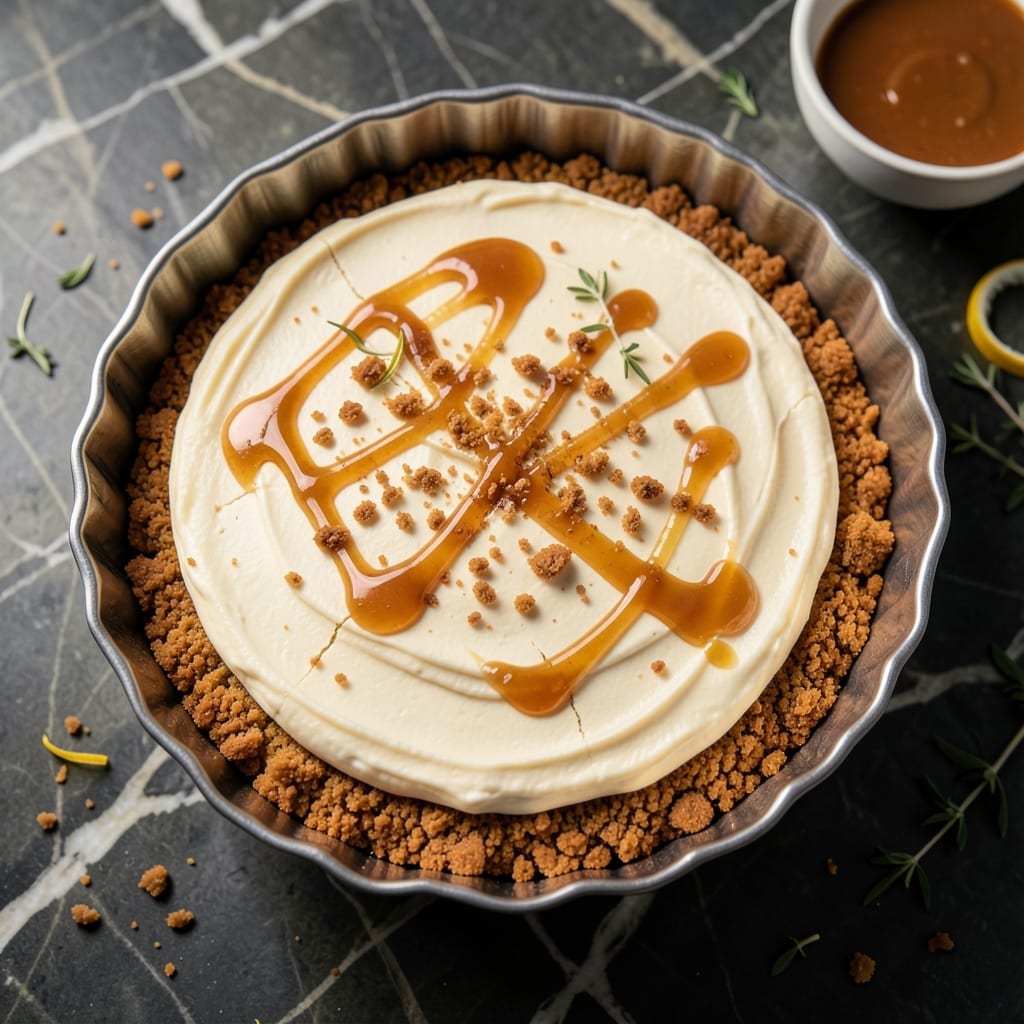
There’s an art to crafting the perfect cheesecake, and this version delivers a dense, velvety texture with pure vanilla elegance. The foundation begins with a buttery graham cracker crust that sets the stage for the rich filling.
The filling combines cream cheese, sugar, and vanilla in a precise ratio, baked in a water bath to prevent cracks. This method ensures even cooking and that signature smooth consistency that defines a professional-quality dessert.
What emerges from the oven is a cheesecake with clean edges and a surface so flawless it needs no adornment. The vanilla shines through every bite, balanced by the subtle tang of cream cheese.
Chill it completely before serving for the best texture. This is the cheesecake that sets the standard.
Ingredients for King Arthur Cheesecake
Classic ingredients combine for a dense, velvety cheesecake with buttery crust and pure vanilla flavor.
| Ingredient | Amount | Notes |
|---|---|---|
| Graham Cracker Crumbs 🍪 | 1 ½ cups | Fine crumbs, about 10 full sheets |
| Granulated Sugar 🥄 | ¼ cup | Divided for crust and filling |
| Unsalted Butter 🧈 | ½ cup | Melted for crust binding |
| Cream Cheese 🧀 | 2 lb | Full-fat, room temperature |
| Granulated Sugar 🥄 | 1 ¼ cups | For sweetening filling |
| Pure Vanilla Extract 🌿 | 2 tsp | High-quality for best flavor |
| Large Eggs 🥚 | 4 whole | Room temperature, separated |
| Heavy Cream 🥛 | ½ cup | Full-fat for richness |
| All-Purpose Flour 🌾 | 2 tbsp | For stabilizing filling |
| Salt 🧂 | ¼ tsp | Fine sea salt preferred |
| Lemon Juice 🍋 | 1 tsp | Freshly squeezed for brightness |
The cream cheese is non-negotiable here. Philadelphia brand gives the smoothest texture—avoid low-fat versions as they lack the richness needed. For the graham crackers, Honey Maid is the standard, but store brands work fine. Buy an extra box if you’re making multiple cheesecakes (the crumbs freeze well). The vanilla extract should be pure, not imitation—Nielsen-Massey is a favorite among bakers.
No graham crackers? Digestive biscuits or vanilla wafers make excellent substitutes. If you’re out of cream cheese, ricotta plus a bit of sour cream can work in a pinch (though texture will differ). The heavy cream can be swapped for full-fat Greek yogurt—just strain it first to remove excess liquid. For the crust, gingersnaps add a nice spiced twist.
Cheesecake must chill overnight—no shortcuts. Store leftovers wrapped tightly in the fridge for up to 5 days, or freeze slices for 2 months (thaw in the fridge before serving). The crust can be prepped a day ahead and stored at room temperature.
Why You’ll Love This Recipe
- One Bowl Wonder: I mix the graham crumbs, sugar, and melted butter right in the pan—no extra bowls to wash.
- That Cream Cheese Magic: The tangy cream cheese with just the right sweetness hits that perfect cheesecake balance every time.
- Crowd Pleaser: From potlucks to Sunday dessert, this one disappears fast—my niece even skips the crust to dig straight into the filling.
- Leftovers? Doubt It: Honestly, the only downside is it never lasts past day two in my house.
Step-by-Step Instructions for Cheesecake with Vanilla Elegance
This method delivers the signature dense texture with a perfectly balanced vanilla profile.
Step 1: Prepare the Graham Cracker Crust
Preheat your oven to 350°F. In a medium bowl, combine the 1.5 cups Graham Cracker Crumbs with the 0.25 cup Granulated Sugar. Stir until evenly distributed—the sugar enhances the natural sweetness of the crumbs.
Drizzle in the 0.5 cup Unsalted Butter (melted) and mix until the crumbs resemble wet sand. Press this mixture firmly into the bottom of a 9-inch springform pan using the back of a measuring cup. The crust should be compact and level for even baking.
Bake for 10 minutes until the edges are lightly golden. Remove from the oven and set aside to cool slightly while you prepare the filling. This prevents the crust from becoming soggy when the filling is added.
Step 2: Beat the Cream Cheese and Sugar
In a stand mixer fitted with the paddle attachment, beat the 2 lb Cream Cheese on medium speed for 2 minutes until completely smooth. Scrape down the sides of the bowl as needed to ensure even mixing.
Gradually add the 1.25 cups Granulated Sugar and continue beating for another 2-3 minutes until light and fluffy. This step aerates the cream cheese, which helps create that signature dense yet creamy texture.
Add the 2 tsp Pure Vanilla Extract and mix for 30 seconds to incorporate. The vanilla should be fully distributed, and the mixture should have a satin-like sheen.
Step 3: Incorporate the Remaining Filling Ingredients
With the mixer on low speed, add the 4 whole Large Eggs, one at a time, mixing just until each is fully incorporated. Overmixing at this stage can introduce too much air, leading to cracks in the finished cheesecake.
Add the 0.5 cup Heavy Cream, 2 tbsp All-Purpose Flour, 0.25 tsp Salt, and 1 tsp Lemon Juice. Mix on low speed for 1 minute until smooth and homogeneous. The flour stabilizes the filling, while the lemon juice adds a subtle brightness.
Step 4: Bake and Cool for Perfect Texture
Pour the filling over the cooled crust and smooth the top with a spatula. Place the springform pan in a larger roasting pan and add hot water to the roasting pan until it reaches halfway up the sides of the springform pan. This water bath ensures even baking and prevents cracking.
Bake at 325°F for 60-70 minutes until the edges are set but the center still has a slight wobble. Turn off the oven and crack the door open 1 inch. Let the cheesecake cool in the oven for 1 hour to prevent sudden temperature changes that can cause cracks.
Remove from the oven and cool completely at room temperature for 2 hours, then refrigerate for at least 4 hours (preferably overnight) before serving. This slow cooling process ensures a firm, dense texture throughout.
Pro Tips For Making King Arthur Cheesecake
- Room Temp Cream Cheese: Pull your cream cheese out at least 2 hours before baking—cold blocks blend unevenly, leaving lumps no matter how hard you beat them.
- Press Crust Firmly: Pack those graham cracker crumbs into the pan with the bottom of a glass, not just a spoon. I learned this the hard way—loose crusts crumble when you slice.
- Skip Overmixing: Once the sugar and cream cheese are smooth, stop. Overbeating adds air, which causes cracks in your finished cheesecake.
- Water Bath Always: Wrap the springform pan in foil and bake it in a water bath. After burning three batches, I finally figured out this is the only way to prevent the edges from baking too fast.
Troubleshooting This Dish
Cracked Surface Fix
If your cheesecake cracks, it’s likely from overmixing or temperature shock. Avoid overbeating eggs—just incorporate them until blended. Always use a water bath and let it cool gradually in the oven with the door cracked open for 1 hour after baking. 💡
Soggy Crust Solution
Prevent sogginess by fully baking and cooling the crust before adding filling. Press crumbs tightly into the pan and bake at 350°F for 10 minutes. Chill the crust for 15 minutes in the freezer before adding filling to create a barrier against moisture.
Underbaked Center
If the center jiggles excessively after 70 minutes, it needs more time. Return it to the oven for 10-minute increments until edges are set but the center has a slight wobble. Avoid opening the oven door too often, as temperature fluctuations can extend baking time.
Lumpy Filling
Ensure cream cheese is at room temperature before mixing. Beat it alone for 2 minutes until smooth before adding sugar. If lumps persist, press the filling through a sieve to remove any remaining bits for a silky texture.
Sticking to Pan
Line the bottom of your 9-inch springform pan with parchment paper before adding the crust. Lightly grease the sides with butter or nonstick spray. After chilling, run a thin knife around the edge to release it cleanly before unmolding. ✨
Uneven Top
For a perfectly level surface, smooth the filling with a spatula before baking. Rotate the pan 180 degrees halfway through baking for even heat distribution. Avoid overfilling the pan—leave ½ inch of space at the top for expansion.
Nutrition Facts
Frequently Asked Questions
Why does my cheesecake crack on top?
Cracks usually form from overmixing or rapid temperature changes. Mix eggs just until combined and always use a water bath. Cool it gradually with the oven door cracked for 1 hour after baking.
Can I make this without a springform pan?
You can use a 9-inch cake pan, but line it well with parchment. Without a removable side, unmolding will be tricky. Expect some texture differences since springform pans provide better heat circulation.
How long should it chill before serving?
For the best texture, refrigerate at least 4 hours, but overnight is ideal. This allows the filling to fully set and develop its dense, creamy consistency.
What’s the best way to store leftovers?
Wrap slices tightly in plastic wrap and store in the fridge for up to 5 days. For longer storage, freeze individual slices for up to 2 months and thaw overnight in the refrigerator.

- BBQ Sausage Recipe Oven: Smoky Depth Without the Grill - September 28, 2026
- BBQ Chicken Bowl Recipe Rice: Smoky Sweetness Over Fluffy Grains - September 28, 2026
- Beef Cutlet Recipe Ideas: Crispy Breaded Patties With Bold Seasonings - September 28, 2026