
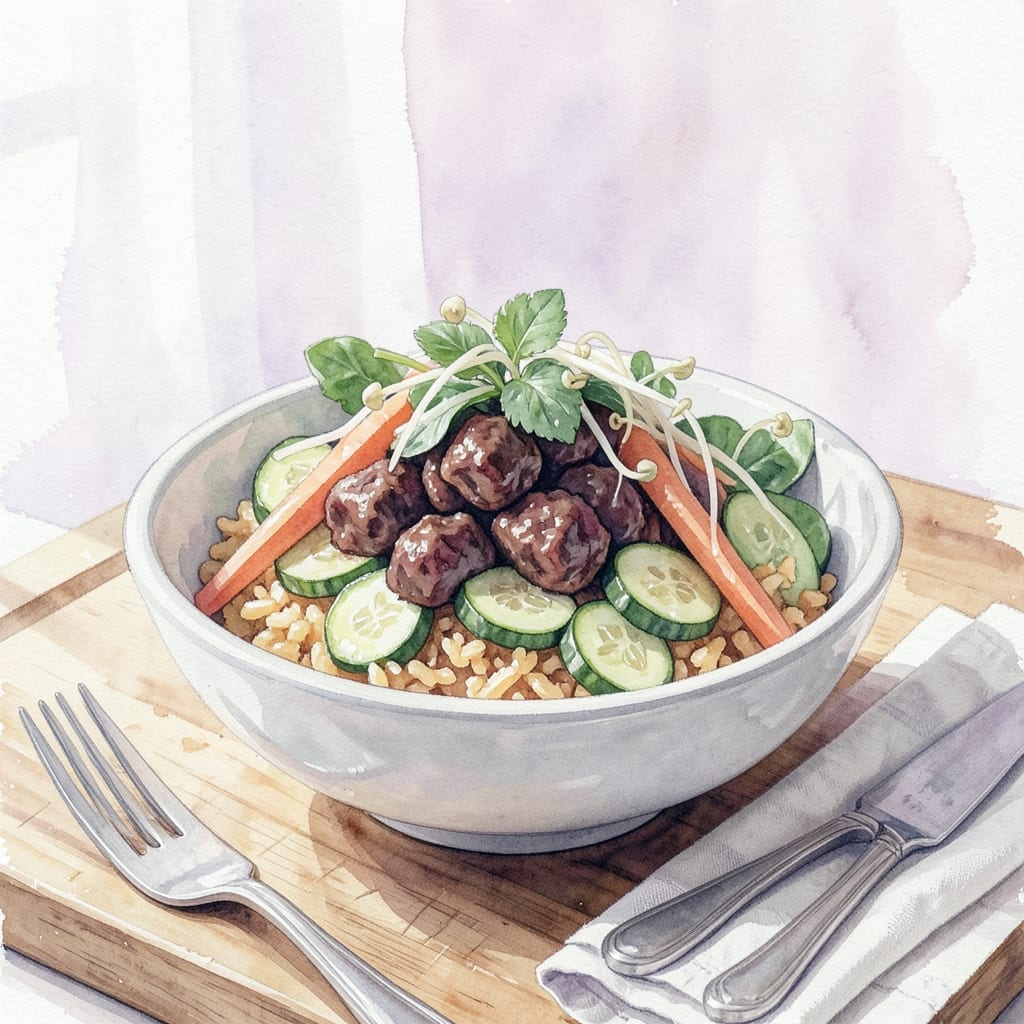
This dish brings Korean flavors to your table with ground beef and colorful vegetables over warm rice. I tested this in my small kitchen to perfect the balance.
Every bite combines savory meat, vibrant veggies, and gochujang sauce for authentic taste. Simple ingredients create a meal that feels special.
Ingredients for Korean Bibimbap Recipe Ground Beef
Pantry staples and fresh veggies come together for this vibrant rice bowl delight.
| Ingredient | Amount | Notes |
|---|---|---|
| Ground Beef 🥩 | 1 lb | 80/20 blend preferred |
| White Rice 🍚 | 2 cups | Short or medium grain |
| Carrots 🥕 | 2 whole | Julienned for texture |
| Zucchini 🥒 | 1 whole | Julienned or matchstick cut |
| Spinach 🥬 | 4 cups | Fresh, roughly chopped |
| Bean Sprouts 🌱 | 1 cup | Rinsed and drained |
| Gochujang 🌶️ | ¼ cup | Korean red pepper paste |
| Soy Sauce 🫒 | 3 tbsp | Low-sodium preferred |
| Sesame Oil 🫒 | 1 tbsp | Toasted for aroma |
| Garlic Cloves 🧄 | 4 cloves | Minced finely |
| Brown Sugar 🍚 | 1 tbsp | For balancing heat |
| Vegetable Oil 🫒 | 1 tbsp | For cooking beef |
| Eggs 🥚 | 4 whole | One per serving |
| Green Onions 🧅 | ½ cup | Thinly sliced for garnish |
| Sesame Seeds 🌰 | 1 tbsp | Toasted for crunch |
The ground beef is the foundation here. 80/20 blend gives you the right fat content for flavor—leaner beef can dry out. I grab mine from Whole Foods or a trusted butcher. For the rice, short-grain white rice is traditional, but jasmine works in a pinch. Look for gochujang at H Mart or Korean grocery stores (or the international aisle at Safeway).
No gochujang? Sriracha mixed with a tiny bit of miso paste gets you close (not perfect, but workable). Short on veggies? Swap in mushrooms, bell peppers, or shredded cabbage. The sesame oil is non-negotiable though—it adds that nutty depth. If you only have regular soy sauce, cut back slightly to avoid over-salting.
This keeps well for 3-4 days in the fridge (store components separately). The veggies can get soggy, so I prep them fresh the day I plan to eat. Freezes okay, but the texture changes—best enjoyed fresh. Reheat the beef and sauce gently to keep it tender.
Why You’ll Love This Recipe
- One Pan Meal: I brown the ground beef, toss in the veggies, and serve it all over rice—no extra pots, no fuss.
- Umami Bomb: The soy-garlic marinade on the beef paired with the sweet carrots and fresh spinach hits all the right notes.
- Meal Prep Hero: I make a big batch on Sunday and the flavors actually get better by Wednesday.
- Stretches Far: Ground beef and rice go a long way, so this feeds my family for two nights without breaking the bank.
Step-by-Step Instructions for Korean Bibimbap with Ground Beef
Here’s how I build this colorful bowl with perfect texture and balanced flavors.
Step 1: Cook the Rice and Prepare Vegetables
Start by cooking the 2 cups White Rice according to package instructions—you want it slightly sticky to hold the toppings. While it cooks, julienne the 2 whole Carrots and 1 whole Zucchini into thin, even strips for quick, uniform cooking.
Roughly chop the 4 cups Spinach and rinse the 1 cup Bean Sprouts, draining them well. Thinly slice the 0.5 cup Green Onions and mince the 4 cloves Garlic Cloves. Having everything prepped before cooking ensures a smooth, stress-free assembly.
Step 2: Sear the Ground Beef with Aromatics
Heat the 1 tbsp Vegetable Oil in a large skillet over medium-high heat. Add the 1 lb Ground Beef and cook, breaking it into small pieces, until it’s no longer pink and develops a light crust—about 5-6 minutes.
Stir in the minced garlic cloves and cook for 30 seconds until fragrant. Add the 3 tbsp Soy Sauce, 1 tbsp Brown Sugar, and 1 tbsp Sesame Oil, stirring to coat the beef evenly. Cook for another 2 minutes, then remove from heat.
Step 3: Sauté the Vegetables Separately
In the same skillet, add the julienned carrots and zucchini. Sauté over medium heat for 3-4 minutes until they soften slightly but retain a crisp bite. Remove and set aside.
Return the skillet to heat and add the spinach and bean sprouts. Cook for 2-3 minutes until the spinach wilts and the sprouts are tender-crisp. Season lightly with salt if desired, but remember the gochujang will add saltiness later.
Step 4: Fry the Eggs and Toast the Sesame Seeds
In a separate nonstick pan, heat a little oil over medium heat and fry the 4 whole Eggs sunny-side up or over-easy—you want runny yolks to mix into the dish. While the eggs cook, toast the 1 tbsp Sesame Seeds in a dry pan for 1-2 minutes until golden and fragrant.
Keep the eggs warm on a plate and set the sesame seeds aside for garnishing. The contrast of warm, runny yolks with the other components is essential for authentic bibimbap.
Step 5: Assemble and Serve with Gochujang
Divide the cooked white rice among four bowls. Arrange the cooked ground beef, carrots, zucchini, spinach, and bean sprouts in sections on top of the rice. Place a fried egg in the center of each bowl.
Drizzle each serving with 0.25 cup Gochujang (about 1 tablespoon per bowl) and sprinkle with green onions and toasted sesame seeds. Serve immediately with extra gochujang on the side for those who like it spicier. Mix everything together just before eating to enjoy the full range of flavors and textures.
Pro Tips For Making Korean Bibimbap Recipe Ground Beef
- Cook Rice First: Start your rice early—it needs 20-30 minutes to cook and cool slightly. I learned this the hard way after rushing and ending up with a bowl of hot rice wilting my fresh veggies.
- Drain the Beef: After browning the ground beef, drain the excess fat completely. Sounds obvious, but that extra grease can make your bibimbap soggy instead of vibrant.
- Salt the Spinach: Blanch the spinach, then drain and squeeze out all the water before seasoning. My grandmother swore by this, and it keeps the dish from getting watery.
- Prep Veggies Uniformly: Julienne your carrots and zucchini into matchstick sizes—about 2 inches long. This isn’t just for looks; it ensures even cooking and a consistent bite in every forkful.
Creative Variations of korean bibimbap recipe ground beef
Vegetarian Twist
Swap the ground beef for 1 lb crumbled tofu or tempeh for a plant-based version. Press the tofu first to remove excess water, then crumble and cook in 1 tbsp vegetable oil until golden. Use the same marinade for that familiar savory kick. 🌱
Seafood Variation
Replace beef with 1 lb shrimp or scallops for a coastal take. Sear the seafood quickly—just 2-3 minutes per side—to avoid overcooking. Toss with the sauce and serve over rice with the same vibrant veggies.
Spicy Pork Option
For a Korean BBQ twist, use 1 lb ground pork instead. Add 1 tsp gochugaru (Korean chili flakes) to the marinade for extra heat. The pork’s richness pairs beautifully with the gochujang. 🔥
Breakfast Bibimbap
Turn this into a morning dish by using leftover rice and adding crispy bacon or sausage crumbles. Top with a fried egg and skip the gochujang if you prefer a milder start to your day.
Kimchi Boost
Add ½ cup chopped kimchi to the beef while cooking for a tangy, fermented depth. The probiotics in kimchi also add gut-friendly benefits. Stir it in during the last 2 minutes of cooking.
Quick Weeknight Hack
Use pre-shredded coleslaw mix instead of julienned veggies to save time. Just sauté the mix for 3-4 minutes until tender. Even Biscuit approves of this shortcut!
Nutrition Facts
Frequently Asked Questions
Can I use ground turkey instead of beef?
Yes! Ground turkey works well and creates a lighter version. Use the same 1 lb amount and follow the recipe as written.
How do I adjust the spice level?
Start with 1 tablespoon gochujang per bowl and add more to taste. For milder heat, mix in 1 teaspoon honey to balance the spice.
Can I prep this ahead of time?
Cook and store components separately in the fridge for up to 3 days. Reheat beef and veggies gently, then assemble with fresh rice and a new fried egg.
What if I don’t have gochujang?
Mix 2 tablespoons sriracha with 1 teaspoon miso paste as a substitute. It won’t be identical but will add similar heat and umami.

- BBQ Sausage Recipe Oven: Smoky Depth Without the Grill - September 28, 2026
- BBQ Chicken Bowl Recipe Rice: Smoky Sweetness Over Fluffy Grains - September 28, 2026
- Beef Cutlet Recipe Ideas: Crispy Breaded Patties With Bold Seasonings - September 28, 2026