
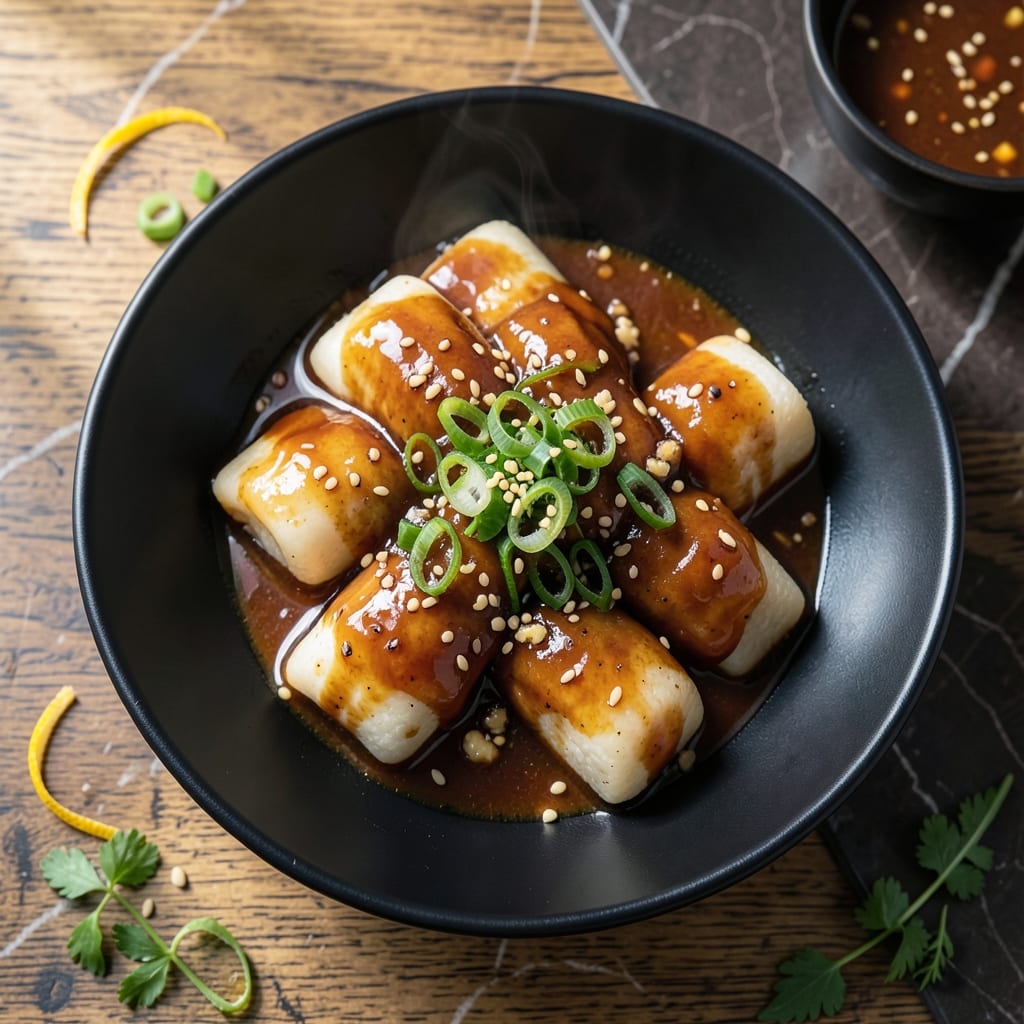
These chewy Korean rice cakes offer a delightful departure from spicy versions with their sweet soy glaze and tender texture. I developed this recipe after noticing how many people avoid traditional tteok due to heat sensitivity.
The key is using fresh rice cakes, which have a naturally soft yet resilient texture that absorbs the glaze beautifully. A simple soak in warm water revives any that have dried out, ensuring perfect results every time.
What emerges is a dish with pillowy rice cakes coated in a glossy, savory-sweet sauce that clings to each bite. The flavor is balanced with just enough depth to feel authentic without overwhelming the palate.
Serve warm as a main or side dish. This approach makes Korean flavors accessible to those who prefer milder profiles.
Ingredients for Korean Rice Cake Recipe Non Spicy
Fresh rice cakes and a handful of pantry staples create this comforting dish.
| Ingredient | Amount | Notes |
|---|---|---|
| Korean Rice Cakes 🍚 | 1 lb | Fresh or pre-soaked if dried |
| Soy Sauce 🫒 | ½ cup | Low-sodium preferred for balance |
| Brown Sugar 🍚 | ¼ cup | Light or dark variety |
| Rice Vinegar 🍶 | 2 tbsp | Mild acidity for sauce balance |
| Sesame Oil 🫒 | 1 tbsp | Toasted for depth of flavor |
| Garlic Cloves 🧄 | 4 cloves | Minced finely for even distribution |
| Fresh Ginger 🌿 | 1 tbsp | Grated for smooth texture |
| Green Onions 🧅 | 4 whole | Thinly sliced for garnish |
| Sesame Seeds 🌾 | 1 tbsp | Toasted for nutty aroma |
| Vegetable Oil 🫒 | 2 tbsp | Neutral flavor for cooking |
| Water 💧 | ½ cup | For soaking dried rice cakes |
| Cornstarch 🌾 | 1 tsp | Optional for sauce thickening |
The rice cakes are everything here. Fresh ones from a Korean market (look for the vacuum-sealed packs in the refrigerated section) have the best texture—chewy but tender. Dried ones work too (just soak in warm water for 20 minutes), but fresh is ideal. For soy sauce, Kikkoman low-sodium is my go-to—consistent quality and widely available at any supermarket.
No rice vinegar? Apple cider vinegar at half the amount works in a pinch. Brown sugar can be swapped for honey or maple syrup (use one-third less since they’re sweeter). Skip the cornstarch if you prefer a thinner glaze. For extra richness, add a splash of toasted sesame oil at the end—it deepens the flavor without overpowering.
Fresh rice cakes keep for 3-4 days in the fridge, submerged in water. Dried ones last 6 months in a cool, dark place. The glaze can be made ahead and stored separately for 1 week—just reheat gently before tossing with the rice cakes.
Why You’ll Love This Recipe
- One Pot Wonder: I toss everything in a single pan—rice cakes, soy sauce, and brown sugar—then let it simmer while I set the table.
- Sweet-Savory Magic: The brown sugar caramelizes with the soy sauce, creating this glossy, crave-worthy glaze that clings to every chewy rice cake.
- Kid-Approved Lunchbox: My picky eater devours these cold the next day, and honestly, I pack leftovers for myself too.
- Budget Stretcher: A bag of rice cakes costs pennies and swells up when cooked, feeding four for less than a takeout appetizer.
Step-by-Step Instructions for Korean Rice Cakes in Sweet Soy Glaze
This method ensures perfectly chewy rice cakes with a glossy, balanced glaze every time.
Step 1: Prepare the Korean Rice Cakes
If using dried Korean rice cakes, soak them in 0.5 cup water for 20-30 minutes until they become soft and pliable. Fresh rice cakes can be used immediately. Drain the soaked rice cakes thoroughly and pat them dry with a clean kitchen towel.
This step is crucial—properly rehydrated rice cakes will have that signature chewy texture. If they’re still firm in the center after soaking, add another 10 minutes of soaking time. You want them supple but not mushy.
Step 2: Create the Sweet Soy Glaze
In a small bowl, whisk together the 0.5 cup soy sauce, 0.25 cup brown sugar, 2 tbsp rice vinegar, and 1 tsp cornstarch until the cornstarch is fully dissolved. The mixture should be smooth with no lumps. Set this aside while you prepare the aromatics.
The cornstarch acts as a thickener, giving your glaze that perfect clinging consistency. I always mix the cornstarch with the liquid ingredients first to prevent clumping when it hits the hot pan.
Step 3: Sauté the Aromatics
Heat 2 tbsp vegetable oil in a large skillet or wok over medium-high heat. Add the minced 4 cloves garlic cloves and grated 1 tbsp fresh ginger, stirring constantly for 30-45 seconds until fragrant but not browned. The garlic should sizzle actively but not burn.
At this point, add the drained Korean rice cakes to the skillet. Stir to coat them in the aromatic oil, cooking for 2-3 minutes until they begin to take on a slight color. This step builds the flavor foundation for your dish.
Step 4: Glaze and Finish
Pour the prepared soy sauce mixture over the rice cakes in the skillet. Stir well to coat all the rice cakes evenly. Add 1 tbsp sesame oil and continue cooking for 5-7 minutes, stirring occasionally, until the sauce has thickened and coats the rice cakes in a glossy sheen.
You’ll notice the sauce transforming from thin to syrupy as it reduces. Keep the heat at medium—too high and the sugar will burn before the sauce thickens properly. The rice cakes should be fully heated through and tender.
Step 5: Garnish and Serve
Remove from heat and stir in half of the thinly sliced 4 whole green onions. Transfer to a serving dish and top with the remaining green onions and 1 tbsp sesame seeds. The sesame seeds add a nutty crunch that contrasts beautifully with the chewy rice cakes.
Serve immediately while hot. The glaze will thicken slightly as it cools, so don’t delay. Each bite should deliver that perfect balance of sweet, salty, and nutty flavors with the rice cakes maintaining their distinctive chew.
Pro Tips For Making Korean Rice Cake Recipe Non Spicy
- Soak the Cakes: I learned this the hard way—dry rice cakes stay chewy and uneven. Cover them with warm water for 10-15 minutes before cooking to guarantee even tenderness.
- Bloom the Sauce: Heat the soy sauce, brown sugar, and rice vinegar together for 2 minutes before adding to the rice cakes. This dissolves the sugar fully and deepens the flavor.
- Skip the Boil: Resist the urge to boil the rice cakes aggressively—it makes them mushy. A gentle simmer in the sauce keeps them plump and intact.
- Finish with Oil: Drizzle the sesame oil at the very end, not during cooking. High heat can turn it bitter, but a final touch adds that nutty aroma we all love.
Wine and Beer Pairings for These Flavors
Crisp White Wines
I love pairing this dish with a chilled Riesling—its light sweetness mirrors the glaze while the acidity cuts through the chewiness. A German Kabinett Riesling works beautifully, offering apple and citrus notes that complement the soy and brown sugar perfectly. 🍷
Sparkling Options
For something celebratory, try a dry Prosecco or Cava. The bubbles refresh your palate between bites, and the slight mineral quality enhances the dish’s umami depth. I always keep a bottle of La Marca Prosecco on hand for special weeknight dinners.
Light Beers
A crisp pilsner like Stella Artois or a Korean lager such as Hite provides a clean, refreshing contrast. The beer’s light body won’t overpower the delicate sweetness of the rice cakes, making each bite taste as vibrant as the first.
Fruity Whites
An off-dry Gewürztraminer brings tropical fruit notes that harmonize with the ginger and garlic in the glaze. The wine’s natural sweetness echoes the dish’s profile without clashing. I find Trimbach Gewürztraminer particularly reliable for this pairing.
Non-Alcoholic Choices
For a non-alcoholic option, try sparkling yuzu lemonade or green tea with a touch of honey. The citrus and floral notes complement the sesame and soy beautifully, making the dish feel just as special. ✨
Nutrition Facts
Frequently Asked Questions
Can I use frozen rice cakes for this?
Yes, but thaw them completely in warm water for 30 minutes first. Frozen rice cakes can be denser, so test one for chewiness before cooking.
How do I fix sauce that’s too thin?
Mix 1 tsp cornstarch with 1 tbsp cold water, then stir into simmering sauce. It will thicken in 1-2 minutes.
What can I substitute for rice vinegar?
Use apple cider vinegar at half the amount, or lemon juice for brightness. Avoid white vinegar—it’s too harsh.
How long will leftovers keep?
Store in an airtight container for up to 3 days. Reheat gently with a splash of water to restore chewiness.

- BBQ Sausage Recipe Oven: Smoky Depth Without the Grill - September 28, 2026
- BBQ Chicken Bowl Recipe Rice: Smoky Sweetness Over Fluffy Grains - September 28, 2026
- Beef Cutlet Recipe Ideas: Crispy Breaded Patties With Bold Seasonings - September 28, 2026