
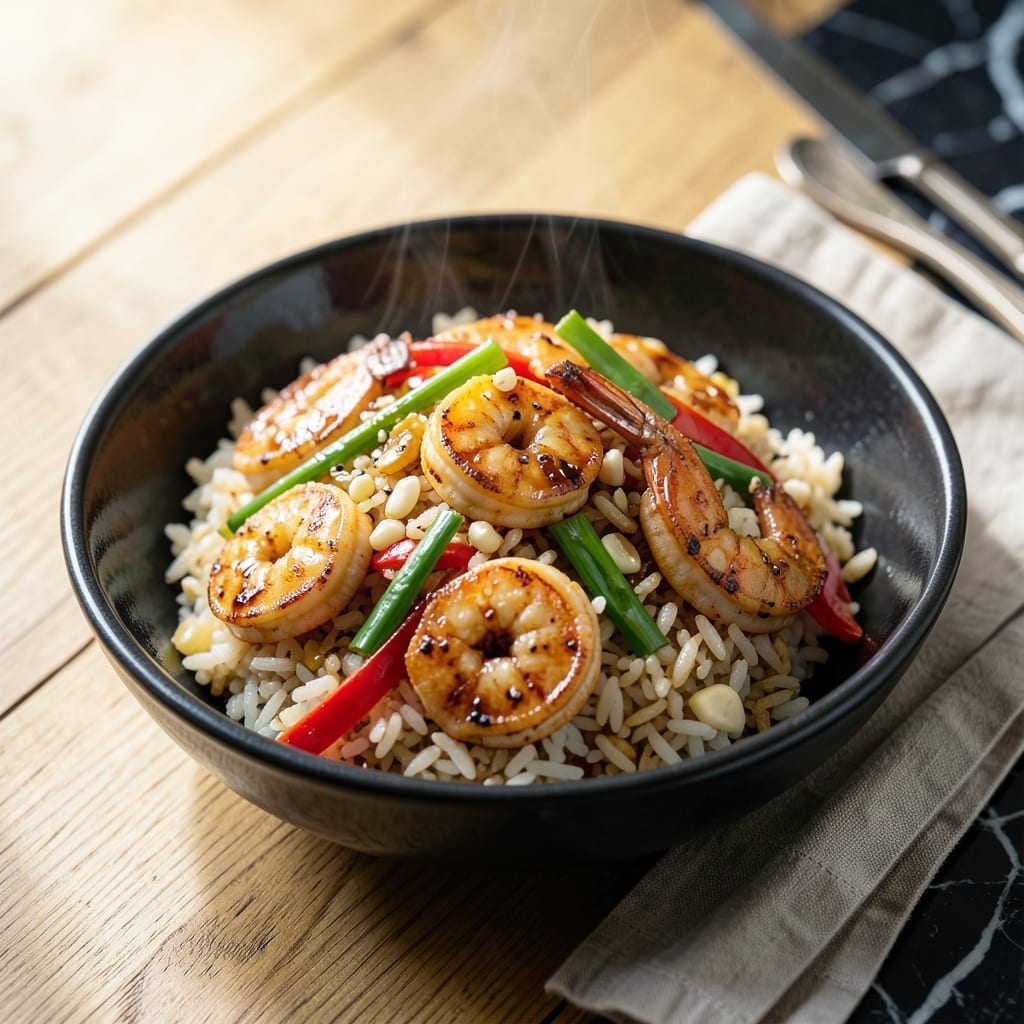
This Korean-inspired fried rice brings bold, savory flavors to your table with minimal effort. The dish combines tender shrimp, fluffy rice, and a mix of traditional seasonings for an umami-packed bite every time.
I’ve refined this method to ensure restaurant-quality results at home. High heat and a well-seasoned wok create the perfect texture, while a few key ingredients deliver authentic taste without complicated steps.
The shrimp cooks quickly, absorbing the flavors of garlic, soy, and sesame. Each grain of rice stays distinct yet richly seasoned, making this a satisfying, well-balanced meal.
Ready in under 30 minutes, this dish is ideal for busy weeknights when you crave something flavorful and filling. Let’s get started.
Ingredients for Korean Shrimp Fried Rice
Restaurant-quality Korean fried rice starts with these bold, umami-rich ingredients ready in minutes.
| Ingredient | Amount | Notes |
|---|---|---|
| Large Shrimp 🦐 | 1 lb | Peeled, deveined, tails off |
| Cooked White Rice 🍚 | 4 cups | Day-old, cold preferred |
| Garlic Cloves 🧄 | 4 cloves | Minced finely |
| Fresh Ginger 🌿 | 1 tbsp | Grated or minced |
| Soy Sauce 🥫 | 3 tbsp | Low-sodium recommended |
| Sesame Oil 🫒 | 1 tbsp | Toasted variety preferred |
| Gochujang 🌶️ | 1 tbsp | Korean chili paste |
| Frozen Peas and Carrots 🥕 | 1 cup | Thawed, no need to cook |
| Green Onions 🧅 | 4 whole | Thinly sliced, white and green parts separated |
| Large Eggs 🥚 | 2 whole | Lightly beaten |
| Vegetable Oil 🫒 | 2 tbsp | High smoke point for frying |
| Toasted Sesame Seeds 🌰 | 1 tsp | For garnish |
| Kosher Salt 🧂 | ½ tsp | Adjust to taste |
| Ground Black Pepper 🌶️ | ¼ tsp | Freshly ground preferred |
The shrimp quality is non-negotiable here. Wild-caught from a trusted seafood counter (like Whole Foods or a local fishmonger) ensures sweet, tender meat. Day-old rice is critical—fresh cooks up mushy. Use jasmine or short-grain for authentic texture. Gochujang can be found in the Asian aisle at H-Mart or most well-stocked supermarkets; Sempio and Kochukara are reliable brands.
No gochujang? Sriracha plus a pinch of sugar works in a pinch (though the depth won’t be the same). Shrimp averse? Firm tofu or scallops are great swaps. For gluten-free, use tamari instead of soy sauce. The eggs can be skipped entirely for a lighter version. Vegetable oil can be swapped for avocado oil—higher smoke point, neutral flavor.
This reheats well for 2-3 days in the fridge. Freezing? Not ideal—rice gets gummy. Store gochujang in the fridge after opening (lasts 6-12 months). Always keep sesame oil sealed tight—it goes rancid quickly.
Why You’ll Love This Recipe
- One Pan Wonder: I toss everything in a single skillet—shrimp, rice, garlic, ginger—so cleanup’s a breeze.
- Umami Bomb: The soy sauce and fresh ginger create this deep, savory flavor that makes me go back for seconds.
- Weeknight Hero: Honestly, it’s my go-to for busy Tuesdays when I need dinner fast but still crave something exciting.
- Budget Stretcher: A pound of shrimp and leftover rice feed my family of four, and the cost per serving is way lower than takeout.
Step-by-Step Instructions for Korean Shrimp Fried Rice
Master the technique and timing to create restaurant-quality results with minimal effort.
Step 1: Sear the Shrimp to Perfection
Heat 2 tablespoons vegetable oil in a large wok or skillet over medium-high heat until shimmering. Add the 1 lb large shrimp in a single layer, season with ½ teaspoon kosher salt and ¼ teaspoon ground black pepper, and cook undisturbed for 1-2 minutes per side.
You’ll know the shrimp are ready when they turn opaque and develop a light golden crust. Remove them from the pan and set aside—they’ll finish cooking later when combined with the hot rice. This initial sear locks in juices and develops deep flavor.
Step 2: Sauté Aromatics and Vegetables
In the same pan, add the minced 4 cloves garlic cloves and grated 1 tablespoon fresh ginger. Stir-fry for 30 seconds until fragrant, being careful not to let the garlic burn. Immediately add the thawed 1 cup frozen peas and carrots and cook for 2-3 minutes until heated through.
The vegetables should remain slightly crisp—this adds texture contrast to the finished dish. The residual heat from the pan and the shrimp’s fond will infuse the aromatics with extra depth, building the foundation of your fried rice.
Step 3: Combine Rice and Seasonings
Add the 4 cups cooked white rice to the pan, breaking up any clumps with a wooden spoon. Drizzle in the 3 tablespoons soy sauce, 1 tablespoon sesame oil, and 1 tablespoon gochujang, then stir-fry for 3-4 minutes until the rice is evenly coated and heated through.
You’ll notice the rice start to sizzle and develop a slightly crispy texture at the edges—that’s the Maillard reaction at work, creating complex umami flavors. The gochujang will melt into the rice, giving it a subtle spicy-sweet depth that defines this dish.
Step 4: Incorporate Eggs and Shrimp
Push the rice to one side of the pan and pour the lightly beaten 2 whole large eggs into the empty space. Scramble quickly with a spatula until just set, then mix into the rice. Return the cooked shrimp to the pan and stir everything together for 1-2 minutes until fully combined.
The eggs should be soft and slightly creamy, coating the individual grains of rice. The shrimp, now fully cooked through, will soak up the surrounding flavors while contributing its own briny sweetness to every bite.
Step 5: Garnish and Serve Immediately
Remove from heat and stir in the thinly sliced 4 whole green onions, reserving some green tops for garnish. Transfer to serving plates and sprinkle with the 1 teaspoon toasted sesame seeds and remaining green onion slices. Serve while hot, with extra gochujang on the side for those who prefer more heat.
The final dish should be vibrant and fragrant, with distinct layers of flavor in every forkful. The rice will have a slight sheen from the sesame oil, while the shrimp and vegetables provide pops of color and texture. This is fried rice at its most balanced and satisfying.
Pro Tips For Making Korean Shrimp Fried Rice
- Use Day-Old Rice: Fresh rice turns to mush—spread leftover cooked white rice on a tray and refrigerate overnight to dry it out. I learned this the hard way after making soggy fried rice three times in a row.
- Pat Shrimp Dry: Blot those large shrimp with a paper towel before cooking, or they’ll steam instead of sear. About 2 tablespoons of oil in a hot pan guarantees that golden crust.
- Skip the Crowding: Cook the shrimp in a single layer, not all at once, or they’ll release too much liquid and boil instead of brown. I was skeptical until I tried it—now I never go back.
- Bloom Aromatics First: Sauté the minced garlic and grated fresh ginger in oil for 30 seconds before adding anything else. Sounds weird, but it works: the flavors deepen and spread through the entire dish.
Health Benefits of This Dish
Protein Powerhouse
The shrimp in this dish delivers 24g of protein per 3-ounce serving, supporting muscle repair and growth. It’s also rich in selenium and vitamin B12, essential for immune function and energy metabolism. I love how this protein keeps me full for hours. 💪
Low-Calorie Satisfaction
A serving of this fried rice contains roughly 350-400 calories, making it a balanced meal that doesn’t skimp on flavor. The shrimp’s low fat content means you get all the satisfaction without the guilt.
Heart-Healthy Fats
Sesame oil adds healthy monounsaturated and polyunsaturated fats, which support cardiovascular health. The 1 tablespoon used here provides just the right amount of richness without overdoing it.
Fiber and Vitamins
The veggies bring fiber, vitamin A, and vitamin C to the table. Peas and carrots add texture while boosting your daily nutrient intake. Even the green onions contribute vitamin K and antioxidants.
Energy-Boosting Carbs
White rice provides quick-digesting carbohydrates for energy. The 4 cups in this recipe offer sustained fuel, perfect for active days. Pair it with the shrimp’s protein for a complete energy profile.
Antioxidant Rich
Gochujang contains capsaicin, which may boost metabolism and reduce inflammation. Combined with ginger and garlic, this dish packs a serious antioxidant punch. 🌟
Nutrition Facts
Frequently Asked Questions
Can I use fresh rice instead of day-old?
Fresh rice is too moist and will turn mushy when stir-fried. Always use cold, day-old rice for the best texture. Spread freshly cooked rice on a tray to cool quickly if needed.
What if I don’t have gochujang?
Substitute with 1 tablespoon sriracha plus ½ teaspoon sugar for similar heat and sweetness. The flavor won’t be identical, but it’ll still be delicious.
How do I prevent the shrimp from getting rubbery?
Cook the shrimp just until opaque (1-2 minutes per side) and remove from the pan immediately. Overcooking is the main cause of rubbery texture.
Can I make this ahead of time?
This dish tastes best fresh, but leftovers keep for 2-3 days in the fridge. Reheat in a skillet over medium heat with a splash of water to restore moisture.

- BBQ Sausage Recipe Oven: Smoky Depth Without the Grill - September 28, 2026
- BBQ Chicken Bowl Recipe Rice: Smoky Sweetness Over Fluffy Grains - September 28, 2026
- Beef Cutlet Recipe Ideas: Crispy Breaded Patties With Bold Seasonings - September 28, 2026