
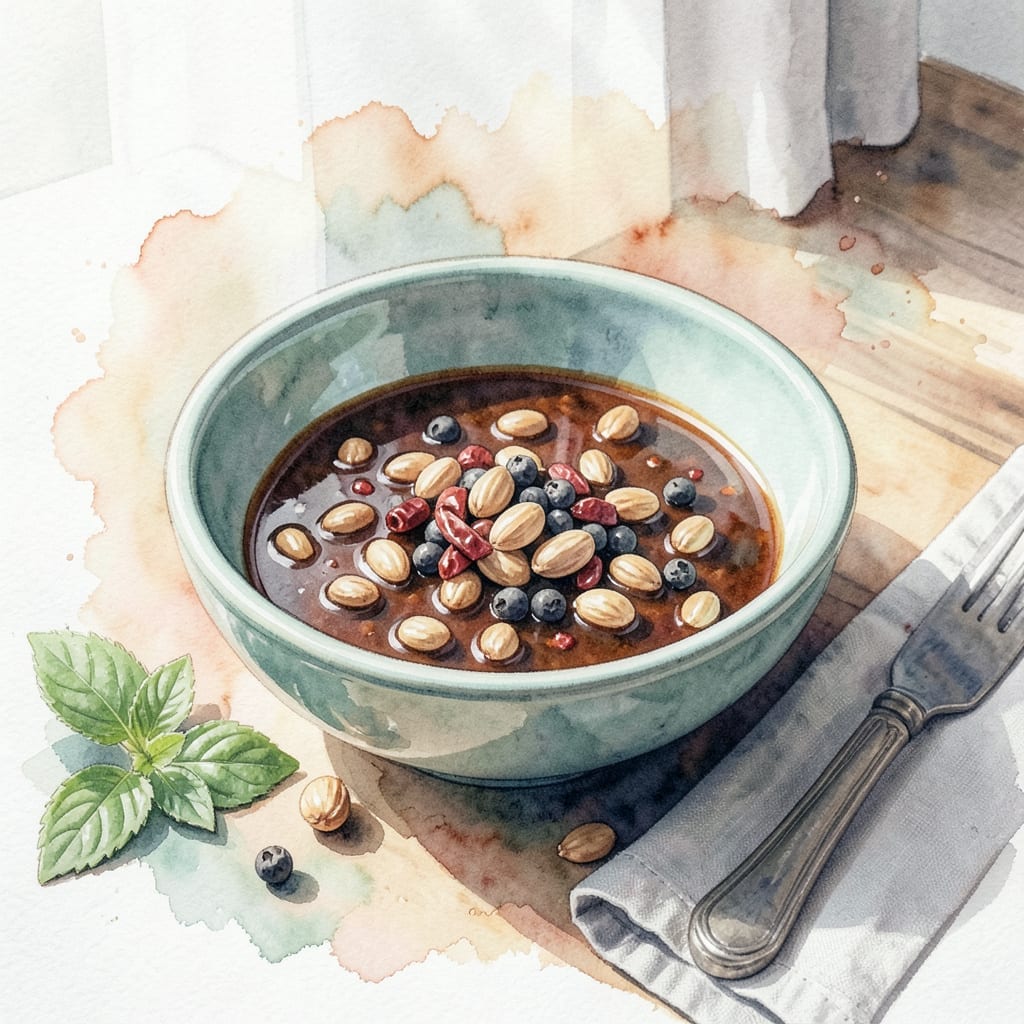
This sauce captures the bold essence of Sichuan cuisine with its signature balance of heat, sweetness, and nutty depth. I developed this version to deliver authentic flavor without requiring hard-to-find ingredients.
The secret lies in toasting the Sichuan peppercorns and dried chilies just until fragrant, then building layers with soy sauce, rice vinegar, and a touch of sugar. Peanuts add the characteristic crunch that makes this sauce so distinctive.
Use it to elevate stir-fries, as a dipping sauce, or drizzled over grilled proteins. The complex flavors work beautifully with chicken, tofu, or vegetables, transforming simple dishes into restaurant-quality meals.
One batch makes enough for multiple meals, and it keeps well in the refrigerator for up to a week. The flavors deepen over time, making leftovers even more delicious.
Ingredients for Kung Pao Recipe Sauce
Nine bold ingredients deliver that signature Sichuan heat and nutty depth.
| Ingredient | Amount | Notes |
|---|---|---|
| Sichuan Peppercorns 🌶️ | 1 tsp | Whole, toasted until fragrant |
| Dried Red Chilies 🌶️ | 8 pieces | Small, whole, stems removed |
| Soy Sauce 🫒 | ½ cup | Low-sodium preferred for balance |
| Rice Vinegar 💧 | ¼ cup | Unseasoned for clean acidity |
| Granulated Sugar 🍚 | 2 tbsp | Adjusts sweetness to taste |
| Roasted Peanuts 🥜 | ¾ cup | Unsalted, roughly chopped |
| Garlic Cloves 🧄 | 4 cloves | Minced for depth of flavor |
| Fresh Ginger 🌿 | 1 tbsp | Peeled, finely grated |
| Sesame Oil 🫒 | 1 tbsp | Toasted for nutty aroma |
The Sichuan peppercorns are non-negotiable—they give that tingly numbing heat that defines the sauce. Asian markets usually have them, or Amazon if you’re ordering online. Toast them gently (don’t burn, or they’ll turn bitter). Dried chilies should be bright red and aromatic—if they smell dusty, they’re past their prime. I grab mine from the bulk section at Whole Foods.
Out of Sichuan peppercorns? Black peppercorns plus a pinch of cayenne gets you close on heat, but you’ll miss the signature numbing effect. No peanuts? Cashews or almonds work, though the flavor shifts slightly. For a gluten-free version, swap soy sauce for tamari. The ginger and garlic can be pre-minced in a pinch, but freshly grated tastes infinitely better.
This keeps for about 7 days in the fridge. The flavors actually improve overnight as everything melds. For longer storage, freeze in ice cube trays—perfect for single-serving portions. Always give it a good stir before using, as the peanuts settle.
Why You’ll Love This Recipe
- Five-Minute Mix: I can stir this together faster than it takes to order takeout—just toss the Sichuan peppercorns, chilies, and sauces in a pan.
- Flavor Bomb: That first hit of numbing heat from the peppercorns paired with the tangy rice vinegar? Ridiculously good.
- Stir-Fry Swiss Army Knife: I slather it on chicken one night, tofu the next, and it still tastes spot-on every time.
- Pantry Hero: All the ingredients live in my cupboard for months, so I can whip this up without a last-minute grocery run.
Step-by-Step Instructions for Kung Pao Sauce
This method delivers authentic Sichuan heat with perfect balance—just follow these steps carefully.
Step 1: Toast the Spices for Maximum Flavor
Heat a dry skillet over medium heat until warm. Add the 1 tsp Sichuan Peppercorns and 8 pieces Dried Red Chilies, stirring constantly for 1-2 minutes until the peppercorns release their citrusy aroma and the chilies darken slightly.
Watch closely—they burn easily. You want them just fragrant, not smoking. The toasted spices will infuse the oil with their signature numbing heat and fruity warmth. Remove from heat and set aside immediately to prevent over-toasting.
Step 2: Build the Sauce Foundation
In a saucepan, combine the 0.5 cup Soy Sauce, 0.25 cup Rice Vinegar, and 2 tbsp Granulated Sugar. Bring to a gentle simmer over medium-low heat, stirring until the sugar dissolves completely—this should take 2-3 minutes.
The mixture will look thin at first, but as it reduces, you’ll notice it thicken slightly. This balance of salty, tangy, and sweet forms the backbone of your sauce. Don’t let it boil vigorously, or the vinegar will evaporate too quickly and throw off the flavor.
Step 3: Infuse with Aromatics
Add the 4 cloves Garlic Cloves and 1 tbsp Fresh Ginger to the sauce, stirring constantly for 30-45 seconds until the garlic turns fragrant but hasn’t colored. Fresh ginger and garlic are non-negotiable here—they add the bright, pungent depth that defines Kung Pao.
Now stir in the 1 tbsp Sesame Oil. Its toasty nuttiness will bloom in the heat, tying all the flavors together. The sauce should now be deeply aromatic, with visible flecks of ginger and garlic suspended in the liquid.
Step 4: Finish with Toasted Peanuts
Off the heat, stir in the 0.75 cup Roasted Peanuts and the toasted Sichuan Peppercorns and Dried Red Chilies. The peanuts will soften slightly while retaining their crunch, and the spices will continue to infuse as the sauce cools.
Let the sauce sit for 10 minutes before using. This resting time allows the flavors to meld completely. The final sauce should coat the back of a spoon with a glossy sheen, packed with visible peanuts and the occasional chili pepper for visual appeal and heat.
Pro Tips For Making Kung Pao Recipe Sauce
- Toast the Spices: Dry-toast the Sichuan peppercorns and dried chilies in a hot pan for 30 seconds before adding liquids—this wakes up their oils and deepens the flavor.
- Balance the Sweet: Dissolve the sugar in the rice vinegar first so it blends evenly into the sauce; I learned this the hard way after finding grainy patches in my first few attempts.
- Skip the Overcook: Add the soy sauce last and simmer only 1-2 minutes—any longer and the sauce reduces too much, turning syrupy and bitter.
- Use Fresh Peppercorns: Old Sichuan peppercorns lose their citrusy punch fast, so buy from a high-turnover spice shop and store in a sealed jar away from light.
Perfect Pairings for This kung pao recipe sauce
Protein Pairings
This sauce transforms chicken breast or thighs into restaurant-quality Kung Pao chicken. I recommend 1 lb of boneless chicken, cut into 1-inch cubes for even coating. The sauce also works beautifully with tofu—just press and cube 14 oz of firm tofu first. 🌶️
Vegetable Companions
For stir-fries, pair with bell peppers, broccoli florets, or snap peas. I love using 2 cups of mixed veggies for texture contrast. The sauce clings perfectly to bok choy or napa cabbage too, adding a fresh crunch.
Starch Sides
Serve over steamed jasmine rice—about 2 cups cooked absorbs the sauce beautifully. For a low-carb option, try cauliflower rice. I also enjoy it with hand-pulled noodles for a heartier meal. The nutty depth pairs wonderfully with the chewy texture.
Dipping and Drizzling
Use as a dipping sauce for spring rolls or dumplings. I thin it slightly with 1-2 tbsp water for easier dipping. Drizzle over grilled shrimp or scallops for a gourmet touch. The heat and sweetness complement seafood surprisingly well.
Nutrition Facts
Frequently Asked Questions
Can I make this without Sichuan peppercorns?
Yes, but the signature numbing heat will be missing. Substitute with ½ tsp black pepper plus ¼ tsp cayenne for heat. The flavor won’t be identical but still delicious.
How do I adjust the spice level?
Reduce the dried chilies to 4-5 pieces for mild heat, or remove the seeds for less intensity. For extra spice, add ½ tsp chili flakes while toasting.
What’s the best way to store leftovers?
Keep in an airtight container in the fridge for up to 7 days. For longer storage, freeze in ice cube trays for 3 months.
Can I use smooth peanut butter instead of peanuts?
Yes! Stir in 2 tbsp smooth peanut butter at the end for a creamier texture. Thin with 1-2 tbsp water if needed.

- BBQ Sausage Recipe Oven: Smoky Depth Without the Grill - September 28, 2026
- BBQ Chicken Bowl Recipe Rice: Smoky Sweetness Over Fluffy Grains - September 28, 2026
- Beef Cutlet Recipe Ideas: Crispy Breaded Patties With Bold Seasonings - September 28, 2026