
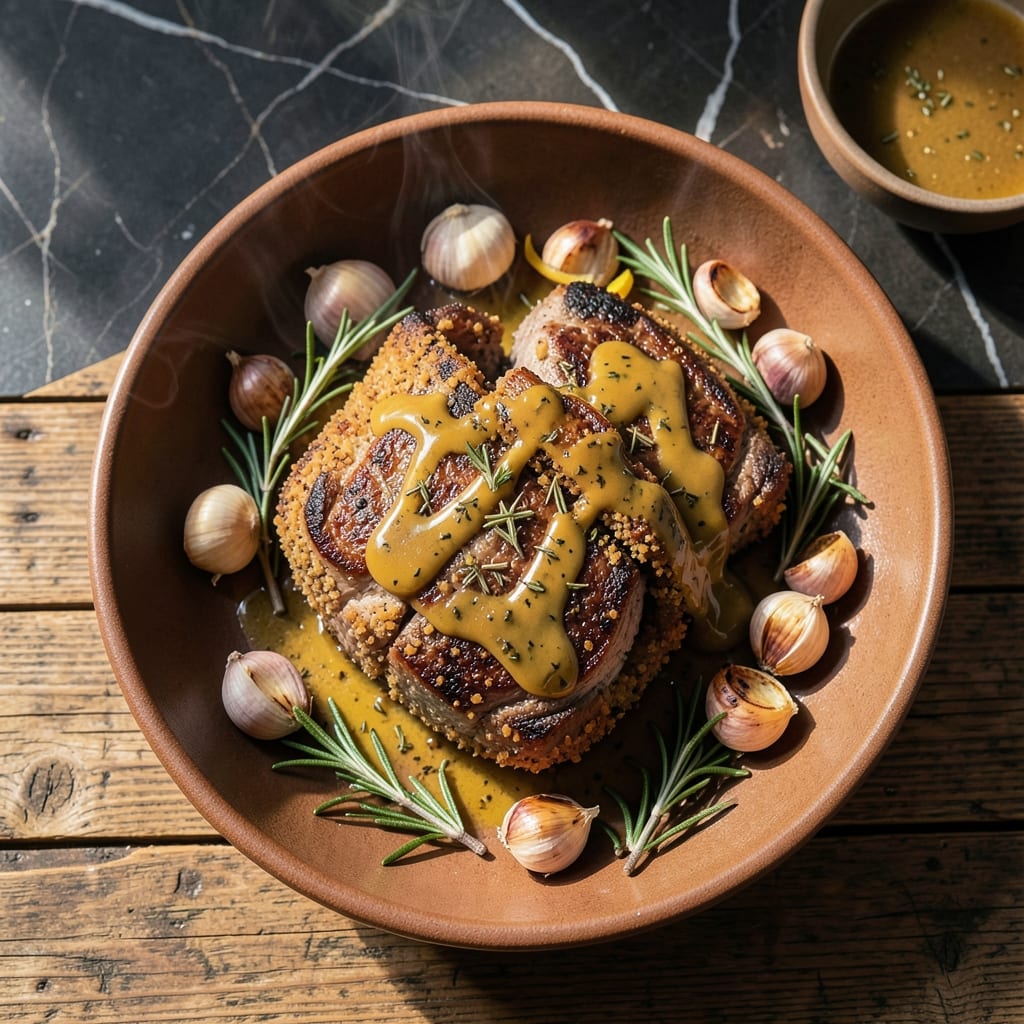
This oven method for lamb leg steak guarantees rosy pink centers with a flavorful herb crust every time. I developed this technique after years of testing, seeking the perfect balance between tender meat and crispy exterior.
The secret lies in a hot oven start followed by a lower temperature finish. This ensures the outside develops a beautiful sear while the inside reaches ideal doneness. A simple herb mixture creates a fragrant crust that complements the lamb’s natural richness.
You’ll achieve restaurant-quality results with minimal effort. The steaks emerge juicy, with a perfectly crispy herb topping and that coveted pink center. This method works reliably for both thick and thin cuts.
Serve with roasted vegetables or mashed potatoes for a complete meal. The herb crust adds an aromatic touch that elevates the entire dish.
Ingredients for Lamb Leg Steak Recipe Oven
Lamb leg steaks and a simple herb crust deliver restaurant-quality results at home.
| Ingredient | Amount | Notes |
|---|---|---|
| Lamb Leg Steaks 🥩 | 2 lb | Bone-in, about 1-inch thick |
| Fresh Rosemary 🌿 | 2 tbsp | Finely chopped, stems removed |
| Fresh Thyme 🍃 | 2 tbsp | Finely chopped, stems removed |
| Garlic Cloves 🧄 | 4 cloves | Minced finely for crust |
| Olive Oil 🫒 | ¼ cup | Extra-virgin for richness |
| Dijon Mustard 🟡 | 2 tbsp | Smooth variety preferred |
| Breadcrumbs 🍞 | ½ cup | Panko for extra crispiness |
| Kosher Salt 🧂 | 2 tsp | Divided for seasoning |
| Black Pepper 🌶️ | 1 tsp | Freshly ground preferred |
| Red Wine 🍷 | ½ cup | Dry variety for deglazing |
| Butter 🧈 | 2 tbsp | Unsalted for finishing |
| Lemon 🍋 | 1 whole | Zested and juiced |
The lamb is the star—look for bone-in leg steaks about 1-inch thick from a reputable butcher or Whole Foods. Good marbling ensures juiciness, and bone-in cuts hold up better to the oven’s heat. The rosemary and thyme should be fresh (dried just won’t give the same aromatic punch). If your market has pre-minced garlic, skip it—fresh cloves taste far superior in the crust.
No lamb leg steaks? Lamb shoulder chops work in a pinch, though cooking time may vary. Swap panko for regular breadcrumbs if needed, but the texture won’t be as crisp. Dry white wine can replace red, though the flavor profile shifts slightly. Out of Dijon? Whole-grain mustard adds nice texture. The butter at the end is optional but highly recommended for that silky finish.
The herb crust mix can be prepped 1 day ahead—store covered in the fridge. Cooked steaks rest well for 10 minutes before serving, and leftovers (if any) reheat beautifully. Serve within 3 days for best quality, or freeze the uncooked crust mixture for up to 1 month.
Why You’ll Love This Recipe
- Set It and Forget: I just season, pop it in the oven, and let the rosemary and thyme do their magic while I do something else.
- That Garlic-Rosemary Crust: The oil locks in the juices while the garlic and herbs form this crispy, fragrant layer that’s honestly the best part.
- Sunday Roast, Tuesday Leftovers: I serve it fancy for guests, then slice the cold leftovers thin for sandwiches all week.
- One Pan, No Stress: One sheet pan, five ingredients, and the oven does the rest—minimal cleanup, maximum flavor.
Step-by-Step Instructions for Lamb Leg Steak in the Oven
This method ensures perfectly rosy centers with a crisp herb crust every time.
Step 1: Prepare the Herb Crust Mixture
In a small bowl, combine the 0.5 cup Breadcrumbs, 2 tbsp Fresh Rosemary, 2 tbsp Fresh Thyme, 4 cloves Garlic Cloves, 2 tbsp Dijon Mustard, 0.25 cup Olive Oil, 1 tsp Black Pepper, and 1 tsp Kosher Salt. Stir until the mixture resembles a thick paste with the breadcrumbs fully coated.
The fresh herbs release their aromatic oils when mixed with the olive oil, creating a fragrant base. The Dijon mustard adds a subtle tang that balances the richness of the lamb. This crust will form a golden-brown layer when baked, so ensure it’s evenly distributed before pressing it onto the steaks.
Step 2: Coat and Season the Lamb Leg Steaks
Pat the 2 lb Lamb Leg Steaks dry with paper towels to remove any excess moisture—this ensures the crust adheres properly. Season both sides generously with the remaining 1 tsp Kosher Salt.
Spread the herb-breadcrumb mixture evenly over the top of each steak, pressing down firmly so it forms a thick, uniform layer. The crust should cling to the meat without falling off. Place the steaks crust-side up on a wire rack set over a baking sheet to allow air circulation underneath, which prevents sogginess.
Step 3: Roast in the Oven Until Perfectly Pink
Preheat your oven to 400°F. Roast the lamb steaks on the middle rack for 15-18 minutes, or until the internal temperature reaches 130-135°F for medium-rare. The crust should be deep golden brown and crisp to the touch.
Resist the urge to flip the steaks—the crust is designed to form on top only. If you prefer medium doneness, aim for 140-145°F, but keep in mind the temperature will rise 5-10°F during resting. The lamb is ready when it feels slightly firm to the touch but still springy.
Step 4: Deglaze and Finish with Butter and Lemon
Transfer the lamb steaks to a cutting board and tent loosely with foil to rest for 10 minutes. Meanwhile, place the baking sheet with the rack on the stovetop over medium heat. Pour in the 0.5 cup Red Wine and scrape up any browned bits with a wooden spoon.
Simmer the wine for 2-3 minutes until reduced by half. Remove from heat, then whisk in the 2 tbsp Butter and the juice of the 1 whole Lemon until the sauce is smooth and glossy. The butter adds richness, while the lemon brightens the flavors and cuts through the fat.
Step 5: Slice and Serve with Pan Sauce
Slice the lamb steaks against the grain into ½-inch thick pieces. The meat should be rosy pink in the center with a crisp, golden herb crust on top. Arrange the slices on a platter and spoon the warm pan sauce over the top.
Serve immediately while the crust is still crisp and the meat is warm. The sauce should pool slightly around the edges of the slices, complementing the lamb’s natural juices. This dish pairs beautifully with roasted vegetables or a simple green salad.
Pro Tips For Making Lamb Leg Steak Recipe Oven
- Sear First, Then Roast: I learned this the hard way—start with a screaming hot pan to sear the lamb leg steaks for 2 minutes per side before transferring to the oven; it locks in juices and gives that restaurant-quality crust.
- Crush the Garlic: Sounds weird, but it works: lightly crush the garlic cloves (peeled) with the side of your knife before adding them to the olive oil and herbs; it infuses the flavor faster without burning.
- Don’t Overcrowd the Pan: After burning three batches, I finally figured out that giving each steak at least an inch of space in the pan prevents steaming and ensures an even sear—use two pans if needed.
- Rest Under Foil: Give it a solid 5-10 minutes under foil after roasting; the lamb reabsorbs its juices, and the residual heat finishes the cooking—I skip this when I’m lazy, but the dish is noticeably better when I don’t.
Essential Equipment for This Dish
Oven Thermometer
I never trust my oven’s built-in temperature gauge. A good oven thermometer like the Taylor Classic hangs from the rack and gives accurate readings. This ensures your 400°F setting is truly 400°F, which is crucial for that perfect crust formation. 🌡️
Wire Rack
A sturdy wire rack set over a baking sheet is essential for airflow underneath the steaks. I use the OXO Good Grips model—it’s durable and prevents the herb crust from getting soggy. This setup mimics professional restaurant techniques.
Meat Thermometer
An instant-read meat thermometer is non-negotiable for perfect doneness. I recommend the ThermoWorks Thermapen for its speed and accuracy. Check for 130-135°F internal temperature for medium-rare, remembering the steaks will continue cooking while resting.
Mixing Bowls
For the herb crust mixture, I prefer a medium-sized stainless steel mixing bowl. The Cuisinox brand offers great durability. A bowl with a flat base helps when pressing the crust mixture onto the lamb steaks.
Baking Sheet
A heavy-duty half-sheet pan (about 18×13 inches) provides enough space for the steaks and catches any drippings. I’ve had great luck with Nordic Ware pans—they’re sturdy and conduct heat evenly. This prevents warping during high-temperature roasting.
Wooden Spoon
When deglazing the pan, a wooden spoon is perfect for scraping up those flavorful browned bits. It won’t scratch your baking sheet like metal utensils might. I keep a dedicated spoon just for this purpose in my kitchen drawer.
Nutrition Facts
Frequently Asked Questions
What temperature should the oven be set to?
Preheat your oven to 400°F for even cooking and a crisp herb crust. This high heat ensures the outside browns beautifully while the inside stays juicy.
How do I know when the lamb is done?
Use a meat thermometer to check for 130-135°F for medium-rare. The temperature will rise 5-10°F while resting, so pull it out just before reaching your desired doneness.
Can I use dried herbs instead of fresh?
Fresh herbs are best for flavor, but you can substitute dried in a pinch. Use 1/3 the amount, as dried herbs are more concentrated. The crust may be slightly less aromatic.
Why do I need a wire rack?
A wire rack allows air to circulate under the steaks, preventing the crust from becoming soggy. It also helps the meat cook evenly on all sides.

- BBQ Sausage Recipe Oven: Smoky Depth Without the Grill - September 28, 2026
- BBQ Chicken Bowl Recipe Rice: Smoky Sweetness Over Fluffy Grains - September 28, 2026
- Beef Cutlet Recipe Ideas: Crispy Breaded Patties With Bold Seasonings - September 28, 2026