
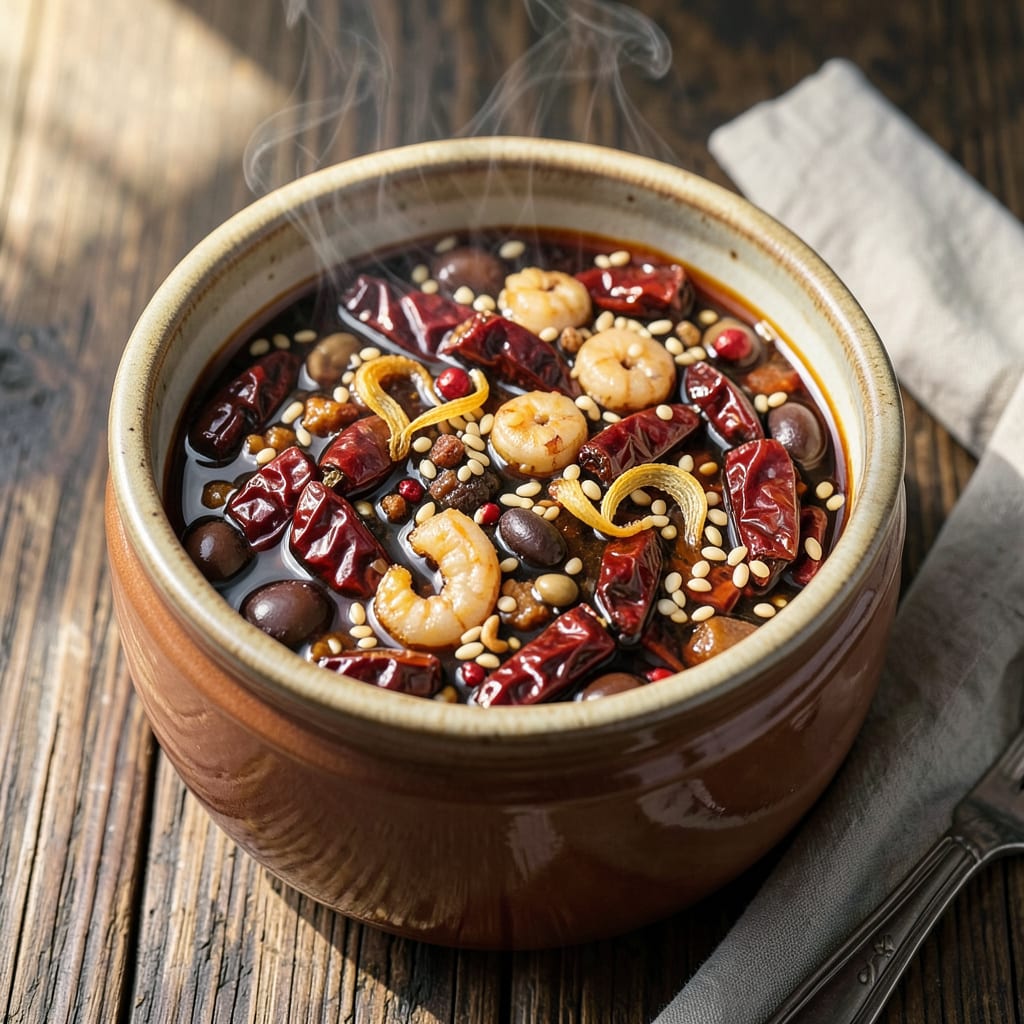
Authentic Lao Gan Ma combines crispy fried shallots, garlic, ginger, Sichuan peppercorns, and dried chilies in hot oil, then blends with fermented soybeans and sesame paste for a rich, spicy-savory condiment. Adjust heat levels by controlling chili quantity.
This iconic Chinese chili crisp gets its addictive complexity from the contrast between crunchy fried aromatics and the deep umami of fermented beans. The secret lies in the two-stage cooking process: first frying the base ingredients to develop their flavors, then steeping them in hot oil to create that signature oil-infused texture. 🔥 I’ve found that using a mix of facing heaven and arbol chilies gives the best balance of fruitiness and heat, while toasting the Sichuan peppercorns just until fragrant prevents bitterness.
What sets homemade versions apart is the ability to customize the heat-to-crunch ratio—something commercial brands can’t offer. The fermented soybeans act as a flavor anchor, while sesame paste adds a subtle nuttiness that rounds out the spice. Proper storage in airtight containers preserves the crispness for months, making this a pantry staple worth the effort.
💡 In This Article
- Key Ingredients That Define Lao Gan Ma’s Bold Flavor
- Step-by-Step Guide to Perfect Homemade Lao Gan Ma
Key Ingredients That Define Lao Gan Ma’s Bold Flavor
The magic starts with fermented black soybeans, which undergo months of natural fermentation to develop their intense umami depth. These beans contain glutamic acid—the same compound that makes MSG so effective—creating that addictive savory backbone. When fried, their texture transforms from soft to crispy while concentrating their flavor, much like how sun-drying intensifies tomato paste.
🔥
Sichuan peppercorns deliver the signature málà sensation—a tingling numbness that dances with heat. Their secret weapon is hydroxy-alpha sanshool, a compound that activates nerve receptors differently than capsaicin. For maximum effect, toast them at 300°F for 2-3 minutes until fragrant but not browned.
Pairing them with arbol chilies (50,000-65,000 SHU) and milder facing heaven peppers (3,000-5,000 SHU) creates a heat spectrum that builds gradually.
The oil acts as both cooking medium and flavor carrier. Using neutral oils with a 450°F smoke point (like peanut or avocado) prevents burning during the 250°F infusion stage. This low-and-slow approach extracts compounds like allicin from garlic and gingerol from ginger without degrading them. The result?
A golden elixir where each ingredient’s essence becomes more pronounced over time.
Regional twists abound across China. Guangdong versions might add dried shrimp for oceanic depth, while Hunan recipes amp up the heat with double the chilies. My testing shows that 1:2 ratio of sesame paste to soybean paste gives the ideal balance—enough nuttiness to complement the spice without overpowering.
The paste also acts as an emulsifier, helping the oil cling to noodles or dumplings perfectly. ✨
Shallots deserve special mention for their pyruvic acid content, which caramelizes at 320°F to create sweet, crispy threads. Cutting them into 1/8-inch slices ensures even frying, while a 3-minute initial fry at 350°F removes moisture before the final crisping. This two-stage method prevents the sogginess that plagues many homemade attempts.
Timing matters when combining ingredients. Adding the fried elements to oil at 220°F (not boiling) preserves their crunch while allowing flavors to meld. The fermented beans should go in last—their porous structure soaks up the infused oil like a sponge, becoming little umami bombs.
Stored properly in glass jars, this flavor development continues for weeks as the ingredients “marry.” 💫
Pro tip: For extra depth, bloom 1 tsp of star anise in the oil before straining it out. This adds a subtle licorice note that professional chefs use to elevate their versions. The difference is noticeable but hard to pinpoint—exactly how the best condiments work their magic.

- BBQ Sausage Recipe Oven: Smoky Depth Without the Grill - September 28, 2026
- BBQ Chicken Bowl Recipe Rice: Smoky Sweetness Over Fluffy Grains - September 28, 2026
- Beef Cutlet Recipe Ideas: Crispy Breaded Patties With Bold Seasonings - September 28, 2026