
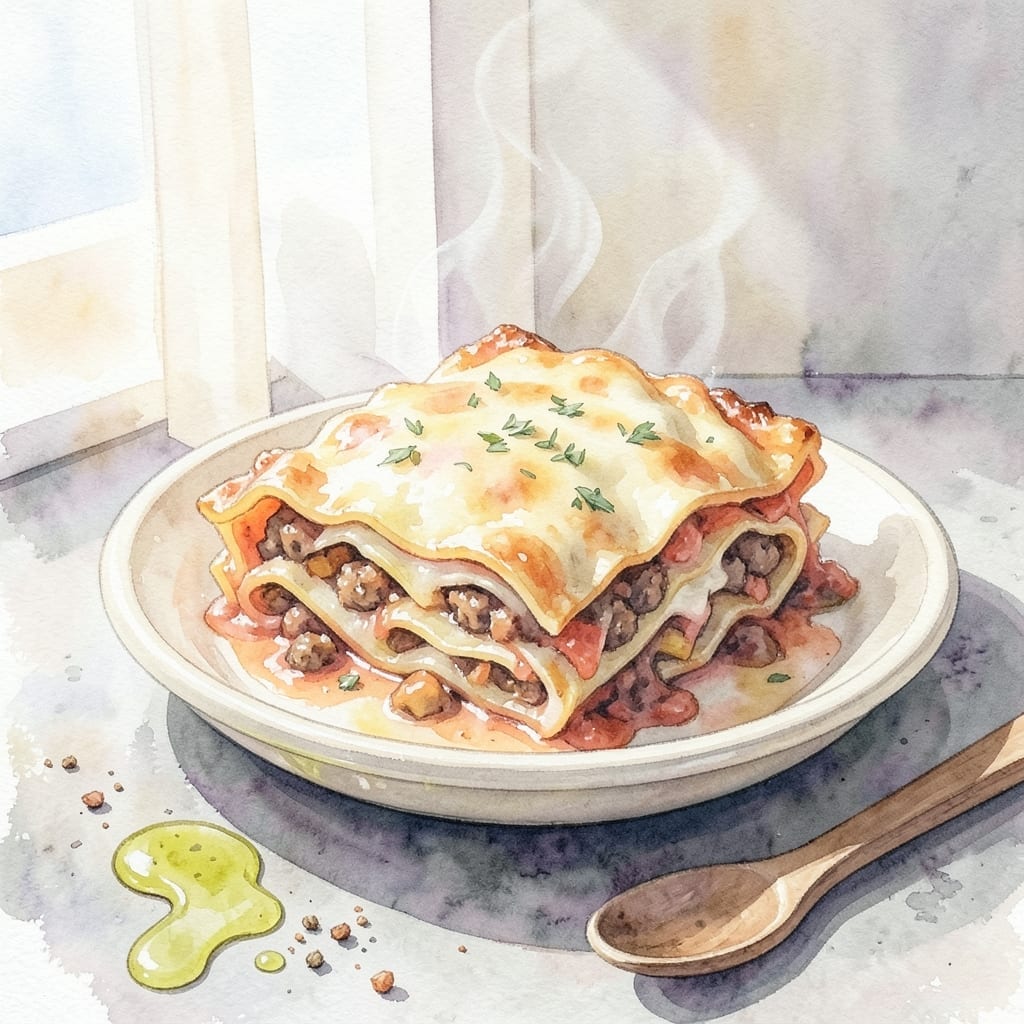
Traditional lasagna represents the pinnacle of Italian comfort food, where layers of rich Bolognese, velvety béchamel, and tender pasta create perfect harmony. This authentic approach honors the dish’s origins without unnecessary shortcuts.
The key lies in slow-simmered ragù and a proper white sauce, both essential for genuine flavor development. Each component is prepared with care before assembly, ensuring every bite delivers the expected depth and texture.
What emerges from the oven is a golden, bubbling masterpiece with distinct layers that hold their structure. The Bolognese offers meaty richness, while the béchamel provides creamy contrast, all bound together by melted cheese.
This method requires patience but rewards with results that surpass most restaurant versions. The process itself becomes part of the satisfaction.
Ingredients for Lasagna Recipe Traditional
Authentic Italian layers demand quality ingredients for Bolognese, béchamel, and pasta harmony.
| Ingredient | Amount | Notes |
|---|---|---|
| Lasagna Noodles 🍝 | 12 sheets | Oven-ready or no-boil variety preferred |
| Ground Beef 🥩 | 1 ½ lb | 80/20 fat ratio for rich ragù |
| Ground Pork 🥩 | ½ lb | Mild Italian sausage acceptable substitute |
| Onion 🧅 | 1 whole | Yellow or white, finely diced |
| Carrot 🥕 | 1 whole | Medium size, finely diced |
| Celery Stalks 🌿 | 2 pieces | Finely diced for soffritto |
| Garlic Cloves 🧄 | 4 cloves | Minced for Bolognese depth |
| San Marzano Tomatoes 🍅 | 1 can | 28 oz whole peeled, crushed by hand |
| Tomato Paste 🍅 | 2 tbsp | Double-concentrated preferred |
| Dry White Wine 🍷 | ½ cup | Pinot Grigio or Sauvignon Blanc |
| Whole Milk 🥛 | 4 cups | Full-fat for authentic béchamel |
| Unsalted Butter 🧈 | ½ cup | European-style for creaminess |
| All-Purpose Flour 🌾 | ½ cup | For roux base in béchamel |
| Parmesan Cheese 🧀 | 1 ½ cups | Freshly grated Parmigiano-Reggiano |
| Mozzarella Cheese 🧀 | 1 lb | Whole-milk, low-moisture, shredded |
| Nutmeg 🌰 | ¼ tsp | Freshly grated for béchamel |
| Salt 🧂 | 1 tbsp | Diamond Crystal kosher salt |
| Black Pepper 🌶️ | 1 tsp | Freshly cracked for best flavor |
| Olive Oil 🫒 | 2 tbsp | Extra-virgin for soffritto sauté |
The ragù foundation requires high-quality meats. Ground chuck with 80/20 fat provides essential richness, while pork adds depth. San Marzano tomatoes (the gold standard) are non-negotiable for authentic flavor. Eataly or Italian markets stock these reliably, though many Whole Foods locations carry them now. For the béchamel, European-style butter yields superior creaminess due to higher fat content.
Substitutions must honor the dish’s integrity. Ground turkey or veal can replace beef in equal measure, though veal is traditional in Emilia-Romagna. If avoiding alcohol, substitute beef stock with 1 tbsp vinegar. Fontina or pecorino can supplement Parmigiano-Reggiano, but don’t omit it entirely—the aged cheese is critical for umami. For the pasta, fresh sheets require boiling, but no-boil noodles work without texture compromise.
Prepare components the day before for deeper flavor development. The ragù improves overnight and can be refrigerated for up to 3 days. Béchamel thickens as it cools—whisk in warm milk to restore consistency. Assembled lasagna keeps 1 day before baking or freezes beautifully for up to 3 months if wrapped tightly.
Why You’ll Love This Recipe
- One Pot Wonder: I brown the beef and pork with the onions and carrots right in the same pot before layering—no extra pans to wash.
- Meat Lovers’ Dream: The mix of ground beef and pork gives it this rich, hearty depth that ground beef alone just can’t match.
- Feeds a Crowd: I make one pan and it stretches to feed six with leftovers for lunch the next day.
- Better the Next Day: Honestly, the flavors meld overnight, so the leftovers taste even more crave-worthy than the first serving.
Step-by-Step Instructions for Traditional Lasagna
Master the classic technique for perfect layers of rich ragù and silky béchamel.
Step 1: Build the Bolognese Ragù Base
Heat a large Dutch oven over medium heat and add the 1 lb Ground Beef. Cook, breaking it apart with a wooden spoon, until browned and crumbly for 8-10 minutes. The beef should release its fat and develop a deep color.
Add the finely diced 1 whole Yellow Onion, 2 whole Carrots, and 2 whole Celery Stalks to the pot. Cook for 6-8 minutes until the vegetables soften and the onion becomes translucent. Stir in the 4 cloves Garlic Cloves and cook for 30 seconds until fragrant—be careful not to let it burn.
Pour in the 0.75 cup Dry White Wine and scrape up any browned bits from the bottom of the pot. Let it simmer for 3-4 minutes until the liquid reduces by half. This deglazing step is crucial for building depth of flavor in your ragù.
Step 2: Develop the Ragù and Prepare Béchamel
Stir in the 1 can San Marzano Tomatoes (crushed by hand) along with 2 tsp Salt and 1 tsp Black Pepper. Reduce heat to low and let the ragù simmer uncovered for 30-40 minutes, stirring occasionally, until it thickens and the flavors meld together beautifully.
While the ragù simmers, begin the béchamel. Melt the 0.5 cup Unsalted Butter in a saucepan over medium heat. Once foaming subsides, whisk in the 0.5 cup All-Purpose Flour to create a smooth roux. Cook for 2 minutes until the mixture turns a light golden color—this removes the raw flour taste.
Gradually whisk in the 4 cups Whole Milk, 1 cup at a time, ensuring each addition is fully incorporated before adding more. Cook for 5-7 minutes until the sauce thickens enough to coat the back of a spoon. Remove from heat and stir in the 0.25 tsp Whole Nutmeg and ½ cup of the Parmesan Cheese. Season with a pinch of salt to taste.
Step 3: Assemble and Layer the Lasagna
Preheat your oven to 375°F. Spread a thin layer of ragù on the bottom of a 9×13-inch baking dish to prevent sticking. Add a layer of 4 sheets Lasagna Noodles (they should fit snugly without overlapping). Follow with a third of the remaining ragù, a quarter of the béchamel, and a handful of shredded 1.5 lb Mozzarella Cheese and grated 1.5 cups Parmesan Cheese.
Repeat the layers twice more, finishing with a final layer of noodles topped with the remaining béchamel and a generous sprinkling of both cheeses. This traditional sequence ensures each bite delivers balanced flavor and texture.
Step 4: Bake to Perfection
Cover the dish tightly with foil, tenting it slightly to prevent the cheese from sticking. Bake for 25 minutes, then remove the foil and bake for another 20-25 minutes until the top is golden brown and bubbling around the edges.
Let the lasagna rest for 15-20 minutes before slicing. This resting period allows the layers to set, making it easier to serve neat portions. The top should be beautifully browned, and the noodles tender with a slight resistance. Serve warm with any remaining ragù on the side.
Pro Tips For Making Lasagna Recipe Traditional
- Brown the Meat Well: Cook the ground beef and pork over medium-high heat until deeply browned, not just gray—this builds the rich flavor base your lasagna needs. I learned this the hard way after serving bland layers once.
- Salt the Water: Use plenty of salt in your noodle water, about 1 tablespoon per quart—it’s the only chance to season the pasta itself. Sounds simple, but it actually changes the outcome.
- Skip the Pre-Boil: Use no-boil lasagna noodles and add extra sauce—they absorb moisture as they bake, saving time and preventing mushy layers. My grandmother swore by this, and she was right.
- Rest Before Cutting: Let the lasagna sit for at least 15 minutes after baking so it sets properly. I was skeptical until I tried it—no more sliding, sloppy squares.
Regional Styles of lasagna recipe traditional
Emilia-Romagna Classic
This is the birthplace of traditional lasagna, where ragù alla bolognese reigns supreme. The sauce here includes a splash of whole milk (about ½ cup) to tenderize the meat. I learned this trick from a Nonna in Bologna—it transforms the texture. 🗺️
Naples Variation
Neapolitan lasagna often features ricotta cheese layered between the ragù and pasta. They also use hard-boiled eggs (sliced) as a garnish. The result is creamier and slightly sweeter due to the San Marzano tomatoes that thrive in the region’s volcanic soil.
Northern Italian Style
In Lombardy, they sometimes replace béchamel with a butter and Parmigiano-Reggiano mixture between layers. The dish becomes richer and more decadent, perfect for cold mountain winters. I prefer this version when I want extra indulgence.
Sicilian Twist
Sicilians add eggplant slices (about 1 lb, salted and drained) to their lasagna, creating a meatless version called pasta alla norma. The eggplant soaks up the tomato sauce beautifully, and they often finish it with ricotta salata instead of mozzarella. 💛
Roman Approach
Roman lasagna often includes offal in the ragù, like finely chopped chicken livers (¼ lb). This adds a deep, iron-rich flavor that’s surprisingly delicious. They also use a higher ratio of Pecorino Romano to Parmigiano for a sharper bite.
Venetian Version
In Venice, seafood sometimes makes an appearance. They’ll layer in shrimp (½ lb, sautéed with garlic) or clams alongside the traditional ragù. The briny seafood contrasts wonderfully with the rich meat sauce and creamy béchamel.
Nutrition Facts
Frequently Asked Questions
Do I need to pre-cook the noodles?
No-boil noodles work perfectly when layered with sufficient sauce. The moisture from the ragù and béchamel softens them during baking at 375°F for 45-50 minutes.
Can I make it ahead of time?
Assemble it a day ahead, refrigerate, then bake as directed. Add 10 minutes to baking time if cold.
Why did my layers slide apart?
This happens when there’s too much sauce or not enough rest time. Let it sit for 15-20 minutes after baking to set properly.
Can I use ricotta instead of béchamel?
Yes, but the texture will differ. Ricotta is creamier while béchamel provides a velvety consistency that holds layers better.

- BBQ Sausage Recipe Oven: Smoky Depth Without the Grill - September 28, 2026
- BBQ Chicken Bowl Recipe Rice: Smoky Sweetness Over Fluffy Grains - September 28, 2026
- Beef Cutlet Recipe Ideas: Crispy Breaded Patties With Bold Seasonings - September 28, 2026