
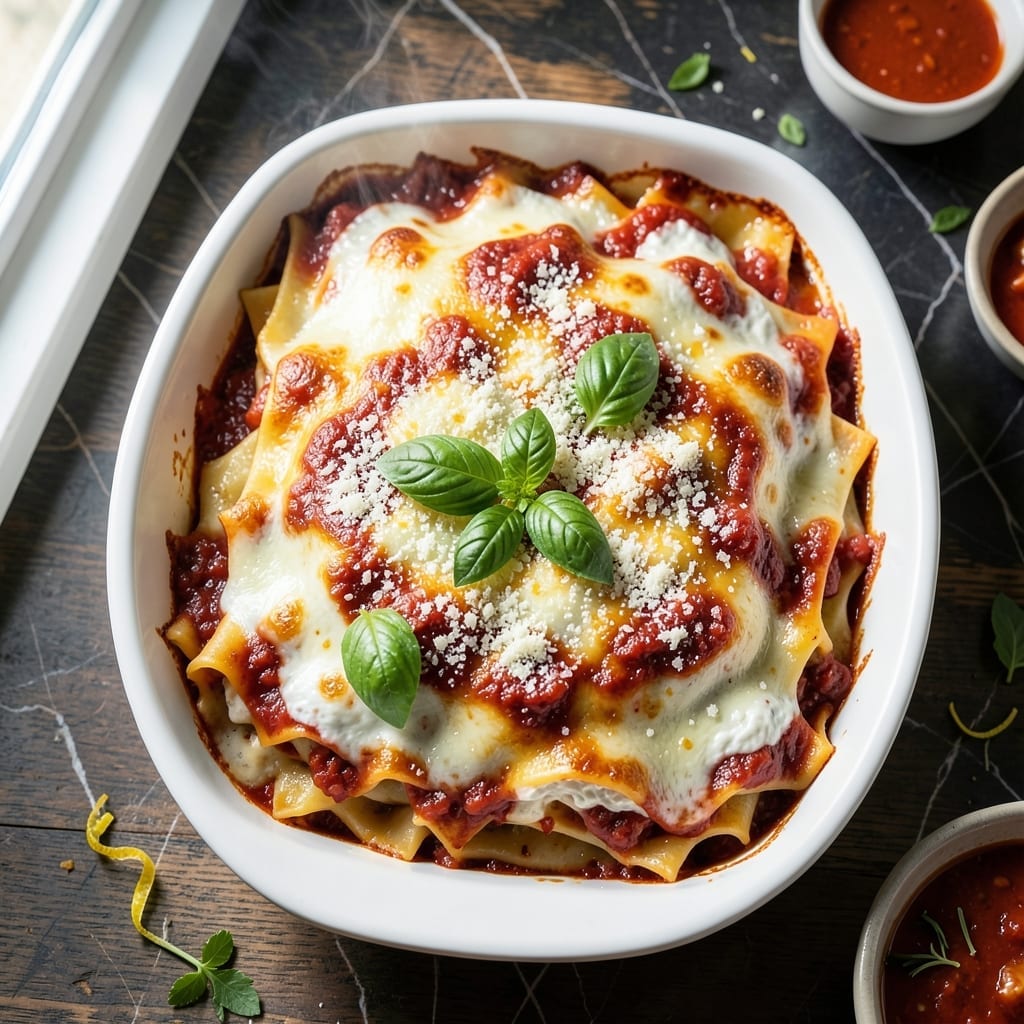
This lasagna recipe transforms simple layers into a restaurant-quality masterpiece, with ricotta adding a creamy depth that elevates every bite.
Perfectly balanced herbs and melted cheeses create a dish that’s rich yet approachable, ideal for family dinners or special occasions.
Ingredients for Lasagna Recipe Using Ricotta
Restaurant-quality layers start with these carefully selected ingredients for ultimate flavor and texture.
| Ingredient | Amount | Notes |
|---|---|---|
| Lasagna Noodles 🍝 | 12 sheets | Oven-ready or no-boil preferred |
| Whole-Milk Ricotta Cheese 🧀 | 2 cups | Full-fat for creaminess |
| Mozzarella Cheese 🧀 | 3 cups | Shredded from block |
| Parmesan Cheese 🧀 | 1 cup | Freshly grated from wedge |
| Marinara Sauce 🍅 | 3 cups | Quality jarred or homemade |
| Large Egg 🥚 | 1 whole | For ricotta mixture binding |
| Fresh Basil Leaves 🌿 | ½ cup | Loosely packed, chopped |
| Fresh Oregano 🍃 | 2 tbsp | Finely chopped, or 2 tsp dried |
| Garlic Cloves 🧄 | 4 cloves | Minced for sauce depth |
| Olive Oil 🫒 | 2 tbsp | Extra-virgin for richness |
| Kosher Salt 🧂 | 1 ½ tsp | Diamond Crystal preferred |
| Ground Black Pepper 🌶️ | ½ tsp | Freshly ground for best flavor |
| Dried Red Pepper Flakes 🌶️ | ½ tsp | Optional for subtle heat |
| Onion 🧅 | 1 whole | Medium, finely diced |
The ricotta is non-negotiable for that signature creaminess—whole-milk only. BelGioioso or Calabro brands deliver superior texture at most supermarkets. For the mozzarella, block cheese shredded fresh melts better than pre-shredded (which contains anti-caking agents). The Parmesan must come from a wedge; Parmigiano-Reggiano offers the authentic nutty depth that pre-grated products lack.
No ricotta? Cottage cheese blended smooth works in a pinch (though texture differs). Dried oregano can replace fresh at one-third the amount. For the marinara, San Marzano tomatoes crushed by hand with garlic and olive oil make an exceptional homemade version. The lasagna noodles must be oven-ready—regular require pre-boiling, which adds unnecessary steps.
Assemble and refrigerate uncooked lasagna up to 24 hours ahead. Baked lasagna keeps 4-5 days refrigerated or freezes beautifully for 3 months. Reheat covered with foil at 375°F until warmed through (add a splash of water to prevent drying).
Why You’ll Love This Recipe
- No-Boil Noodles: Here’s what sold me—just layer the noodles dry, and they soften perfectly in the sauce.
- Creamy Dreamy: That whole-milk ricotta mixed with Parmesan? Ridiculously rich but still light.
- Feeds a Crowd: I make this for Sunday suppers, and it disappears faster than I can slice it.
- Leftovers for Days: Honestly, it tastes even better the next day—if there’s any left.
Step-by-Step Instructions for Lasagna Using Ricotta
Master this layered dish with precise techniques for perfect texture and flavor balance.
Step 1: Prepare the Ricotta Filling
In a medium bowl, combine the 2 cups Whole-Milk Ricotta Cheese, 1 whole Large Egg, ½ cup Fresh Basil Leaves, 2 tbsp Fresh Oregano, 1.5 tsp Kosher Salt, and ½ tsp Ground Black Pepper. The egg binds the mixture while the herbs infuse it with aromatic depth.
Beat with a fork until smooth and uniform in texture. I ensure all the herbs are evenly distributed—this prevents concentrated pockets of flavor in the finished dish. The ricotta should look creamy with visible flecks of green from the basil and oregano.
Step 2: Sauté the Aromatic Base
Heat 2 tbsp Olive Oil in a saucepan over medium heat. Add the 1 whole Onion (finely diced) and cook for 5-6 minutes until translucent and soft. The onion should release its natural sweetness without browning, creating a subtle foundation for the sauce.
Stir in the 4 cloves Garlic Cloves (minced) and ½ tsp Dried Red Pepper Flakes, cooking for 1 minute until fragrant. This step builds complex layers of flavor that will permeate through the marinara. Remove from heat and stir this mixture into the 3 cups Marinara Sauce.
Step 3: Assemble the Lasagna Layers
Spread 1 cup of the marinara mixture on the bottom of a 9×13-inch baking dish. Add a layer of 4 sheets Lasagna Noodles, slightly overlapping if necessary. These oven-ready noodles absorb liquid as they cook, eliminating the need for pre-boiling.
Spoon half of the ricotta mixture over the noodles, spreading it evenly with the back of a spoon. Sprinkle 1 cup Mozzarella Cheese and ⅓ cup Parmesan Cheese over the ricotta. Repeat with another layer of marinara, noodles, remaining ricotta, and half of the remaining mozzarella and parmesan.
Step 4: Finish and Bake to Perfection
Top with the final layer of noodles, remaining marinara, and the rest of the Mozzarella Cheese and Parmesan Cheese. The top should be completely covered to prevent the noodles from drying out during baking.
Cover with foil and bake at 375°F for 25 minutes. Then remove the foil and bake for an additional 20-25 minutes until the cheese is bubbly and golden brown and the edges are crisp. Let it rest for 10 minutes before serving to allow the layers to set.
Pro Tips For Making Lasagna Recipe Using Ricotta
- Pre-Cook Noodles: I learned this the hard way—boil your lasagna noodles for 2 minutes less than the package says, then finish them in the oven. They’ll absorb moisture from the sauce without turning to mush.
- Drain Ricotta: Spread whole-milk ricotta on paper towels for 10 minutes before using to remove excess liquid—this keeps your lasagna from getting watery.
- Skip the Overload: Resist the urge to pile on too much ricotta between layers; about ¼ cup per layer is plenty, or the lasagna won’t set properly.
- Rest Before Slicing: Let the lasagna sit for at least 15 minutes after baking—it holds together better, and the flavors meld. I skip this when I’m starving, but it’s always worth the wait.
Perfect Pairings for This lasagna recipe using ricotta
Side Dish Pairings
I love serving a simple arugula salad with lemon vinaigrette—the peppery bite cuts the richness perfectly. Toss 4 cups baby arugula with 2 tbsp olive oil and 1 tbsp lemon juice. Alternatively, garlic bread from a crusty baguette soaks up extra sauce beautifully. 🥗
Wine Pairings
An Italian Chianti Classico with its bright acidity and cherry notes complements the dish wonderfully. For white wine lovers, try a crisp Pinot Grigio from Northern Italy. Both stand up to the rich cheese while cleansing your palate.
Beer Options
A light Italian pilsner like Peroni works well with its clean finish. For craft beer, a brown ale with nutty notes pairs surprisingly well. Avoid heavy IPAs that overpower the dish’s delicate cheese flavors. 🍺
Finishing Touches
Fresh basil ribbons on top add color and aroma. A sprinkle of red pepper flakes brings subtle heat. I sometimes add a drizzle of balsamic glaze for a touch of sweetness that balances the savory layers.
Frequently Asked Questions
Can I use cottage cheese instead of ricotta?
Yes, but blend it first for a smoother texture. Cottage cheese has a slightly tangier flavor and grainier consistency than ricotta.
How do I prevent a watery lasagna?
Drain your ricotta well and use oven-ready noodles to absorb excess moisture. Letting it rest 10 minutes after baking also helps layers set properly.
Can I assemble it the night before baking?
Assemble, cover tightly, and refrigerate up to 24 hours. Add 10 minutes to baking time if cold.
Why does my ricotta layer turn out dry?
Overmixing or using low-fat ricotta can cause this. Stick to whole-milk ricotta and fold in the egg gently for the creamiest texture.
Nutrition Facts

- BBQ Sausage Recipe Oven: Smoky Depth Without the Grill - September 28, 2026
- BBQ Chicken Bowl Recipe Rice: Smoky Sweetness Over Fluffy Grains - September 28, 2026
- Beef Cutlet Recipe Ideas: Crispy Breaded Patties With Bold Seasonings - September 28, 2026