
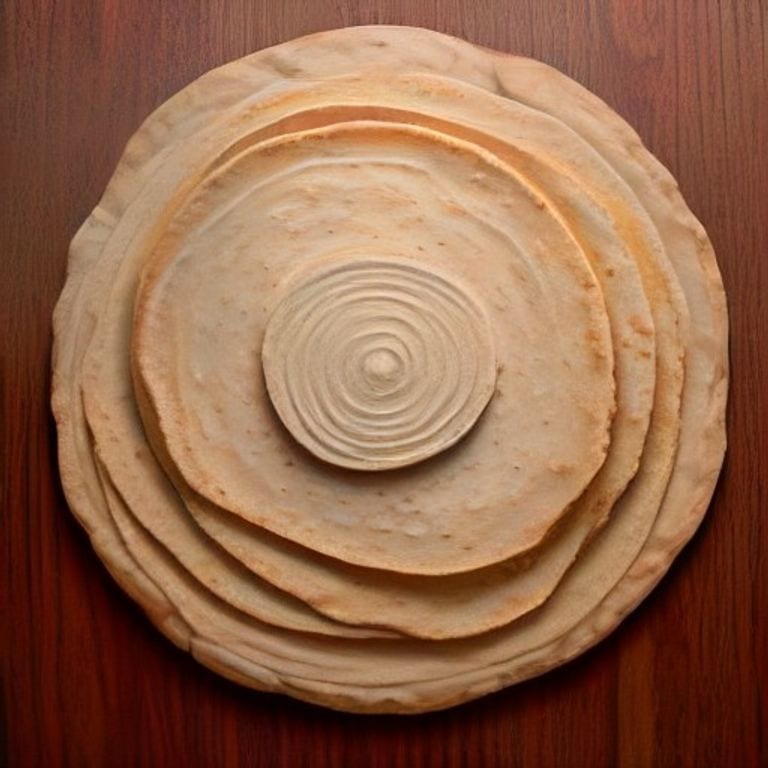
There’s something special about homemade lavash bread—thin, soft, and endlessly versatile for wraps and dips. I’ve perfected this recipe to deliver restaurant-quality results with a few simple ingredients and techniques.
The beauty of lavash lies in its simplicity and adaptability. Whether you bake it in a hot oven or cook it on a skillet, this thin flatbread comes together quickly. The dough requires minimal kneading, making it accessible for any home cook.
You’ll end up with paper-thin bread that’s pliable when warm and slightly crisp when cooled. It’s ideal for wrapping around fillings or tearing into pieces for scooping up dips and spreads.
This recipe works as a base for countless variations, from garlic-herb to whole wheat. The possibilities are as endless as your imagination.
Ingredients for Lavash Bread Recipe Ideas
Simple pantry staples transform into thin, pliable flatbread perfect for any meal.
| Ingredient | Amount | Notes |
|---|---|---|
| All-Purpose Flour 🌾 | 2 cups | Plus extra for dusting surface |
| Warm Water 💧 | ¾ cup | About 110°F for activation |
| Active Dry Yeast 🍞 | 1 tsp | One packet, proofed first |
| Granulated Sugar 🍚 | 1 tsp | Feeds the yeast for rise |
| Kosher Salt 🧂 | 1 tsp | Diamond Crystal preferred for texture |
| Extra-Virgin Olive Oil 🫒 | 2 tbsp | Plus extra for brushing dough |
| Plain Greek Yogurt 🥛 | ¼ cup | Full-fat for tender dough |
| Honey 🍯 | 1 tbsp | Optional for slight sweetness |
| Sesame Seeds 🌰 | 2 tbsp | Toasted for garnish optional |
| Poppy Seeds 🌿 | 1 tbsp | Optional topping variation |
| Dried Oregano 🍃 | 1 tsp | For garlic-herb variation |
| Garlic Powder 🧄 | 1 tsp | For garlic-herb variation |
The flour is the foundation here. King Arthur all-purpose is my go-to for consistent results, but any quality brand works. I always keep a 5-pound bag on hand for bread days. Yeast freshness matters—check the expiration date (those little packets lose potency fast). For the yogurt, Fage full-fat gives the best texture, but any Greek yogurt will do. Warm the water to bathwater temperature—too hot kills the yeast, too cold won’t wake it up.
No Greek yogurt? Plain whole-milk yogurt works too, just strain out excess liquid. Skip the honey entirely if you prefer savory. For whole wheat lavash, swap half the all-purpose for whole wheat flour. The dough will be slightly denser but still delicious. No sesame seeds? Everything bagel seasoning makes a killer topping. If you’re missing dried oregano, fresh thyme leaves at double the amount add great flavor.
Dough rises best in a warm, draft-free spot (I use my turned-off oven with the light on). Baked lavash keeps in an airtight container for 3 days, but honestly it’s best fresh. Freeze stacks between parchment for up to 1 month—reheat in a dry skillet to restore that pliable texture.
Why You’ll Love This Recipe
- No-Knead Magic: I mix flour, water, yeast, sugar, and salt—no fancy techniques, just let the dough rest and roll it thin.
- Subtle Sweetness: The sugar balances the yeast’s earthiness, giving it that perfect hint of warmth without overpowering.
- Endless Uses: I’ve wrapped sandwiches, scooped dips, even baked it into crackers—this dough does it all.
- Budget Stretch: A bag of flour and a packet of yeast make multiple batches, and leftovers keep well in the freezer.
Step-by-Step Instructions for Lavash Bread
This method delivers thin, pliable flatbread with a tender bite and golden blisters.
Step 1: Activate the Yeast and Mix Wet Ingredients
In a small bowl, combine the 0.75 cup warm water, 1 tsp active dry yeast, and 1 tsp granulated sugar. Stir gently and let sit for 5-10 minutes until the mixture becomes foamy and bubbly—this confirms the yeast is active.
In a large mixing bowl, whisk together the 2 tbsp extra-virgin olive oil, 0.25 cup plain Greek yogurt, and 1 tbsp honey until smooth. The yogurt adds tenderness to the dough, while the honey provides a subtle sweetness. Pour in the yeast mixture and stir to combine.
Step 2: Combine Wet and Dry Ingredients
In a separate bowl, whisk together the 2 cups all-purpose flour and 1 tsp kosher salt. Gradually add this dry mixture to the wet ingredients, stirring until a shaggy dough forms. The dough will be slightly sticky but should pull away from the bowl.
If the dough feels too wet, add a 1-2 tbsp all-purpose flour from your dusting supply, but avoid over-flouring. The goal is a soft, pliable dough that’s easy to roll thin. Let it rest for 10 minutes to hydrate fully before proceeding.
Step 3: Knead and Rest the Dough
Turn the dough onto a lightly floured surface and knead for 5-7 minutes until smooth and elastic. You’ll notice the texture transforms from rough to silky as the gluten develops. The dough should spring back slowly when pressed with a finger.
Form the dough into a ball, place it in a lightly oiled bowl, and cover with a damp towel. Let it rise in a warm place for 1-2 hours, or until doubled in size. This rise time ensures a light, airy texture in the final bread.
Step 4: Roll, Top, and Bake the Lavash
Preheat your oven to 475°F and place a baking stone or inverted baking sheet inside to heat. Divide the risen dough into 4 equal portions and roll each into a paper-thin rectangle on a floured surface. For extra flavor, brush the surface with olive oil and sprinkle with 2 tbsp sesame seeds, 1 tbsp poppy seeds, 1 tsp dried oregano, and 1 tsp garlic powder if using.
Carefully transfer each sheet to the preheated stone or baking sheet. Bake for 3-5 minutes until the edges are lightly golden and small blisters form. Watch closely—lavash bakes quickly at this high temperature.
Step 5: Cool and Store for Later Use
Remove the lavash from the oven and transfer to a wire rack to cool completely. The bread will crisp slightly as it cools but should remain pliable. Stack the cooled sheets with parchment paper between each to prevent sticking.
For the best texture, use the lavash the same day, or store in an airtight container at room temperature for up to 3 days. To revive, warm briefly in the oven or over an open flame to restore flexibility.
Pro Tips For Making Lavash Bread Recipe Ideas
- Test Your Yeast: Always proof your active dry yeast in warm water with a pinch of sugar first—I learned this the hard way after wasting a batch when the yeast was dead. If it doesn’t bubble within 5-10 minutes, start over.
- Roll It Thin: Lavash should be paper-thin, so roll the dough as thin as possible, almost to the point of transparency. Sounds weird, but it works for that perfect crisp texture.
- Skip the Over-Flouring: Use just enough flour to prevent sticking when rolling, but resist the urge to add too much—excess flour makes the bread tough and dry.
- Bake Hot and Fast: Crank your oven to its highest setting (usually 500°F or above) and bake the lavash for just 2-3 minutes. My grandmother swore by this, and she was right: high heat is non-negotiable for that signature crispness.
Dietary Considerations for This Recipe
Gluten-Free Option
Swap the all-purpose flour for a 1:1 gluten-free baking blend—I recommend King Arthur Measure for Measure. Add 1 tsp xanthan gum to improve elasticity. The dough may feel slightly stickier but rolls out just as thin. 💪
Vegan Adaptation
Replace the Greek yogurt with unsweetened almond milk yogurt and use maple syrup instead of honey. I’ve found Silk brand works particularly well. The texture remains tender and pliable with these simple swaps.
Lower-Carb Version
Use 1 cup almond flour and 1 cup tapioca starch instead of all-purpose flour. The dough will be slightly more delicate to handle. Bake at 450°F for best results with this variation.
Dairy-Free Notes
Ensure your Greek yogurt is dairy-free, like Kite Hill or Cocojune. The olive oil in the recipe already keeps it dairy-free. No other adjustments are needed for this simple modification.
Nut Allergy Caution
If nut allergies are a concern, skip the sesame seeds topping and verify all ingredients. Use sunflower seed oil instead of olive oil if cross-contamination is a worry. Always check labels carefully. 💡
Sugar-Free Alternative
Omit the granulated sugar and honey entirely. The yeast will still activate, though it may take 5 extra minutes. The bread will be slightly less sweet but just as delicious for savory applications.
Nutrition Facts
Frequently Asked Questions
Can I make lavash without yeast?
Yes! Use 1 cup self-rising flour and 0.5 cup Greek yogurt for a quick no-yeast version. Skip the proofing step and rest the dough for just 20 minutes.
What’s the best way to roll it thin?
Use a rolling pin on a lightly floured surface. Roll from the center outward, rotating the dough 90° after each pass. Aim for 1-2mm thickness for perfect pliability.
Why did my lavash turn out tough?
Over-kneading or using too much flour makes it dense. Knead just until smooth (5-7 minutes) and add flour sparingly. Resting the dough properly helps too.
How can I use leftover lavash?
Turn it into chips by brushing with oil, sprinkling with salt, and baking at 375°F for 5-7 minutes. Or layer with hummus and veggies for a quick flatbread pizza.

- Peach Syrup Recipe for Ice Cream: Sweet and Silky Drizzle for Scoops - October 6, 2026
- Pav Bhaji Recipe Food Lab: Mumbai Street Food Magic at Home - October 6, 2026
- Peach Jelly Recipe Without Pectin: Naturally Set Sweet Spread - October 6, 2026