
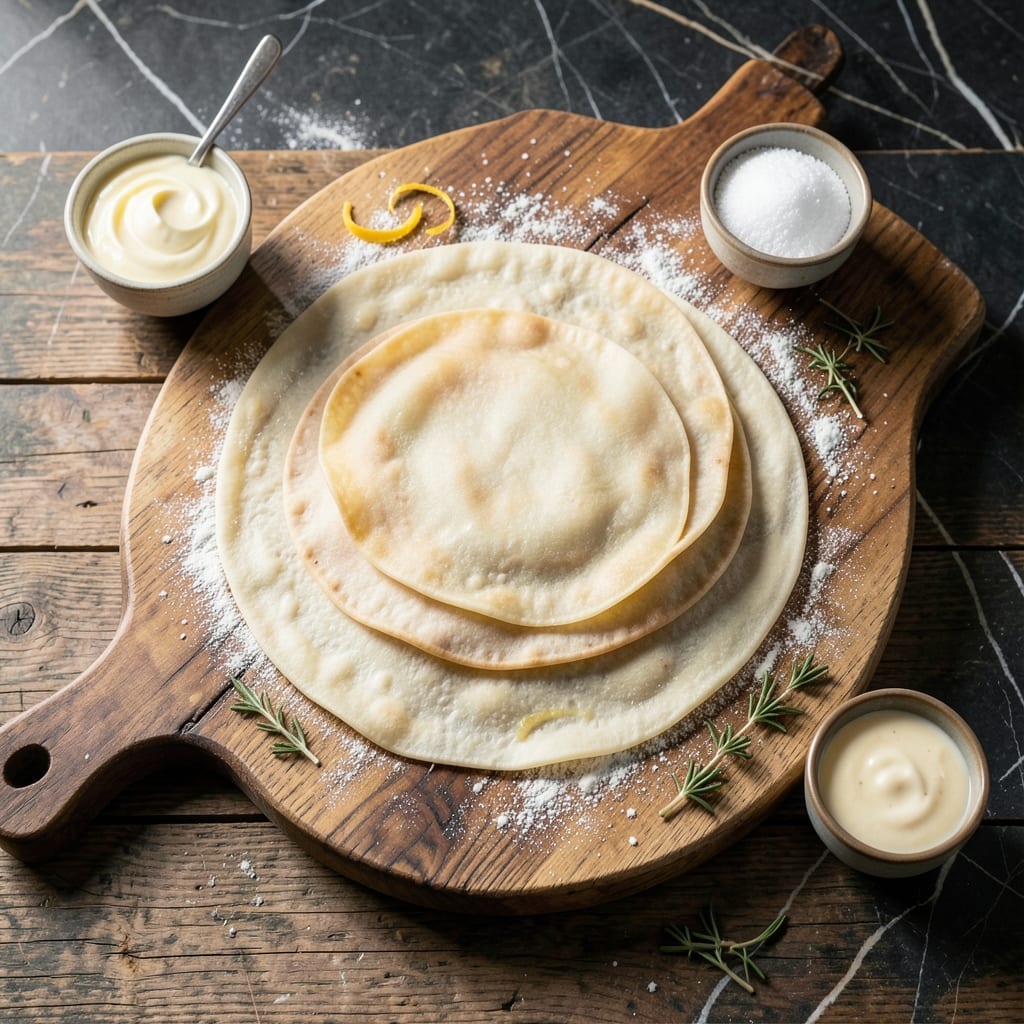
This potato-free lefse recipe preserves the authentic Scandinavian flatbread tradition while simplifying the process for modern kitchens. The secret lies in using all-purpose flour and cream to achieve the signature soft, pliable texture.
I developed this version after years of testing to maintain the delicate, slightly sweet flavor that makes lefse special. The dough requires minimal ingredients but demands precise rolling and cooking techniques to create those paper-thin rounds.
What emerges is a tender flatbread perfect for rolling with jam, butter, or savory fillings. The absence of potatoes actually enhances the clean, buttery flavor that complements both sweet and savory accompaniments.
The final product should be nearly translucent when held to light, with a delicate texture that tears easily. This method produces traditional results without the typical potato base.
Ingredients for Lefse Recipe Without Potatoes
Minimal ingredients, maximum tradition. This authentic Scandinavian flatbread comes to life with flour, cream, and butter.
| Ingredient | Amount | Notes |
|---|---|---|
| All-Purpose Flour 🌾 | 3 cups | Plus extra for dusting work surface |
| Heavy Cream 🥛 | 1 cup | Full-fat for rich texture |
| Unsalted Butter 🧈 | ½ cup | Melted and cooled slightly |
| Granulated Sugar 🍚 | 2 tbsp | Fine grain for even distribution |
| Salt 🧂 | ½ tsp | Fine sea salt preferred |
| Large Egg 🥚 | 1 whole | Room temperature for even mixing |
| Vanilla Extract 🌿 | 1 tsp | Pure extract for authentic flavor |
| Ground Cardamom 🌶️ | ¼ tsp | Freshly ground for best aroma |
The flour is the foundation here—King Arthur or Gold Medal all-purpose give the right balance of structure and tenderness. Heavy cream is non-negotiable; its fat content creates the signature pliable texture. Organic Valley carries a particularly rich version. Use European-style butter if available (higher fat content), but standard unsalted from Land O’Lakes works perfectly.
No heavy cream? Full-fat coconut milk (canned, not carton) can substitute in a pinch, though the flavor will differ slightly. For the butter, vegetable shortening at a 1:1 ratio maintains texture without dairy. The cardamom is traditional but optional—skip it entirely if you prefer a neutral flavor. The dough should be soft but not sticky; add flour gradually if needed.
The dough can rest overnight in the fridge (actually improves texture). Cooked lefse keeps at room temperature in a sealed container for 3-4 days, or freeze with parchment between layers for up to 2 months. Reheat briefly on a dry skillet to restore pliability.
Why You’ll Love This Recipe
- No Peeling Needed: I love skipping the potato peeling and boiling—just mix flour, cream, and butter for a smooth dough.
- Buttery Sweetness: The heavy cream and butter make it rich, while sugar adds a subtle sweetness that’s irresistible.
- Holiday or Anytime: Honestly, I roll this out for Christmas as much as for weekend snacking with jam or cinnamon sugar.
- Stays Fresh for Days: Leftovers keep beautifully in the fridge, and reheating takes seconds in a dry pan.
Step-by-Step Instructions for Lefse Without Potatoes
Master the Norwegian flatbread technique with precise temperature control and rolling consistency.
Step 1: Prepare and Combine the Dough Ingredients
In a large mixing bowl, whisk together the 3 cups All-Purpose Flour, 2 tbsp Granulated Sugar, 0.5 tsp Salt, and 0.25 tsp Ground Cardamom until evenly distributed. The cardamom adds a subtle floral note essential to authentic flavor.
Create a well in the center and add the 1 whole Large Egg, 1 cup Heavy Cream, 1 tsp Vanilla Extract, and 0.5 cup Unsalted Butter (melted and cooled slightly). Use a wooden spoon to gradually incorporate the dry ingredients into the wet until a shaggy dough forms.
Step 2: Knead and Rest the Dough
Turn the dough onto a lightly floured surface and knead gently for 3-4 minutes until smooth and elastic. The dough should be soft but not sticky—add a sprinkle of flour only if necessary to prevent sticking.
Divide the dough into 8 equal portions (about 80 grams each) and shape into balls. Place them on a plate, cover with plastic wrap, and refrigerate for 30 minutes. This rest period allows the gluten to relax, making the dough easier to roll thin without springing back.
Step 3: Roll the Dough Paper-Thin
On a well-floured surface, roll one dough ball at a time into a 12-inch circle, rotating frequently to maintain an even thickness. The dough should be nearly translucent—about 1/16-inch thick—so thin you can almost see through it.
Use a lefse rolling pin if available, or a standard pin with long, even strokes. Dust with flour as needed to prevent sticking, but brush off excess before transferring to the griddle to avoid bitter flecks in the finished bread.
Step 4: Cook on a Hot Griddle
Heat a griddle or large skillet over medium-high heat (about 375°F). The surface is ready when a drop of water sizzles and evaporates immediately. Place a rolled dough circle on the griddle and cook for 30-45 seconds per side until light golden spots appear.
Use a thin spatula to lift and flip—work quickly as the dough cooks fast at this thickness. The lefse should develop a few light brown freckles but remain soft and pliable. Do not overcook, or it will become brittle.
Step 5: Cool and Store Properly
Transfer each cooked lefse to a clean kitchen towel and cover with another towel to keep warm and prevent drying. Repeat with remaining dough, stacking cooked rounds between towels as you go.
Once completely cool, store in an airtight container with parchment between layers for up to 5 days at room temperature. For longer storage, freeze for up to 3 months. Serve at room temperature, spread with butter and jam, or use as a wrap for savory fillings.
Pro Tips For Making Lefse Recipe Without Potatoes
- Chill the Dough: After mixing, refrigerate the dough for at least 30 minutes—I learned this the hard way when my first batch kept shrinking on the griddle.
- Use Cold Heavy Cream: Cold heavy cream makes the dough easier to handle and prevents the butter from separating, which happened to me when I used room temperature cream.
- Roll It Paper-Thin: Aim for about 1/8 inch thickness or less for that perfect, delicate texture; my grandmother swore by this, and she was right.
- Heat the Griddle Evenly: Set your griddle to medium-high and make sure it’s fully heated before adding the dough—after burning three batches, I finally figured out the importance of even heat.
Creative Variations of This lefse recipe without potatoes
Sweet Cinnamon Roll
Add 1 tsp cinnamon and 1 tbsp brown sugar to the dough mixture for a warm spiced flavor. After rolling, brush with melted butter and sprinkle with cinnamon sugar before cooking. This sweet variation is perfect for breakfast or dessert. 💛
Savory Herb Version
Replace the sugar with 1 tsp dried rosemary or thyme and add ½ tsp black pepper to the dough. Cook as usual, then brush with garlic-infused olive oil. This savory lefse pairs beautifully with cheeses and cured meats.
Citrus Zest Twist
Enhance the dough with 1 tbsp lemon or orange zest for a bright, fresh flavor. The citrus oils complement the rich cream and butter beautifully. I love this version with honey butter and fresh berries.
Whole Wheat Blend
Substitute 1 cup whole wheat flour for a nuttier, heartier lefse. The texture will be slightly denser but still soft. Add 1 extra tbsp cream to compensate for the drier flour.
Cardamom-Free
Omit the cardamom and increase the vanilla to 2 tsp for a neutral-flavored lefse. This version is ideal when you want the buttery richness to shine through without any competing spices.
Brown Butter Upgrade
Brown the ½ cup butter before adding to the dough for a deep, caramelized flavor. Let it cool slightly before mixing. The nutty aroma takes this simple flatbread to gourmet status. ✨
Nutrition Facts
Frequently Asked Questions
Can I use milk instead of heavy cream?
Whole milk works in a pinch but yields a less rich texture. The higher fat in cream creates the signature softness. For best results, stick with heavy cream or substitute half with melted butter to boost fat content.
Why is my lefse tough instead of soft?
Overworking the dough or rolling too thick are common culprits. Knead just until smooth and roll to 1/16-inch thickness. Also ensure you’re not overcooking—30-45 seconds per side is ideal.
What’s the best way to roll it so thin?
Use a long rolling pin and work on a well-floured surface. Rotate the dough frequently and dust with flour as needed. A lefse rolling pin with its longer handle helps maintain even pressure.
How do I keep it from drying out?
Cover cooked rounds with a clean towel as you work to retain moisture. Store completely cooled lefse in an airtight container with parchment between layers for up to 5 days.

- BBQ Sausage Recipe Oven: Smoky Depth Without the Grill - September 28, 2026
- BBQ Chicken Bowl Recipe Rice: Smoky Sweetness Over Fluffy Grains - September 28, 2026
- Beef Cutlet Recipe Ideas: Crispy Breaded Patties With Bold Seasonings - September 28, 2026