
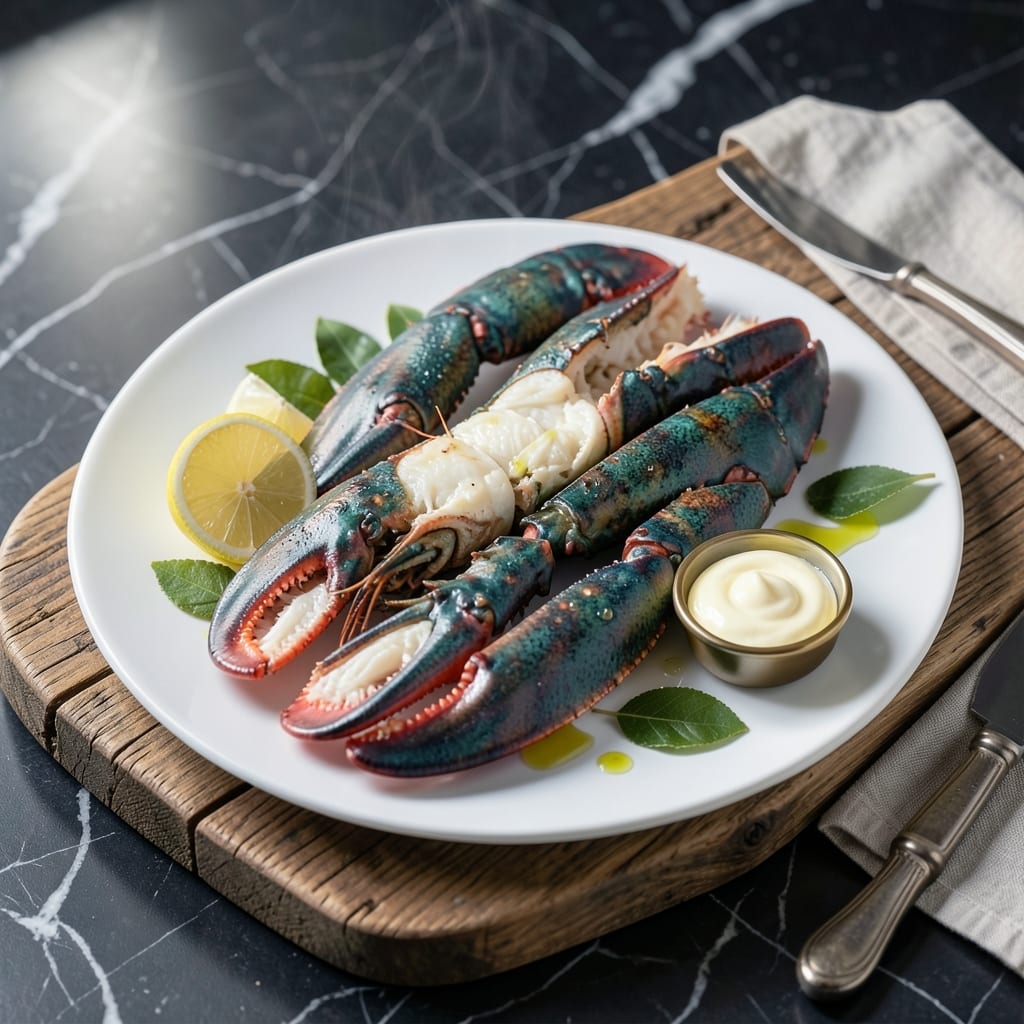
There’s a simplicity to boiling lobster tail that many overlook—it’s the most foolproof method for achieving tender, succulent meat every time.
Unlike grilling or broiling, boiling ensures even cooking without drying out the delicate flesh. The key is precise timing and starting with fresh or properly thawed tails.
This technique delivers meat that pulls away from the shell effortlessly, with a texture that’s firm yet buttery. No fancy equipment required—just a pot, water, and a few 10 minutes of cooking.
Serve with drawn butter and lemon for a meal that feels luxurious but takes almost no effort. The results speak for themselves.
Ingredients for Lobster Tail Recipe Boiled
Fresh lobster tails and a few pantry staples create this elegant seafood dish with minimal effort.
| Ingredient | Amount | Notes |
|---|---|---|
| Lobster Tails 🦞 | 4 whole | Fresh or thawed, 8-10 oz each |
| Water 💧 | 4 cups | Enough to cover tails completely |
| Sea Salt 🧂 | 2 tbsp | For brining the water |
| Bay Leaves 🍃 | 2 whole | For aromatic infusion |
| Lemon 🍋 | 1 whole | Sliced for water and serving |
| Unsalted Butter 🧈 | ½ cup | For drawn butter sauce |
| Fresh Parsley 🌿 | ¼ cup | Chopped for garnish |
| Garlic Cloves 🧄 | 2 cloves | Minced for butter sauce |
| Lemon Juice 🍋 | 2 tbsp | Freshly squeezed for brightness |
| Old Bay Seasoning 🌶️ | 1 tsp | For classic seafood flavor |
| Black Peppercorns 🌶️ | 1 tsp | Lightly crushed for water |
The lobster tails are non-negotiable here. Fresh is ideal from a trusted seafood counter, but frozen works if properly thawed overnight in the fridge. Look for tails that feel heavy for their size with a vibrant shell color. Most high-end grocery stores like Whole Foods or Harris Teeter carry quality options. Avoid pre-cooked tails—they’ll turn rubbery when reheated.
No bay leaves? Thyme sprigs or a pinch of dried tarragon can substitute. Out of Old Bay? Celery salt plus paprika mimics the flavor profile. The butter must be unsalted—salted will overpower the lobster. For a lighter option, ghee or high-quality olive oil works, though the classic drawn butter is hard to beat.
Best eaten immediately, but cooked tails keep in the fridge for 1-2 days. Store uncooked tails in their original packaging on ice for up to 24 hours. Drawn butter can be reheated gently—don’t let it separate.
Why You’ll Love This Recipe
- Five Minute Prep: Honestly, it’s just boiling water with bay leaves and lemon—no fancy techniques or hours in the kitchen.
- Buttery Sweetness: The sea salt brings out the natural sweetness of the lobster tail in a way that feels indulgent but stays simple.
- Fancy Without Effort: I serve this for date night or Sunday dinner and look like a pro, even on a busy weeknight.
- Leftovers Upgrade: Cold lobster tail the next day makes the best sandwiches or salads—if there’s any left, that is.
Step-by-Step Instructions for Lobster Tail Boiled
Master this straightforward technique for tender, perfectly cooked lobster tails with minimal effort.
Step 1: Prepare the Lobster Tails and Aromatic Water
Begin by thawing the 4 whole Lobster Tails if frozen, then rinse them under cold water. Pat dry with paper towels to ensure proper seasoning adhesion. Using kitchen shears, cut the top shell lengthwise down the center, stopping just before the tail fin. Gently pull the shell apart to expose the meat, then lift the meat out, keeping it attached at the base, and lay it on top of the shell.
In a large stockpot, combine the 4 cups Water, 2 tbsp Sea Salt, 2 whole Bay Leaves, 1 tsp Black Peppercorns, and half of the sliced 1 whole Lemon. This aromatic base infuses the tails with subtle, complementary flavors as they cook. Lightly crush the peppercorns to release their essence. Bring the water to a rolling boil over high heat.
Step 2: Boil the Lobster Tails to Perfection
Once the water reaches a full, rolling boil, carefully add the prepared 4 whole Lobster Tails to the pot, meat-side up. Reduce the heat to maintain a gentle boil—this prevents the tails from toughening. Add the 1 tsp Old Bay Seasoning to the water for an extra layer of classic seafood flavor.
Cook the tails for 1 minute per ounce of their weight. For 8-10 oz tails, this translates to 8-10 minutes. The meat should turn opaque white and firm to the touch, curling slightly as it cooks. Avoid overcooking, as this will make the meat rubbery. The tails are done when an instant-read thermometer inserted into the thickest part reads 140°F.
Step 3: Prepare the Drawn Butter Sauce
While the tails cook, melt the 0.5 cup Unsalted Butter in a small saucepan over low heat. Add the minced 2 cloves Garlic Cloves and cook for 30-60 seconds, stirring constantly, until fragrant but not browned. Remove from heat and stir in the 2 tbsp Lemon Juice for a bright, tangy finish.
This drawn butter sauce should be smooth and slightly emulsified, with the garlic adding depth and the lemon juice balancing the richness. Keep the sauce warm on very low heat, but do not let it simmer or the butter may separate.
Step 4: Serve with Garnishes and Sauce
Using tongs, carefully transfer the cooked tails to a serving platter, meat-side up. Drizzle some of the warm drawn butter sauce over each tail, reserving the rest for dipping. Garnish with the remaining sliced 1 whole Lemon and the chopped 0.25 cup Fresh Parsley for a pop of color and freshness.
Serve immediately with additional drawn butter sauce on the side. The meat should be tender, succulent, and easily pulled from the shell with a fork. Each bite should deliver the sweet, delicate flavor of the lobster, enhanced by the aromatic cooking liquid and the rich, garlicky butter sauce.
Pro Tips For Making Lobster Tail Recipe Boiled
- Use Cold Water Start: I learned this the hard way—always begin with cold water and the lobster tails, then bring to a boil. Plunging them into already-boiling water shocks the meat and makes it tough.
- Salt Like Seawater: Make the water as salty as the ocean, about 1/4 cup sea salt per gallon. Lobster is briny by nature, and this keeps the flavor balanced.
- Watch the Time: Boil for 1 minute per ounce of tail, no more. Overcooking turns the meat rubbery, and nobody wants that after spending good money on lobster.
- Shock with Ice: After boiling, plunge the tails into ice water for 2-3 minutes to stop the cooking process. This keeps the meat tender and makes peeling easier.
Storing and Reheating This Dish
Refrigerator Storage
Let cooked tails cool for no more than 2 hours before transferring to airtight containers. They’ll keep at 40°F or below for 1-2 days. I store mine in the shell to preserve moisture and flavor. ❄️
Freezer Storage
For longer storage, remove meat from shells and place in freezer bags with ¼ cup of the cooking broth. Squeeze out excess air and freeze for up to 3 months. Label with the date—I use Ziploc freezer bags for best results.
Stovetop Reheating
Gently reheat tails in a pot with ½ cup water or broth over low heat for 5-7 minutes. This prevents drying out. Add a splash of the reserved cooking liquid for extra flavor. 🔥
Microwave Reheating
Place meat in a microwave-safe dish with 1 tbsp water and cover with a damp paper towel. Heat on 50% power for 1-2 minutes, checking frequently. This method works in a pinch but can toughen the meat.
Butter Sauce Storage
Drawn butter can be stored in the fridge for 3-4 days in an airtight container. Reheat gently in a saucepan over low heat, stirring constantly. Avoid microwaving, as it can cause separation.
Nutrition Facts
Frequently Asked Questions
How do I know when the tails are done?
The meat turns opaque white and reaches 140°F internally. For 8-10 oz tails, this takes 8-10 minutes in boiling water. Overcooking makes them rubbery, so check early!
Should I leave the shell on while boiling?
Yes! The shell protects the meat and adds flavor. Cut the top shell lengthwise before boiling to expose the meat, but keep it attached at the base.
What can I use if I don’t have Old Bay?
Substitute with celery salt plus paprika or a pinch of dried tarragon. These mimic the classic seafood seasoning profile.
Can I boil frozen tails directly?
Never boil from frozen—it cooks unevenly. Always thaw overnight in the fridge first for the best texture and safety.

- BBQ Sausage Recipe Oven: Smoky Depth Without the Grill - September 28, 2026
- BBQ Chicken Bowl Recipe Rice: Smoky Sweetness Over Fluffy Grains - September 28, 2026
- Beef Cutlet Recipe Ideas: Crispy Breaded Patties With Bold Seasonings - September 28, 2026