
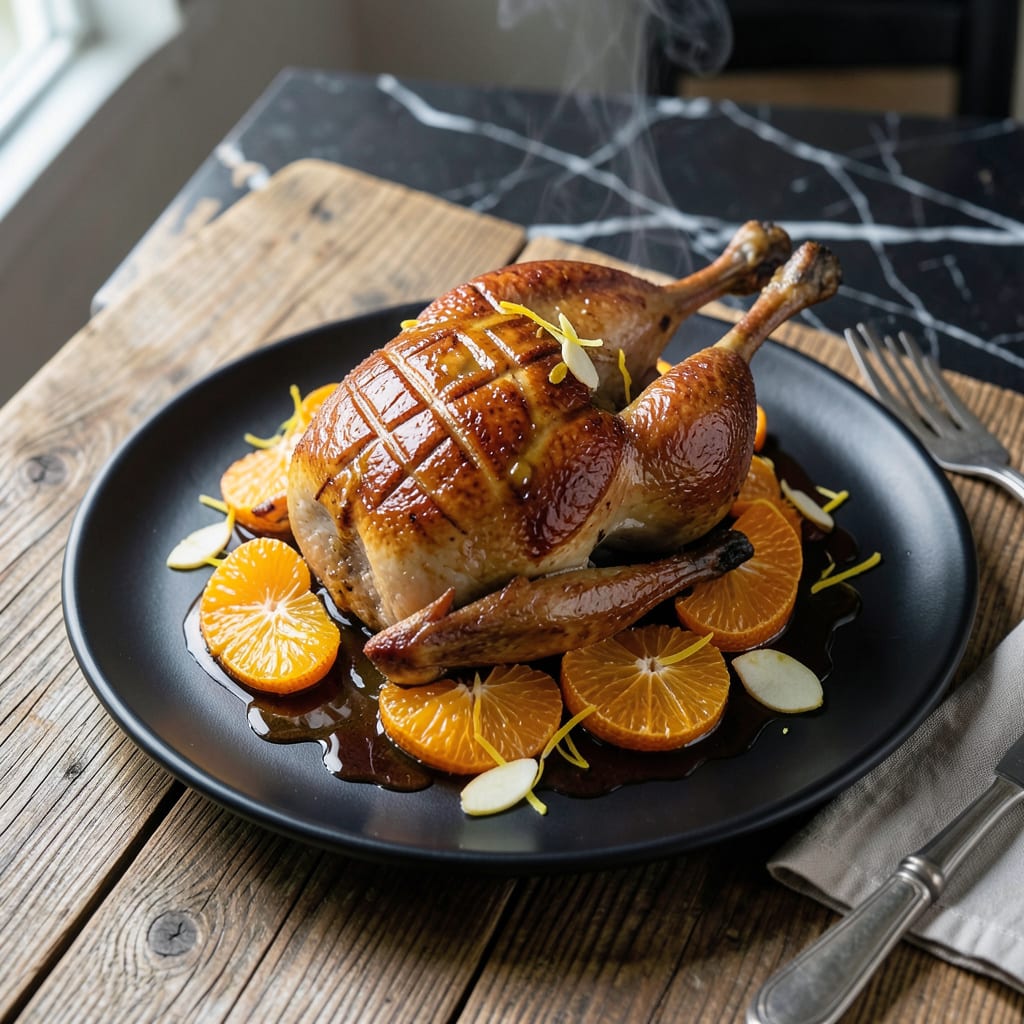
This Long Island classic delivers crispy skin and tender meat with a bright orange glaze that balances richness perfectly. The technique involves slow roasting to render fat while maintaining moisture.
The orange glaze adds a sweet-tangy contrast that complements the duck’s natural richness. This method ensures consistent results with minimal effort, making it ideal for special occasions.
Ingredients for Long Island Duck
Crispy skin starts with quality duck and a bright orange glaze to tie it all together beautifully.
| Ingredient | Amount | Notes |
|---|---|---|
| Whole Duck 🦆 | 5 lb | Fresh, skin-on, giblets removed |
| Orange Zest 🍊 | 2 tbsp | From 2 large oranges |
| Fresh Orange Juice 🍊 | ¾ cup | Newly squeezed preferred |
| Honey 🍯 | ¼ cup | Wildflower or clover variety |
| Soy Sauce 🥫 | 2 tbsp | Low-sodium recommended |
| Fresh Ginger 🌿 | 1 tbsp | Peeled and finely grated |
| Garlic Cloves 🧄 | 4 cloves | Minced for glaze |
| Kosher Salt 🧂 | 1 ½ tsp | Diamond Crystal preferred |
| Black Pepper 🌶️ | 1 tsp | Freshly cracked for best flavor |
| Dried Thyme 🍃 | 1 tsp | Rubbed between fingers to release oils |
| Unsalted Butter 🧈 | 4 tbsp | Melted for basting |
| Shallot 🧅 | 1 whole | Finely minced for glaze |
| Dijon Mustard 🥫 | 1 tbsp | Smooth variety for depth |
| Apple Cider Vinegar 🍏 | 1 tbsp | Balances sweetness in glaze |
The duck is the foundation—sourced from a reputable butcher or specialty market like D’Artagnan. Look for birds with smooth, unblemished skin and a layer of fat just under the surface. A 5-pound duck serves four generously. Avoid pre-brined or frozen birds if possible, as they can affect the skin’s ability to crisp. Freshness is non-negotiable for that signature Long Island texture.
No fresh orange juice? Bottled works in a pinch (but fresh is brighter). Swap honey for maple syrup at equal amount if needed. Soy sauce can be replaced with tamari for gluten-free. The shallot adds depth—red onion (finely minced) is a fine substitute. For extra complexity, add a splash of Grand Marnier to the glaze (trust me on this one).
Rendered duck fat keeps for 1 month refrigerated—perfect for roasting potatoes later. The glaze can be made 2 days ahead and reheated gently. Leftovers (if any) reheat best in a 350°F oven for 15-20 minutes to recrispen the skin.
Why You’ll Love This Recipe
- One Pan Wonder: I just toss the duck in with the orange zest and honey, let the oven do the work, and clean up is a breeze.
- Sweet and Savory: That mix of honey, soy, and fresh orange juice gives it a sticky, tangy glaze that’s ridiculously good.
- Sunday Dinner Star: It’s my go-to for impressing guests—fancy enough for company but unfussy enough for a lazy afternoon.
- Leftovers Magic: The duck tastes even better the next day—shred it for tacos or toss it into fried rice. Honestly, I make extra on purpose.
Step-by-Step Instructions for Long Island Duck With Orange Glaze
This method ensures perfectly crisp skin and a glossy, citrus-kissed finish every time.
Step 1: Prepare and Season the Duck
Pat the 5 lb Whole Duck completely dry inside and out with paper towels. This step is non-negotiable—any moisture prevents crispy skin. Prick the skin all over with a sharp knife or fork, taking care not to pierce the meat underneath.
Rub the cavity and exterior with 1.5 tsp Kosher Salt, 1 tsp Black Pepper, and 1 tsp Dried Thyme. Rub the dried thyme between your fingers first to release its aromatic oils. Place the duck on a wire rack set over a baking sheet and refrigerate uncovered for 12-24 hours. This drying process is the secret to ultra-crispy skin.
Step 2: Create the Orange Glaze
In a small saucepan, combine 2 tbsp Orange Zest, 0.75 cup Fresh Orange Juice, 0.25 cup Honey, 2 tbsp Soy Sauce, 1 tbsp Fresh Ginger, 4 cloves Garlic Cloves (minced), 1 whole Shallot (minced), 1 tbsp Dijon Mustard, and 1 tbsp Apple Cider Vinegar. Stir to combine all ingredients thoroughly.
Simmer over medium heat for 8-10 minutes, stirring occasionally, until the mixture reduces by about half and becomes syrupy. You’ll know it’s ready when it coats the back of a spoon. Remove from heat and set aside to cool slightly.
Step 3: Roast the Duck to Perfection
Preheat your oven to 375°F. Remove the duck from the refrigerator and let it come to room temperature for 30 minutes. Place the duck breast-side up on a roasting rack in a roasting pan. Brush generously with 2 tbsp of the 4 tbsp Unsalted Butter (melted).
Roast for 1 hour, then flip the duck breast-side down and brush with another 2 tbsp Unsalted Butter. Roast for another 45 minutes. Flip breast-side up again and brush with the remaining orange glaze. Increase the oven temperature to 425°F and roast for a final 15-20 minutes until the skin is deep mahogany brown and crisp.
Step 4: Rest and Serve
Transfer the duck to a cutting board and let it rest for 15 minutes before carving. This allows the juices to redistribute, ensuring moist, flavorful meat. Reserve the pan drippings for a quick sauce if desired.
Carve the duck by removing the legs and thighs first, then slicing the breast meat against the grain. Serve immediately with the remaining orange glaze drizzled over the top. The skin should shatter with each cut, revealing tender meat beneath.
Pro Tips For Making Long Island Duck
- Score the Skin: Use a sharp knife to make shallow cuts in the duck skin before roasting—this helps the fat render out and the orange-honey glaze penetrate deeply. I learned this the hard way after my first few ducks came out greasy instead of crisp.
- Reduce the Glaze: Simmer the orange juice, honey, and soy sauce together for 5-7 minutes until it thickens slightly. Sounds tedious, but it keeps the sauce from sliding right off the duck.
- Rest Before Carving: Let the duck rest for at least 15 minutes after roasting, tented loosely with foil. Skipping this step means all those juicy orange-infused drippings will end up on the cutting board.
- Use Fresh Zest: Grate the orange zest yourself instead of using pre-packaged—it’s brighter and more aromatic. After using the dried stuff once, I could taste the difference immediately.
Perfect Pairings for This Dish
Wine Pairings
A bold Pinot Noir from Oregon’s Willamette Valley cuts through the duck’s richness while complementing the orange glaze beautifully. The fruit-forward notes balance the dish’s sweet and savory elements perfectly. 🍷
Craft Beer Options
Try a Belgian dubbel like Chimay Red—its caramel and dark fruit notes mirror the glaze’s depth. For hop lovers, an amber ale with malty sweetness works surprisingly well.
Side Dish Ideas
Wild rice pilaf with toasted almonds and dried cherries echoes the orange notes. I also love simple roasted Brussels sprouts tossed with duck fat from the pan.
Starch Pairings
Garlic mashed potatoes soak up the glaze beautifully. For something lighter, try sweet potato purée with a touch of cinnamon to complement the orange flavors. 💛
Vegetable Accompaniments
Sautéed green beans with slivered almonds add crunch and color. A simple arugula salad with lemon vinaigrette cuts through the richness with its peppery bite.
Bread Options
Warm crusty baguette slices are perfect for mopping up pan juices. I sometimes serve cornbread for a slightly sweet contrast to the savory duck.
Nutrition Facts
Frequently Asked Questions
How do I get the skin extra crispy?
Pat the duck completely dry and refrigerate uncovered for 12-24 hours. This removes moisture from the skin, allowing it to crisp perfectly when roasted at 425°F.
Can I use frozen duck?
Yes, but thaw it completely in the fridge for 2-3 days before drying and seasoning. Never roast from frozen, as this will prevent even cooking and crispy skin.
What if my glaze burns?
Simmer the glaze over medium-low heat and stir frequently. If it darkens too quickly, remove from heat and add 1-2 tbsp of water to thin it out.
How do I know when it’s done?
Use a meat thermometer inserted into the thickest part of the thigh—it should read 165°F. The skin should be deep brown and shatter when cut.

- BBQ Sausage Recipe Oven: Smoky Depth Without the Grill - September 28, 2026
- BBQ Chicken Bowl Recipe Rice: Smoky Sweetness Over Fluffy Grains - September 28, 2026
- Beef Cutlet Recipe Ideas: Crispy Breaded Patties With Bold Seasonings - September 28, 2026