
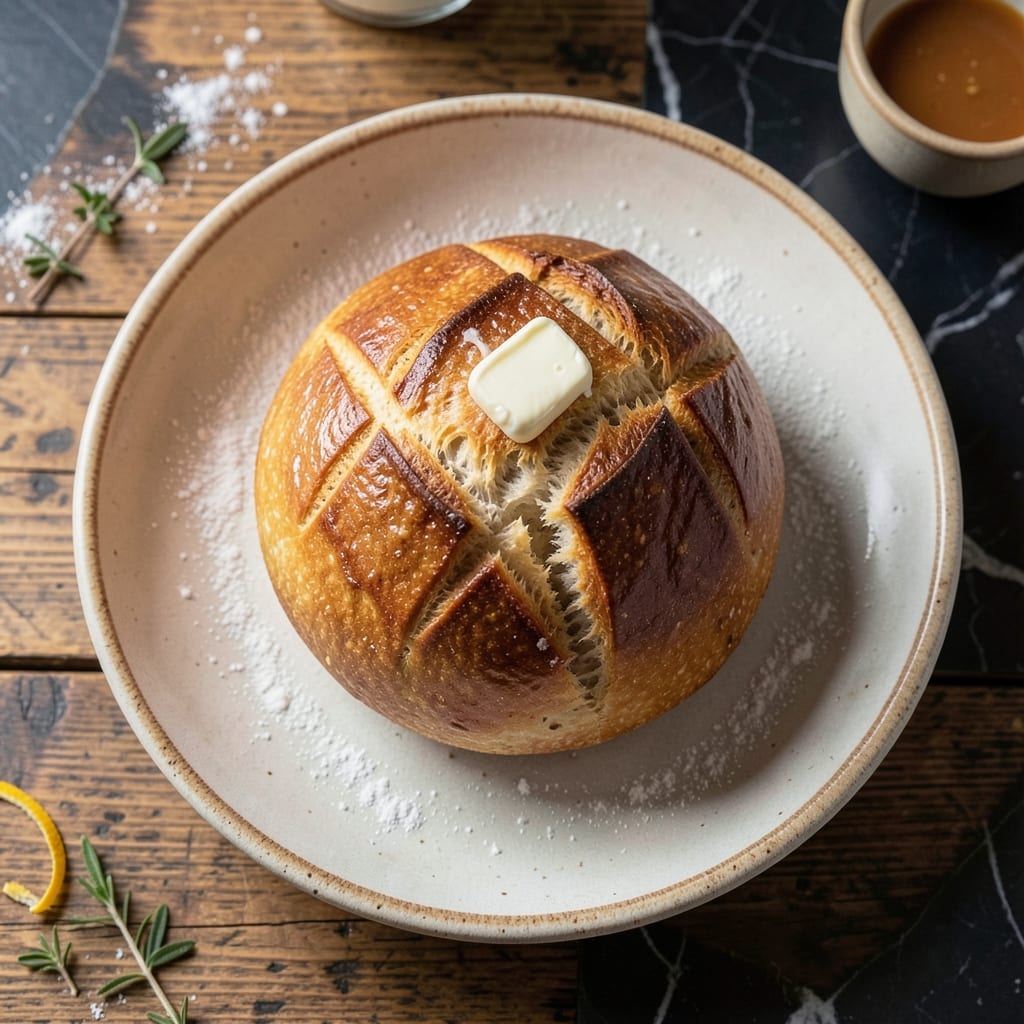
This Texas-style bread delivers the warm, buttery goodness that made Longhorn famous. The secret lies in its soft, slightly sweet interior and golden crust that crackles with every slice.
I’ve perfected this recipe to mirror the restaurant version, using simple ingredients and a straightforward method. The dough comes together quickly, rises beautifully, and bakes into a loaf that’s impossible to resist.
What sets this bread apart is its rich, buttery flavor and tender texture. It’s ideal for serving with meals or enjoying as a snack with a spread of honey butter.
With minimal effort and basic pantry staples, you’ll have a homemade loaf that tastes just like the original.
Ingredients for Longhorn Bread
Basic pantry staples come together for this warm, buttery Texas-style loaf with golden crust.
| Ingredient | Amount | Notes |
|---|---|---|
| All-Purpose Flour 🌾 | 4 cups | Plus extra for dusting |
| Granulated Sugar 🍚 | ¼ cup | For subtle sweetness |
| Active Dry Yeast 🍞 | 2 ¼ tsp | 1 packet, proofed in warm water |
| Salt 🧂 | 2 tsp | Fine table salt preferred |
| Unsalted Butter 🧈 | ½ cup | Melted and cooled slightly |
| Whole Milk 🥛 | 1 ¼ cups | Warm, about 110°F |
| Large Egg 🥚 | 1 whole | Room temperature, lightly beaten |
| Honey 🍯 | 2 tbsp | For brushing on crust |
| Water 💧 | ¼ cup | Warm, for yeast activation |
| Bread Flour 🌾 | 1 cup | Optional for extra chew |
| Cornmeal 🌽 | 2 tbsp | For dusting pan |
The flour is the foundation here. King Arthur or Gold Medal all-purpose are reliable choices—avoid self-rising, as it already contains salt and leavening. For the yeast, Fleischmann’s or Red Star work well. Use whole milk for richness; skim will make the bread less tender. The butter should be unsalted so you can control the salt level precisely.
No honey? Maple syrup or agave works in a pinch (use the same amount). If you’re out of whole milk, 2% with a teaspoon of melted butter per cup gets you close. The egg can be skipped, but the bread won’t be quite as rich. For a slightly denser loaf, swap the bread flour for more all-purpose—the texture changes, but it’s still delicious.
Store the loaf wrapped in foil at room temperature for up to 3 days. For longer storage, slice and freeze in a zip-top bag for up to 3 months. Reheat slices in a toaster or oven to revive that fresh-baked feel.
Why You’ll Love This Recipe
- One Bowl Wonder: I mix the flour, sugar, yeast, and salt in one bowl—no fancy equipment, just my hands and a wooden spoon.
- Buttery Heaven: That melted unsalted butter brushed on top gives it a rich, golden crust that’s impossible to resist.
- Feeds a Crowd: Honestly, it’s my go-to for potlucks or Sunday dinners since one batch makes enough to share.
- Budget Friendly: All-purpose flour and basic pantry staples mean I can make this for pennies compared to store-bought.
Step-by-Step Instructions for Texas-Style Buttery Bread
Here is the method to achieve a perfectly soft, golden loaf with that signature rich flavor.
Step 1: Activate the Yeast and Prepare Wet Ingredients
Combine the 0.25 cup Water and 1.25 cups Whole Milk in a small bowl, ensuring the temperature reaches 110°F. This warmth is critical for activating the yeast without killing it. Add the 2.25 tsp Active Dry Yeast and 0.25 cup Granulated Sugar, then let it sit for 5-10 minutes until frothy.
You’ll know the yeast is active when the mixture bubbles and expands. Stir in the 0.5 cup Unsalted Butter (melted and cooled) and the 1 whole Large Egg (lightly beaten). This forms the rich, buttery base of your dough.
Step 2: Combine Dry Ingredients and Form the Dough
In a large mixing bowl, whisk together the 4 cups All-Purpose Flour, 1 cup Bread Flour, and 2 tsp Salt. The combination of flours ensures a soft yet slightly chewy texture. Gradually pour the wet ingredients into the dry mixture, stirring until a shaggy dough forms.
Turn the dough onto a lightly floured surface and knead for 8-10 minutes until smooth and elastic. The dough should be slightly tacky but not stick to your hands. If it feels too wet, add a sprinkle of flour, but avoid over-flouring, as this can make the bread dense.
Step 3: Let the Dough Rise Until Doubled
Place the kneaded dough in a greased bowl, turning it once to coat the surface. Cover with a clean kitchen towel and let it rise in a warm, draft-free place for 1 to 1.5 hours, or until it has doubled in size. This rise develops the gluten, giving the bread its structure and softness.
To check if the dough is ready, press your finger gently into the top. If the indentation remains, it’s time to move to the next step. If it springs back, give it more time.
Step 4: Shape, Second Rise, and Prepare for Baking
Punch down the risen dough to release the air, then shape it into a loaf. Dust a baking sheet with the 2 tbsp Cornmeal to prevent sticking and give the bread a rustic texture. Place the loaf seam-side down on the sheet.
Cover the loaf again and let it rise for 30-45 minutes until puffy. Preheat your oven to 375°F during this time so it’s ready when the dough is. The second rise ensures a light and airy crumb.
Step 5: Bake and Finish with Honey Glaze
Bake the loaf for 25-30 minutes until the top is golden brown and the internal temperature reaches 190°F. If the top browns too quickly, tent it loosely with aluminum foil. Remove from the oven and brush the crust with the 2 tbsp Honey while still warm.
Let the bread cool on a wire rack for at least 20 minutes before slicing. This resting period allows the structure to set, ensuring clean slices and the best texture. Serve warm for that melty, buttery experience.
Pro Tips For Making Longhorn Bread
- Proof the Yeast: I learned this the hard way—always dissolve the active dry yeast in warm water (around 110°F) with a pinch of sugar first to guarantee it’s alive before mixing with flour.
- Use Room-Temp Butter: Skip cold butter; let it soften for 30 minutes so it blends smoothly into the dough without creating tough pockets.
- Don’t Over-Flour: Resist the urge to dump extra flour on the counter—too much makes the bread dense, so dust lightly and only as needed.
- Brush with Butter: Right after baking, brush the top with melted unsalted butter—it adds that signature Longhorn richness and keeps the crust tender.
Storing and Reheating longhorn bread
Room Temperature Storage
Let your loaf cool completely before storing. Wrap it tightly in aluminum foil or place in a ziplock bag to maintain freshness. At room temperature, it stays soft for 2-3 days. I find the flavor actually deepens overnight. 💡
Freezer Storage
For longer storage, slice the loaf and wrap individual pieces in plastic wrap, then place in a freezer-safe bag. This bread freezes beautifully for up to 3 months without texture loss. Squeeze out excess air to prevent freezer burn.
Oven Reheating
Preheat your oven to 350°F and wrap the entire loaf or individual slices in aluminum foil. Heat for 10-15 minutes until warmed through. This method restores that fresh-baked softness better than any other. ❄️
Toaster Method
For quick slices, pop them directly in the toaster on medium setting. The crust will crisp slightly while the inside stays tender. Brush with a little melted butter after toasting for that signature Longhorn richness.
Microwave Option
Place a slice on a microwave-safe plate with a damp paper towel on top. Heat for 15-20 seconds on 50% power. This prevents the bread from becoming rubbery while warming it through.
Nutrition Facts
Frequently Asked Questions
Can I use instant yeast instead of active dry?
Yes! Skip the proofing step and mix instant yeast directly with dry ingredients. Reduce the amount slightly to 2 tsp since it’s more concentrated.
Why did my loaf turn out dense?
Over-flouring or insufficient rising time are common culprits. Ensure dough is only slightly tacky and let it rise until doubled. 8-10 minutes of kneading develops proper gluten structure.
How can I make this without bread flour?
Simply replace it with more all-purpose flour. The texture will be slightly less chewy but still delicious. For extra softness, add 1 tbsp vital wheat gluten to the dry ingredients.
Can I prepare the dough the night before?
After kneading, refrigerate the dough overnight for the first rise. Let it warm to room temperature and complete the second rise before baking. This enhances flavor development.

- BBQ Sausage Recipe Oven: Smoky Depth Without the Grill - September 28, 2026
- BBQ Chicken Bowl Recipe Rice: Smoky Sweetness Over Fluffy Grains - September 28, 2026
- Beef Cutlet Recipe Ideas: Crispy Breaded Patties With Bold Seasonings - September 28, 2026