
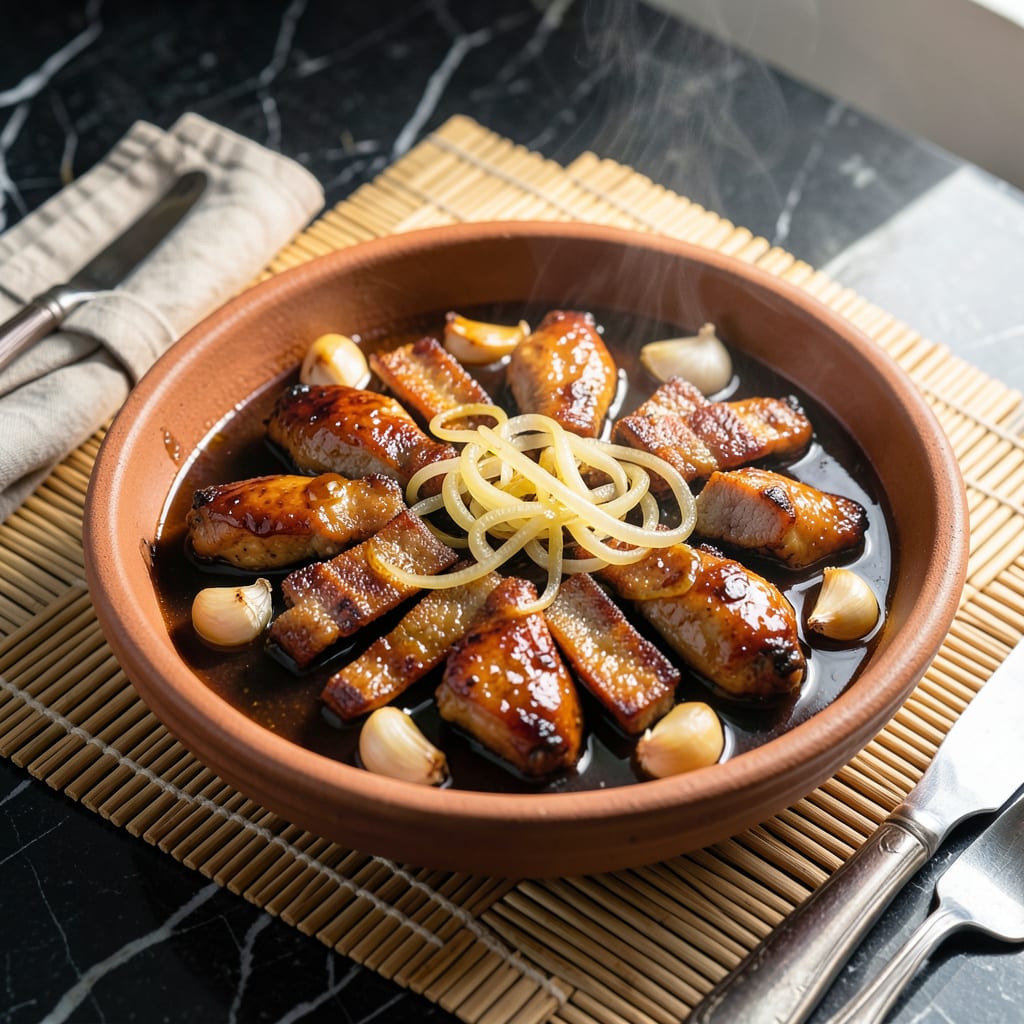
Filipino cuisine offers a rich tapestry of flavors that reflect the country’s diverse cultural heritage and history.
This collection brings together traditional dishes passed down through generations, each with its own story and regional significance.
Ingredients for Lutong Pinoy Recipe List
Traditional ingredients for authentic Filipino flavors passed down through generations in every dish.
| Ingredient | Amount | Notes |
|---|---|---|
| Chicken Thighs 🍗 | 2 lb | Boneless, skin-on preferred |
| Pork Belly 🥓 | 1 lb | Cut into 1-inch strips |
| White Vinegar 💧 | ½ cup | Cane vinegar for authenticity |
| Soy Sauce 🫙 | ½ cup | Filipino brand preferred |
| Garlic Cloves 🧄 | 8 cloves | Peeled and minced |
| Yellow Onion 🧅 | 1 whole | Medium-sized, diced |
| Bay Leaves 🍃 | 3 pieces | Dried, whole |
| Black Peppercorns 🌶️ | 1 tsp | Whole, crushed |
| Green Chili Peppers 🌶️ | 2 whole | Siling haba or bird's eye |
| Tomatoes 🍅 | 2 whole | Medium, quartered |
| Potatoes 🥔 | 2 whole | Medium, peeled and cubed |
| Carrots 🥕 | 2 whole | Medium, sliced into rounds |
| Fish Sauce 🐟 | 2 tbsp | Patis, for umami depth |
| Sugar 🍚 | 1 tbsp | White granulated |
| Cooking Oil 🫒 | ¼ cup | Neutral-flavored, for frying |
For authentic results, source Filipino soy sauce and vinegar from Asian markets or specialty grocers. Silver Swan and Datu Puti are trusted brands for soy sauce and vinegar, respectively. Pork belly should have a good fat-to-meat ratio for the best texture. Chicken thighs with skin render fat that enriches the dish, so avoid skinless cuts.
Short on time? Pre-minced garlic works, but fresh is ideal for true depth. No green chilies? Jalapeños at half the amount can substitute, though the flavor profile shifts slightly. Patis (Filipino fish sauce) is irreplaceable, but Thai fish sauce works in a pinch. For a milder dish, reduce chili quantity by half.
Store fresh ingredients like garlic and chilies in a cool, dry place for up to 2 weeks. Leftover cooked dishes keep in the fridge for 3-4 days and freeze well for 3 months. Always use airtight containers to preserve flavors.
Why You’ll Love This Recipe
- One Pot Meal: I toss the chicken thighs, pork belly, and garlic into a single pot, and the vinegar and soy sauce do the rest.
- Tangy Depth: The white vinegar cuts through the richness of the pork belly while the soy sauce and garlic build layers of umami.
- Feeds the Gang: I make a big batch for family gatherings, and it’s just as good reheated the next day.
- Budget Stretch: Chicken thighs and pork belly are affordable cuts, and a little goes a long way with these bold flavors.
Step-by-Step Instructions for Adobo with Pork and Chicken
Master this traditional technique for tender meat bathed in rich, tangy-savory sauce every time.
Step 1: Sear the Pork Belly and Chicken Thighs
Heat the 0.25 cup cooking oil in a large pot over medium-high heat. Add the 1 lb pork belly strips and sear until lightly browned on all sides, about 8-10 minutes. The fat should render slightly, creating a glossy sheen on the meat.
Remove the pork with a slotted spoon and set aside. In the same oil, brown the 2 lb chicken thighs skin-side down first for 5-7 minutes until the skin is golden brown and crisp. Turn and sear the other side for 3 minutes. This builds a flavor base that defines authentic adobo.
Step 2: Build the Aromatic Foundation
In the same pot, add the 1 whole yellow onion, 8 cloves garlic cloves, 2 whole green chili peppers, 3 pieces bay leaves, and 1 tsp black peppercorns. Sauté for 2-3 minutes until the onions soften and the garlic turns light golden—don’t let it darken or it will turn bitter.
Add the 2 whole tomatoes and cook for another 2 minutes until they begin to break down. The tomatoes add natural sweetness that balances the vinegar’s acidity in the final dish. Stir frequently to prevent sticking.
Step 3: Simmer in the Adobo Marinade
Return the pork and chicken to the pot. Pour in the 0.5 cup white vinegar, 0.5 cup soy sauce, 2 tbsp fish sauce, and 1 tbsp sugar. Add the 2 whole potatoes and 2 whole carrots. Bring to a boil, then reduce heat to low.
Cover and simmer for 45-50 minutes, stirring occasionally, until the potatoes are fork-tender and the meat is falling off the bone. The sauce should reduce slightly but still coat the meat generously. If it reduces too much, add ¼ cup water to maintain the right consistency.
Step 4: Reduce and Concentrate the Sauce
Once the meat and vegetables are tender, uncover the pot and increase heat to medium. Simmer for an additional 10-15 minutes to reduce the sauce to your desired thickness. You want it to cling to the meat but still be pourable.
Taste and adjust seasoning if needed, though the combination of soy sauce, fish sauce, and vinegar typically provides perfect balance. The sauce should be tangy with deep umami notes from the fish sauce and a subtle sweetness from the sugar and tomatoes.
Step 5: Rest and Serve
Remove from heat and let the adobo rest for 10 minutes before serving. This allows the flavors to meld together and the sauce to thicken slightly as it cools. The pork belly should be melt-in-your-mouth tender, while the chicken thighs remain juicy.
Serve hot over steamed rice, ensuring each serving gets an ample amount of the rich sauce and tender vegetables. The dish should have a glossy sheen from the reduced sauce, with the potatoes and carrots absorbing all the wonderful flavors of the adobo.
Pro Tips For Making Lutong Pinoy Recipe List
- Marinate Overnight: Let the chicken thighs and pork belly soak in soy sauce, vinegar, and crushed garlic for at least 4 hours—I learned this the hard way when my first batch tasted bland after just 30 minutes.
- Boil Then Fry: For crispy pork belly, parboil it first for 20 minutes to render some fat before frying. Sounds weird, but it works every time.
- Skip the Lid: When simmering the adobo, resist the urge to cover the pot completely—leave a small gap to let the vinegar acidity mellow out without overpowering the dish.
- Use Skin-On Thighs: The extra fat from skin-on chicken thighs makes a real difference in flavor, and it crisp up beautifully when you fry or broil them after braising.
Make-Ahead Tips for lutong pinoy recipe list
Marinating Overnight
For the most flavorful results, I always marinate the pork and chicken in the adobo mixture overnight. Combine the 0.5 cup soy sauce, 0.5 cup vinegar, 8 minced garlic cloves, and 1 tsp crushed peppercorns in a large bowl. Add the meat, ensuring it’s fully coated, then refrigerate for 8-12 hours. This step deepens the dish’s signature tangy-savory profile. 💡
Prepping Vegetables Early
You can peel and cube the 2 potatoes and slice the 2 carrots up to 24 hours ahead. Store them submerged in cold water in the fridge to prevent browning. Drain and pat dry before adding to the pot. This saves precious minutes on cooking day.
Partial Cooking Method
If you’re short on time, par-cook the meat and vegetables for 20-25 minutes, then cool and refrigerate. Finish cooking the next day by simmering for an additional 20-25 minutes until everything is tender. This approach still yields rich flavors.
Sauce Preparation
Mix the 0.5 cup soy sauce, 0.5 cup vinegar, 2 tbsp fish sauce, and 1 tbsp sugar the night before. Store in an airtight container at room temperature. The sugar helps balance the acidity, creating a harmonious sauce base. 🔥
Freezing for Later
Adobo freezes beautifully for up to 3 months. Cool the dish completely, then transfer to freezer-safe containers, leaving 1 inch of headspace. Thaw overnight in the fridge and reheat gently on the stovetop with a splash of water.
Reheating Tips
Gently reheat leftovers in a pot over low heat for 10-15 minutes, adding ¼ cup water if needed. Microwave in 1-minute intervals, stirring between each, to avoid drying out the meat. The flavors often taste even better the next day!
Nutrition Facts
Frequently Asked Questions
What makes Filipino dishes unique?
Filipino cuisine blends sweet, sour, and savory flavors, often using vinegar, soy sauce, and fish sauce. Dishes like adobo showcase this balance with tender meat in rich, tangy sauce.
How long can I store cooked adobo?
Cooked adobo stays fresh in the fridge for 3-4 days in an airtight container. For longer storage, freeze for up to 3 months. Reheat gently to preserve texture.
Can I substitute ingredients in traditional recipes?
Yes, but some swaps change the flavor. For example, Thai fish sauce can replace patis, though the taste differs slightly. Always adjust seasoning to taste after substituting.
What’s the best way to reheat leftovers?
Reheat on the stovetop over low heat for 10-15 minutes, adding a splash of water. Avoid microwaving, as it can dry out the meat.

- BBQ Sausage Recipe Oven: Smoky Depth Without the Grill - September 28, 2026
- BBQ Chicken Bowl Recipe Rice: Smoky Sweetness Over Fluffy Grains - September 28, 2026
- Beef Cutlet Recipe Ideas: Crispy Breaded Patties With Bold Seasonings - September 28, 2026