
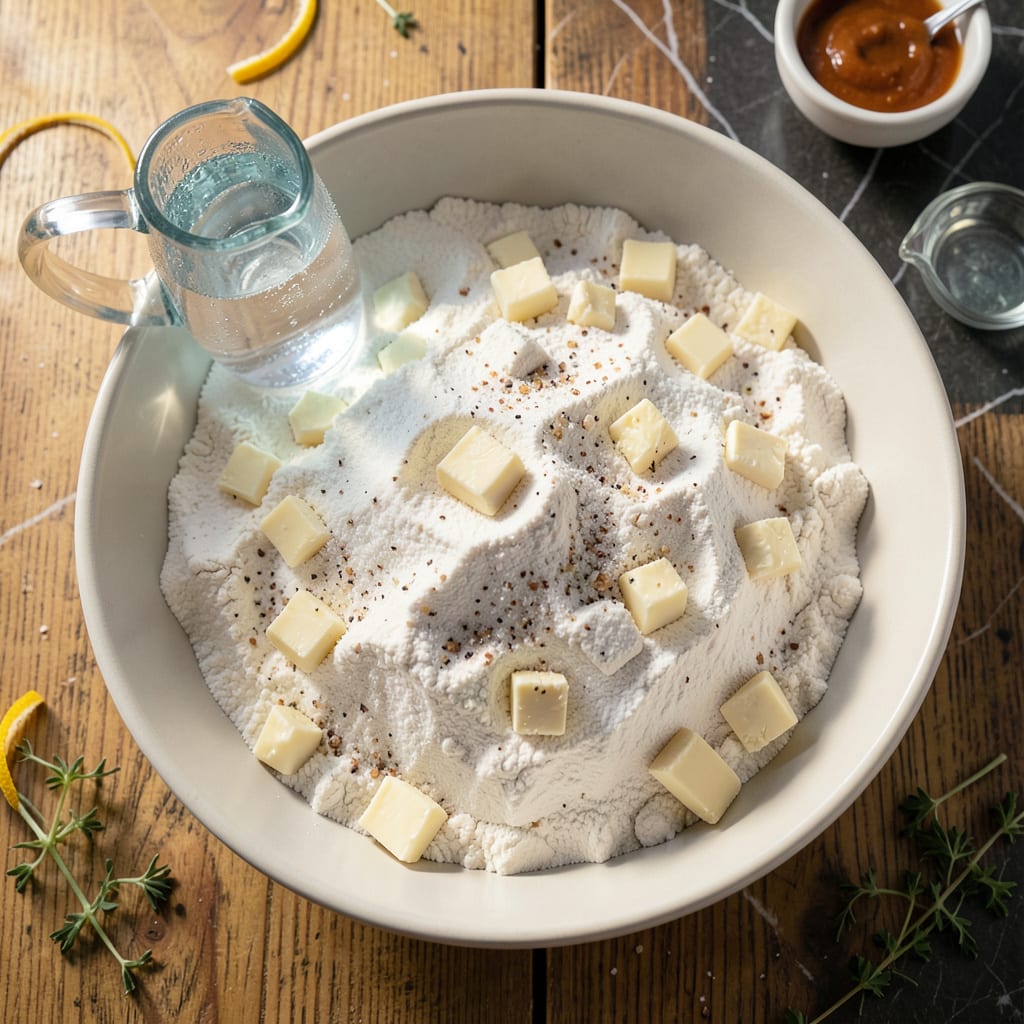
After years of testing, I’ve perfected a pie crust that delivers flaky, buttery layers every time. This method ensures consistent, professional results with minimal effort.
The secret lies in cold ingredients and precise mixing. You’ll achieve a golden, tender crust that’s the foundation for any perfect pie.
Ingredients for Magnolia Pie Crust
Precision matters here: cold ingredients and proper technique yield that signature flaky, buttery crust.
| Ingredient | Amount | Notes |
|---|---|---|
| All-Purpose Flour 🌾 | 2 ½ cups | Spoon and level for accuracy |
| Unsalted Butter 🧈 | 1 cup | Cold, cut into 1/2-inch cubes |
| Ice Water 💧 | ½ cup | Plus 1 tbsp as needed |
| Granulated Sugar 🍚 | 1 tbsp | Optional for sweet crusts |
| Fine Sea Salt 🧂 | 1 tsp | Diamond Crystal preferred |
| Distilled White Vinegar 🍶 | 1 tbsp | Enhances tenderness |
| Shortening 🧈 | ¼ cup | Cold, for extra flakiness |
[recipeingredientscaler]
The butter must stay cold—Land O’Lakes or European-style with 82% fat content delivers superior flakiness. Use King Arthur Flour for consistent protein content, which ensures tender layers. Vinegar might seem unusual, but it inhibits gluten formation for a more delicate texture. Measure flour by spooning into cups rather than scooping to avoid compacting.
No unsalted butter? Salted butter at half the added salt. Short on shortening? Lard works at a 1:1 ratio (though not vegetarian). For a richer flavor, replace 2 tbsp ice water with vodka—it evaporates during baking, reducing gluten development. The vinegar can be apple cider or lemon juice if that’s what you have.
Dough can be refrigerated for up to 3 days or frozen for 1 month. Wrap tightly in plastic to prevent drying. For best results, let chilled dough rest at room temperature for 10-15 minutes before rolling to prevent cracking.
Why You’ll Love This Recipe
- Five Ingredients Only: I love that this crust comes together with just flour, butter, ice water, sugar, and salt—no fancy pantry items needed.
- Buttery, Flaky Layers: The cold butter creates pockets of flakiness that melt in your mouth, and that pinch of sugar adds just the right sweetness.
- Freezer Friendly: I always make a double batch and freeze one—it thaws beautifully and saves me time for impromptu pies.
- Budget Stretch: A pound of flour and a stick of butter make two crusts, so it’s an affordable way to feed a crowd or treat my family.
Step-by-Step Instructions for Magnolia Pie Crust
Master the technique for achieving flaky, golden layers that define exceptional pie crust.
Step 1: Combine Dry Ingredients and Cold Fats
In a large mixing bowl, whisk together the 2.5 cups All-Purpose Flour, 1 tbsp Granulated Sugar, and 1 tsp Fine Sea Salt until thoroughly combined. The sugar adds subtle sweetness for dessert pies, while the salt enhances all flavors.
Add the 1 cup Unsalted Butter (cut into ½-inch cubes) and 0.25 cup Shortening to the flour mixture. Both fats must remain cold—this creates the flaky layers. Use a pastry cutter or your fingertips to work the fats into the flour until the mixture resembles coarse crumbs with pea-sized fat pieces visible.
Step 2: Incorporate Liquid Ingredients
Create a well in the center of the flour-fat mixture. Add the 0.5 cup Ice Water and 1 tbsp Distilled White Vinegar. The vinegar tenderizes the gluten, preventing toughness. Use a fork to gently toss the mixture until it just begins to come together.
At this stage, some dry bits will remain—that’s intentional. Overworking the dough develops gluten, which makes crust tough rather than tender. If the mixture seems too dry, add ice water 1 tbsp at a time until it holds when pressed.
Step 3: Chill and Rest the Dough
Turn the shaggy dough onto a lightly floured surface and gently press it into a cohesive mass. Divide it into two equal portions and shape each into a disc about 1 inch thick. Wrap both discs tightly in plastic wrap.
Refrigerate for at least 1 hour (or up to 48 hours). This resting period allows the gluten to relax and the fats to re-solidify, making the dough easier to roll out. Chilling also prevents shrinking during baking.
Step 4: Roll and Fit into Pie Dish
On a floured surface, roll one disc to a 12-inch circle, about ⅛-inch thick. Work from the center outward, rotating the dough frequently to maintain an even thickness. If the dough cracks, press the edges together—the cold temperature will help it hold.
Transfer the rolled dough to a 9-inch pie dish, pressing it gently into the bottom and up the sides. Trim the edges to leave a ½-inch overhang. For a single crust, crimp the edges. For a double crust, repeat with the second disc and place it over the filling before crimping.
Step 5: Pre-Bake or Blind Bake as Needed
For pre-baking, freeze the crust in the pie dish for 15 minutes to prevent shrinking. Prick the bottom all over with a fork. Line with parchment paper and fill with pie weights or dried beans. Bake at 375°F for 15 minutes, then remove weights and bake 5-10 minutes more until light golden brown.
For filled pies, add your filling to the unbaked crust and bake according to your recipe. The crust should emerge from the oven with visible flaky layers and a rich golden color.
Pro Tips For Making Magnolia Pie Crust
- Keep Butter Ice Cold: Cube your unsalted butter and chill it for 20 minutes before mixing—warm butter melts into the flour and ruins that flaky texture I learned this the hard way after my first three crusts turned out dense.
- Measure Water Precisely: Use exactly 1/4 cup ice water for this recipe, adding a tablespoon at a time if needed. Too much makes the dough stick, too little leaves it crumbly—I was skeptical until I tried it.
- Skip Overworking Dough: Once the dough comes together, stop mixing. Overworking develops gluten, and you’ll end up with a tough crust instead of that tender, flaky Magnolia texture.
- Rest Before Rolling: Let the dough rest in the fridge for at least 1 hour—yes, even if you’re impatient like me. This relaxes the gluten and makes rolling out much easier, with fewer cracks.
Troubleshooting Great magnolia pie crust
Tough Crust
If your crust turns out tough, you likely overworked the dough. Remember, the fat should remain in pea-sized pieces—don’t overmix. I use a pastry cutter to keep my hands warm butter-free. 💪
Shrinking Crust
Prevent shrinking by chilling the dough for at least 1 hour before rolling and freezing the shaped crust for 15 minutes before baking. This firms up the butter so it holds its shape in the oven.
Soggy Bottom
For filled pies, pre-bake the crust for 10 minutes at 375°F before adding filling. I also brush the bottom with a thin layer of egg white to create a moisture barrier.
Cracked Dough
If the dough cracks while rolling, let it rest at room temperature for 5-10 minutes to soften slightly. Patch cracks by pressing the edges together—cold dough will hold once chilled again.
Uneven Browning
Rotate your pie dish halfway through baking for even color. For extra shine, brush the top crust with 1 beaten egg yolk mixed with 1 tbsp water before baking.
Dry Crust
This usually means too much flour was added. Measure flour by spooning into cups rather than scooping. If the dough seems dry, add 1 tbsp ice water at a time until it just holds together.
Nutrition Facts
Frequently Asked Questions
Why does the vinegar get added?
The vinegar tenderizes the gluten in the flour, preventing a tough texture. It also adds a subtle tang that balances the richness. Use 1 tbsp for the best results.
Can I use salted butter instead?
Yes, but reduce the added salt to ½ tsp. Salted butter works fine, though unsalted gives you more control over the flavor. Keep it cold for flaky layers.
How long can I store the dough?
Wrapped tightly, it keeps in the fridge for up to 3 days or in the freezer for 1 month. Thaw overnight in the fridge before rolling.
What if my crust cracks while rolling?
Let it rest at room temperature for 5-10 minutes to soften. Patch cracks by pressing edges together—the cold will help it hold.

- BBQ Sausage Recipe Oven: Smoky Depth Without the Grill - September 28, 2026
- BBQ Chicken Bowl Recipe Rice: Smoky Sweetness Over Fluffy Grains - September 28, 2026
- Beef Cutlet Recipe Ideas: Crispy Breaded Patties With Bold Seasonings - September 28, 2026