
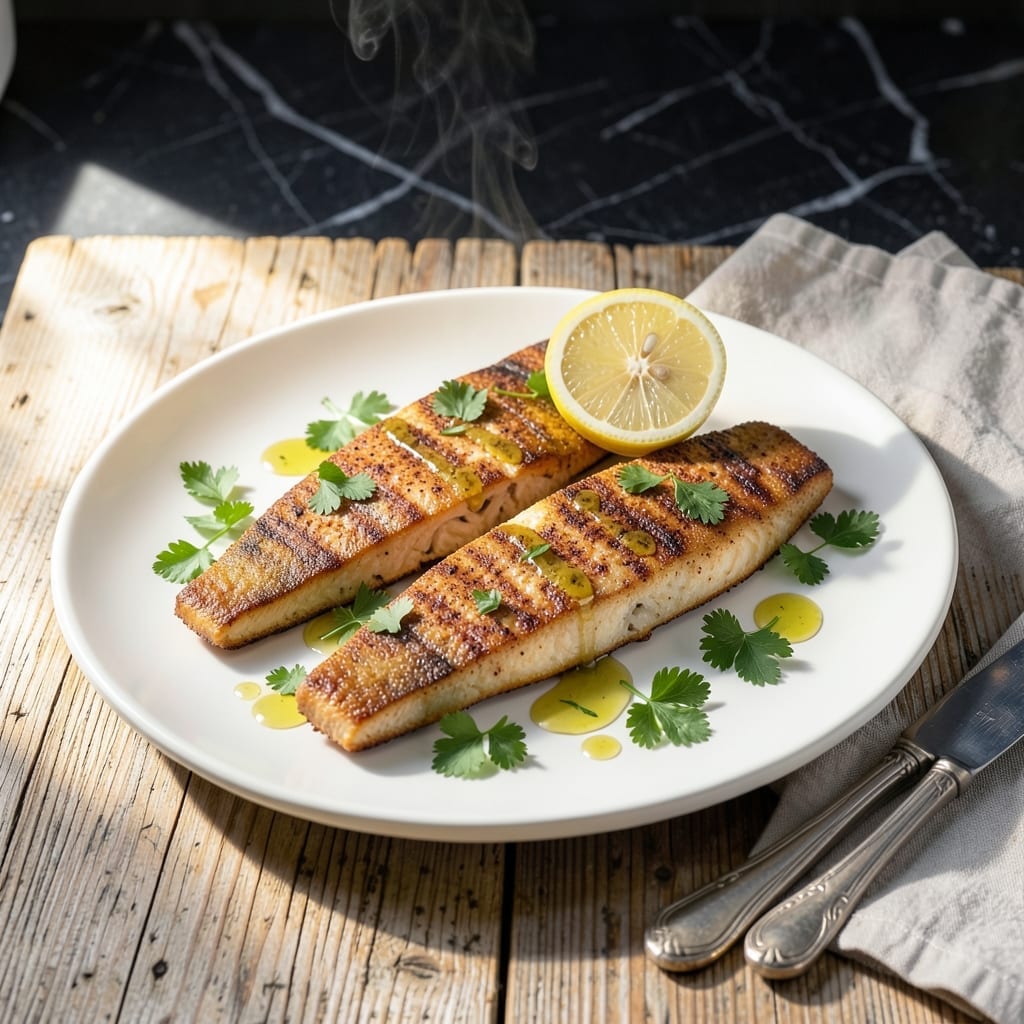
Mastering pan-fried mahi mahi at home delivers flaky, tender fish with a perfectly golden crust every time. This technique transforms an ordinary weeknight dinner into something extraordinary.
The key lies in proper heat control and timing. A hot pan creates that crisp exterior while keeping the inside moist and delicate. I’ve refined this method to ensure consistent results without overcomplicating the process.
You’ll end up with fish that easily flakes at the touch of a fork, with a crust so crisp it shatters. The simplicity of the ingredients lets the natural sweetness of the mahi mahi shine through.
Serve it with a squeeze of lemon and a side of roasted vegetables for a complete, restaurant-worthy meal.
Ingredients for Mahi Mahi Recipe Pan Fried
Quality fish and a few pantry staples create this restaurant-worthy flaky white fish with golden crust.
| Ingredient | Amount | Notes |
|---|---|---|
| Mahi Mahi Fillets 🐟 | 1 ½ lb | Skinless, about 1 inch thick |
| All-Purpose Flour 🌾 | ½ cup | For light dredging |
| Kosher Salt 🧂 | 1 ½ tsp | Diamond Crystal preferred |
| Freshly Ground Black Pepper 🌶️ | ½ tsp | Coarse grind ideal |
| Smoked Paprika 🌶️ | ½ tsp | For depth of flavor |
| Garlic Powder 🧄 | ½ tsp | Not garlic salt |
| Unsalted Butter 🧈 | 4 tbsp | Divided for cooking |
| Extra-Virgin Olive Oil 🫒 | 2 tbsp | High smoke point variety |
| Fresh Lemon 🍋 | 1 whole | For serving, cut into wedges |
| Fresh Parsley 🌿 | ¼ cup | Chopped, for garnish |
| Fresh Thyme Sprigs 🍃 | 4 sprigs | Optional, for aroma |
| Cayenne Pepper 🔥 | ¼ tsp | Optional, for heat |
The mahi mahi is the centerpiece—fresh, never previously frozen if possible. Look for fillets with vibrant color and no fishy odor. Whole Foods or a trusted fishmonger will have the best selection. Aim for uniform thickness (about 1 inch) so all pieces cook evenly. The flour dredge is minimal but essential for that shatteringly crisp exterior.
No smoked paprika? Regular paprika plus a pinch of cumin works in a bind. Fresh thyme can be swapped for dried at one-third the amount. If avoiding butter, ghee or coconut oil are solid alternatives. The lemon is non-negotiable—its acidity brightens the fish. For extra crunch, panko breadcrumbs can be added to the flour dredge.
Cook immediately after prepping the fish—it doesn’t hold well once seasoned. Leftovers? Rare with this dish, but they’ll keep 1-2 days in the fridge. Reheat gently in a skillet to avoid drying out. The fresh herbs are best added just before serving.
Why You’ll Love This Recipe
- Ready in 15: I can get this from fridge to plate faster than takeout arrives. Just flour, spices, and a hot pan—no fuss.
- Smoky Crisp: That smoked paprika in the crust gives it this deep, almost barbecue-like flavor that makes every bite ridiculous.
- Weeknight MVP: Honestly, it’s my go-to for busy evenings when I need something that feels fancy but takes zero effort.
- Leftovers? Yes Please: The fillets reheat beautifully for lunch the next day, and they’re just as good cold in a wrap.
Step-by-Step Instructions for Pan-Fried Mahi Mahi
Master the technique for perfectly flaky fillets with a crisp, golden exterior every time.
Step 1: Season and Dredge the Mahi Mahi Fillets
Pat the 1.5 lb Mahi Mahi Fillets completely dry with paper towels—moisture prevents proper browning. In a shallow dish, combine the 0.5 cup All-Purpose Flour, 1.5 tsp Kosher Salt, 0.5 tsp Freshly Ground Black Pepper, 0.5 tsp Smoked Paprika, 0.5 tsp Garlic Powder, and 0.25 tsp Cayenne Pepper.
Dredge each fillet lightly in the flour mixture, shaking off any excess. The coating should be thin and even. Press gently to adhere, but avoid compacting the flour—this ensures a delicate, crisp crust rather than a thick, pasty layer.
Step 2: Sear in Hot Oil-Butter Mixture
Heat the 2 tbsp Extra-Virgin Olive Oil in a large skillet over medium-high heat until it shimmers but does not smoke. Add 2 tbsp Unsalted Butter and swirl until melted. The oil prevents the butter from burning while adding richness.
Carefully place the dredged fillets in the skillet, leaving space between them to avoid steaming. Cook undisturbed for 3-4 minutes until the edges appear opaque and the bottom develops a golden-brown crust. Resist the urge to move them—this contact is critical for even browning.
Step 3: Flip and Finish Cooking
Add the remaining 2 tbsp Unsalted Butter to the skillet along with the 4 sprigs Fresh Thyme Sprigs for aroma. Flip the fillets and cook for an additional 3-4 minutes until the fish flakes easily with a fork and the internal temperature reaches 145°F.
Baste the fillets with the hot butter and oil mixture during the final minute. This adds flavor and promotes even cooking. The thyme infuses the butter, lending a subtle herbal note to complement the smoky paprika.
Step 4: Rest and Garnish Before Serving
Transfer the fillets to a paper towel-lined plate to drain excess oil. Let them rest for 2-3 minutes—this allows the juices to redistribute, ensuring moist, flaky meat. Cover loosely with foil to retain warmth.
Garnish with the 0.25 cup Fresh Parsley and serve immediately with wedges of the 1 whole Fresh Lemon. The acidity from the lemon cuts through the richness of the butter, while the parsley adds a fresh, vibrant finish to each bite.
Pro Tips For Making Mahi Mahi Recipe Pan Fried
- Dry the Fillets: Pat those mahi mahi fillets bone-dry with paper towels before dredging in flour—I learned this the hard way after my first few batches steamed instead of seared.
- Start Ripping Hot: Get that pan screaming hot, about 2 tablespoons of oil shimmering, before adding the fish. Anything less and you’ll get a sad, pale crust instead of that golden-brown finish.
- Skip the Overcrowding: Resist the urge to fit all the fillets in at once—give them at least an inch of space or they’ll steam each other and turn rubbery.
- Rest Before Serving: Let the fish rest 3-4 minutes on a plate after cooking, loosely tented with foil. Sounds weird, but it keeps the juices from running all over your plate when you cut in.
Troubleshooting This Dish
Sticking to the Pan
If your fish sticks, your pan likely wasn’t hot enough or you moved it too soon. Heat the 2 tbsp olive oil until it shimmers before adding the mahi mahi fillets. Wait until a crust forms before attempting to flip—usually 3-4 minutes. 🔥
Dry or Overcooked Fish
This happens when the heat is too high or the cooking time extends beyond 6-8 minutes total. Use medium-high heat and pull the fish at 145°F internal temperature. The residual heat will finish the cooking during the 2-3 minute rest.
Uneven Browning
Uneven browning often results from crowded pans or inconsistent thickness. Leave space between fillets and ensure they’re uniformly 1 inch thick. Press the dredge lightly but evenly for a consistent crust.
Bland Flavor
If your dish tastes flat, don’t skimp on the seasoning. Use the full 1.5 tsp kosher salt in your flour mixture. Fresh lemon wedges and chopped parsley at the end add brightness.
Soggy Crust
Pat the fillets completely dry before dredging—moisture is the enemy of crispiness. Use all-purpose flour for a light, delicate crust. Let the fish rest on a wire rack or paper towels to maintain crispness.
Burnt Butter
The butter can burn if the heat is too high. Use medium-high heat and add the 4 tbsp butter in stages. The 2 tbsp olive oil helps raise the smoke point, but watch for browned bits forming too quickly.
Nutrition Facts
Frequently Asked Questions
What’s the best oil for pan-frying?
Use a high smoke point oil like extra-virgin olive oil. It handles medium-high heat without burning. Adding butter later gives richness while the oil prevents scorching.
How do I know when it’s done?
Cook until the internal temperature reaches 145°F. The flesh should flake easily with a fork and turn opaque. This takes about 6-8 minutes total for 1-inch thick fillets.
Can I use frozen fillets?
Yes, but thaw completely first. Pat them completely dry before dredging to avoid a soggy crust. Never refreeze after thawing.
Why did my crust turn out soggy?
Moisture is the main culprit. Pat fillets dry, use medium-high heat, and don’t crowd the pan. Let them rest on a rack after cooking.

- BBQ Sausage Recipe Oven: Smoky Depth Without the Grill - September 28, 2026
- BBQ Chicken Bowl Recipe Rice: Smoky Sweetness Over Fluffy Grains - September 28, 2026
- Beef Cutlet Recipe Ideas: Crispy Breaded Patties With Bold Seasonings - September 28, 2026