
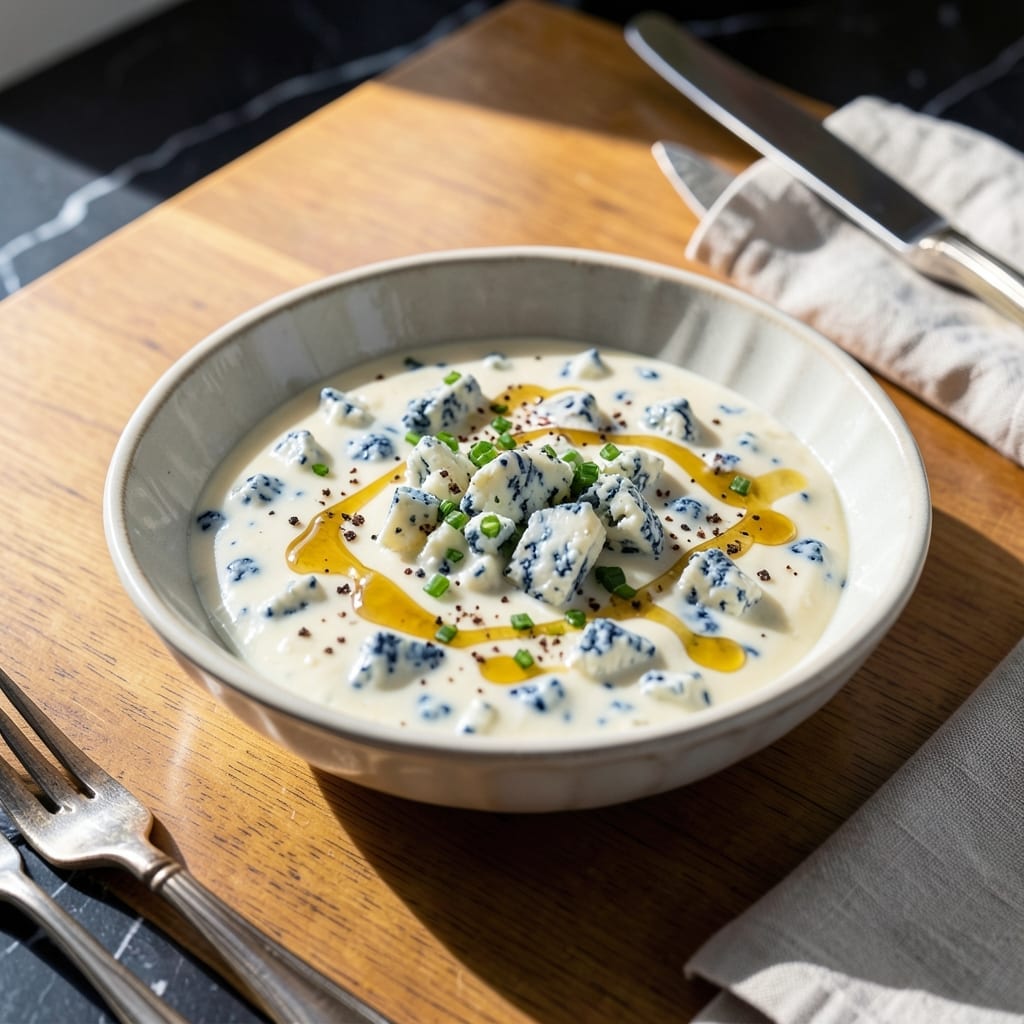
This creamy dressing elevates any salad with its bold blue cheese flavor and tangy herbal notes. The balance between rich cheese and bright vinegar creates a versatile condiment that works as both a dressing and marinade.
I’ve perfected this recipe to ensure a smooth, lump-free texture without overpowering the dish. The key lies in using high-quality blue cheese and slowly whisking in the oil to create a stable emulsion.
What you get is a restaurant-quality vinaigrette that clings beautifully to greens or tenderizes meats. It stores well, so you can make a batch ahead for quick, flavorful meals.
Use it on crisp lettuce, drizzle over grilled vegetables, or toss with pasta for an instant upgrade. Here’s how to make it right every time.
Ingredients for Marie’s Blue Cheese Vinaigrette
Creamy, tangy, and packed with bold flavor. Elevate any salad or dish instantly.
| Ingredient | Amount | Notes |
|---|---|---|
| Blue Cheese 🧀 | ½ cup | High-quality, crumbled |
| Buttermilk 🥛 | ½ cup | Full-fat for creaminess |
| Sour Cream 🥛 | ½ cup | Full-fat for richness |
| White Wine Vinegar 🍷 | 3 tbsp | Bright, tangy flavor |
| Dijon Mustard 🟡 | 1 tbsp | Smooth, sharp mustard |
| Honey 🍯 | 1 tbsp | Balances acidity |
| Worcestershire Sauce 🫚 | 1 tsp | Adds umami depth |
| Garlic Clove 🧄 | 1 clove | Minced finely |
| Dried Parsley 🌿 | 1 tsp | Herbal note |
| Extra-Virgin Olive Oil 🫒 | ¾ cup | For stable emulsion |
| Salt 🧂 | ½ tsp | Adjust to taste |
| Black Pepper 🌶️ | ¼ tsp | Freshly ground |
The blue cheese is everything here. Splurge on a wedge of good stuff—Maytag or Rogue River if you can find it. Grocery store pre-crumble works in a pinch, but the flavor won’t be as complex. Buttermilk and sour cream add that creamy base, so don’t skimp on full-fat. Whole Foods or a local cheese shop will have the best selection.
No buttermilk? Whole milk with a splash of vinegar does the trick. Swap sour cream for Greek yogurt at the same amount. Regular mustard can replace Dijon, but the sharpness won’t be as pronounced. The honey balances the vinegar—maple syrup works too if you prefer. Worried about lumps? Let the cheese sit at room temp for 20 minutes before mixing.
Stores beautifully in the fridge for up to 1 week. The flavors meld over time, so it actually gets better. Give it a good stir before using—separation is normal. Freezing isn’t recommended, but you can make half a batch if needed.
Why You’ll Love This Recipe
- Five-Minute Whisk: I toss everything in a jar, shake, and it’s done—no blender, no fuss.
- Tangy Blue Cheese Punch: The sharp blue cheese mellows into the buttermilk and sour cream, with white wine vinegar giving it that bright, zingy finish.
- Drizzle on Everything: It’s my go-to for steak salads, roasted veggies, even as a dip for Buffalo wings.
- Keeps Like a Dream: Honestly, it tastes even better the next day, and it’ll last a solid week in the fridge.
Step-by-Step Instructions for Blue Cheese Vinaigrette
This method ensures a smooth, well-balanced dressing with the perfect tangy creaminess.
Step 1: Blend the Creamy Base
In a blender or food processor, combine the 0.5 cup Blue Cheese, 0.5 cup Buttermilk, and 0.5 cup Sour Cream. Pulse until the mixture is smooth but still has some small chunks of blue cheese visible—this gives texture to the finished vinaigrette.
I like to scrape down the sides halfway through to ensure everything gets incorporated evenly. The buttermilk and sour cream create a rich, creamy foundation that balances the sharpness of the blue cheese perfectly.
Step 2: Add the Tangy and Sweet Components
Next, add the 3 tbsp White Wine Vinegar, 1 tbsp Dijon Mustard, 1 tbsp Honey, 1 tsp Worcestershire Sauce, and the minced Garlic Clove. Blend until fully combined and smooth.
The vinegar and mustard provide the tangy backbone, while the honey adds just enough sweetness to round out the flavors. The Worcestershire sauce deepens the umami, and the garlic adds a subtle kick. Blend for 20-30 seconds to ensure all ingredients are fully emulsified.
Step 3: Stream in the Olive Oil
With the blender running on low speed, slowly drizzle in the 0.75 cup Extra-Virgin Olive Oil. This slow addition is key to creating a stable emulsion that won’t separate. You’ll see the dressing thicken and turn a creamy, pale yellow as the oil incorporates.
If the mixture looks too thick, add a splash of buttermilk to thin it slightly. The goal is a pourable consistency that clings to greens without overpowering them. This step should take about 1 minute for the full amount of oil.
Step 4: Season and Adjust to Taste
Finally, add the 0.5 tsp Salt, 0.25 tsp Black Pepper, and 1 tsp Dried Parsley. Pulse once or twice to distribute the seasonings evenly. Taste and adjust the salt if needed—blue cheese can vary in saltiness.
Let the dressing sit for 10 minutes to allow the flavors to meld before using. The parsley adds a subtle herbal note that brightens the overall profile. If it’s too thick after resting, thin with a little more buttermilk until it reaches your desired consistency.
Pro Tips For Making Marie’S Blue Cheese Vinaigrette
- Crumble the Cheese: Use your fingers to break the blue cheese into small, pea-sized crumbles—this distributes the flavor better than chopping, which can make the dressing chunky.
- Warm the Buttermilk: Take the buttermilk out of the fridge for 10-15 minutes before mixing. Cold buttermilk can make the dressing too thick and hard to blend smoothly.
- Skip the Blender: I learned this the hard way—over-blending turns the dressing gluey. A whisk and a little elbow grease give you the perfect creamy texture.
- Add Vinegar Last: Stir in the white wine vinegar after everything else is combined. This prevents the dressing from separating or getting too thin while you work.
Storing and Reheating This Recipe
Fridge Storage
Transfer your vinaigrette to an airtight container—I use mason jars for easy shaking. It keeps beautifully in the fridge for up to 7 days. The flavors actually deepen as it sits, making leftovers taste even better. 🥬
Separation Fix
Natural separation will occur. Just give it a vigorous shake or whisk before each use. If it’s too thick after chilling, thin with 1-2 tbsp buttermilk to restore the perfect consistency.
Freezing Not Recommended
Dairy-based dressings don’t freeze well—the texture can turn grainy or split. However, you can easily halve the recipe if you won’t use a full batch within a week.
Revivifying Leftovers
If your dressing has been sitting for a few days, bring it to room temperature and whisk in 1 tsp warm water to refresh the emulsion. This trick works like magic for restoring creaminess.
Marinade Use
For marinating meats or veggies, use within 3 days for best flavor transfer. The acid in vinegar helps tenderize while the cheese adds incredible depth. I love it on grilled chicken or portobello mushrooms.
Container Tips
Glass containers are ideal—they won’t absorb odors and let you see the dressing. Avoid metal containers, as they can react with the vinegar. A 16-ounce jar fits this recipe perfectly with room to shake. ❄️
Nutrition Facts
Frequently Asked Questions
Can I make this without a blender?
Yes! Whisk all ingredients except oil in a bowl until smooth. Slowly drizzle in oil while whisking vigorously for 2-3 minutes to emulsify. The texture may be slightly chunkier but still delicious.
What’s the best way to use this dressing?
It’s perfect on wedge salads, drizzled over grilled steaks, or as a dip for veggie sticks. Also try tossing with roasted potatoes or as a marinade for chicken.
Why did my dressing turn out too thick?
This happens if the oil is added too quickly. Thin with 1-2 tbsp buttermilk until pourable. Room temperature ingredients also blend more smoothly.

- BBQ Sausage Recipe Oven: Smoky Depth Without the Grill - September 28, 2026
- BBQ Chicken Bowl Recipe Rice: Smoky Sweetness Over Fluffy Grains - September 28, 2026
- Beef Cutlet Recipe Ideas: Crispy Breaded Patties With Bold Seasonings - September 28, 2026