
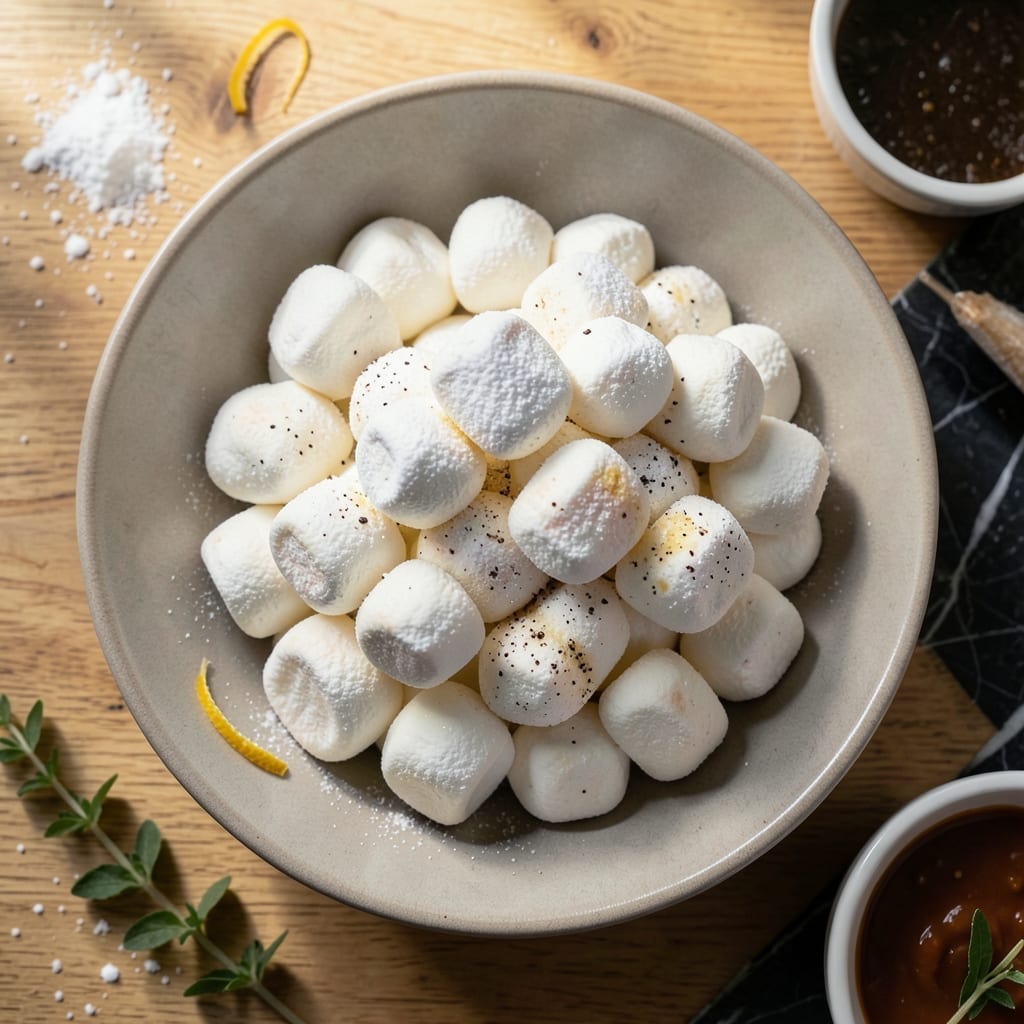
I’ve perfected a homemade marshmallow recipe that skips corn syrup entirely while still delivering that pillowy softness you crave.
With just a few simple ingredients and precise timing, you’ll achieve fluffy, melt-in-your-mouth results every time. This method proves you don’t need corn syrup for professional-quality marshmallows.
Ingredients for Marshmallow Recipe Without Corn Syrup
Short list of pantry staples transforms into fluffy, melt-in-your-mouth magic with no corn syrup.
| Ingredient | Amount | Notes |
|---|---|---|
| Granulated Sugar 🍚 | 1 ½ cups | Fine grain for smooth texture |
| Water 💧 | ¾ cup | Divided for syrup and gelatin |
| Unflavored Gelatin 🥣 | 3 tbsp | Powdered, bloom in cold water |
| Vanilla Extract 🌿 | 2 tsp | Pure extract for best flavor |
| Salt 🧂 | ¼ tsp | Fine sea salt preferred |
| Powdered Sugar 🍚 | ½ cup | For dusting finished marshmallows |
| Cornstarch 🌾 | 2 tbsp | Mixed with powdered sugar |
| Honey 🍯 | ¼ cup | Replaces corn syrup for binding |
| Lemon Juice 🍋 | 1 tsp | Freshly squeezed for balance |
| Cream of Tartar 🥣 | ¼ tsp | Stabilizes sugar syrup |
The gelatin is non-negotiable here—Knox or Great Lakes brands are reliable and widely available at any grocery store. Sugar quality matters less than you’d think (regular granulated is fine), but organic cane sugar gives a slightly cleaner taste. Honey adds the binding corn syrup usually provides, so use raw, unfiltered for best results—it’s worth the splurge at Whole Foods or a local farmers market.
No honey? Maple syrup or agave work in a pinch (use one-third less since they’re thinner). Skip the cream of tartar? A splash of lemon juice (extra teaspoon) can help stabilize the syrup, though results won’t be as consistent. Vanilla is flexible—bourbon vanilla adds depth, but imitation works if that’s what’s in the cabinet (just add a pinch more).
Marshmallows keep in an airtight container for 2-3 weeks at room temp. Dust them well with the powdered sugar mix to prevent sticking. They’ll get firmer over time, but a quick 10-second microwave revives their fluffiness.
Why You’ll Love This Recipe
- No Fuss Mixing: I just bloom the gelatin while the sugar syrup heats—no candy thermometer drama, promise.
- Pure Vanilla Clouds: The real vanilla extract shines through, giving these marshmallows a rich, warm depth corn syrup versions can’t touch.
- Endless Uses: I’ve piped them onto hot cocoa, squished them into s’mores, and even gifted them in cute bags for teacher thank-yous.
- Pantry Staples Only: Granulated sugar and gelatin are probably in my cupboard right now, so I can make a batch on a whim without extra shopping.
Step-by-Step Instructions for Homemade Marshmallows
This method delivers cloud-like marshmallows without corn syrup—simple, reliable, and foolproof.
Step 1: Bloom the Gelatin in Cold Water
Pour 0.75 cup Water into a small bowl and sprinkle 3 tbsp Unflavored Gelatin evenly over the surface. I let it sit undisturbed for 10 minutes—you’ll see it transform into a spongy, opaque layer. This blooming process hydrates the gelatin, which is essential for creating that perfect chewy texture.
Don’t stir it yet; stirring too early can create lumps. Just let it do its thing. The gelatin should look thick and slightly jiggly when it’s ready. If your kitchen is cold, the blooming might take a few extra minutes—just be patient.
Step 2: Cook the Sugar Syrup to Soft Ball Stage
In a medium saucepan, combine 1.5 cups Granulated Sugar, 0.25 cup Honey, 0.25 cup Water, and 0.25 tsp Cream of Tartar. I use a candy thermometer clipped to the side of the pan for accuracy. Cook over medium-high heat without stirring until the mixture reaches 240°F.
At this temperature, the syrup forms a soft ball when dropped into cold water. Watch closely—sugar syrup can quickly jump from underdone to burnt. If you see any sugar crystals on the sides of the pan, brush them down with a wet pastry brush to prevent crystallization.
Real talk: this is the moment that matters. The cream of tartar prevents sugar crystallization, ensuring a smooth, glossy syrup. Without it, you risk a grainy texture in your final marshmallows.
Step 3: Whip the Gelatin Mixture to Ribbon Stage
Once the gelatin has fully bloomed, transfer it to the bowl of a stand mixer fitted with the whisk attachment. With the mixer on low speed, carefully pour the hot sugar syrup in a thin, steady stream down the side of the bowl. Be cautious—this syrup is extremely hot.
After all the syrup is added, increase the speed to high and whip for 10-12 minutes until the mixture turns glossy white and forms stiff peaks. Add 2 tsp Vanilla Extract and 1 tsp Lemon Juice during the last minute of whipping. The lemon juice adds a subtle brightness that balances the sweetness.
The mixture should triple in volume and look like fluffy marshmallow fluff. If you lift the whisk, the mixture should hold a peak that doesn’t collapse immediately.
Step 4: Pipe or Spread and Set
Lightly grease a 9×13-inch baking dish or line it with parchment paper. Pour the marshmallow mixture into the pan and spread it evenly with a greased spatula. I prefer to pipe the mixture into individual marshmallows for a more professional look, but spreading works just fine for a simpler approach.
Dust the top lightly with some of the powdered sugar and cornstarch mixture (combine 0.5 cup Powdered Sugar with 2 tbsp Cornstarch). This prevents sticking and gives the marshmallows that classic dusted appearance. Let it sit uncovered at room temperature for 4-6 hours, or until fully set.
Step 5: Cut and Dust the Finished Marshmallows
Once set, use a knife or pizza cutter to cut the marshmallows into squares. Dust each piece generously with the remaining powdered sugar and cornstarch mixture. I like to roll them around in the dusting mixture to ensure they’re fully coated.
Store in an airtight container at room temperature for up to 2 weeks. These marshmallows are pillowy soft with just the right amount of chew. The honey adds a subtle floral note, while the vanilla and lemon juice create a balanced, well-rounded flavor.
Pro Tips For Making Marshmallow Recipe Without Corn Syrup
- Bloom the Gelatin: Always let the gelatin sit in cold water for 5-10 minutes until it looks spongy—I learned this the hard way after my first batch never set properly.
- Watch the Syrup: Cook the sugar and water to exactly 240°F, no higher, or you’ll end up with rock-hard marshmallows that crack teeth.
- Use Fresh Vanilla: Skip the imitation stuff; real vanilla extract actually changes the outcome, adding depth that cheap versions just can’t.
- Beat Long Enough: After adding the gelatin to the syrup, beat the mixture for at least 8-10 minutes—it’ll look glossy and hold peaks when it’s ready, and yes, even if you’re impatient like me.
Troubleshooting Great marshmallow recipe without corn syrup
Grainy Texture Issues
If your marshmallows turn out grainy, the sugar syrup likely crystallized. Use a wet pastry brush to wash down any sugar crystals on the pan sides during cooking. I always add 0.25 tsp Cream of Tartar to prevent this issue. 💡
Syrup Too Thin
Did your syrup not reach 240°F? It needs to hit soft ball stage. If it’s under-cooked, return it to medium-high heat and monitor the thermometer closely. Never stir the syrup while cooking, as this can cause crystallization.
Marshmallows Won’t Set
If your mixture remains sticky after 4-6 hours, your gelatin may not have bloomed properly. Ensure 3 tbsp Unflavored Gelatin is fully dissolved in cold water for 10 minutes before whipping. The gelatin must be spongy and thick before adding the syrup.
Flat Marshmallows
If your marshmallows lack volume, whip the mixture longer. It should triple in size and form stiff peaks that hold their shape. I find 10-12 minutes on high speed with a stand mixer works perfectly. Check that your bowl and whisk are completely clean before starting.
Sticky Mess
Prevent sticking by dusting generously with the powdered sugar and cornstarch mix. Use 0.5 cup Powdered Sugar with 2 tbsp Cornstarch for the best results. Lightly grease your pan or pipe directly onto parchment paper for easy removal. 🔥
Overly Dense Texture
If your marshmallows are dense, the syrup may have been overcooked. Aim for exactly 240°F—any higher and the sugar hardens too much. Also, ensure you’re whipping on high speed to incorporate enough air for that signature fluffiness.
Frequently Asked Questions
Why use honey instead of corn syrup?
Honey acts as a natural binder and sweetener, just like corn syrup, but adds a subtle floral depth. It also helps create that signature chewy texture we all love.
Can I use agave or maple syrup instead of honey?
Yes! Use one-third less since they’re thinner than honey. The flavor will differ slightly, but the texture remains pillowy soft.
How long do homemade marshmallows last?
Stored in an airtight container at room temperature, they stay fresh for 2-3 weeks. Dust them well with powdered sugar to prevent sticking.
What if my marshmallows turn out grainy?
This usually means the sugar crystallized. Prevent it by adding 0.25 tsp Cream of Tartar and brushing down pan sides with a wet brush during cooking.
Nutrition Facts

- BBQ Sausage Recipe Oven: Smoky Depth Without the Grill - September 28, 2026
- BBQ Chicken Bowl Recipe Rice: Smoky Sweetness Over Fluffy Grains - September 28, 2026
- Beef Cutlet Recipe Ideas: Crispy Breaded Patties With Bold Seasonings - September 28, 2026