
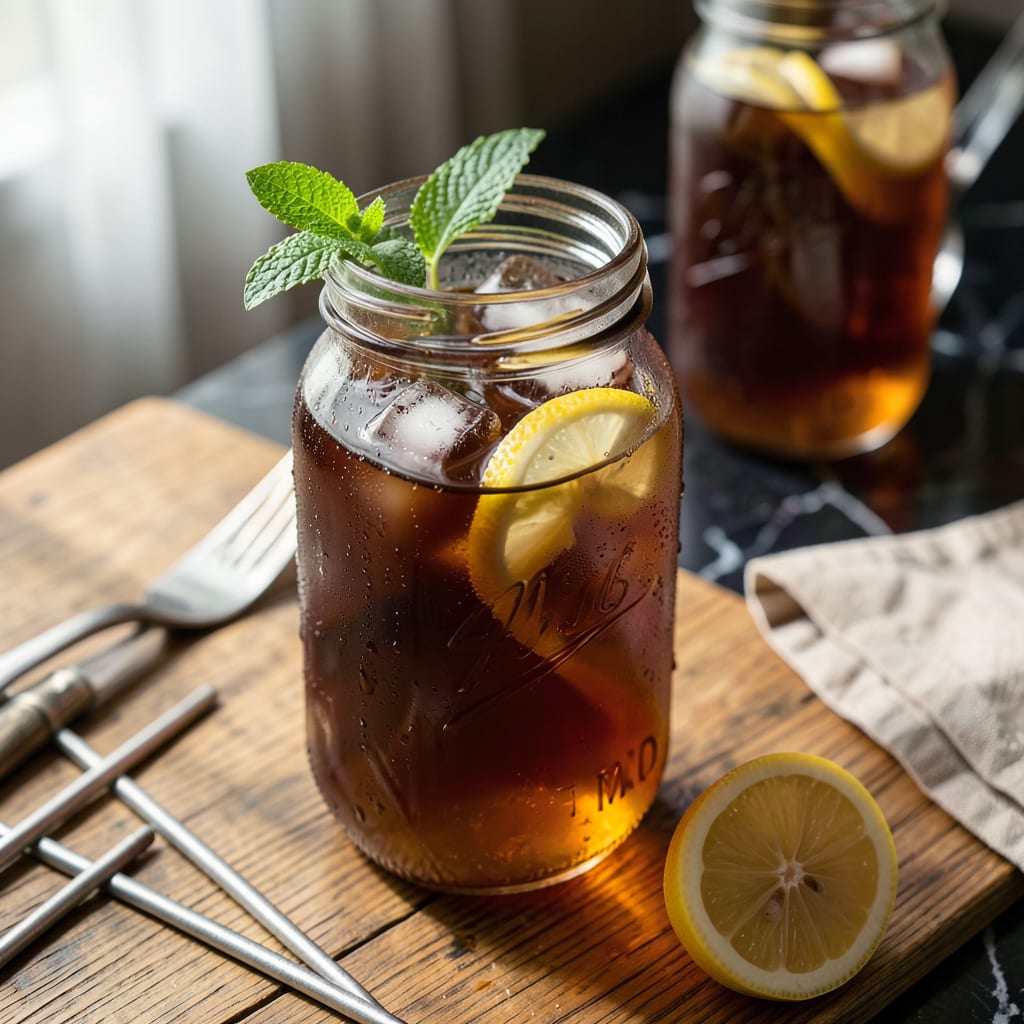
McAlister’s famous sweet tea combines black tea bags with sugar and baking soda for smoothness. The key is brewing strong tea, dissolving sugar while hot, then chilling for that signature refreshing taste.
This restaurant-style tea gets its addictive quality from a carefully balanced chemistry. The baking soda isn’t just for show—it neutralizes tannins in the black tea, eliminating bitterness while preserving the bold flavor. 🔥 I’ve found that using 1/4 teaspoon per gallon creates that perfect smoothness without altering the taste profile. What most home cooks miss is the importance of water temperature during brewing—too hot and you’ll extract harsh compounds, too cool and the flavor falls flat. The chilling process then locks in that crisp, clean finish that makes it so refreshing.
💡 In This Article
- The Secret Science Behind McAlister’s Tea Flavor
- Step-by-Step Guide to Recreating McAlister’s Tea at Home
The Secret Science Behind McAlister’s Tea Flavor
The magic starts with chemistry—specifically pH balance. Black tea contains tannins that create bitterness, especially when oversteeped. McAlister’s uses a tiny amount of baking soda (1/4 teaspoon per gallon) to raise the pH slightly, neutralizing those harsh compounds while preserving the tea’s robust character.
This isn’t about making it alkaline; it’s about hitting the sweet spot where tannins relax but don’t disappear. The result is a remarkably smooth base that can handle sweetness without tasting cloying or artificial. ✨
Temperature plays a crucial role in extraction. The ideal brewing range sits between 195-205°F—hot enough to extract flavor compounds but not so hot that it pulls out excessive tannins.
Commercial operations use precise equipment, but at home, you can achieve this by bringing water to a rolling boil, then letting it rest for 2-3 minutes before steeping. The steeping time matters too: 5-7 minutes gives you full flavor extraction without crossing into bitter territory.
I’ve found that Luzianne tea bags (their reported brand) release optimal flavor in this window.
Sugar integration happens at the molecular level. Adding sugar while the tea is still hot (above 140°F) ensures complete dissolution, creating a homogeneous solution rather than grainy sweetness.
The standard ratio is 1.5-2 cups of sugar per gallon, but the baking soda trick allows you to use slightly less sugar while achieving the same perceived sweetness. This is because the smoother tea base makes the sweetness more pronounced—your taste buds aren’t fighting bitterness, so they register the sugar more efficiently. 🔥
The chilling process transforms both flavor and appearance. Rapid cooling (using ice baths or refrigeration) locks in the tea’s bright amber color by preventing oxidation that would turn it muddy. But here’s the fascinating part: controlled oxidation during the first 30 minutes of cooling actually enhances the tea’s body and mouthfeel.
McAlister’s likely uses commercial chill plates that drop temperatures quickly while allowing just enough air exposure for this effect. At home, stirring the hot tea briefly before refrigerating mimics this process.
What most copycat recipes miss is the water quality factor. McAlister’s uses filtered water with a specific mineral content (similar to what you’d get from a reverse osmosis system with remineralization). Hard water with high calcium can make tea taste flat, while too-soft water produces weak extraction.
If your tap water tastes “off,” using bottled spring water for brewing makes a noticeable difference in the final product’s clarity and flavor purity. 💫
The carbonation question often comes up—McAlister’s tea isn’t carbonated, but the effervescent quality comes from two factors: the baking soda’s slight alkalinity creates a mouthfeel similar to light carbonation, and serving it ice-cold enhances that crisp, refreshing sensation.
The combination of smooth tannins, balanced sweetness, and that perfect chill creates what food scientists call “dynamic contrast”—your palate experiences both richness and refreshment simultaneously.

- BBQ Sausage Recipe Oven: Smoky Depth Without the Grill - September 28, 2026
- BBQ Chicken Bowl Recipe Rice: Smoky Sweetness Over Fluffy Grains - September 28, 2026
- Beef Cutlet Recipe Ideas: Crispy Breaded Patties With Bold Seasonings - September 28, 2026