
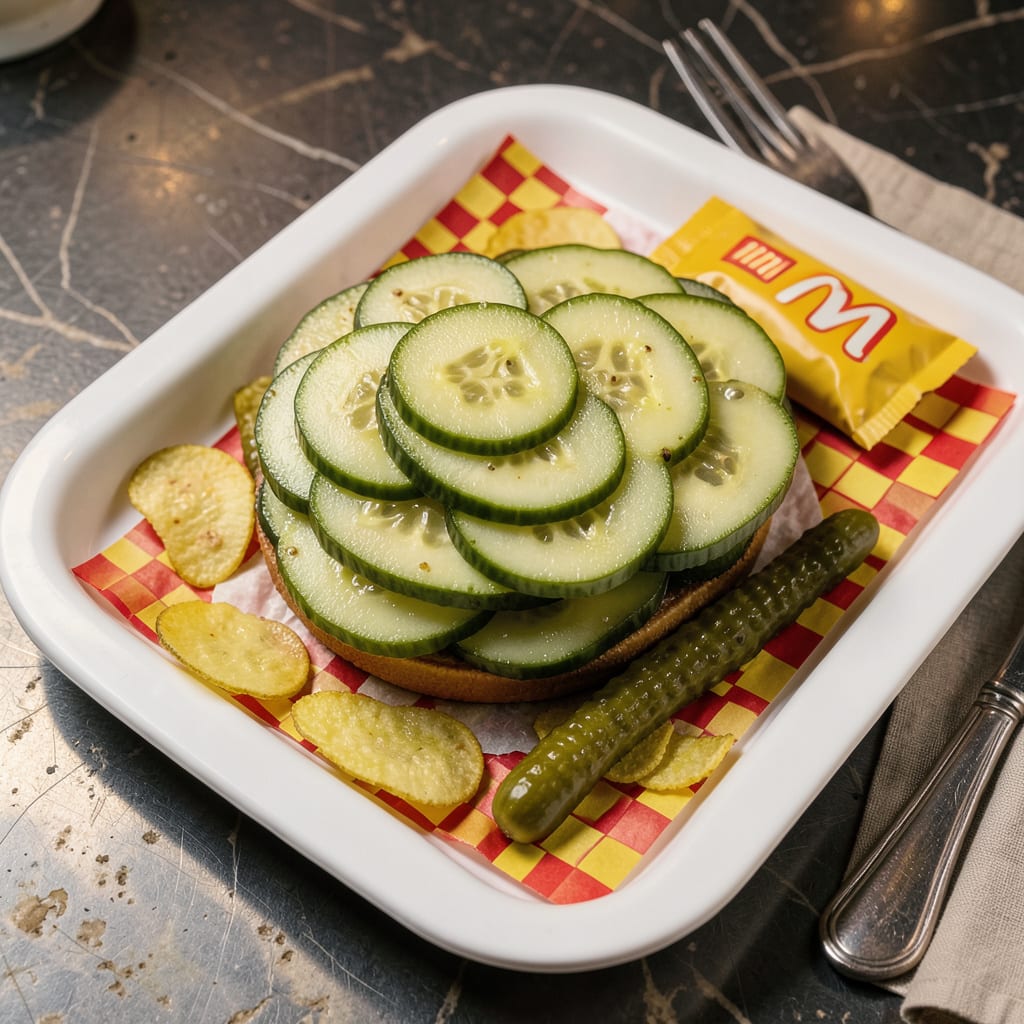
McDonald’s pickles are crisp dill chips made from cucumbers brined in vinegar, salt, dill, garlic, and mustard seeds. Recreate them at home by slicing cucumbers thin, soaking in ice water for crunch, then quick-pickling in a tangy vinegar solution for 24 hours.
The secret to nailing that iconic fast-food crunch lies in two critical steps: the ice-water bath and precise slicing. 🔥 This method shocks the cucumbers to maintain their firmness while the thin slices ensure maximum flavor absorption during brining. I’ve tested multiple vinegar ratios and found that a 1:1 vinegar-to-water blend with 2 tablespoons of salt per cup delivers the perfect balance of tang and crispness—just like the real deal.
What most copycat recipes miss is the resting period. The 24-hour soak isn’t just about flavor—it’s when the cucumbers transform from raw slices to that signature snappy texture. Skipping this step or using warm water will leave you with limp, sad pickles instead of the satisfying bite you’re after. ✨
💡 In This Article
- The Science Behind McDonald’s Pickle Crunch and Flavor
- Step-by-Step Guide to Perfect Copycat McDonald’s Pickles
The Science Behind McDonald’s Pickle Crunch and Flavor
The signature snap of McDonald’s pickles starts with the cucumbers themselves. Commercial suppliers use Kirby cucumbers—small, bumpy varieties with dense flesh and minimal seeds. These cucumbers have a higher pectin content than slicing cucumbers, which helps them maintain structure during processing.
The real magic happens during the ice-water soak, which shocks the plant cells and prevents enzymatic breakdown that would turn them mushy. 🔥
Vinegar acidity is the second critical factor. McDonald’s uses a 5% acetic acid solution (standard white vinegar), which lowers the pH below 4.6—creating an environment where harmful bacteria can’t survive while preserving crispness. The salt concentration (typically 2-3 tablespoons per cup of liquid) draws out excess moisture through osmosis, further firming the texture.
Commercial operations often add calcium chloride (0.1-0.2%), a food-grade firming agent that cross-links pectin molecules for extra crunch.
Temperature control separates commercial pickles from homemade attempts. Factory brining happens at 40-50°F for 12-24 hours, while most home recipes use room temperature. This cooler environment slows the acid diffusion, allowing flavor to develop without compromising texture.
The dill, garlic, and mustard seeds contribute more than just taste—their natural antimicrobial properties help preserve the pickles’ signature bright green color. ✨
Here’s what most copycat recipes overlook: the slicing thickness must be precisely 1/8-inch. Thinner slices become limp; thicker ones don’t absorb enough brine. The uniform thickness ensures even brining and that perfect bend-without-breaking quality. Commercial slicers use stainless steel blades that make cleaner cuts than home knives, reducing cell damage that leads to softness.
Fermentation time matters more than you’d think. While McDonald’s pickles are technically “quick pickles” (not fermented), their 24-hour brine soak allows the vinegar to penetrate completely while the salt reaches equilibrium. This creates the ideal balance where the exterior has that sharp vinegar tang but the center remains slightly sweet—a hallmark of their flavor profile.
💫
For comparison, traditional fermented pickles develop flavor through lactic acid bacteria over weeks, creating a more complex sourness. McDonald’s pickles skip this step entirely, relying on acetic acid for immediate tang.
This is why their pickles taste brighter and cleaner than deli-style fermented versions, with a crunch that holds up even after sitting on a warm burger for 10+ minutes.
The final secret? Storage temperature. McDonald’s pickles are stored at 38-40°F in sealed bags to prevent moisture loss. At home, glass jars in the fridge work best—just consume within 3-4 weeks before the texture starts to degrade. The cold slows the remaining enzymatic activity, preserving that just-pickled snap. ⚡

- BBQ Sausage Recipe Oven: Smoky Depth Without the Grill - September 28, 2026
- BBQ Chicken Bowl Recipe Rice: Smoky Sweetness Over Fluffy Grains - September 28, 2026
- Beef Cutlet Recipe Ideas: Crispy Breaded Patties With Bold Seasonings - September 28, 2026